Le port de Marseille au coucher du soleil — History & Analysis
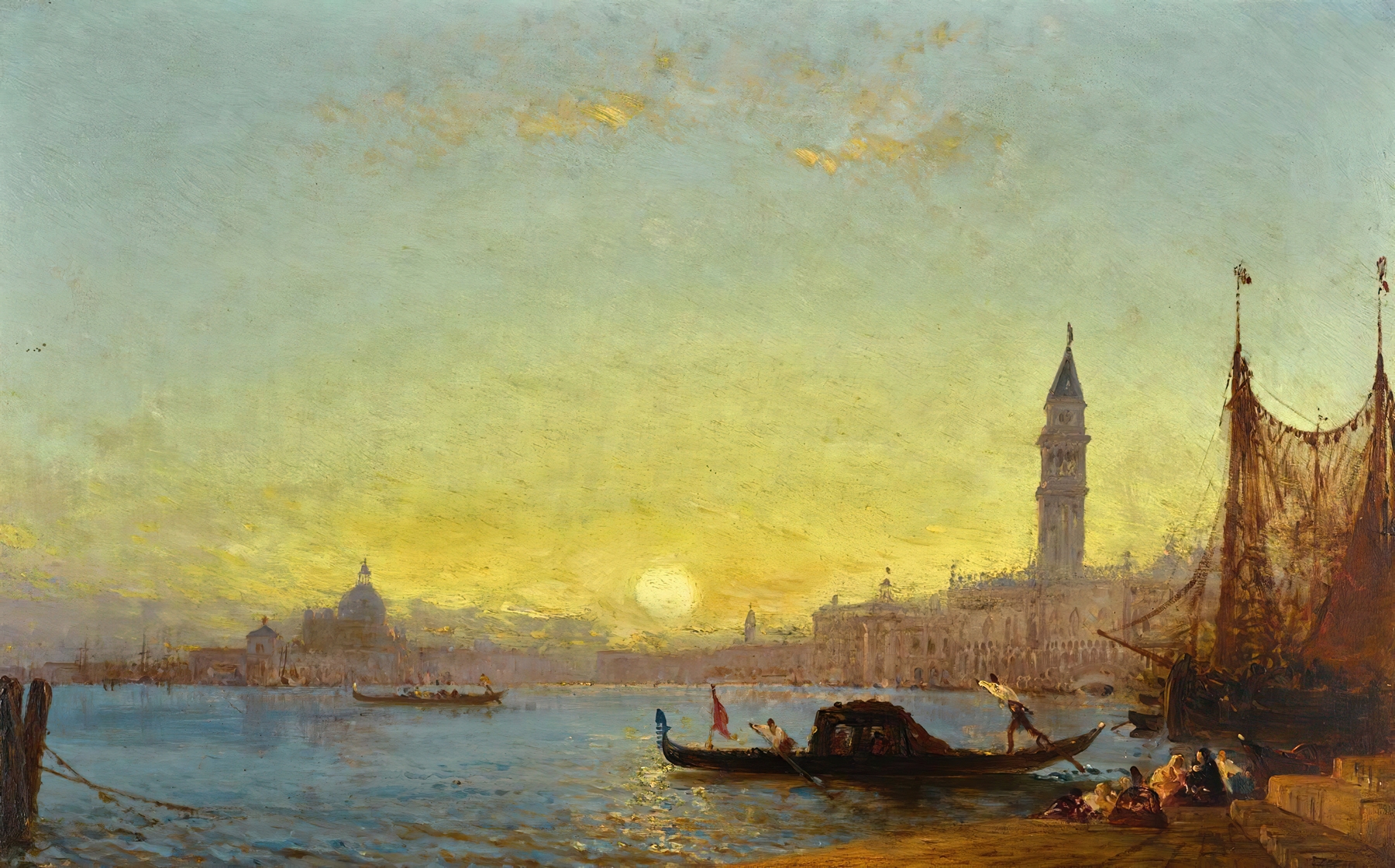
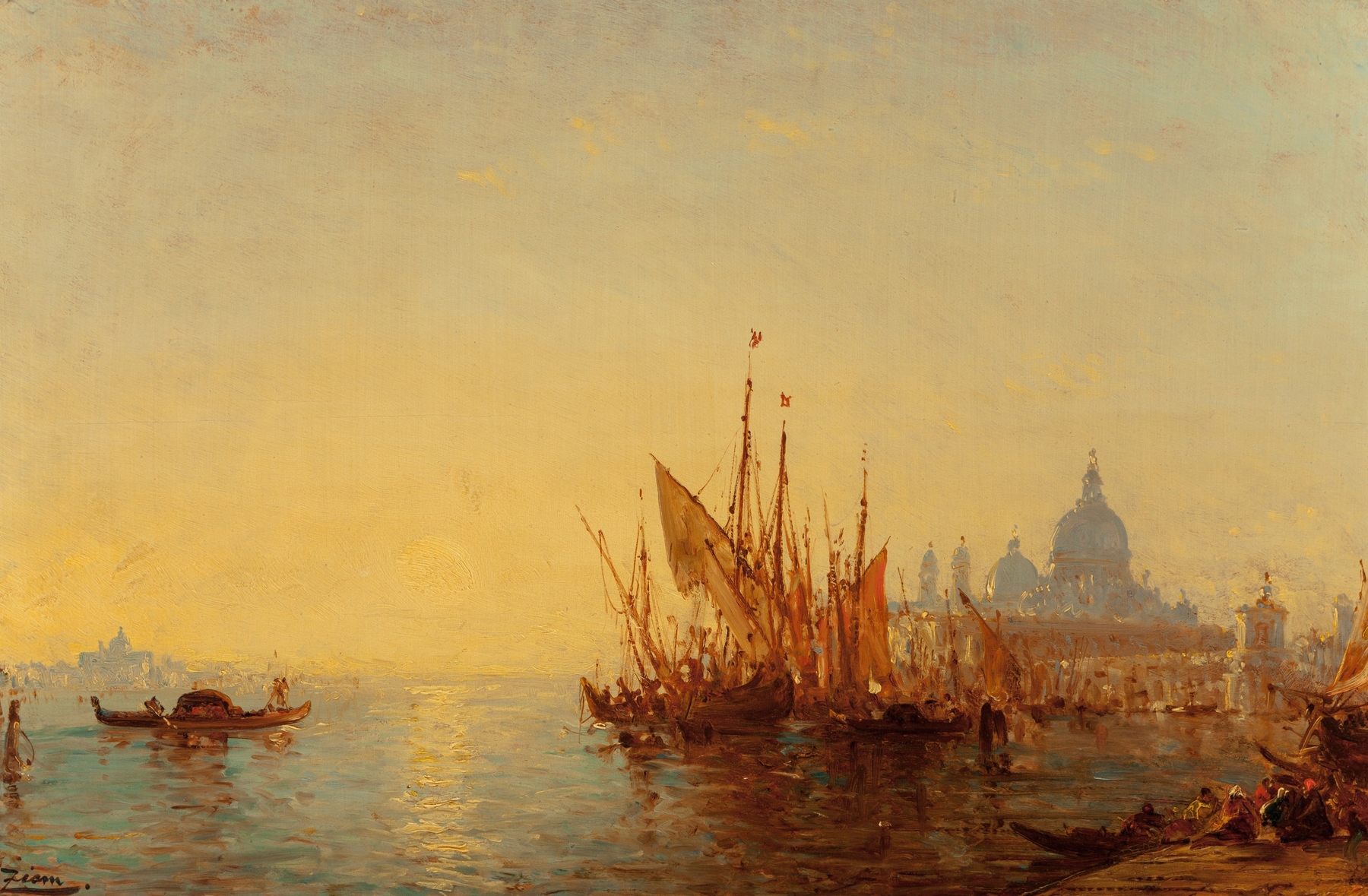
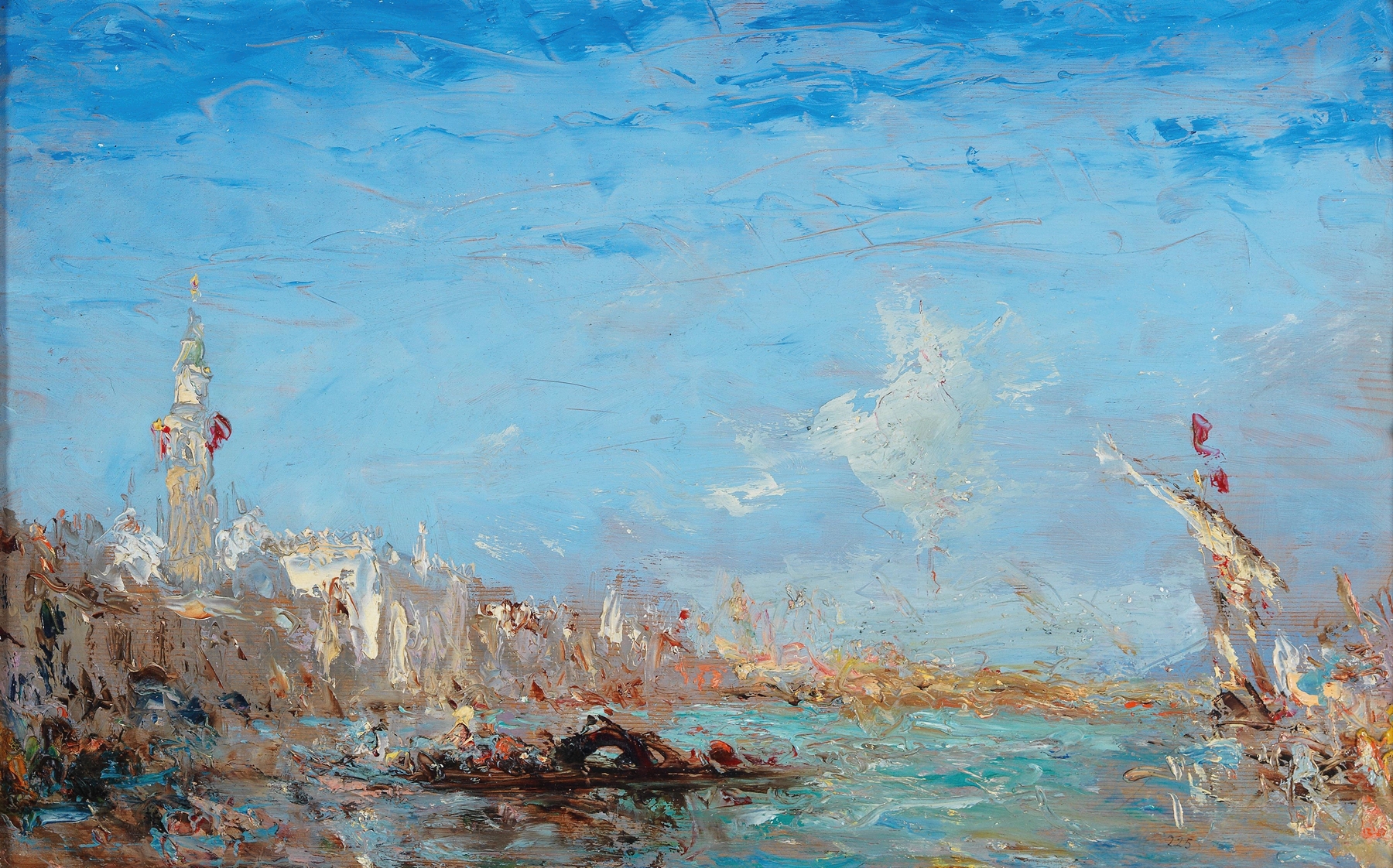
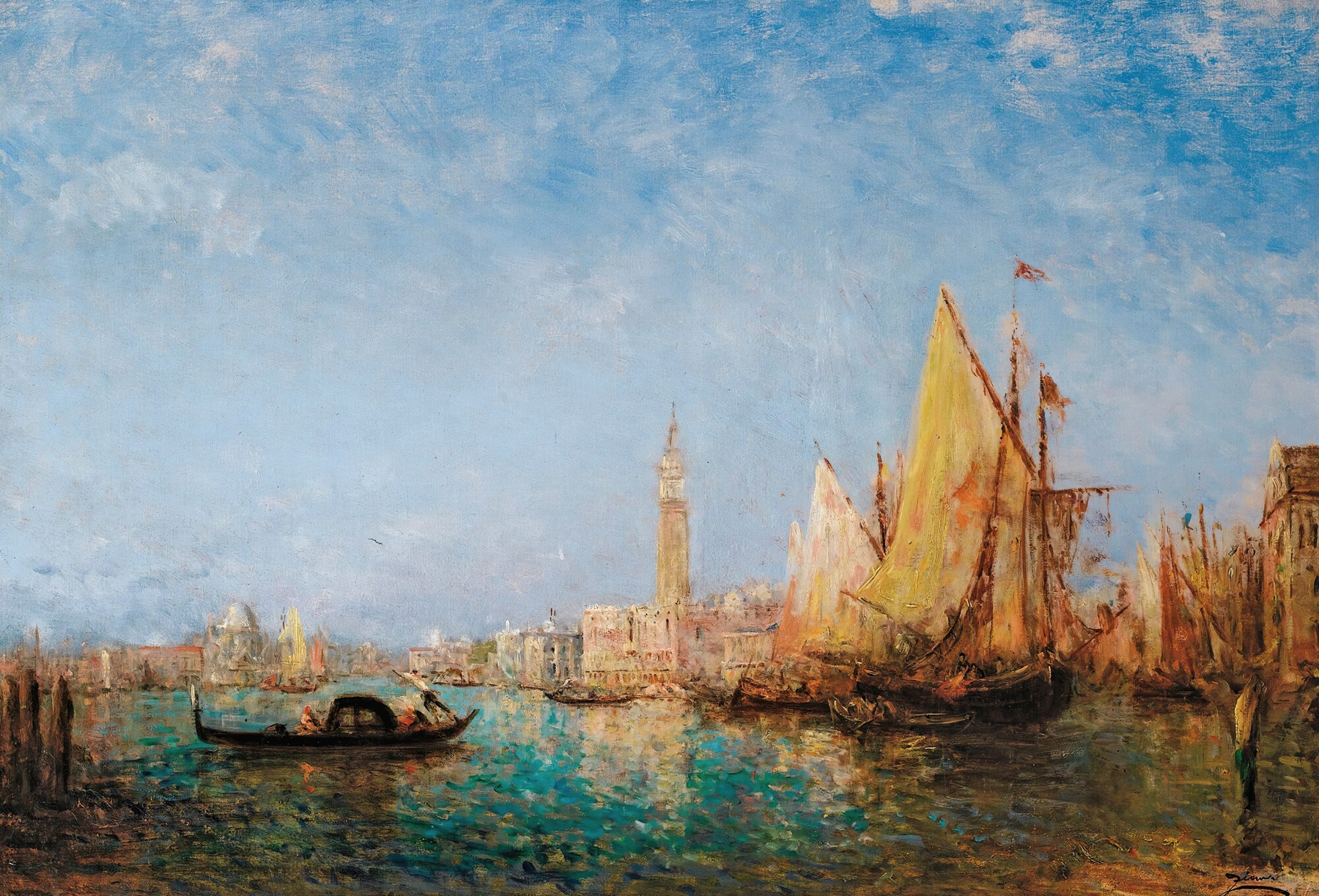
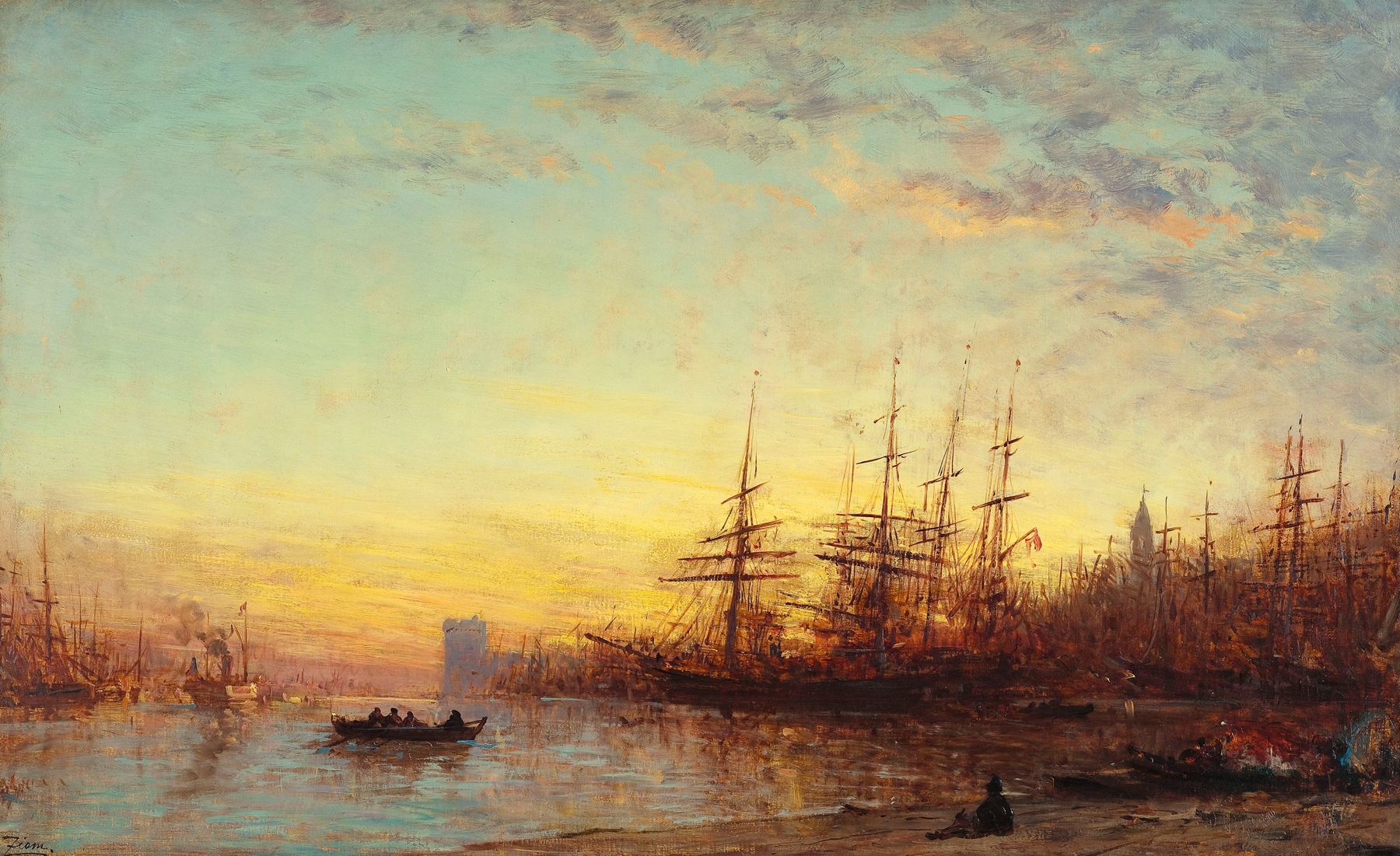
Did the painter know this moment would outlive them? As chaos swirls in the bustling harbor, a delicate balance of movement and tranquility emerges, encapsulated in the vibrant hues of twilight. Focus on the lower left corner where a small boat gently rocks amidst the reflections of the sunset. Notice how the light cascades over the water, creating a shimmering pathway that guides the eye toward the horizon, where earth meets sky.
Ziem's brushstrokes blend rich oranges and deep blues, capturing the fleeting beauty of day’s end, while the chaotic silhouettes of masts and figures reinforce the sense of life's constant ebb and flow. The painting reveals a tension between the serene sunset and the frenetic activity of the port, suggesting a world in perpetual motion. The soft, diffused light bathes the scene, yet hints of undercurrents of chaos linger in the shadows of the cotton clouds. Each detail, from the textured waves to the distant shipyard, invites contemplation on the dichotomy between nature’s calm and the human struggle against it.
Created between 1890 and 1895, this work emerged during a period when Ziem was fully immersed in the vibrant artistic circles of Paris and beyond. A recognized figure in the Impressionist movement, he sought to capture the fleeting moments of life and light. The late 19th century was marked by rapid industrialization and societal change, which influenced his choice of subject—port scenes, like this one, that celebrated both beauty and the chaos of modern existence.