
Le printemps à Billy — History & Facts
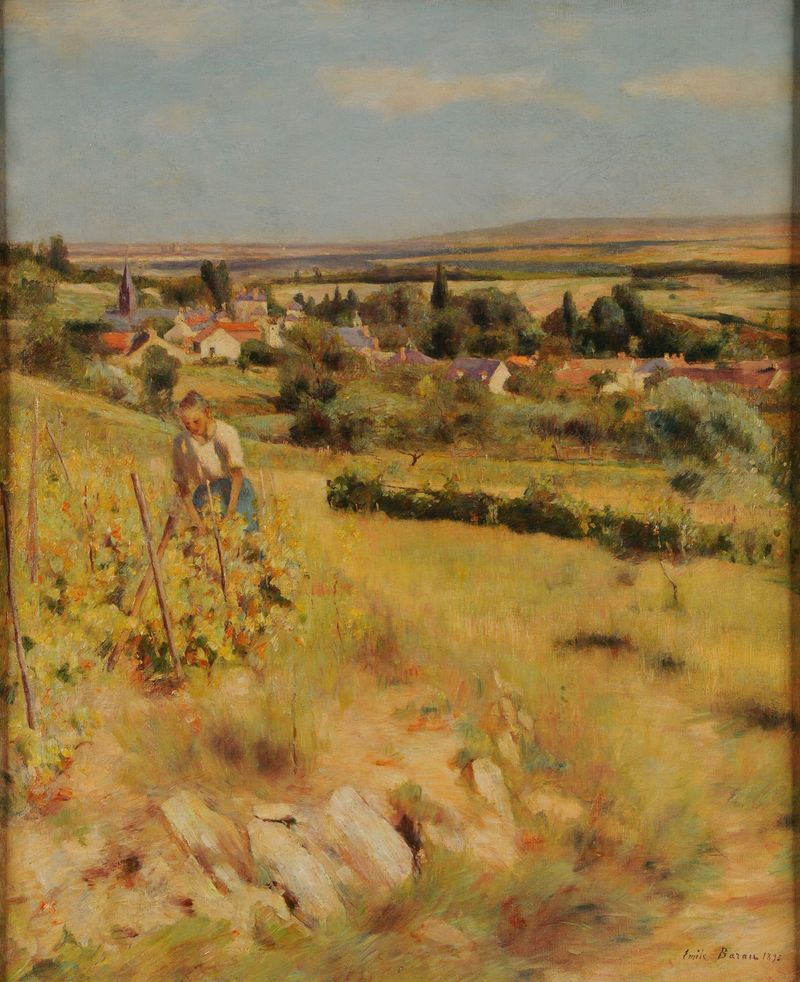
Where does light end, and longing begin? In Le printemps à Billy, the boundary blurs, revealing the bittersweet beauty of decay and renewal. Look to the center of the canvas, where brilliant greens and delicate pastels intertwine, welcoming spring's embrace. The soft brushwork captures the gentle rustle of blossoming trees, inviting your gaze to dance across the vibrant landscape. Notice how the sunlight filters through the foliage, illuminating patches of earth while casting shadows that hint at the passage of time.
Each stroke carries a whisper of life, yet there’s an underlying tension in the scene, as if nature's vibrancy is simultaneously a celebration and a farewell. This painting invites contemplation on the cycle of life and the inevitability of decay. The interplay of light and shadow reveals the ambivalence within beauty; the blooming flowers contrast with the hint of wilting petals, suggesting that all things must fade. The artist's choice of colors further emphasizes this duality — the lush greens and soft pinks evoke hope, while undercurrents of muted browns remind viewers of life's transient nature.
It’s a poignant reminder that every season comes with its own set of losses and renewals. Émile Barau created this piece in 1886, during a period marked by a burgeoning interest in Impressionism. Living in France, an epicenter for artistic evolution, he was influenced by the movement's emphasis on capturing fleeting moments in nature. The world was transitioning, and so was Barau's own style, as he sought to blend the energetic spirit of spring with the quiet whispers of decay, reflecting his personal and artistic evolution.
More Artworks by Émile Barau
Browse all →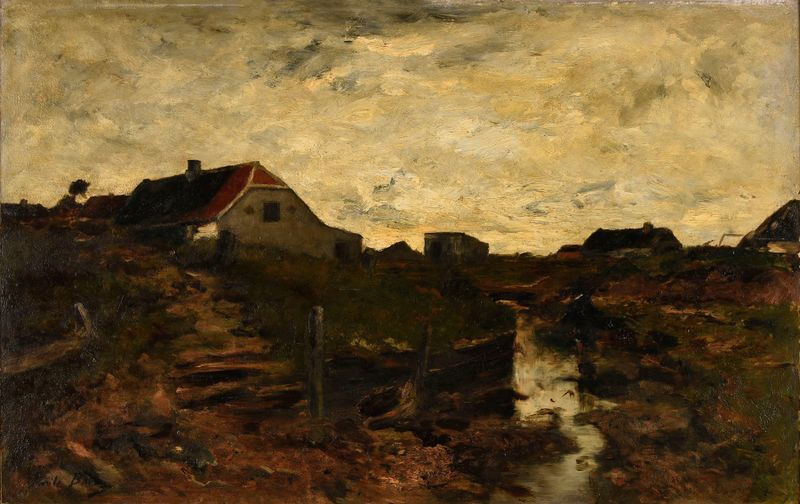
Chaumières dans les dunes à Skagen (Danemark)
Émile Barau

Soleil d’octobre
Émile Barau
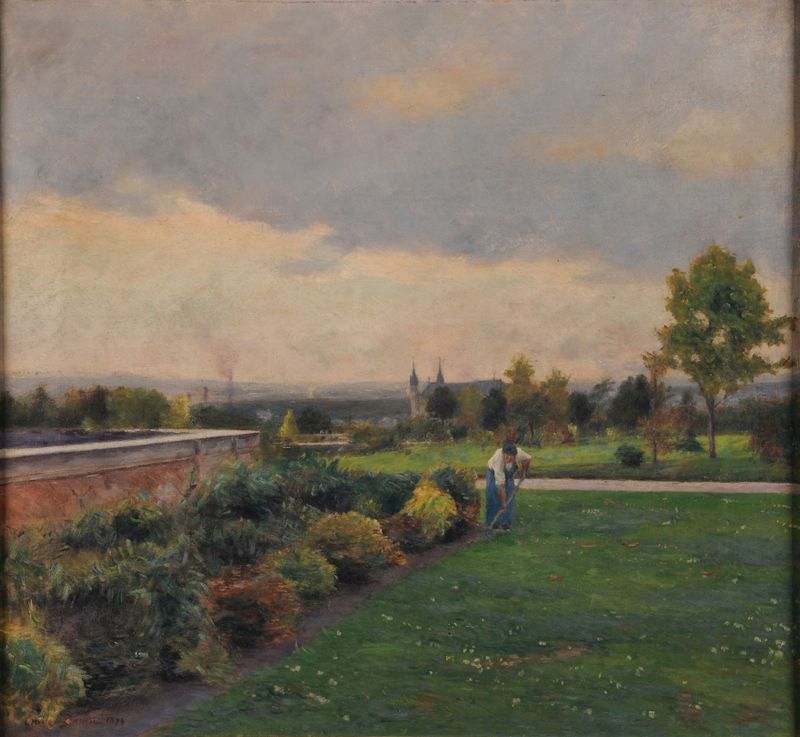
Vue prise du Parc Pommery en 1894
Émile Barau
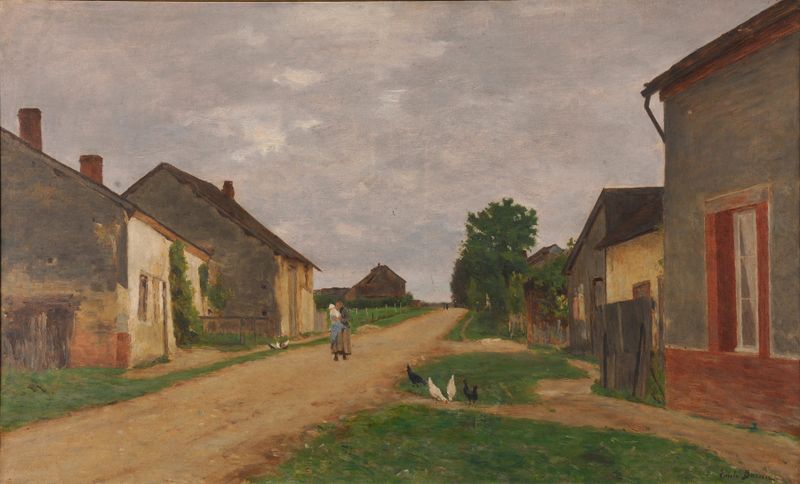
Village champenois
Émile Barau
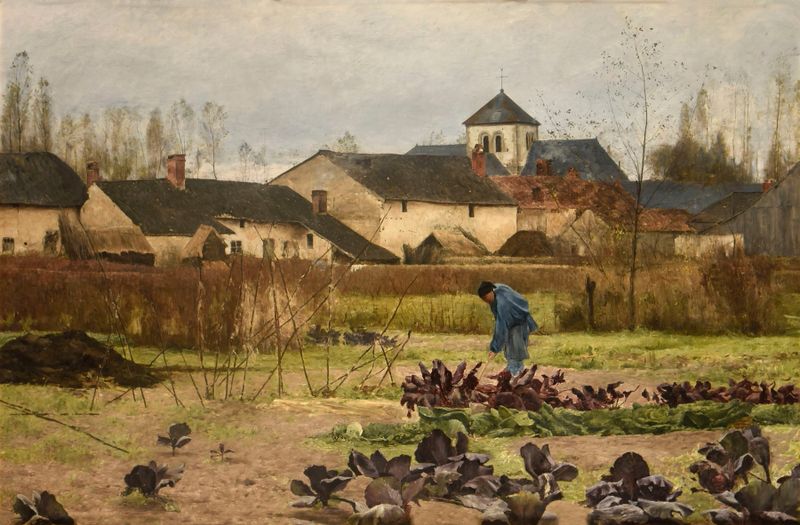
Jardinage d’automne
Émile Barau
Vue sur Chenay
Émile Barau

Près Semide (Ardennes) Paysage de semide (Ardennes)
Émile Barau

L’été en Champagne
Émile Barau





