Chaumières dans les dunes à Skagen (Danemark) — History & Facts
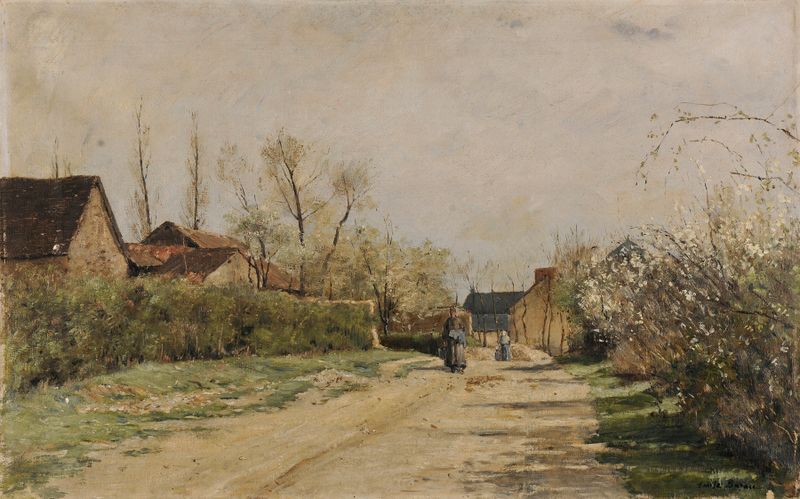
In the hands of Émile Barau, movement transcends mere depiction and transforms into a dance of color and form. Look to the foreground, where the gentle undulations of sand form a textured tapestry. The viewer’s eyes are immediately drawn to the quaint, weather-beaten cottages nestled among the dunes, their roofs a patchwork of earthy tones that resonate with the landscape. Notice how the light captures flecks of gold on the surfaces, creating an interplay of shadow and illumination that suggests an ephemeral moment caught in time.
The brushstrokes, both swift and deliberate, convey a sense of the wind’s caress, as the horizon blurs softly, suggesting the fleeting nature of this coastal scene. Amidst the tranquil beauty, tension arises from the juxtaposition of the enduring structures and the transient elements of nature. The cottages stand resilient against the shifting sands, yet they seem vulnerable to the whims of the elements. This tension reflects the delicate balance between human life and the relentless forces of nature, embodying both comfort and fragility.
The colors, from sandy beiges to deep ocean blues, evoke a sense of nostalgia, inviting the viewer to ponder the passage of time and the stories held within these walls. In 1880, while Barau painted this piece in Skagen, Denmark, he was deeply influenced by the Impressionist movement, pushing boundaries of traditional landscape painting. This period marked a significant shift in his artistic journey as he sought to capture the essence of the environment—its light, its movement, and its soul. As artists increasingly turned to the natural world for inspiration, Barau’s work became a reflection of a changing society that embraced both the serenity and chaos found in nature’s embrace.