
Les Déchargeurs de Plâtre — History & Facts
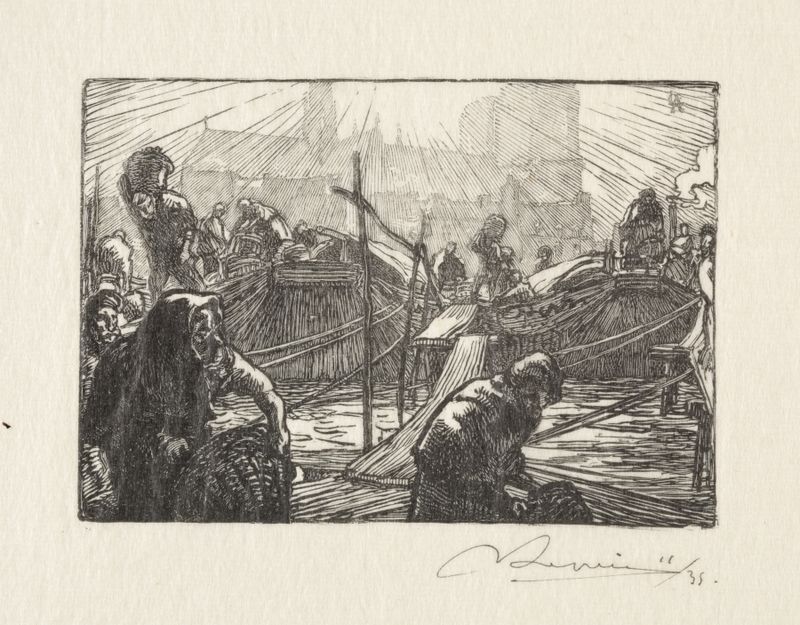
What if beauty was never meant to be finished? The interplay of light and shadow in Les Déchargeurs de Plâtre whispers of an unfinished story, of a moment suspended in time, echoing the labor and artistry inherent in creation. Focus on the left side of the canvas, where figures are engaged in their arduous task, silhouetted against a soft, golden light that streams in from an unseen source. The textured strokes of the plaster evoke a tactile quality, inviting viewers to feel the weight of both the material and the labor. Notice how the shadows weave through the scene, creating a dynamic contrast that speaks to both effort and artistry.
Each brushstroke works harmoniously with the warm palette, bringing warmth to the toil and hinting at the beauty that emerges from this rugged existence. Yet beneath the surface, a deeper narrative unfolds. The men are not merely laborers; they are artists themselves, sculpting not just the plaster but their lives, reflecting the often-overlooked beauty of everyday work. The shadows cast by their figures suggest an absence, a void that speaks to the fleeting nature of their efforts.
This delicate balance of light and dark encapsulates the struggle against anonymity, depicting the profound dignity of hard work and the often unrecognized artistry it entails. Painted between 1870 and 1918, during a time of industrial growth and artistic evolution, the artist found inspiration in the laborers' world around him. Lepère was immersed in the Parisian art scene, influenced by his contemporaries and the shifting dynamics of society. This period marked a transition in art that celebrated both the mundane and the extraordinary, capturing the essence of life in a rapidly changing world.
More Artworks by Auguste Louis Lepère
Browse all →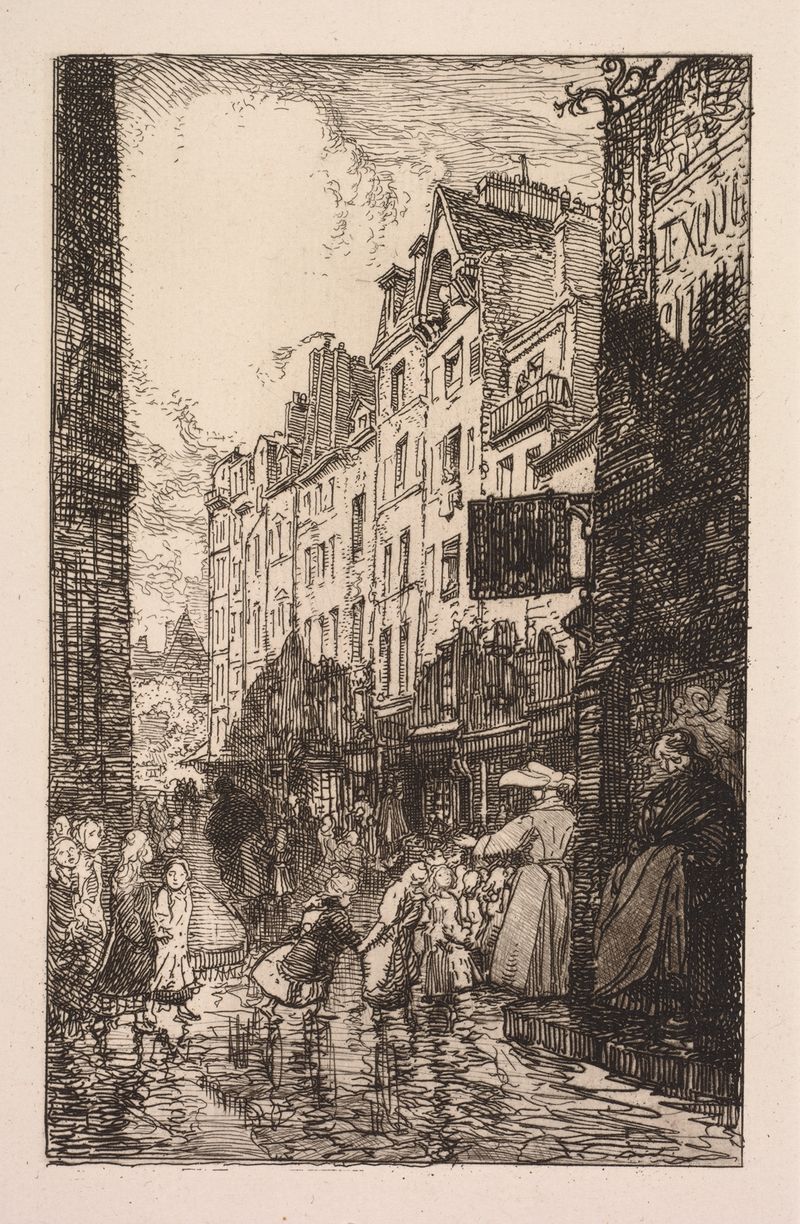
La Rue des Prêtres Saint-Séverin
Auguste Louis Lepère
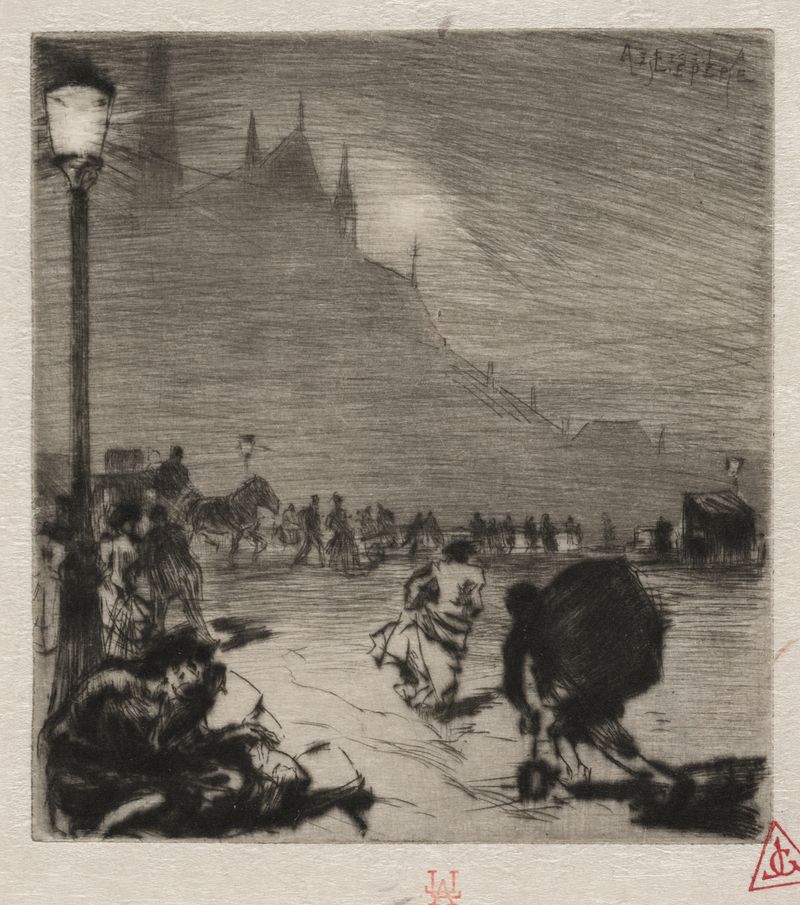
Au Coin du Pont-aux-Doubles
Auguste Louis Lepère
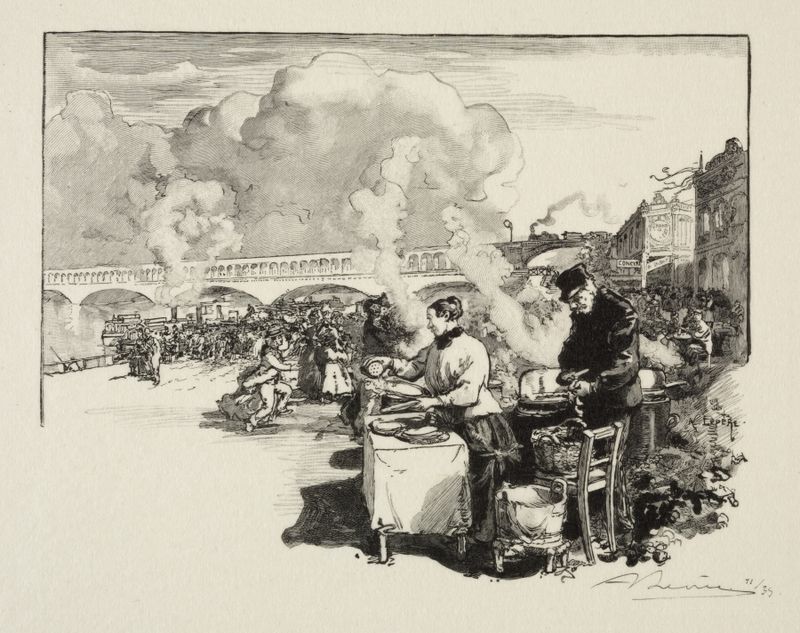
Debarcadère des bateaux-omnibus
Auguste Louis Lepère

La Seine, au quai de la Rapée
Auguste Louis Lepère
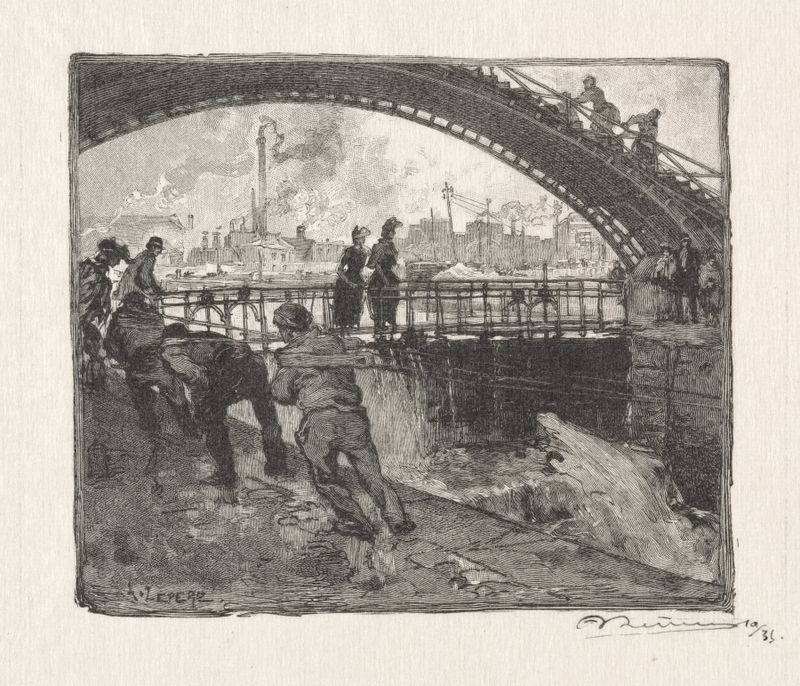
L’Ecluse du Canal St. Martin
Auguste Louis Lepère

Le Boulevard Montmartre, le Soir
Auguste Louis Lepère

Une Chasse au Mont Gérard
Auguste Louis Lepère
Les Charbonniere
Auguste Louis Lepère
Notre Dame vue du Marché aux pommes
Auguste Louis Lepère

Le Palais des Arts Liberaux, Intèrieur
Auguste Louis Lepère





