
Les moulins à vent — History & Facts
The tension etched in the landscape hints at a violent struggle beneath the serene surface—a battle between man and nature, creation and destruction. Look to the foreground, where the windmills rise against an expansive, brooding sky. The muted palette of earthy greens and weathered browns contrasts starkly with the violent swirls of dark clouds overhead. Notice how the light breaks through in a few daring rays, illuminating the sails, yet casting elongated shadows that stretch menacingly across the ground.
The composition draws the eye to these towering structures, embodying both the ingenuity of man and the relentless forces of nature that loom ominously. These windmills, symbols of industry, are caught in a precarious dance with the elements. A subtle shift in light reveals the fragility of human endeavor against the chaos of the storm. The sky, rich with texture, speaks of impending turmoil, while the stillness of the earth below evokes a sense of looming dread.
This juxtaposition between the calmness of the landscape and the stormy skies hints at a deeper narrative—one that encapsulates the tension between progress and the violent resistance of the natural world. Painted in 1835, this work emerged from Dupré's deep engagement with landscapes during a time when romanticism was shaping artistic expression. Reflecting the tumultuous energy of the era, he sought to capture the raw power of nature alongside the human spirit. His choice to depict the windmills amidst such turbulent skies mirrors the artist’s own struggles and aspirations, marking a significant moment in his career as he sought to harmonize beauty with the intensity of existence.
More Artworks by Jules Dupré
Browse all →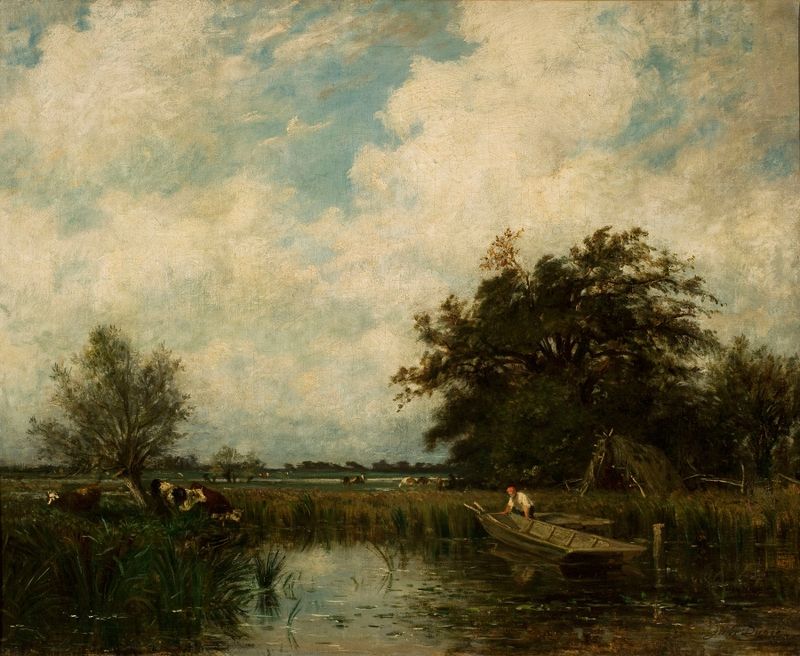
Landscape with a pond
Jules Dupré

The Cottage by the Roadside, Stormy Sky
Jules Dupré
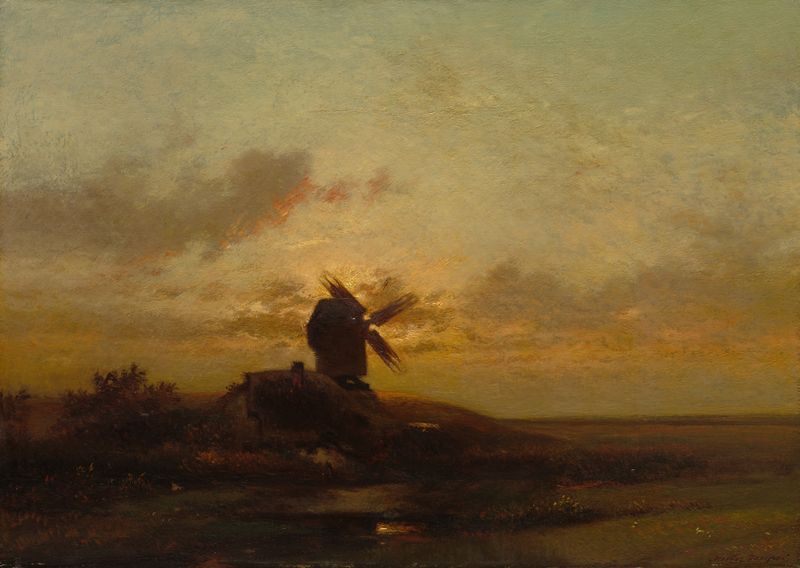
The Windmill
Jules Dupré

The Estuary Farm
Jules Dupré

Fontainebleau Oaks
Jules Dupré

Village Scene, Sunset
Jules Dupré

Barks Fleeing Before the Storm
Jules Dupré

Cows Crossing a Ford
Jules Dupré

The Old Oak
Jules Dupré

Weidelandschaft im Limousin
Jules Dupré





