
Les Remorqueurs — History & Facts
Can paint confess what words never could? In Gustave Cariot's Les Remorqueurs, a profound sense of grief permeates the canvas, inviting the viewer to explore the weight of unspoken emotions. Focus on the deep blues and grays that dominate the scene, where the tugboats stand resolute against an expansive, somber sky. Notice how the brushstrokes create a rhythm, mirroring the gentle lapping of water against the hulls. The tension is palpable, as light refuses to penetrate the thick atmosphere, reflecting the heaviness of the moment.
The boats, poised at the water's edge, seem to hold their breath, enveloped in a stillness that speaks louder than words. The juxtaposition of the sturdy vessels against the vast emptiness evokes a poignant sense of isolation. Each boat, though inherently strong, carries the weight of solitude and loss, as if they are the guardians of secrets submerged beneath the water. The subtle ripples in the water suggest an unvoiced yearning, while the foggy horizon hints at an uncertain future, steeped in sorrow.
Together, these elements weave a narrative of heartache and resilience, making the viewer acutely aware of the emotional landscape hidden within the painting. Cariot created Les Remorqueurs during a time when artists were increasingly exploring themes of modernity and the emotional depths of their subjects. Working in France, he was influenced by the Post-Impressionist movement, which sought to express more than mere representation. The quiet strength and mournful atmosphere of this piece reflect both the artist's personal experiences and the collective grief of a world grappling with change.
More Artworks by Gustave Cariot
Browse all →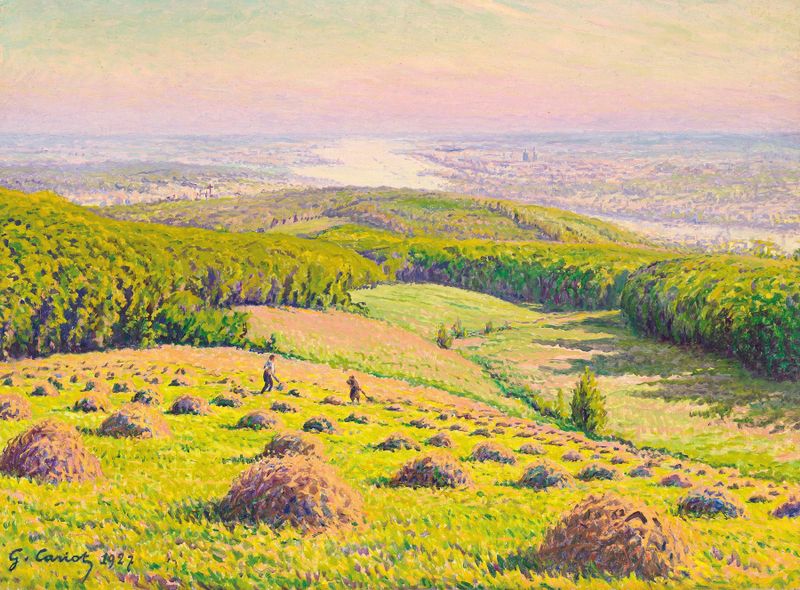
La vallée
Gustave Cariot

Le Jardin
Gustave Cariot

Les meules
Gustave Cariot
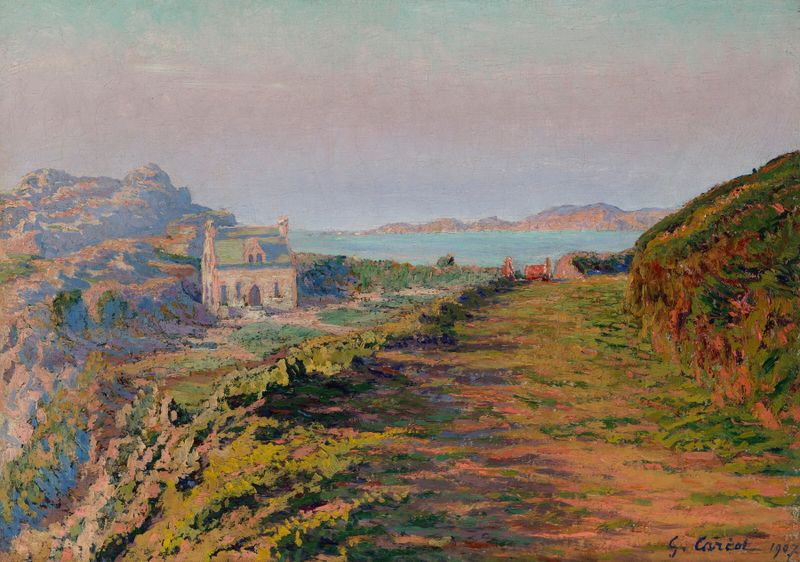
Maison Pen ar C’hastel à la pointe du Château, Perros-Guirrec
Gustave Cariot
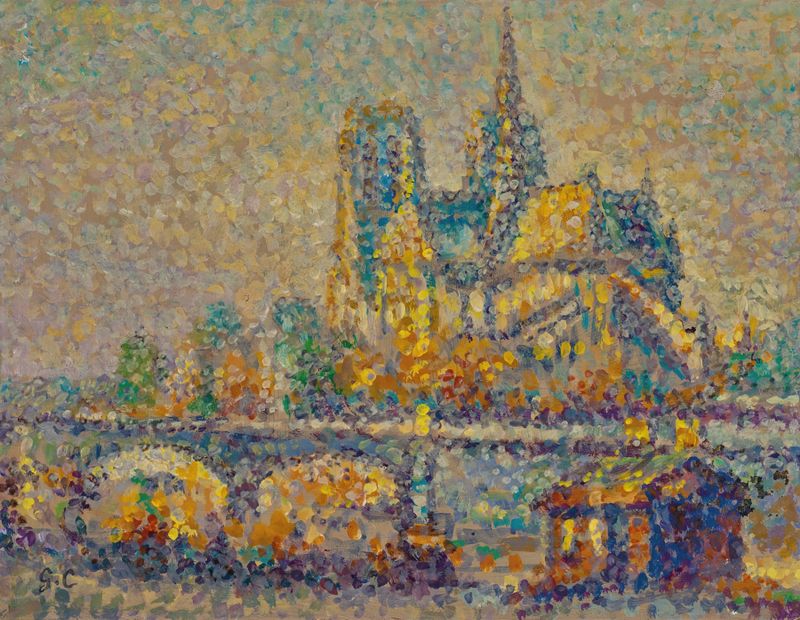
Notre-Dame de Paris
Gustave Cariot
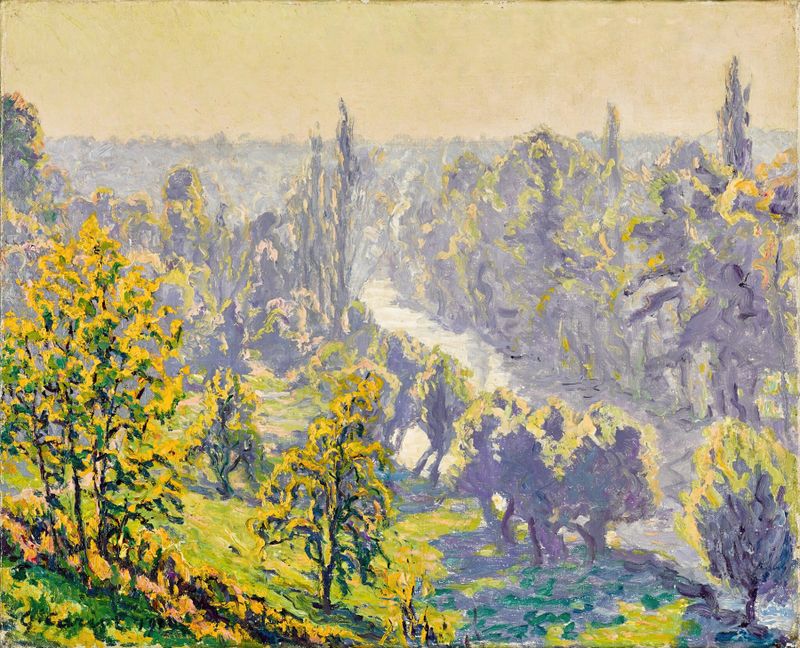
Périgny, automne, matinée sur l’Yerres
Gustave Cariot
Périgny, pont sur l’Yerres
Gustave Cariot
Le Pont-Neuf, eté, 20 heures
Gustave Cariot

Moulin de Périgny
Gustave Cariot

Le chemin à Mandres
Gustave Cariot





