
Les Saules — History & Facts
Could a single brushstroke hold eternity? In Les Saules, vibrant hues and rhythmic forms intertwine, revealing the complex tapestry of emotion that lies beneath the surface. Look to the left at the sweeping outlines of the trees, their exaggerated, swirling trunks and branches pulsating with life. The deep greens and warm yellows create a sense of intimacy, inviting you into this enchanted grove. Notice how the light filters through the leaves, casting dappled shadows on the ground below, while Gauguin's bold, unblended colors evoke both serenity and tension.
The composition draws your eye inward, suggesting a hidden narrative lurking beneath the impassioned brushwork. The juxtaposition of the serene landscape against the vibrant color palette speaks to a deeper betrayal of nature's tranquility. Each brushstroke seems to pulse with the weight of unspoken words, hinting at an emotional turmoil that contrasts with the outward beauty. The swirling forms echo a restless spirit, inviting contemplation on the dichotomy between appearance and reality, where moments of peace can swiftly dissolve into chaos. In 1885, Gauguin was navigating the complexities of post-impressionism while living in Paris, where he was surrounded by a burgeoning community of artists questioning traditional representation.
This period marked a pivotal point in his life, as he began to explore the emotional and symbolic potential of color and form, laying the groundwork for his future explorations of primitivism and the South Pacific.
More Artworks by Paul Gauguin
Browse all →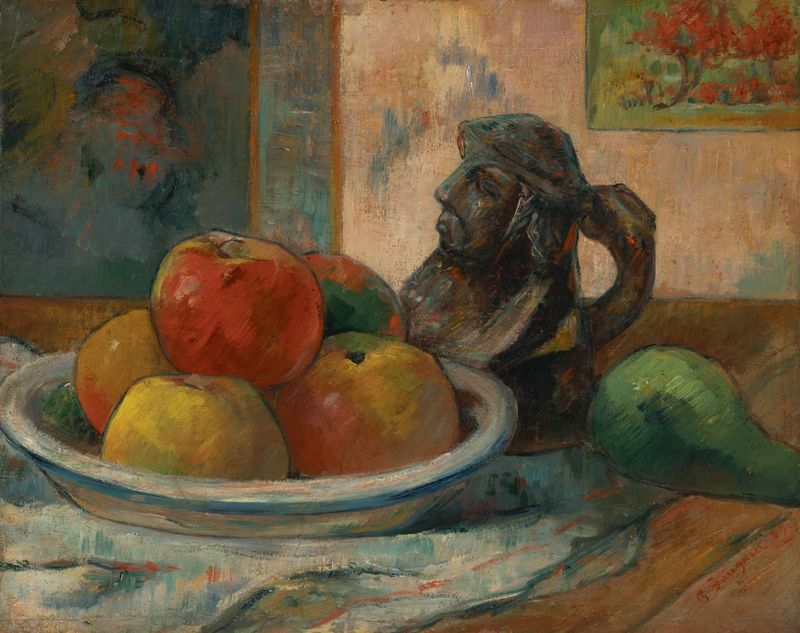
Still Life with Apples, a Pear, and a Ceramic Portrait Jug
Paul Gauguin
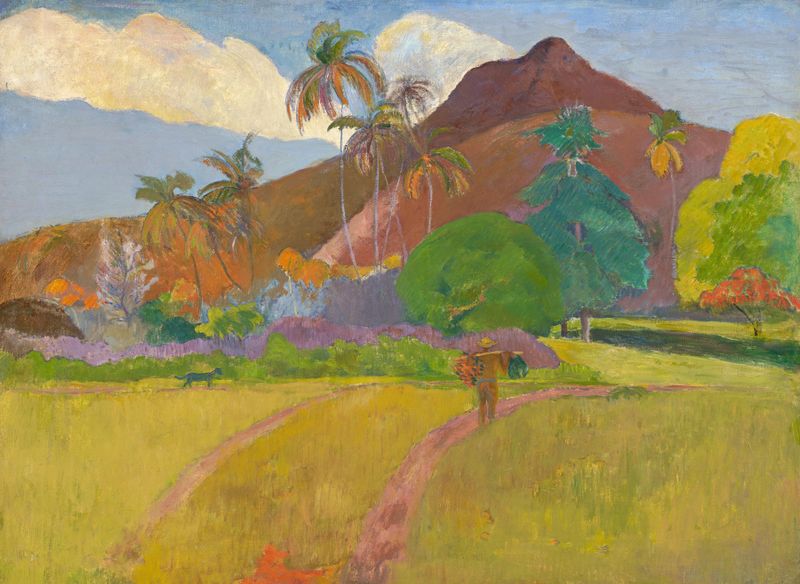
Tahitian Landscape
Paul Gauguin

Landscape near Pont-Aven
Paul Gauguin

No te aha oe riri (Why Are You Angry?)
Paul Gauguin
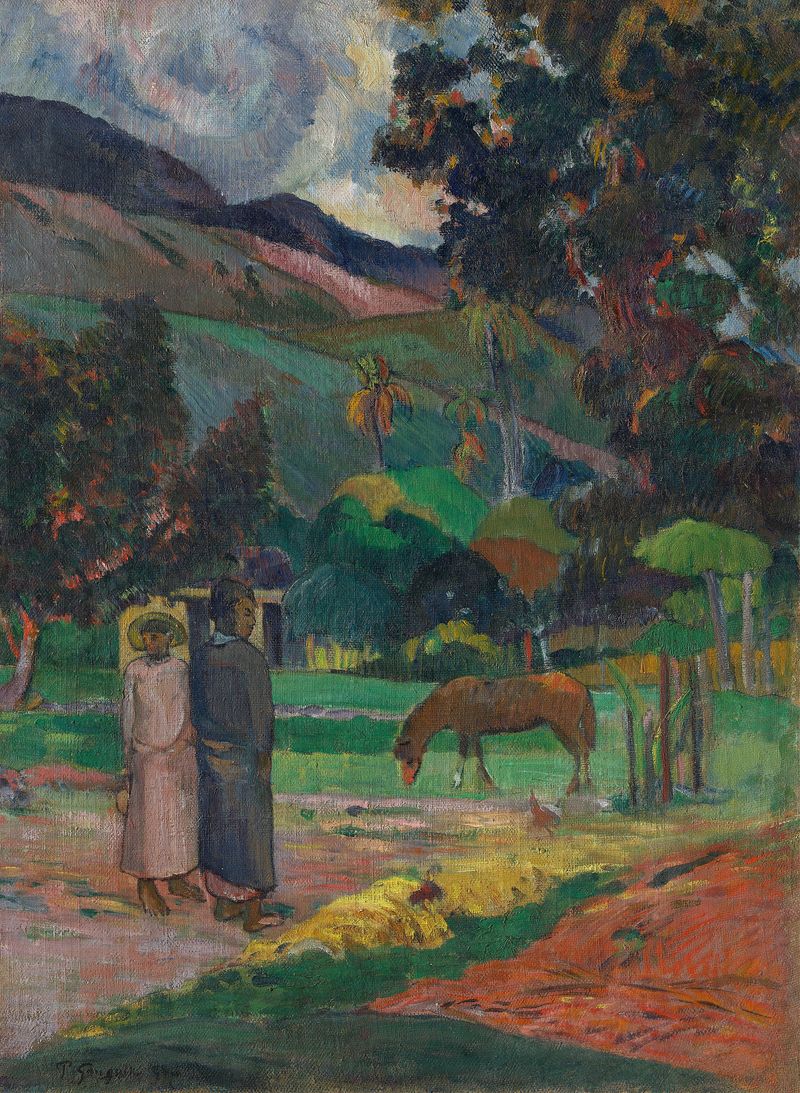
Tahitian Landscape
Paul Gauguin
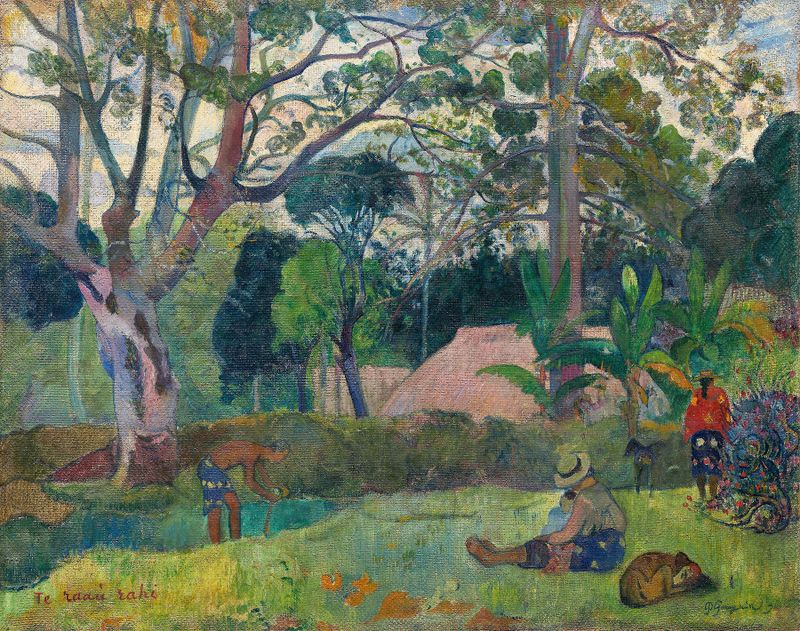
Te raau rahi (The Big Tree)
Paul Gauguin

Landscape at Le Pouldu
Paul Gauguin

Landscape of Brittany
Paul Gauguin

Poèmes Barbares
Paul Gauguin
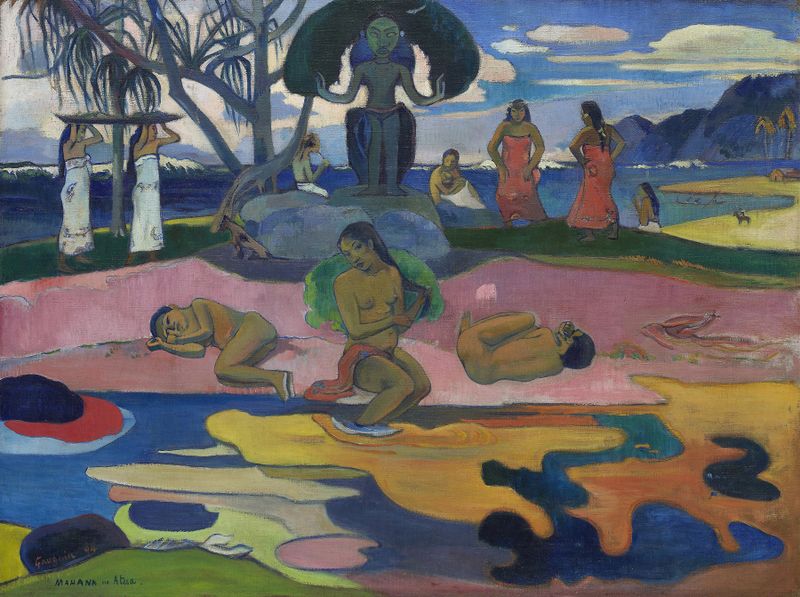
Mahana no atua (Day of the God)
Paul Gauguin





