Lesquiffinec. Morgat — History & Facts
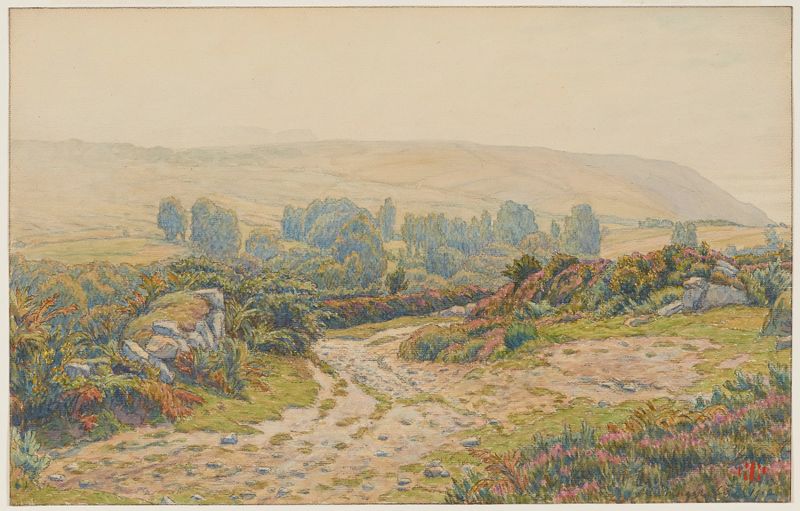
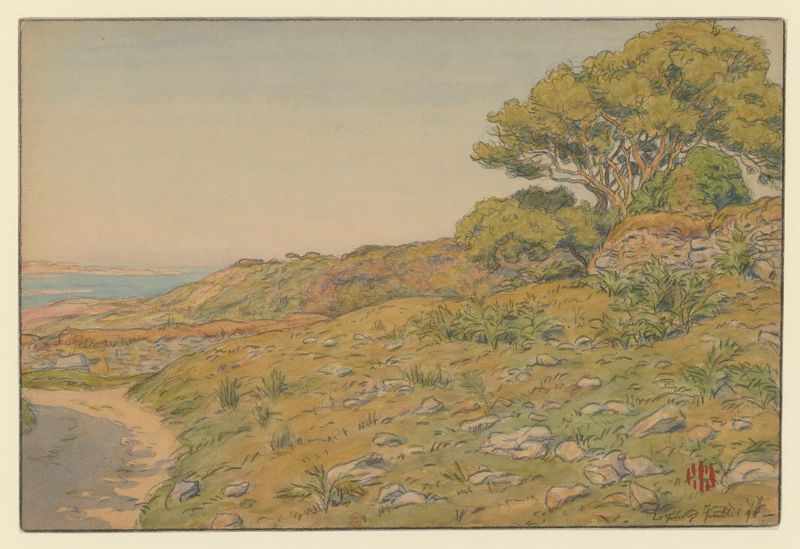
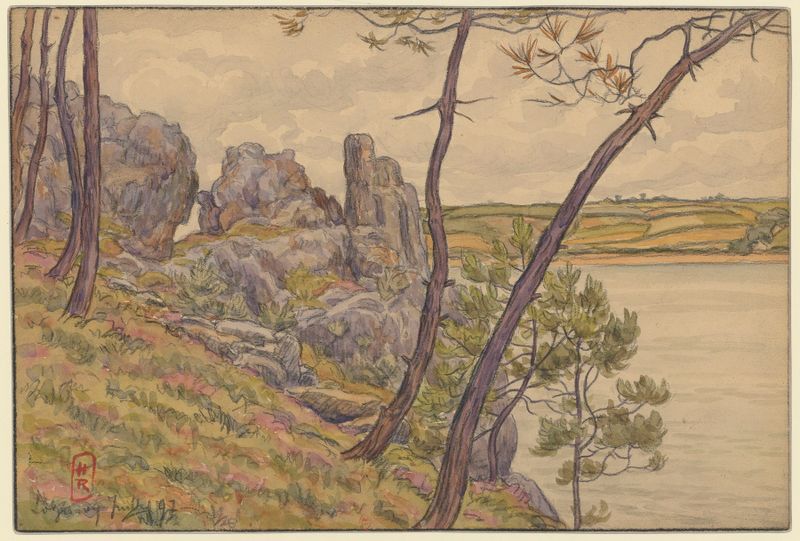
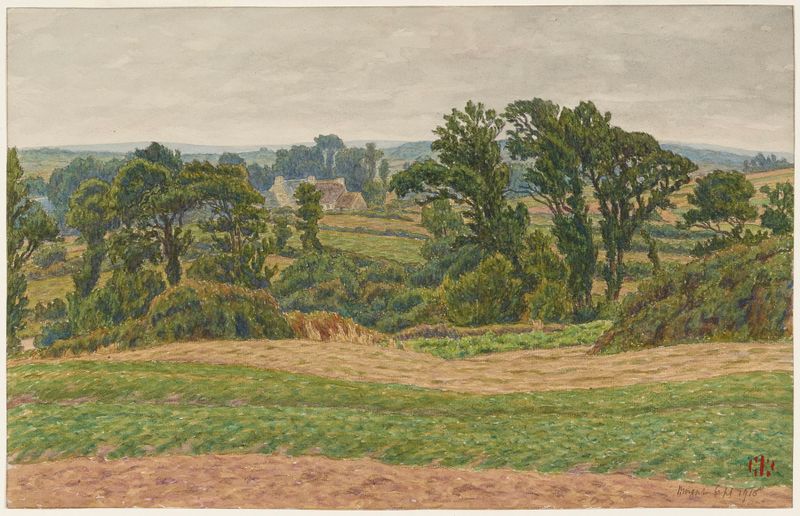
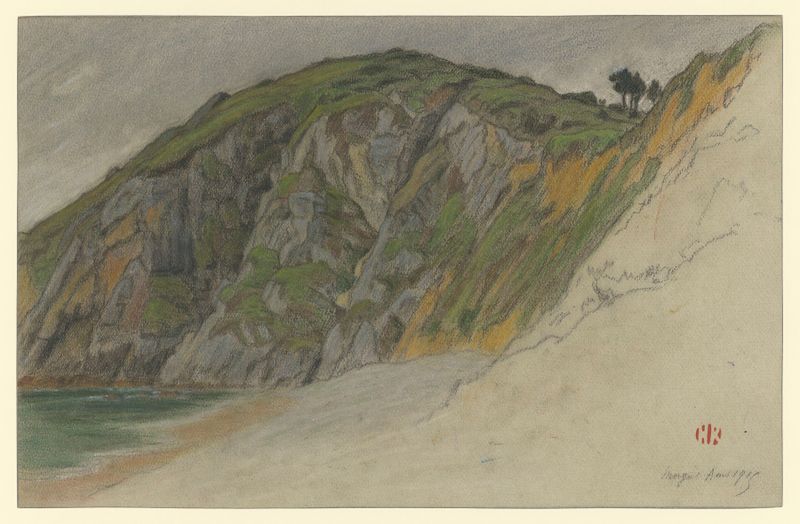
Who listens when art speaks of silence? In the stillness of Lesquiffinec, the viewer is invited to reflect on a tranquil moment where the unspoken whispers of nature echo in the mind. Look to the lower left, where gentle waves kiss the shore, their soft undulations rendered with delicate strokes that evoke a sense of peaceful rhythm. The muted palette, dominated by soft blues and grays, envelops the canvas, creating an atmosphere of calm that seems to transcend time. Notice how the horizon blurs, the boundary between sea and sky dissolving into a misty embrace, drawing your eye outward into the infinite expanse. As you explore further, a subtle tension surfaces in the contrast between the rugged rocks and the fluidity of the water.
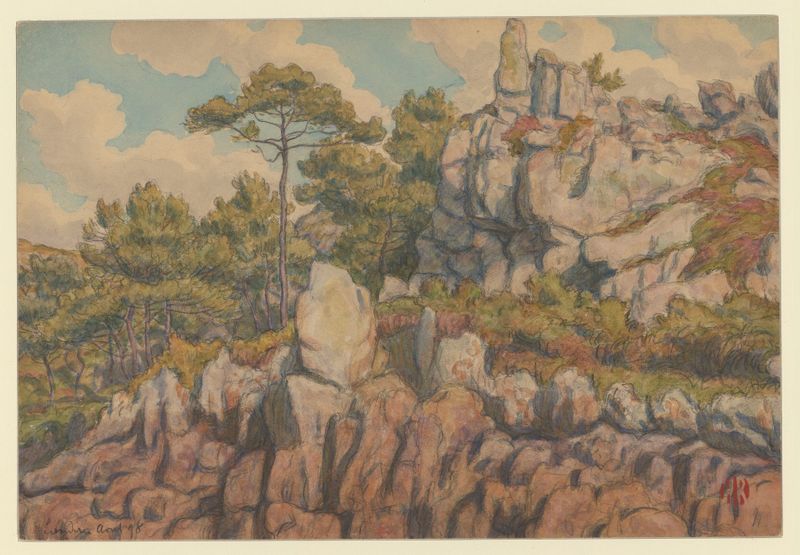
Rivière masterfully balances the solidity of the earth with the ephemeral quality of the waves, suggesting a harmony between permanence and transience. The distant silhouettes of boats, barely discernible, hint at human presence yet remain shrouded in mystery, encouraging a contemplation of solitude amidst the vastness. In 1908, Rivière found himself in a world teetering between tradition and modernity, painting this work in his native France, where the Impressionist movement had already established its legacy. At this time, he was heavily influenced by the coastal landscapes of Brittany, seeking to capture not just the scene before him, but the emotional resonance it held.
The work reflects his desire to transcend mere representation, inviting viewers to experience the serene, almost spiritual quality of the landscape.