
L’homme et le vaisseau — History & Facts
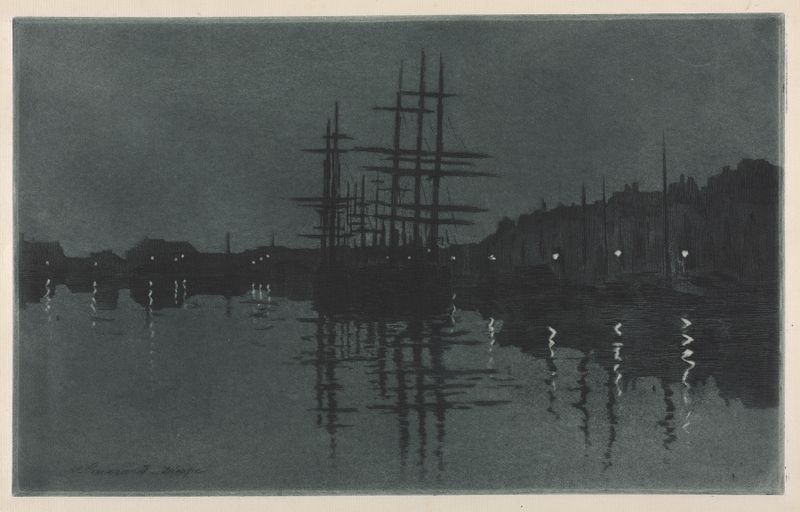
In the delicate interplay of human experience and nature's vastness, fragility emerges as a poignant theme in L’homme et le vaisseau. This artwork invites us to contemplate the transient nature of life and our place within the grand tapestry of existence. Look closely at the figure of the man, positioned to the left, gazing out toward a distant vessel on the horizon. Notice the subtle curves of his form, rendered in soft, muted tones that seem to blend with the landscape—this connection evokes a sense of kinship with the sea.
The gentle waves, painted with fluid brushstrokes, shimmer under the light, reflecting a fragile beauty that mirrors the man’s introspection. The palette, dominated by cool blues and greens, enhances the atmosphere of solitude, drawing our attention to the lone figure's contemplation. The juxtaposition between the solidity of the ship and the vulnerable stance of the man underscores a profound emotional tension. While the vessel represents human achievement and adventure, the solitary figure embodies vulnerability and introspection.
This contrast invites us to ponder the balance between ambition and the delicate nature of existence. Each detail—a series of curls in the water, the soft folds of the man's clothing—adds layers of meaning, urging us to reflect on the interplay of strength and fragility in our lives. Created in 1880, the artist painted this piece during a period marked by a growing interest in the interplay of man and nature. Guérard found himself enveloped in a world of shifting artistic movements, where impressionism began to challenge traditional forms.
At the time, he sought to capture the essence of human experience, imbuing his work with reflections on the human condition, as the world around him evolved rapidly.
More Artworks by Henri-Charles Guérard
Browse all →
Paris, la rue Cortot, Montmartre
Henri-Charles Guérard
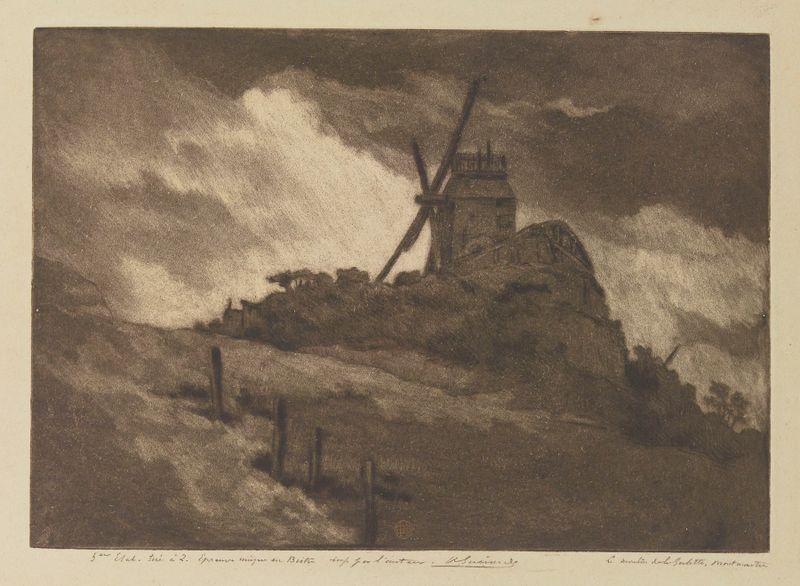
Le moulin de la Galette, Montmartre
Henri-Charles Guérard
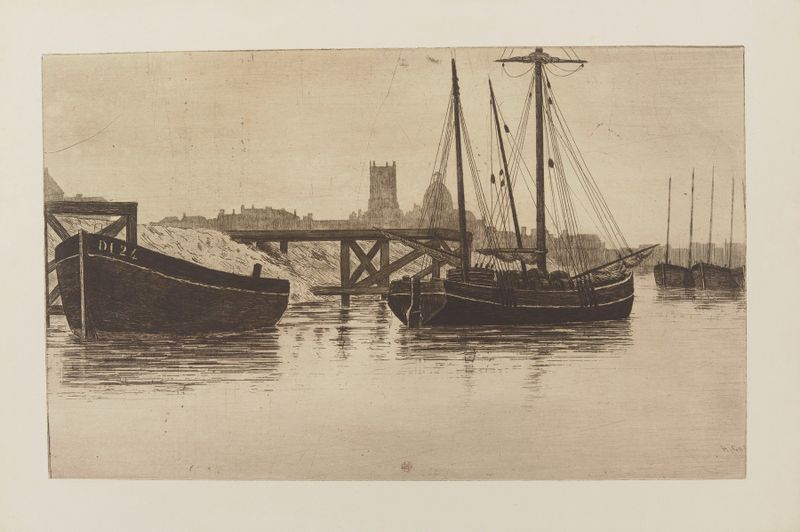
Débarquement de créosote, Retenue, Dieppe
Henri-Charles Guérard
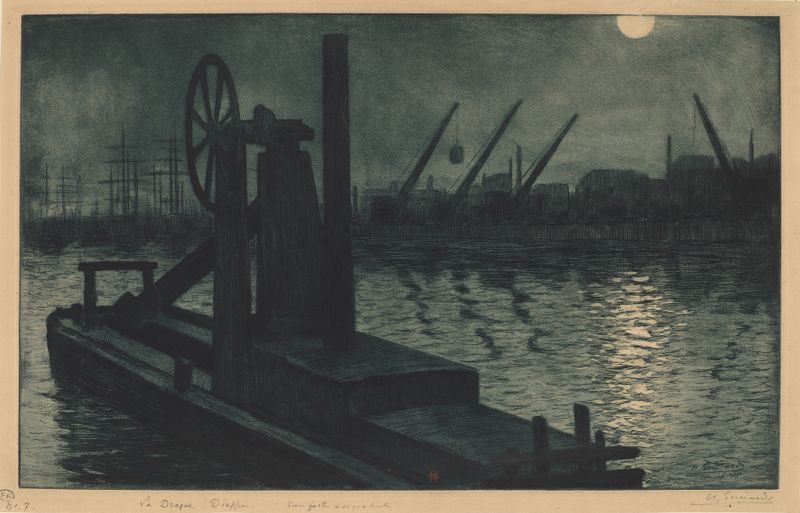
La Drague Dieppe (A Dredger in Dieppe Harbor by Moonlight)
Henri-Charles Guérard
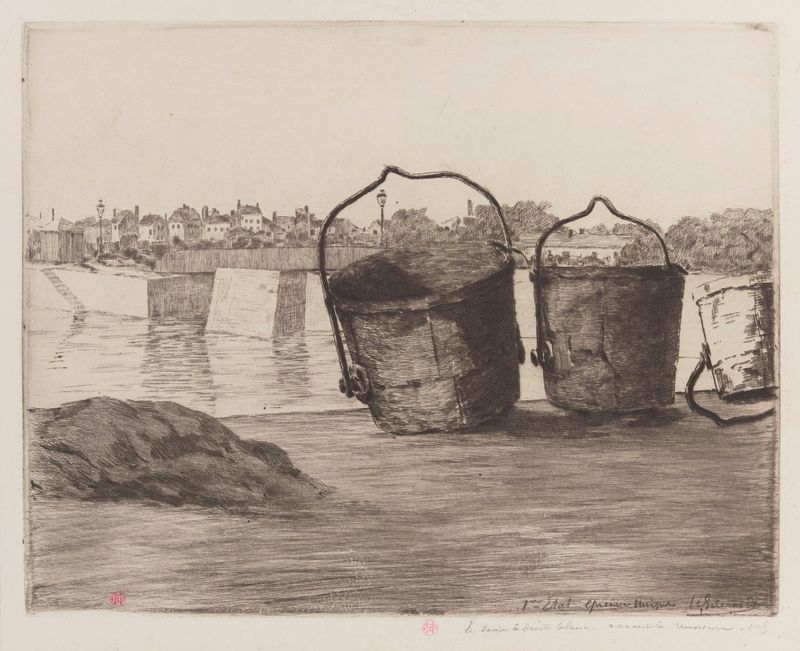
Quai au charbon, Honfleur
Henri-Charles Guérard
Effect of Moon at Dieppe
Henri-Charles Guérard

Escalier de la cale au Pollet, Dieppe
Henri-Charles Guérard

Venise (l’entrée du Grand canal, près de la Piazetta)
Henri-Charles Guérard

Le pêcheur au carrelet
Henri-Charles Guérard

Patineurs sur le lac d’Annecy
Henri-Charles Guérard





