
Liverdun — History & Facts
Where does light end, and longing begin? In Liverdun, one can almost hear the echoes of whispered dreams carried by the gentle breeze along the riverbank. Look to the bottom left corner, where soft hues of lavender and deep blue meld into one another, creating a tranquil horizon that draws you in. The water reflects the subtle pinks and golds of the sky, capturing the fleeting essence of twilight. Notice how the brushstrokes vary—the smoothness of the river contrasts with the more textured foliage on the banks, inviting you to explore the nuanced relationship between nature and man’s interpretation of it.
Each stroke carries a sense of immediacy, as if Whistler was inspired by the very breath of the landscape. Delving deeper, the composition speaks to the delicate balance of serenity and tension. The winding river seems to beckon, its flow suggesting journeys yet to be taken, while the distant hills loom with an air of mystery. Whistler's use of color evokes not just the physical environment but also an emotional landscape, where awe and contemplation coexist.
The pale, shimmering light infuses the scene with a spiritual quality, urging viewers to reflect on their own experiences of beauty and the transient nature of life. In 1858, Whistler painted this piece during a transformative period in his life while living in France. Engaged in the study of color and light, he was redefining the conventions of landscape painting. The world of art was shifting, influenced by movements such as Impressionism, yet Whistler's approach remained uniquely his own, blending a sense of intimacy with a broader exploration of atmospheric effects that would become his hallmark.
More Artworks by James Abbott McNeill Whistler
Browse all →
Nocturne in Blue and Silver
James Abbott McNeill Whistler
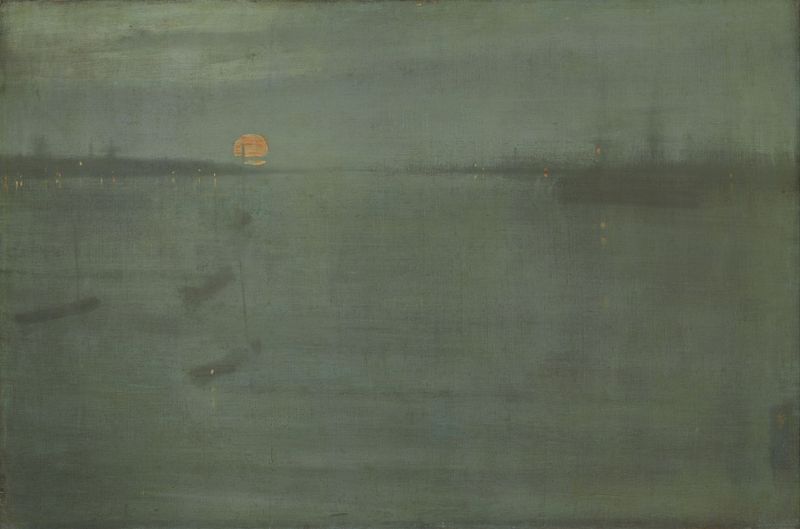
Nocturne: Blue and Gold–Southampton Water
James Abbott McNeill Whistler
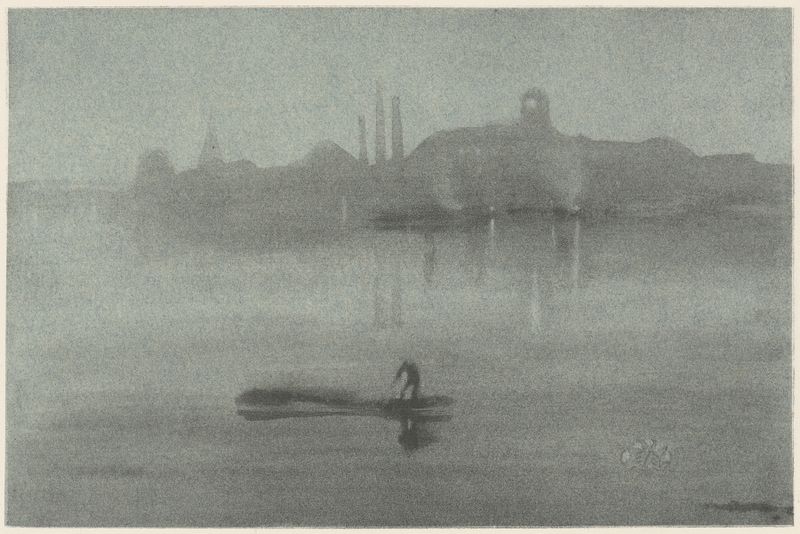
Nocturne
James Abbott McNeill Whistler
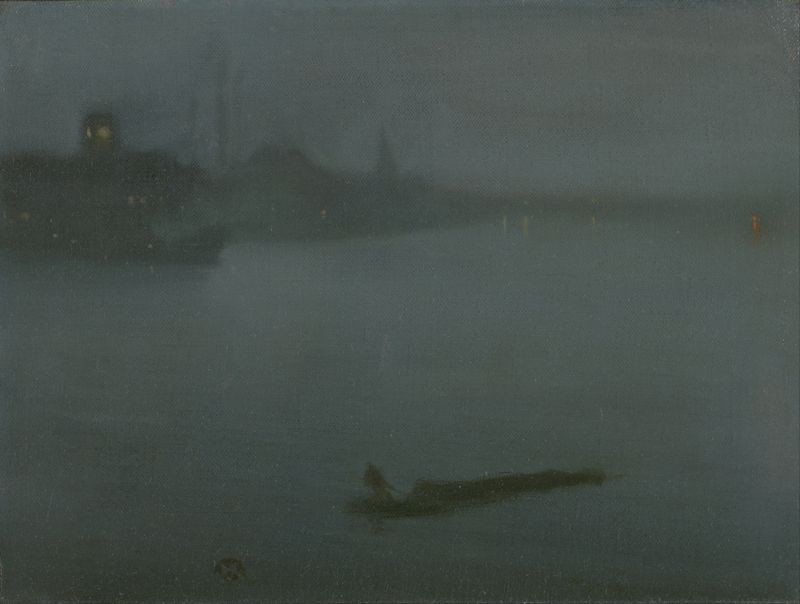
Nocturne in Blue and Silver
James Abbott McNeill Whistler
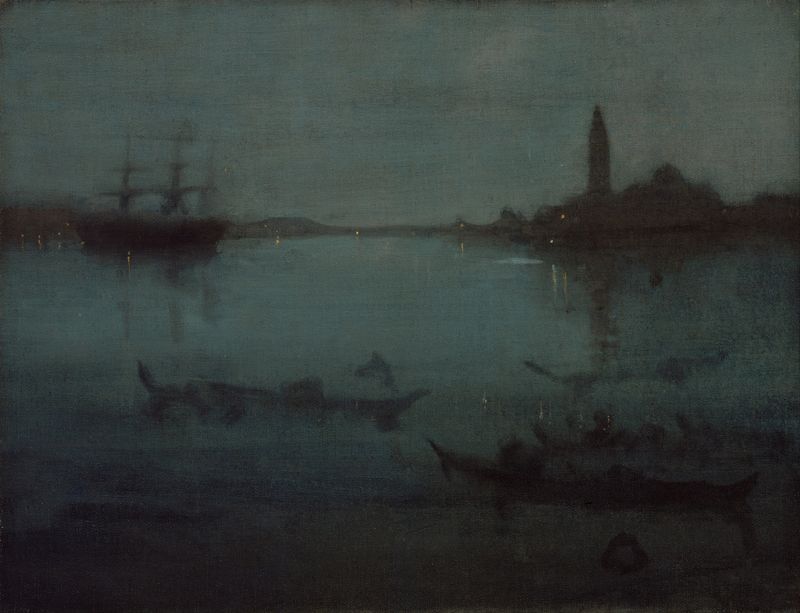
Nocturne in Blue and Silver- The Lagoon, Venice
James Abbott McNeill Whistler
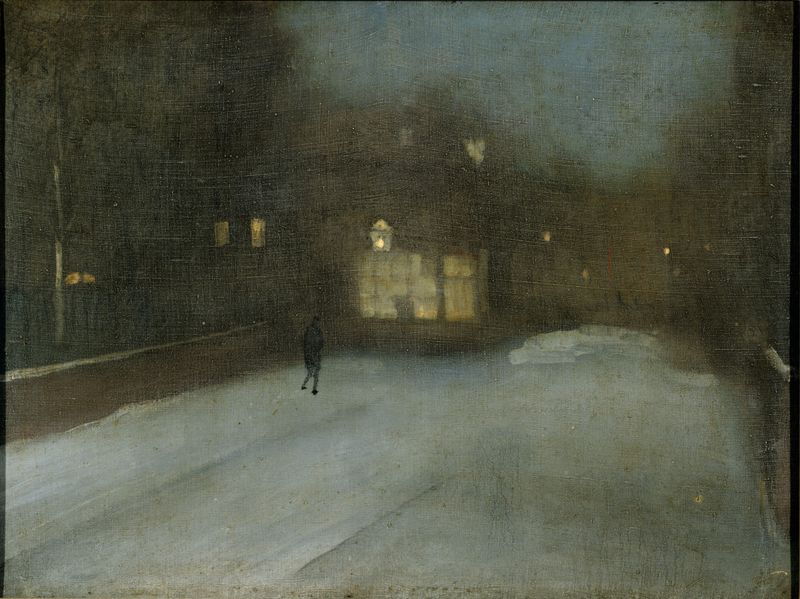
Nocturne in Grey and Gold: Chelsea Snow
James Abbott McNeill Whistler
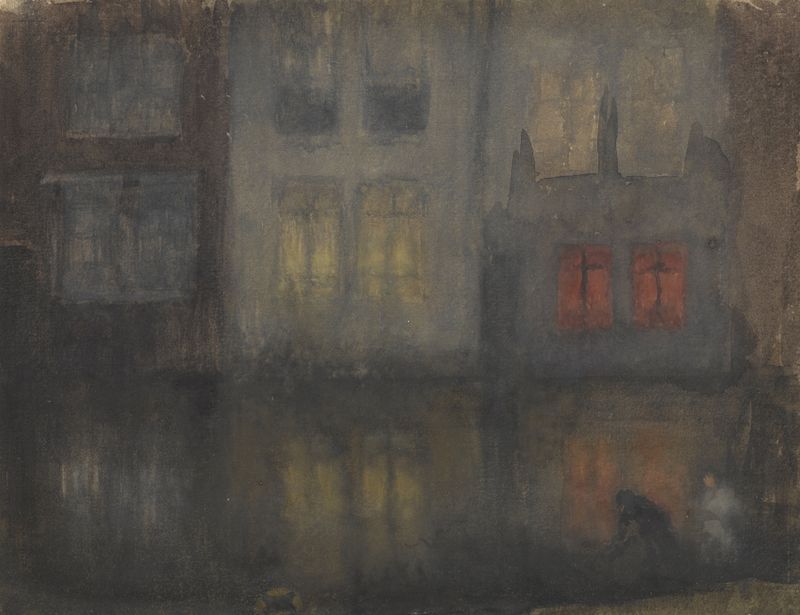
Nocturne: Black and Red—Back Canal, Holland
James Abbott McNeill Whistler
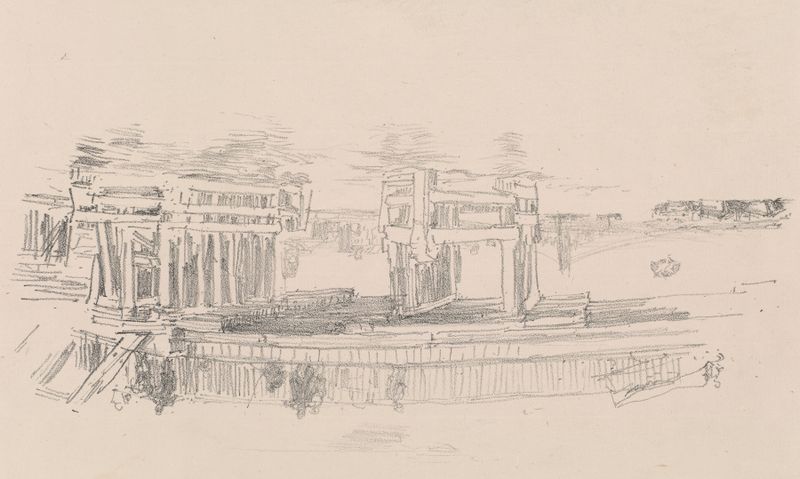
Old Battersea Bridge
James Abbott McNeill Whistler

Nocturne: Blue and Silver–Battersea Reach
James Abbott McNeill Whistler
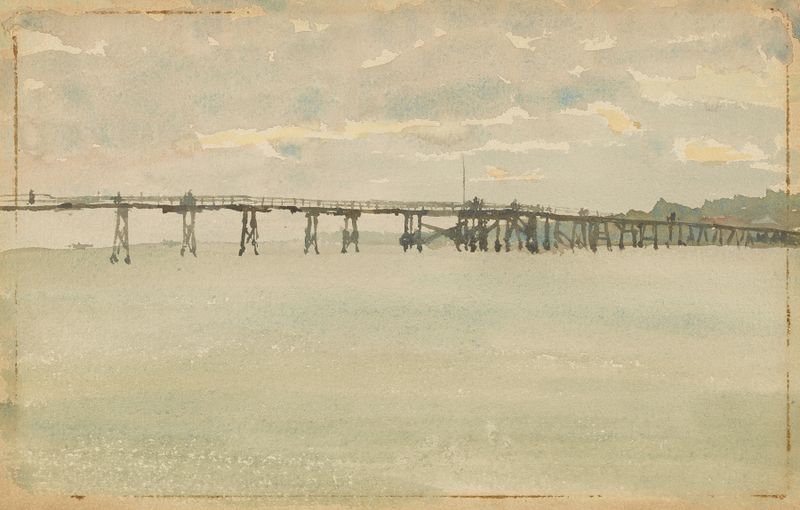
Grey and Silver–Pier, Southend
James Abbott McNeill Whistler





