
Loch Awe, Scotland — History & Facts
In landscapes, the brush embodies the whispers of existence and the echoes of what has passed. The tranquility of nature speaks to the heart, revealing a delicate dance between life and mortality. Look closely at the foreground, where gentle strokes of green and brown blend to form the underbrush. The vibrant hues of the trees, dappled with sunlight, draw your gaze upward toward the distant hills that fade into a misty blue.
Notice how the interplay of light and shadow creates an almost ethereal depth, inviting contemplation of the vastness of the scene. The reflection of the sky upon the serene waters of Loch Awe adds a soothing symmetry, balancing the composition and suggesting an intrinsic connection between the earth and the heavens. Yet beneath this serene exterior lies a subtle tension. The stillness of the water hints at the transient nature of life, captured at a moment that will never recur.
The encroaching shadows of the hills seem to remind us of time's relentless march, while the vibrant colors of the landscape evoke the fleeting beauty of existence. This harmonious juxtaposition invites viewers to ponder both the richness and fragility of the world around them. Copley Fielding created this piece during a period when Romanticism was flourishing in England, embracing nature as both a subject and a muse. Though the exact date remains uncertain, he painted during a time rich with exploration and discovery.
His works reflect the deep emotional connection to nature, embodying the tranquil yet profound relationship between humanity and the landscapes that define our existence.
More Artworks by Copley Fielding
Browse all →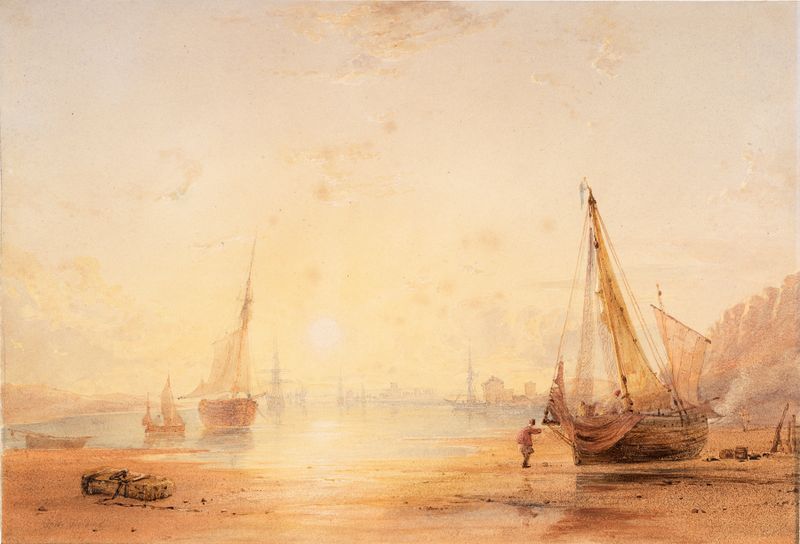
Shoreham Harbour, Sussex
Copley Fielding

Crowborough Hill
Copley Fielding
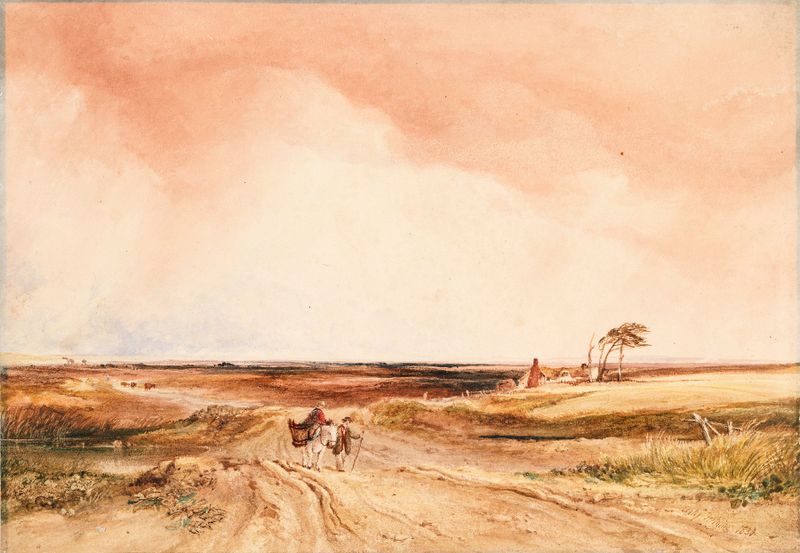
The Wash of Cumberland (Cumbria)
Copley Fielding
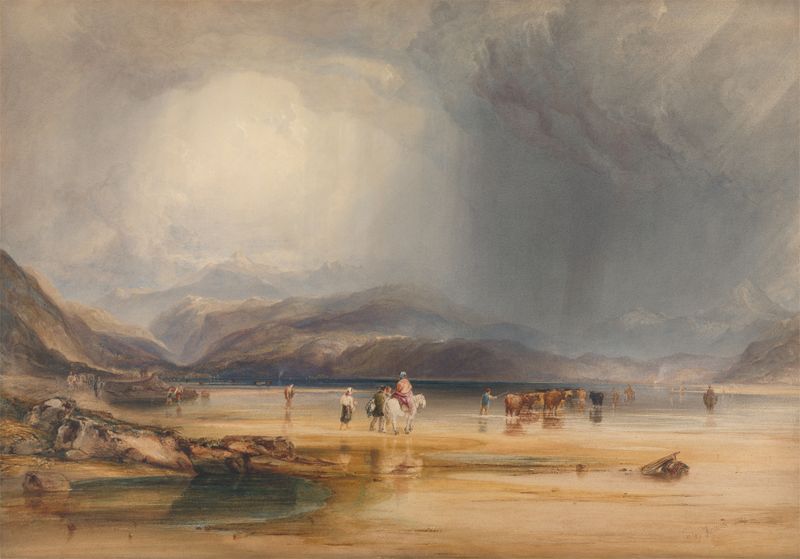
A View of Snowdon from the Sands of Traeth Mawr, taken at the Ford Between Pont Aberglaslyn and Tremadoc
Copley Fielding
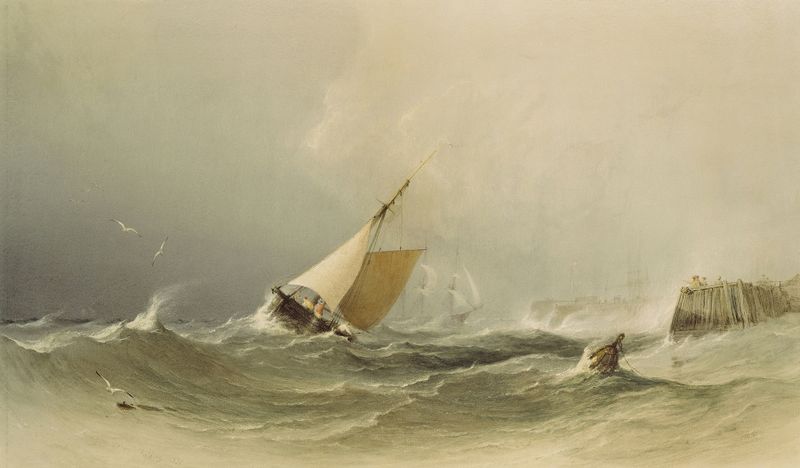
Bridlington Harbour
Copley Fielding
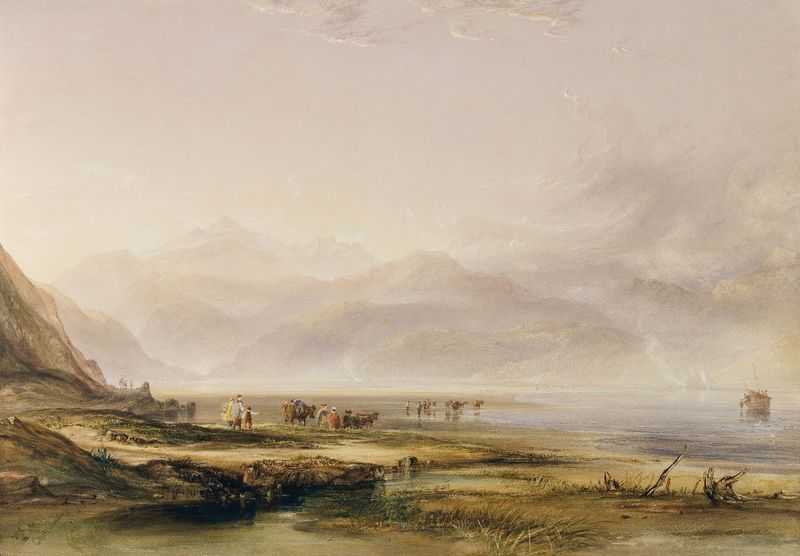
Traeth Mawr
Copley Fielding

The Head of Glencoe, North Argyll, Scotland
Copley Fielding
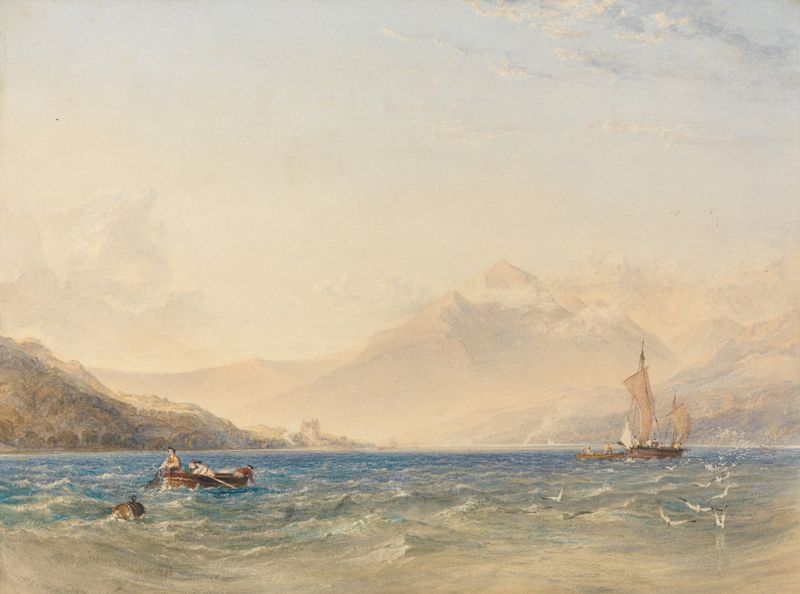
The Head of Loch Fyne, with Dindarra Castle
Copley Fielding
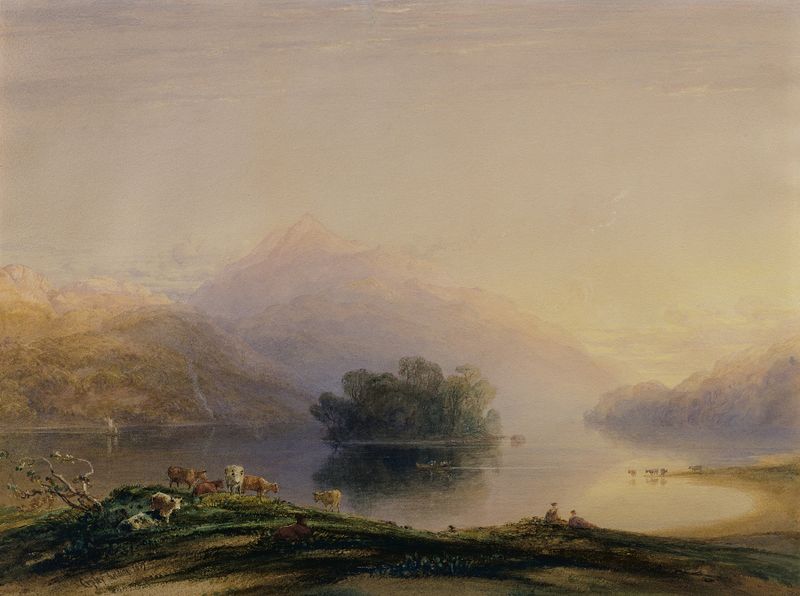
Loch Katrine
Copley Fielding
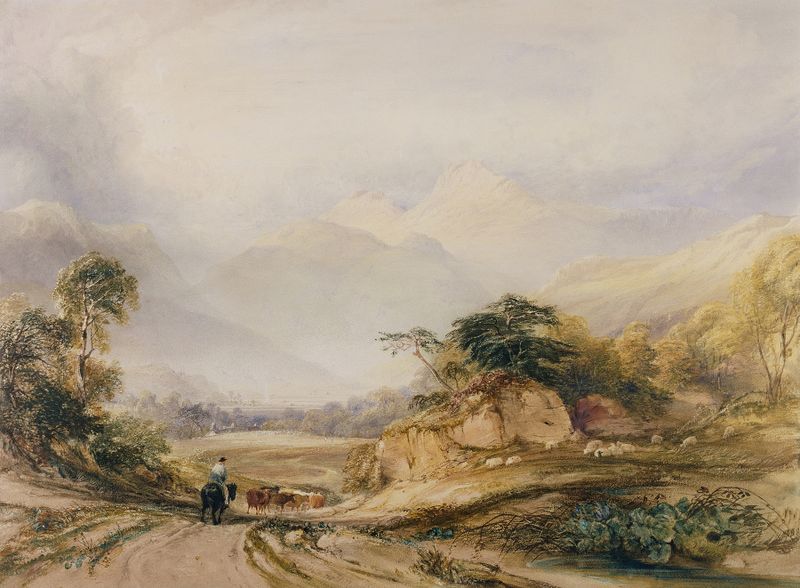
Langdale Pikes
Copley Fielding





