Locksmith — History & Facts
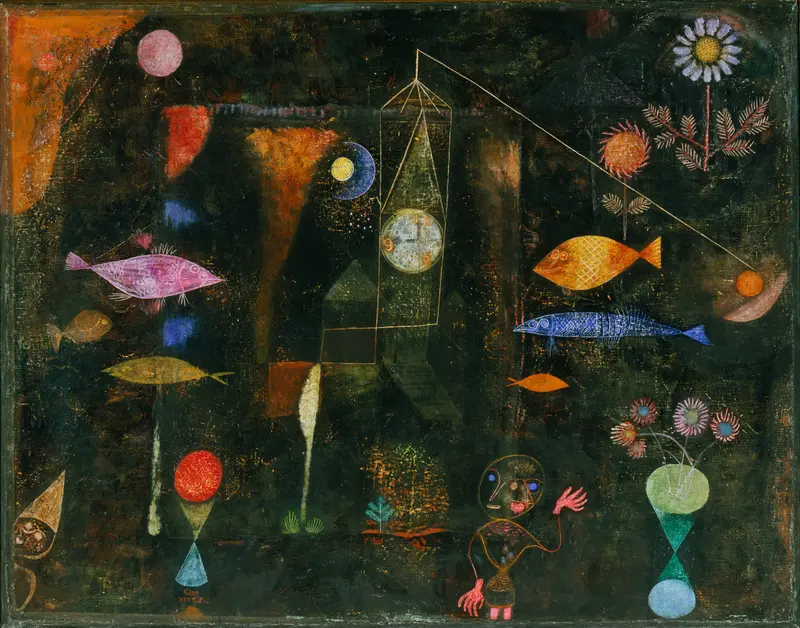
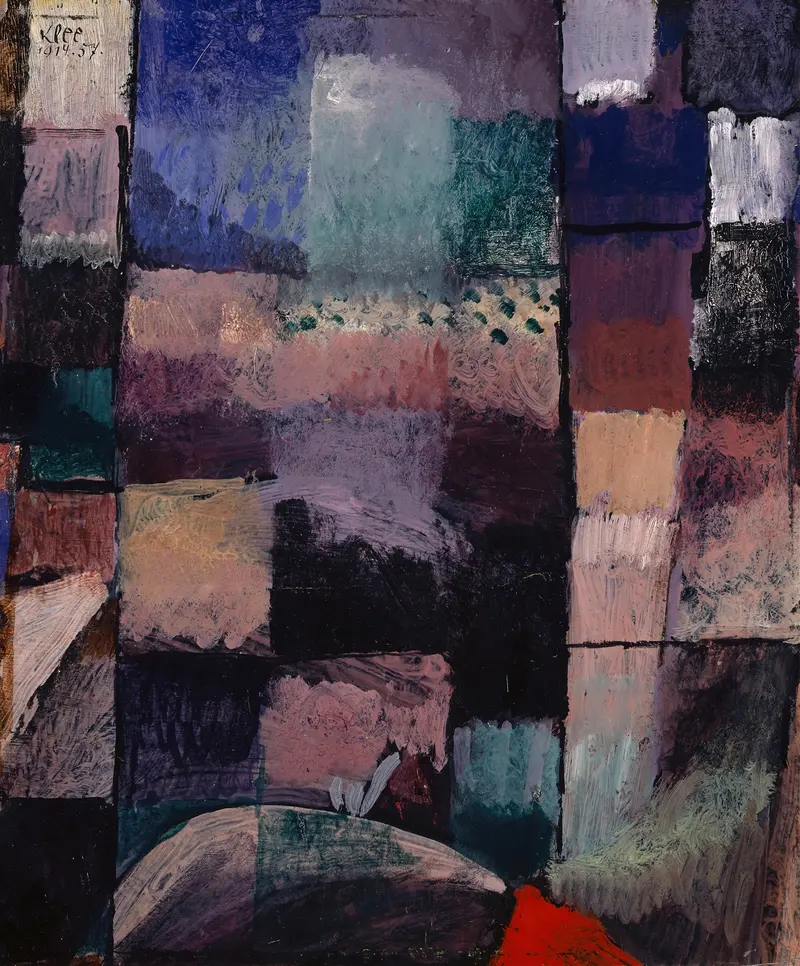
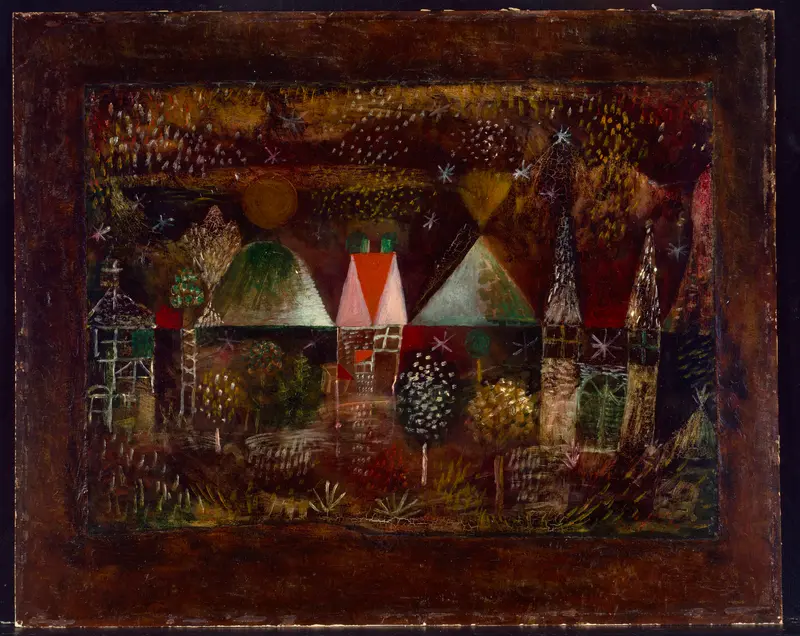
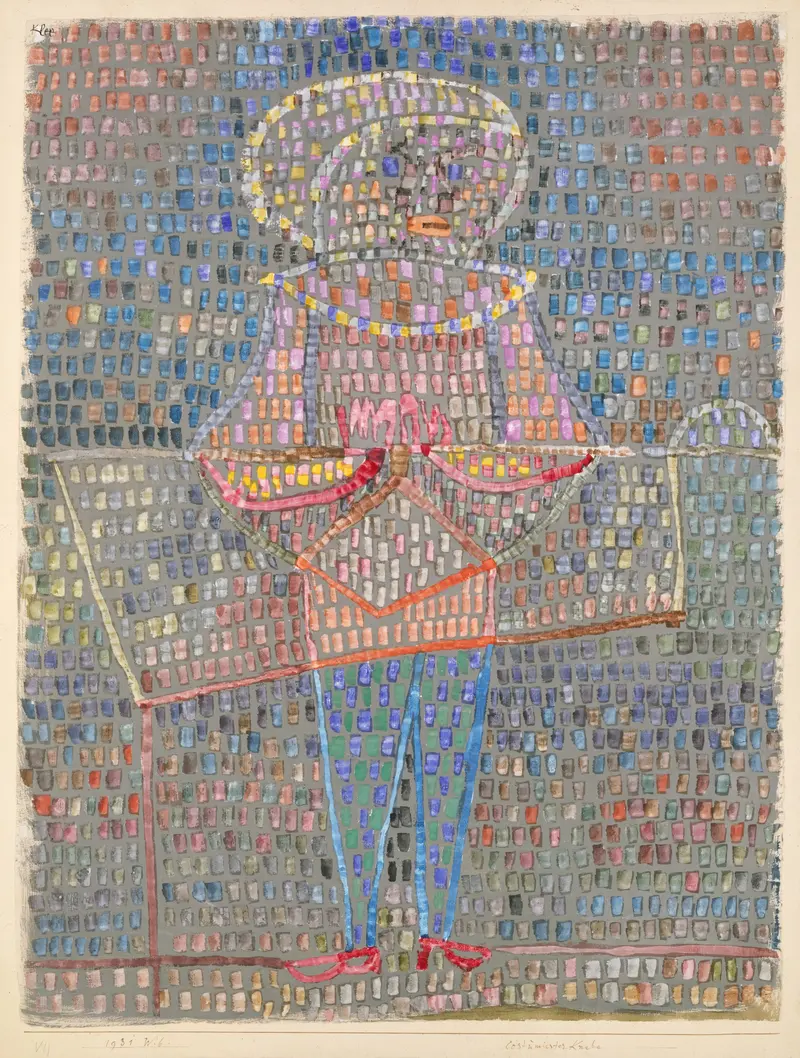
In Locksmith, Paul Klee uses a vibrant palette dominated by yellows, blues, and reds. The composition features abstract figures that seem to interact in a whimsical manner. These figures are not clearly defined, creating a sense of movement and energy.
The background is filled with geometric shapes that add to the overall dynamic quality of the piece. The painting is executed in oil on canvas, showcasing Klee's characteristic use of color and form. The brushwork is loose and expressive, contributing to the playful atmosphere of the work. Viewers can observe the layering of colors, which creates depth and texture.
The dimensions are approximately 60 x 80 cm, making it a medium-sized work that invites close inspection. Paul Klee was a key figure in the Expressionist movement, known for his unique style that blends abstraction and figuration. Locksmith reflects Klee's fascination with the interplay of color and form, a hallmark of his artistic approach. An interesting fact about this work is that it was created during a time when Klee was exploring the themes of identity and transformation.
This painting encapsulates his innovative spirit and his ability to convey complex ideas through simple forms.