Loguivy — History & Facts
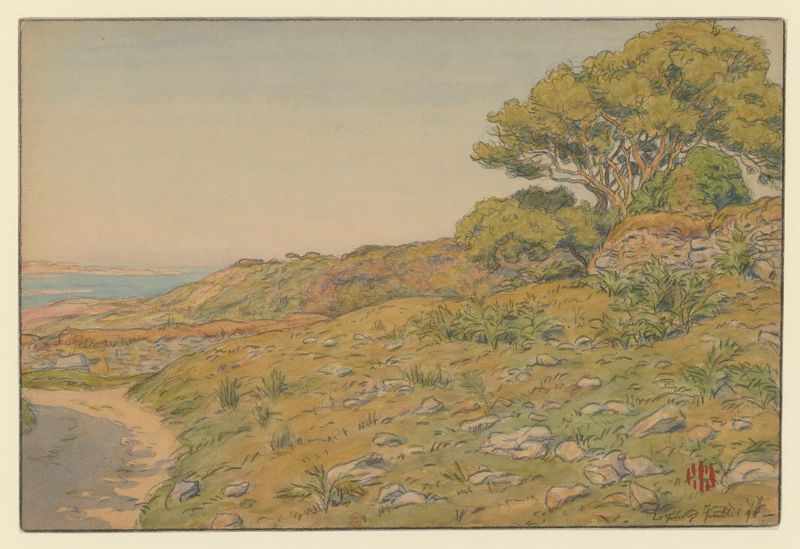
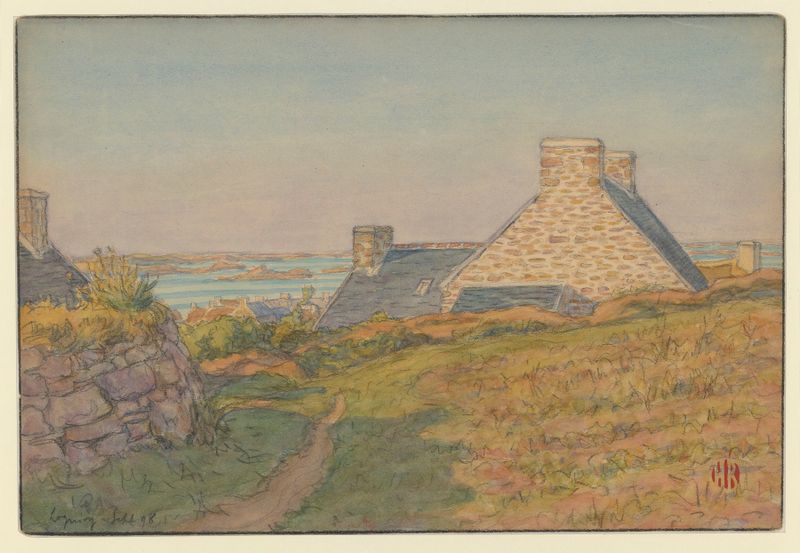
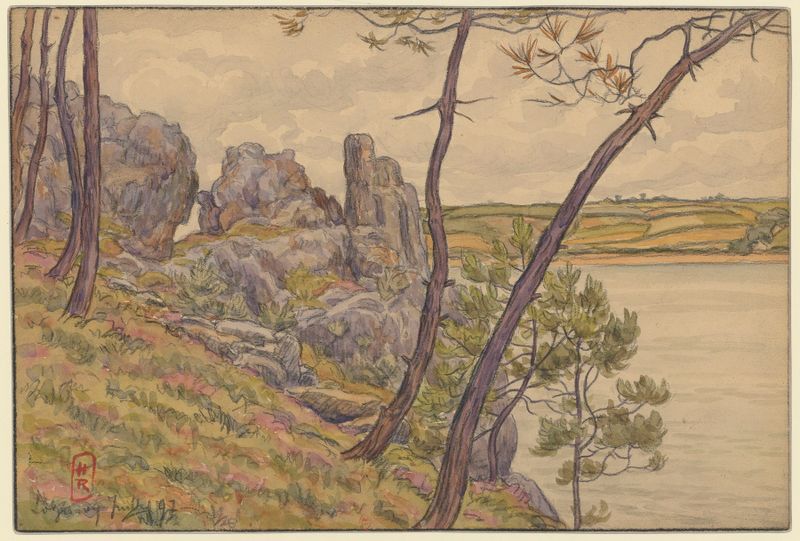
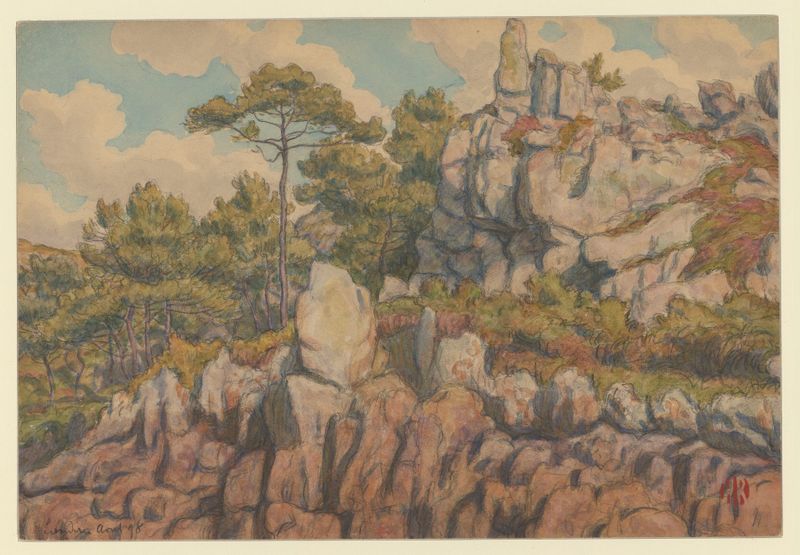
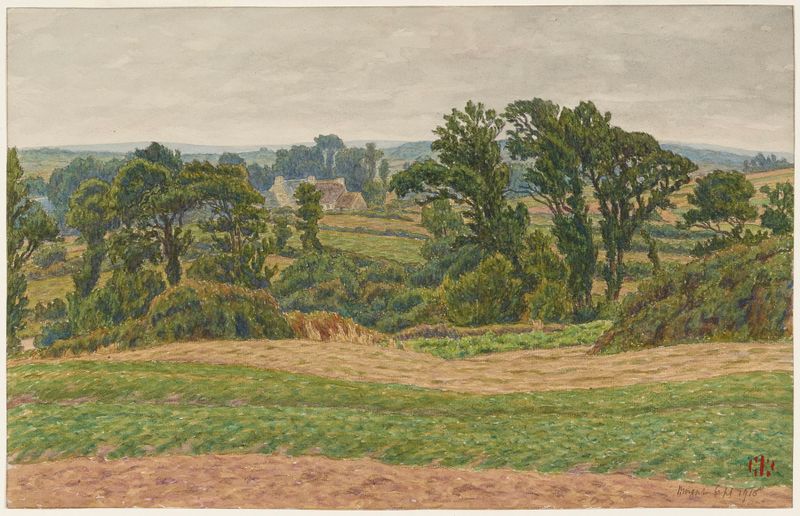
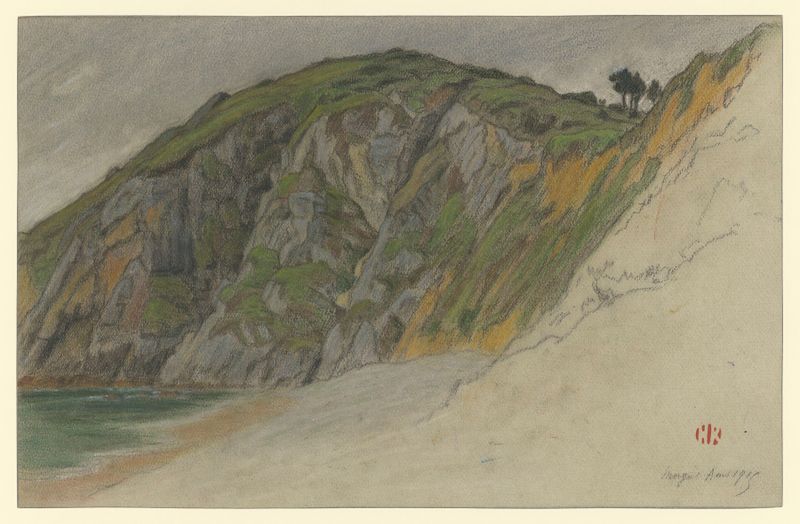
In Loguivy, Henri Rivière encapsulates not just a moment in time but the essence of a revolution in perception, where nature and emotion intertwine seamlessly. Look to the left at the rugged cliffs, their jagged edges standing resolute against the gentle swell of the sea below. Notice how the muted palette of greens and blues dances with the subtlety of light, capturing the transitory beauty of the landscape. Rivière’s technique, characterized by delicate brushwork, invites the viewer to explore the nuances of the coastline, as forms emerge and recede, mirroring the ebb and flow of time itself. The juxtaposition of the raw, unmoving cliffs and the fluidity of the ocean conveys an emotional tension that speaks to the heart of the painting.
Each wave crashing against the rocks seems to whisper stories of resilience and change, hinting at the deeper currents of transformation beyond the mere beauty of the scene. The interplay of light and shadow evokes a sense of introspection and longing, revealing layers of meaning beneath the serene surface. Created in 1898, Rivière painted Loguivy during a period marked by significant shifts in both his personal life and the art world. Living in France, he embraced the Symbolist movement, which sought to depict the unseen emotional truths of existence.
This was a time when artistic revolutions were redefining traditional aesthetics, and Rivière’s work reflects his dedication to capturing the poetic essence of nature amidst these changing tides.