Loguivy (la balise Holeneyères) — History & Facts
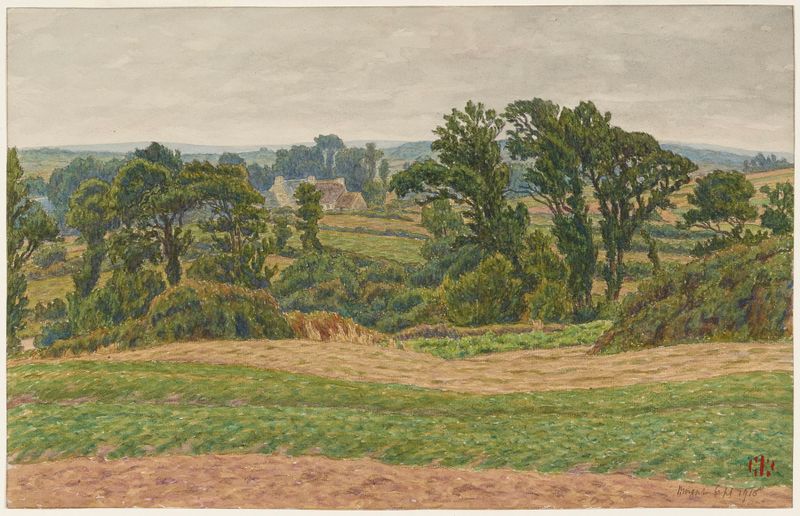
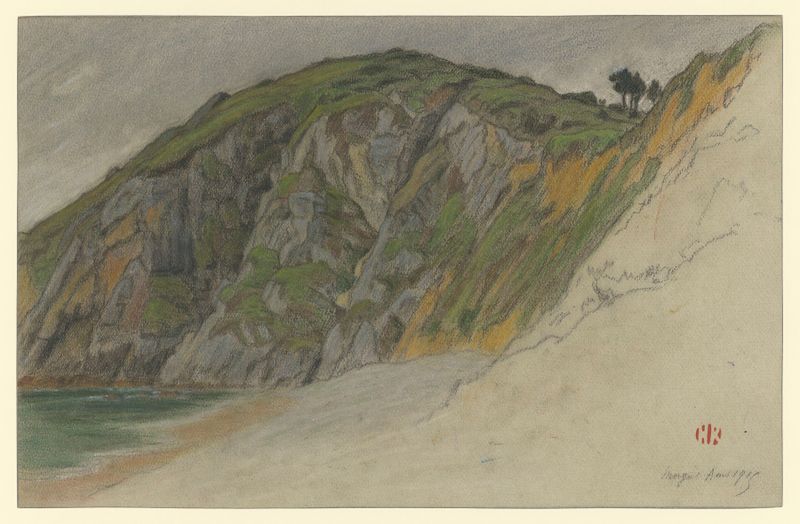
In the stillness of a coastal dusk, shadows deepen and the light wanes, revealing the fragility of human existence against the vastness of nature. The looming lighthouse stands sentinel over the tumultuous waters, both a protector and a harbinger, whispering secrets of solitude and the fear of what lies just beyond the horizon. Look to the center, where the lighthouse rises against a backdrop of swirling clouds tinged with ominous hues. The strokes are deliberate, capturing the texture of the waves as they crash against the rocks, their white foam mirroring the turbulence of the sky.
The palette of blues and grays evokes a palpable chill, while the silvery light piercing through the clouds hints at a fleeting moment of hope amidst the impending storm. There is a haunting contrast in the painting. The sturdy lighthouse, representing stability and guidance, is juxtaposed with the chaotic, ever-changing sea, symbolizing fear and uncertainty. Notice the way the light reflects off the water, creating a path that feels both inviting and treacherous.
This duality mirrors the human fear of the unknown, a theme that resonates deeply during times of personal or societal upheaval. Henri Rivière painted Loguivy (la balise Holeneyères) in 1906, a time when he was experimenting with the intersection of impressionism and symbolism. Living in France, he was surrounded by the burgeoning modernist movement, which sought to explore deeper emotional truths. The world was grappling with change, and Rivière’s art reflects the anxieties of an era, inviting viewers to confront their own fears in the face of nature's overwhelming power.