
Louisiana Landscape — History & Facts
In the heart of a vast and lonely expanse, isolation speaks through the gentle brushstrokes of nature, revealing the quietude that envelops the soul. Look to the left at the subtle rise of the land, where a solitary tree stands sentinel against the horizon. The muted greens and browns blend harmoniously, drawing your gaze across the low hills and expansive sky, hinting at a world untouched by the bustle of civilization. Wisps of soft clouds float lazily, their reflections whispering secrets to the water below.
The composition exudes a serene stillness, yet the light plays a vital role, casting long shadows that evoke a sense of longing and solitude. As you delve deeper, consider how the vibrant sunlit areas contrast sharply with the dimmer, shadowed spaces. This interplay captures the tension between hope and despair, illustrating a landscape that feels both alive and desolate. The absence of human presence adds to the profound sense of loneliness, allowing the viewer to ponder their connection to this untouched environment and the echoes of those who once roamed it. In 1880, the artist created this work during a period of introspection and exploration.
Residing in the rural South, he sought to convey the beauty of the Louisiana landscape while reflecting his own feelings of isolation. This era in art was marked by a growing appreciation for naturalism and the emotional depth found in stillness, setting the stage for a profound conversation between the viewer and the landscape.
More Artworks by Joseph Rusling Meeker
Browse all →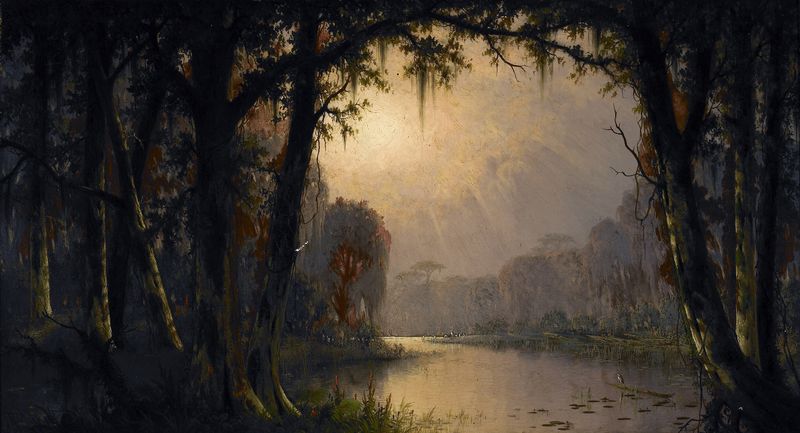
Bayou Teche, Louisiana
Joseph Rusling Meeker
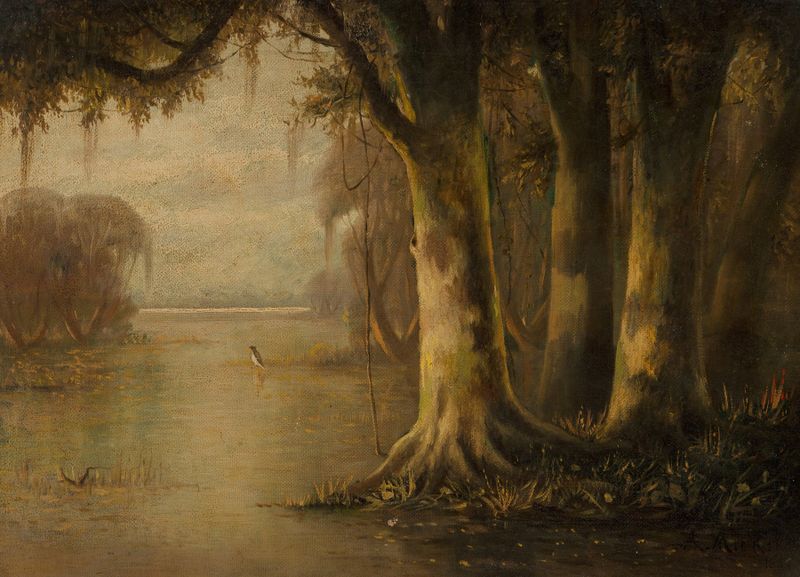
Near the Tombigbee River
Joseph Rusling Meeker

Bayou Scene
Joseph Rusling Meeker
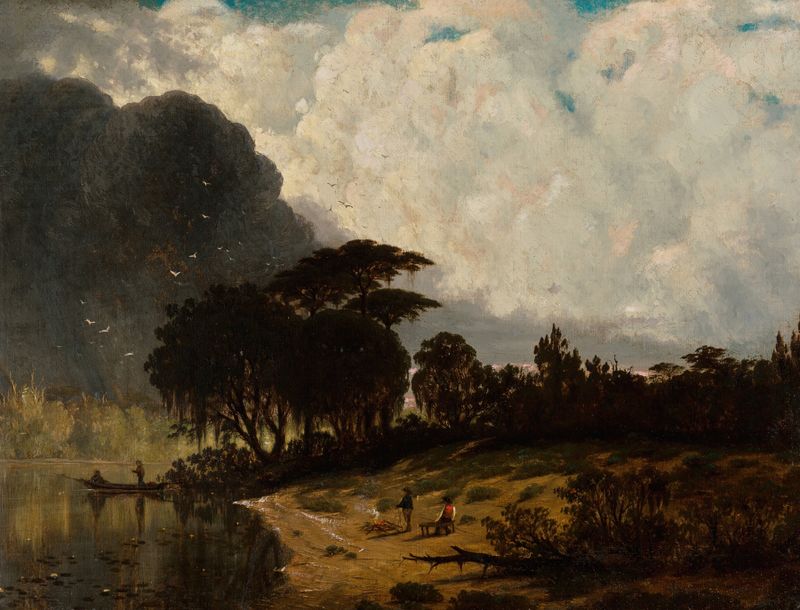
Lake Pontchartrain, Louisiana
Joseph Rusling Meeker
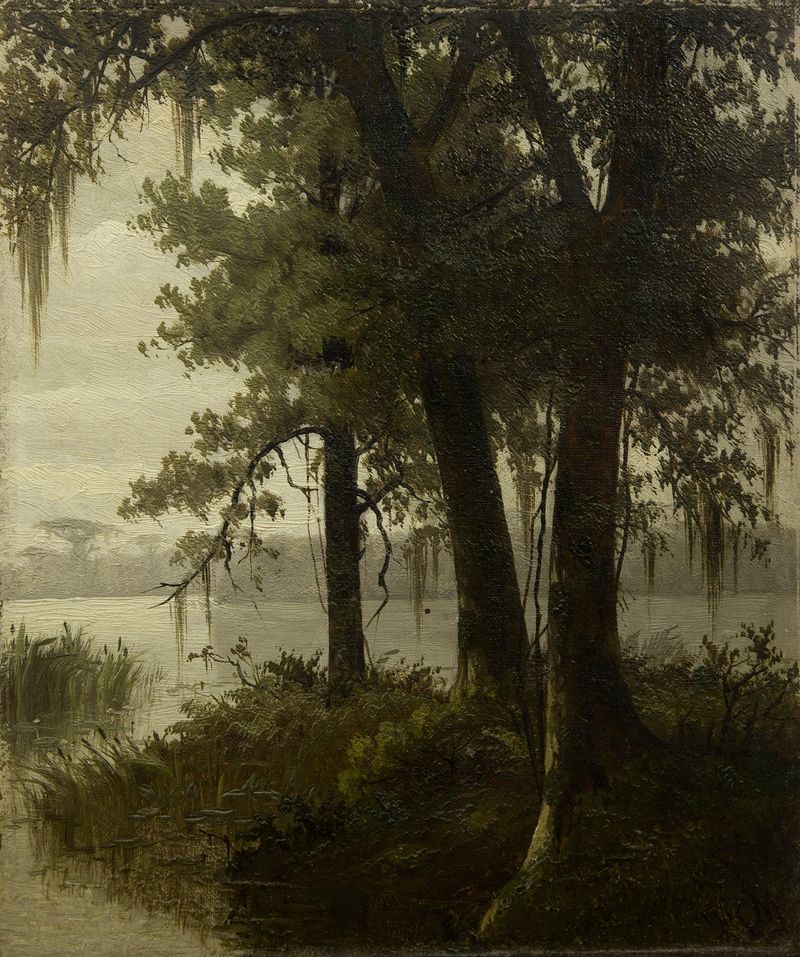
Swamp Scene
Joseph Rusling Meeker
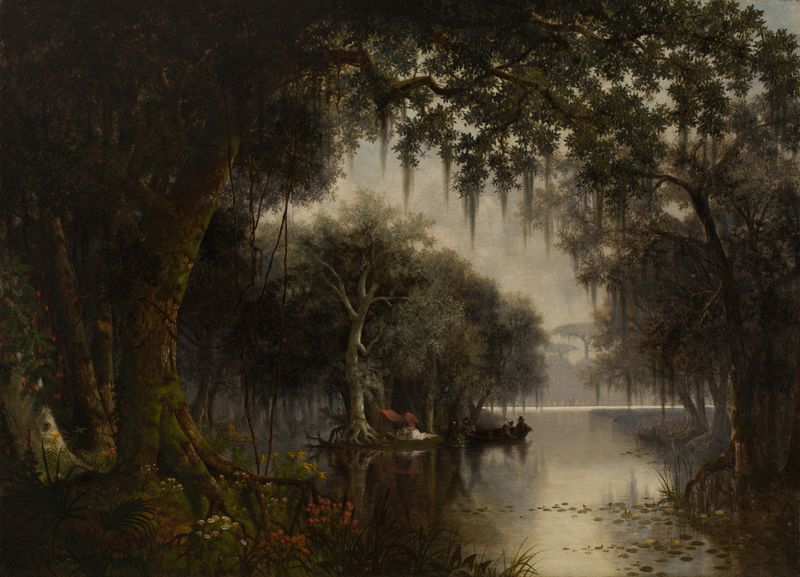
The Land of Evangeline
Joseph Rusling Meeker

Bayou
Joseph Rusling Meeker
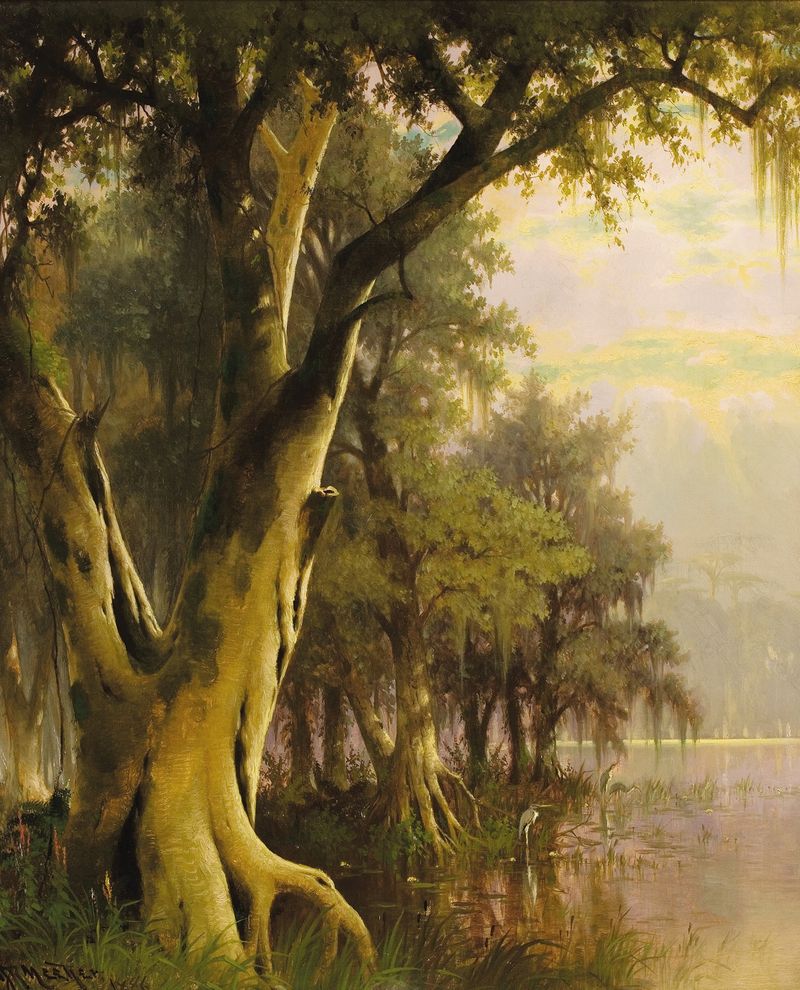
Florida Lowlands
Joseph Rusling Meeker

Swamp Scene
Joseph Rusling Meeker





