
Swamp Scene — History & Facts
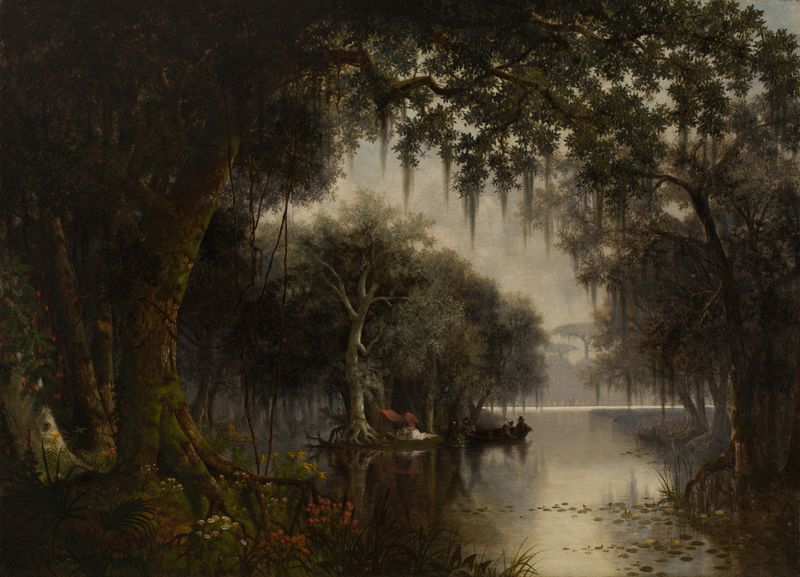
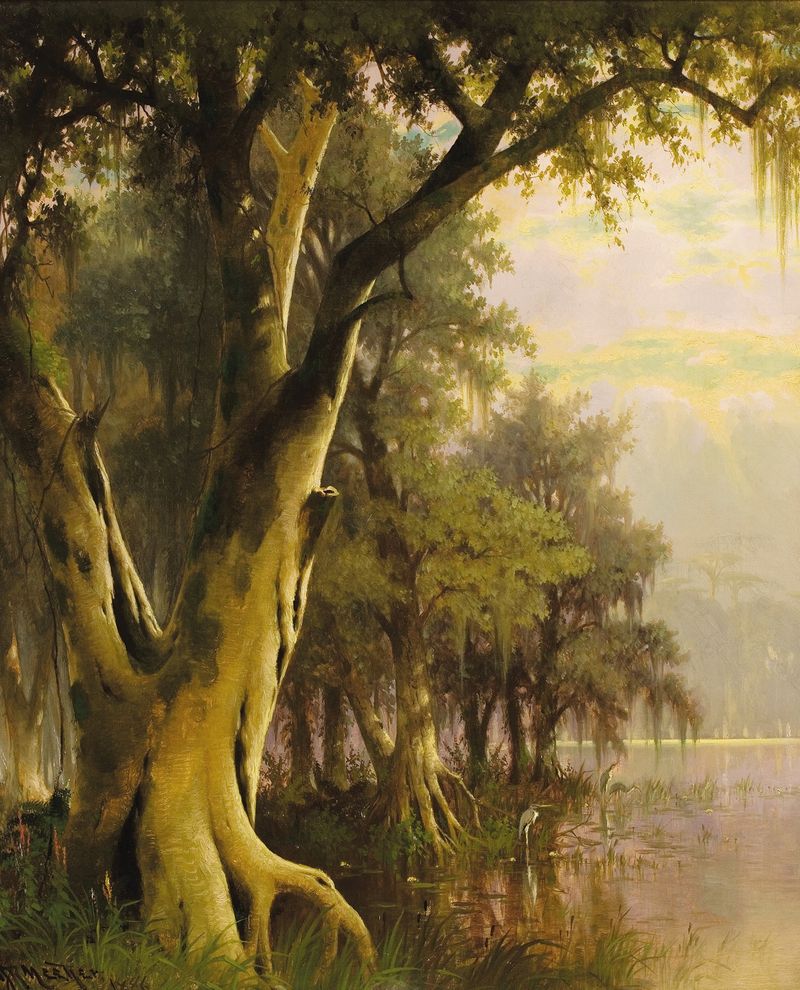
Who listens when art speaks of silence? The stillness of a swamp unfolds layers of melancholy, beckoning us to contemplate the whispers of nature and the passage of time. Look to the left at the intricate interplay of twisted trees, their gnarled branches arching over stagnant waters, creating a natural frame that draws the eye inward. Notice how the muted palette of greens and browns breathes life into the scene while the delicate brushwork captures the ripple of water, enhancing the sense of tranquility tinged with sorrow. The soft light filtering through the foliage hints at hidden narratives, evoking nostalgia for forgotten moments. Yet, amid this stillness lies a tension between solitude and the threat of decay.
The languid waters reflect not just the surrounding landscape but also the weight of memories and the inevitability of change. Small details, like the fallen leaves and the faint traces of animal life, suggest both life’s vibrancy and its fragility, inviting a deeper reflection on existence itself. This duality evokes an emotional resonance that lingers with the viewer long after the initial gaze. Joseph Rusling Meeker painted Swamp Scene during a period when landscape painting was evolving.
Completed between 1870 and 1887, he sought to capture the essence of American nature, moving away from romanticized visions towards a more introspective portrayal. At that time, the art world was beginning to embrace realism, reflecting the complex relationship between humanity and the natural environment, a theme that resonates powerfully in this work.
More Artworks by Joseph Rusling Meeker
Browse all →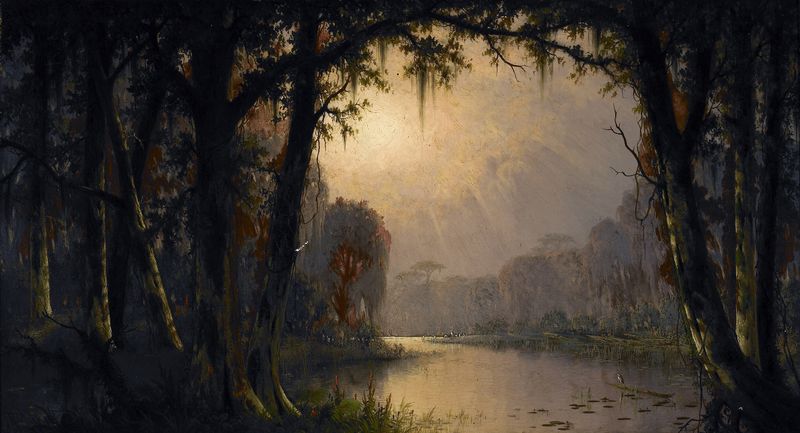
Bayou Teche, Louisiana
Joseph Rusling Meeker
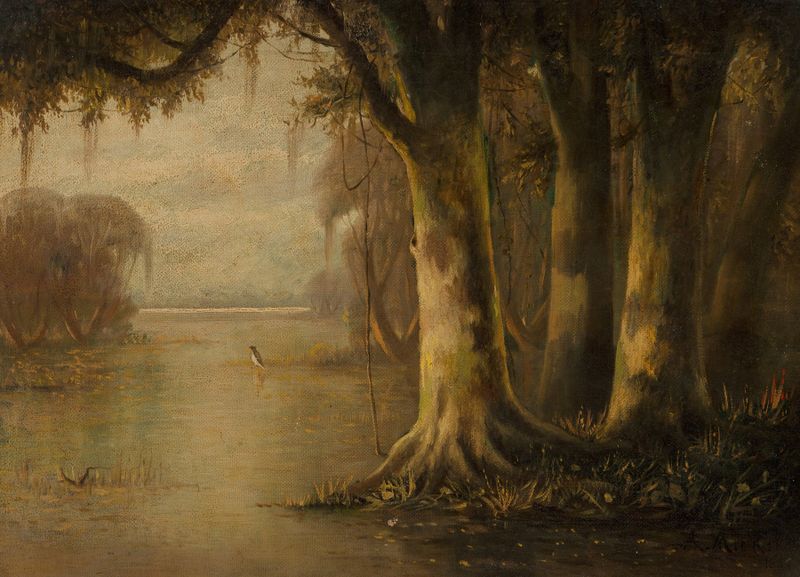
Near the Tombigbee River
Joseph Rusling Meeker

Bayou Scene
Joseph Rusling Meeker
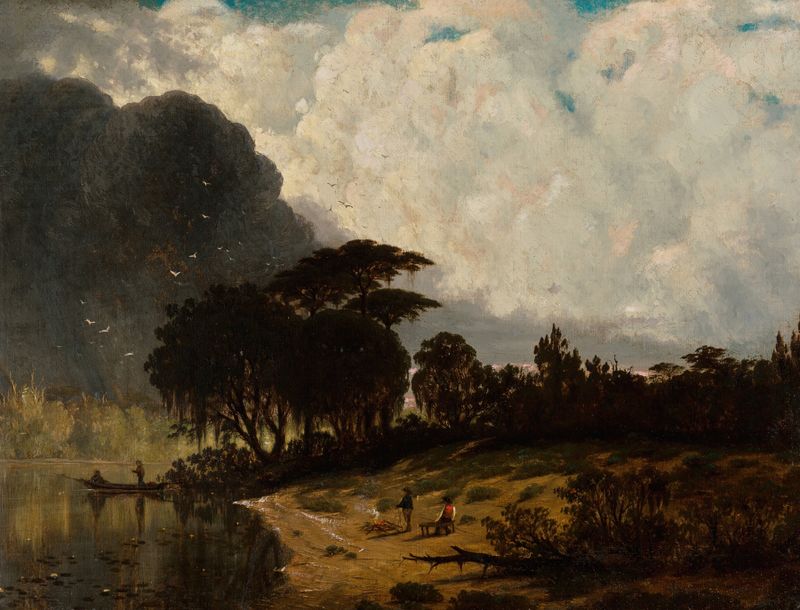
Lake Pontchartrain, Louisiana
Joseph Rusling Meeker
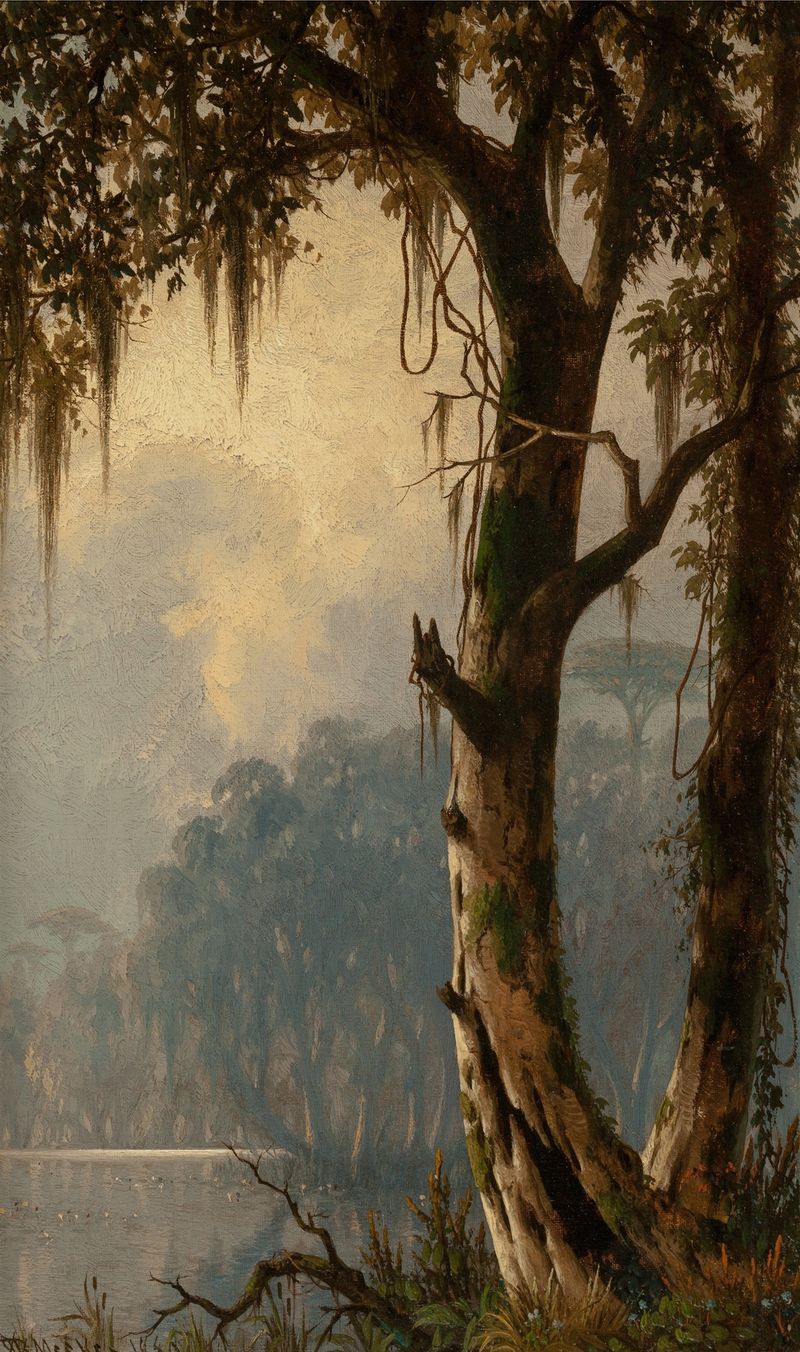
Louisiana Landscape
Joseph Rusling Meeker
The Land of Evangeline
Joseph Rusling Meeker

Bayou
Joseph Rusling Meeker
Florida Lowlands
Joseph Rusling Meeker

Swamp Scene
Joseph Rusling Meeker





