
Lubelska Street in Kazimierz Dolny — History & Facts
This sentiment echoes through the quiet avenues of life depicted here, where truth dances like light upon cobblestones. Look to the left at the muted yellows and greens that gently cradle the buildings, their stoic facades standing resilient against the soft wash of twilight. The painter’s brushstrokes weave a tapestry of texture, with the sky transitioning into a dusky blue, hinting at the encroaching night. The restrained palette evokes a sense of nostalgia, while the diagonal lines of the street draw the eye deeper into the scene, inviting viewers to traverse its winding path. Beneath this serene appearance lies a tension between stillness and the passage of time.
The empty street, devoid of human presence, suggests solitude, perhaps even abandonment, while the warm light spilling softly from the windows hints at life behind closed doors. Additionally, the juxtaposition of the rigid architecture against the fluid lines of the road creates a dialogue between stability and uncertainty—the very essence of truth in a transient world. Władysław Ślewiński painted this work between 1907 and 1909, during a period of personal evolution and artistic exploration in Poland. Living in Kazimierz Dolny at that time, he was immersed in a community of artists influenced by post-impressionism, seeking to capture the beauty of their surroundings while grappling with the socio-political currents of the era.
This piece reflects both his emotional landscape and the changing tides of artistic expression.
More Artworks by Władysław Ślewiński
Browse all →
Rough sea
Władysław Ślewiński
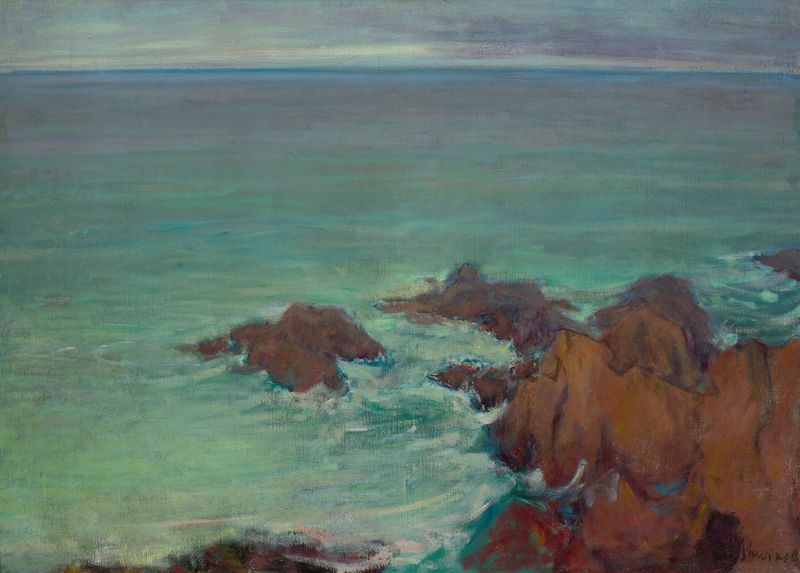
Sea in Brittany
Władysław Ślewiński
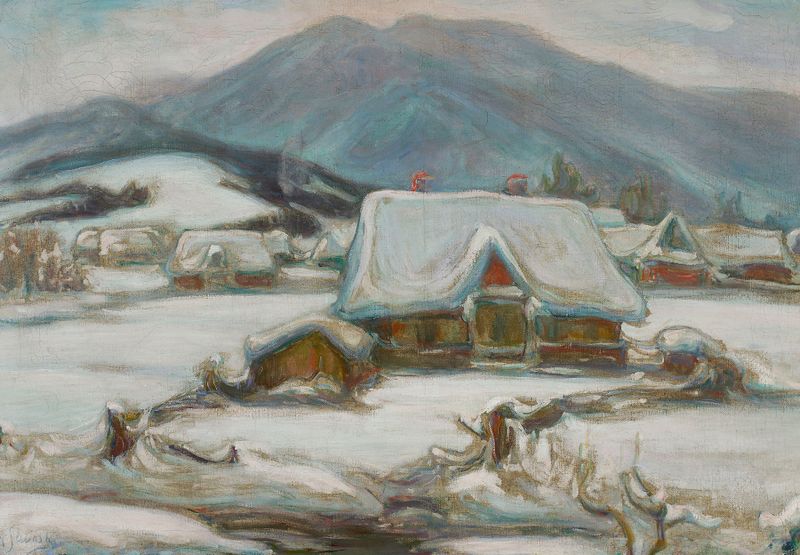
Cottages in the snow
Władysław Ślewiński

Sea
Władysław Ślewiński

Waves in a rocky bay
Władysław Ślewiński

Sea with white waves
Władysław Ślewiński
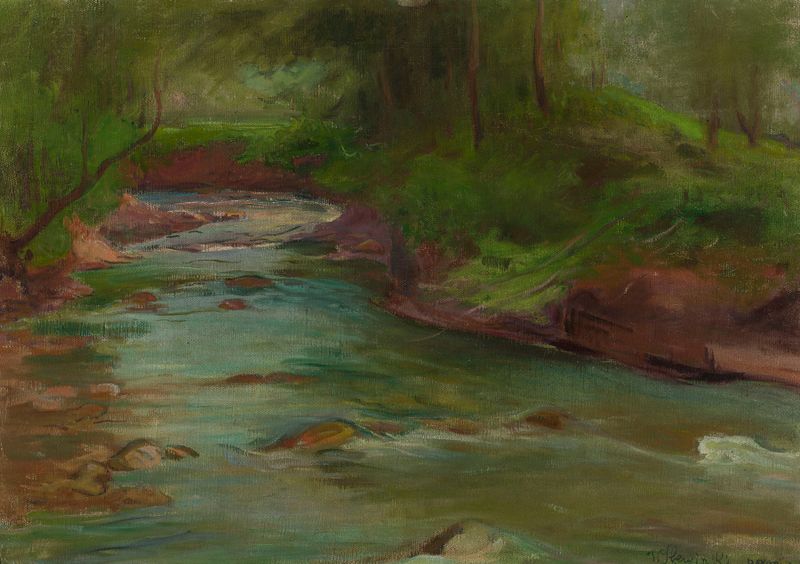
Mountain stream – in the Tatra Mountains below Mt Nosal
Władysław Ślewiński
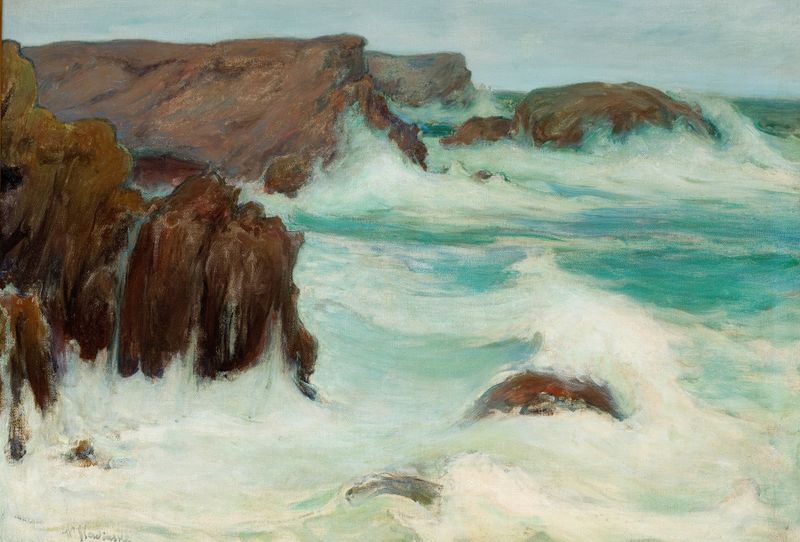
The Sea in Brittany
Władysław Ślewiński

A Coastal Landscape
Władysław Ślewiński

Sea at night
Władysław Ślewiński





