Maastik — History & Facts
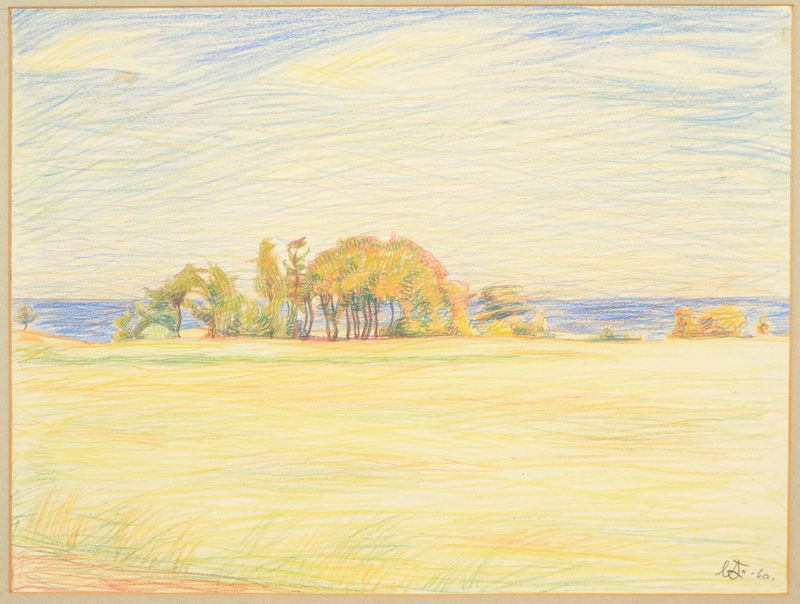
In the depths of artistic creation lies an emptiness that resonates, inviting us to explore the void beneath the surface. Begin your journey by focusing on the delicate hues that wash across the canvas, where warm ochres and muted blues intertwine in a dance of color. Notice how the edges blur, suggesting a landscape that feels both familiar and ethereal. The textured strokes create a sense of movement, guiding the eye to areas where light seems to linger, giving life to a scene that teeters on the edge of memory. This artwork captures a profound emotional tension, where the harmony of color contrasts with a sense of isolation.
The seemingly serene landscape hints at deeper themes of longing and introspection, as the viewer is compelled to confront the emptiness that calls from beyond the vibrant palette. The void, masterfully rendered, speaks to the human experience—an invitation to reflect on the beauty that often emerges from sorrow. Between 1905 and 1907, Nikolai Triik was painting in Estonia at a time when the artistic scene was grappling with emerging modernism and national identity. The country was in a transitional period, seeking autonomy and self-expression, which influenced his work.
Triik’s exploration of landscape reflected both his personal journey and his desire to capture the essence of his homeland amid broader artistic movements.