
Maastik — History & Facts
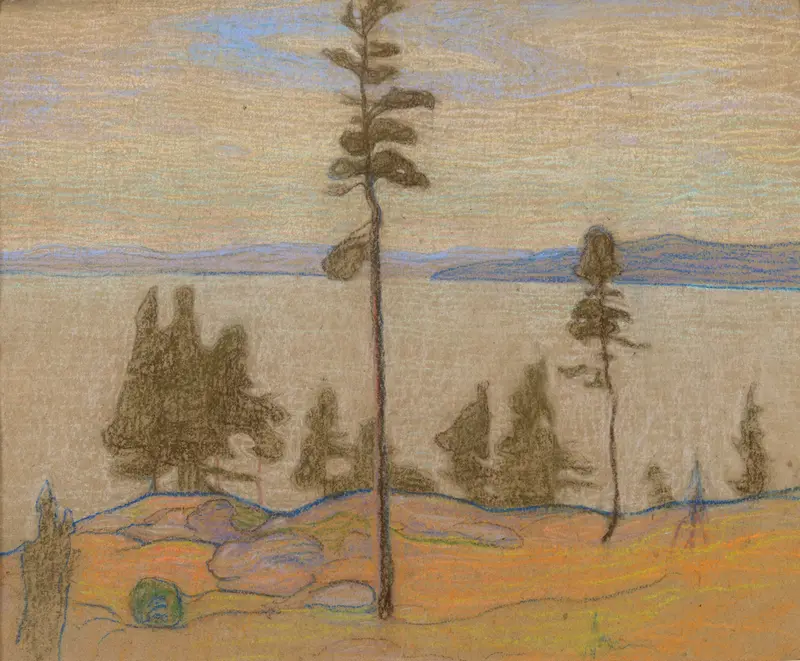
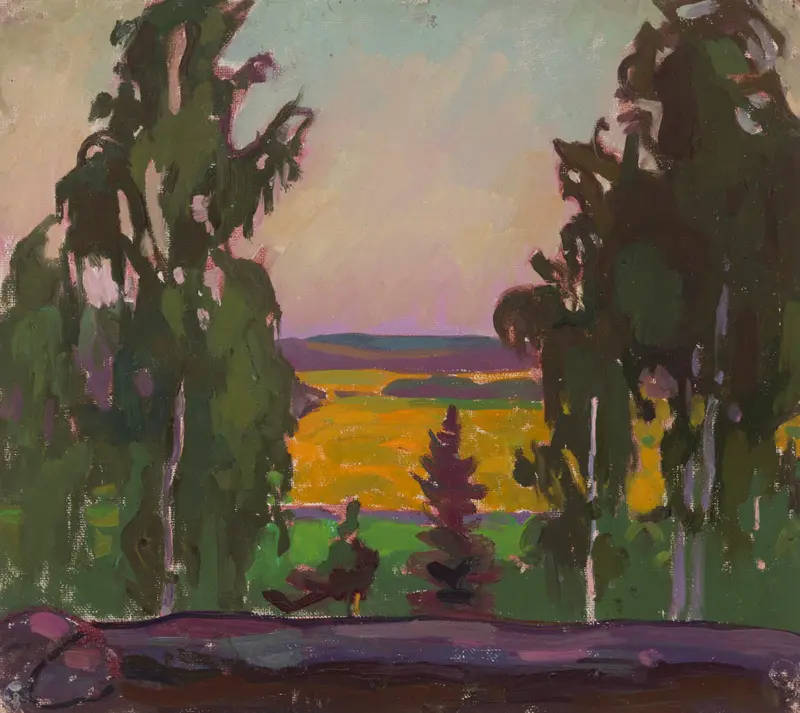
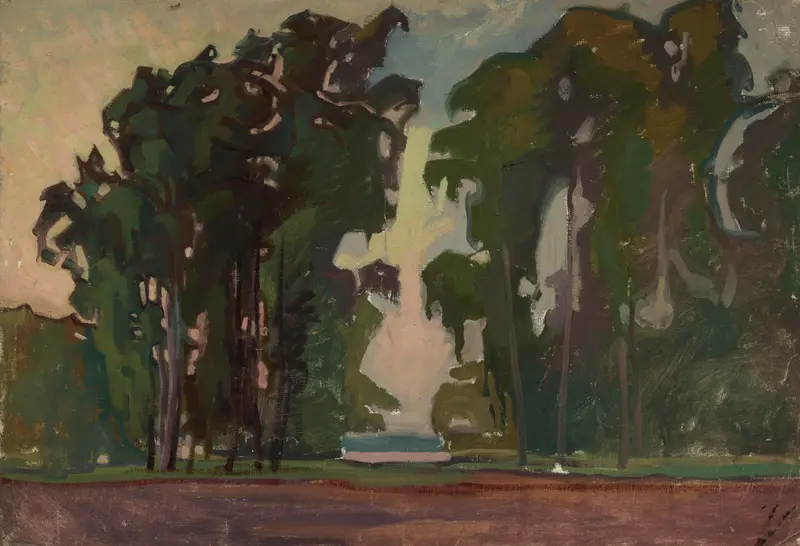
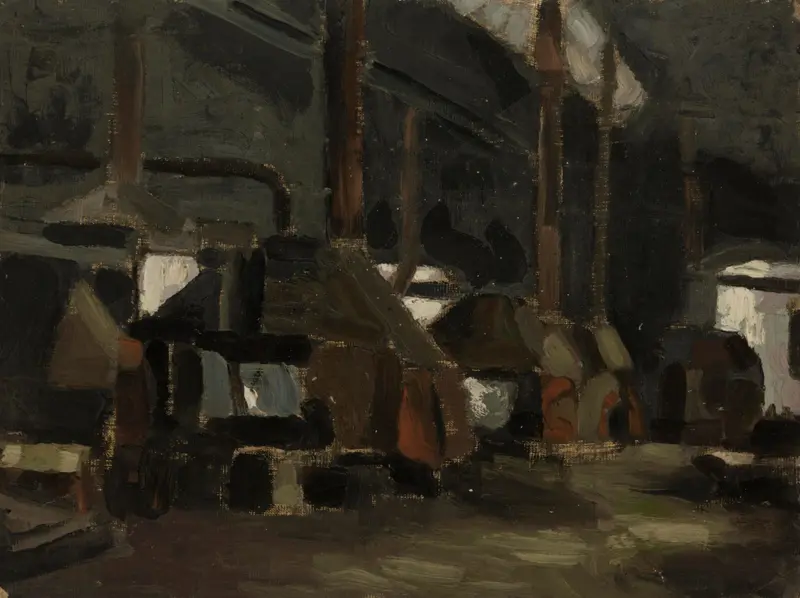
In the act of creation lies the power to transform fleeting moments into lasting impressions, capturing the essence of change through vivid strokes and colors. Look to the left, where the delicate interplay of light and shadow creates a rhythm that pulls the eye across the canvas. The soft blues and greens meld seamlessly into one another, evoking the gentle sway of grass in the wind or the muted whispers of a tranquil forest. Notice how the brushwork varies—some areas are smooth and blended, while others burst with chaotic energy, suggesting the constant ebb and flow of nature’s cycle. In the muted palette, there exists a profound contrast between the stillness of the scene and the underlying tension of transformation.
Each brushstroke seems to narrate a story of impermanence, a reminder that seasons shift, colors fade, and memories blur. The presence of a figure or two, perhaps lost in contemplation, enhances the emotional depth, inviting the viewer to ponder their own connection to the evolving landscape. During this period, the artist was embracing the modernist movement, exploring the boundaries of perception and experience. The exact date of creation for Maastik remains uncertain, yet it reflects the artist's journey through Estonia's rich cultural heritage and changing landscapes, as he sought to intertwine personal memory with collective identity in his work.
More Artworks by Nikolai Triik
More Landscape Art

The Starry Night
Vincent van Gogh

View of Delft
Johannes Vermeer

Water Lilies
Claude Monet

The Grand Canal, Venice, looking north-west from the Ca' Corner to the Ca' Contarini degli Scrigni, with the campanile of Santa Maria della Carità
Canaletto

Windsor Castle
Canaletto

The Grand Canal looking North-East from the Palazzo Dolfin-Manin to the Rialto Bridge
Canaletto