Saaremaa maastik — History & Facts
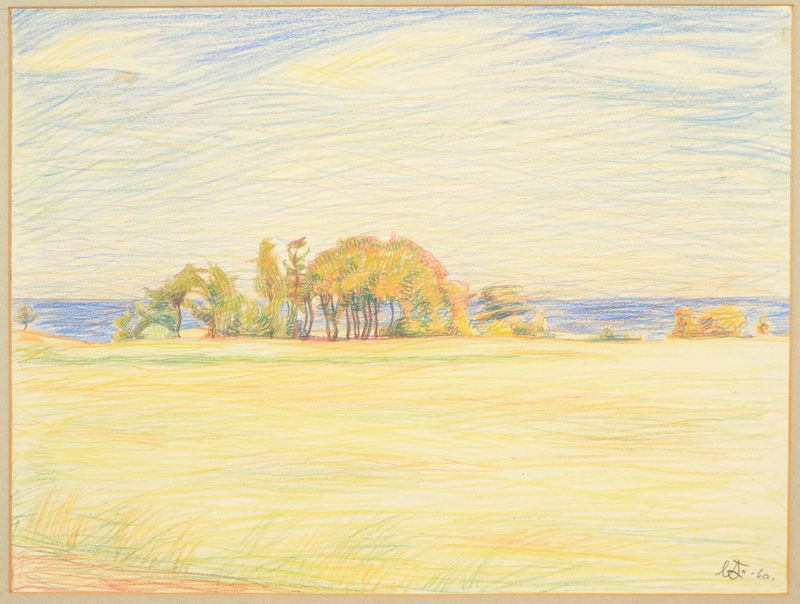
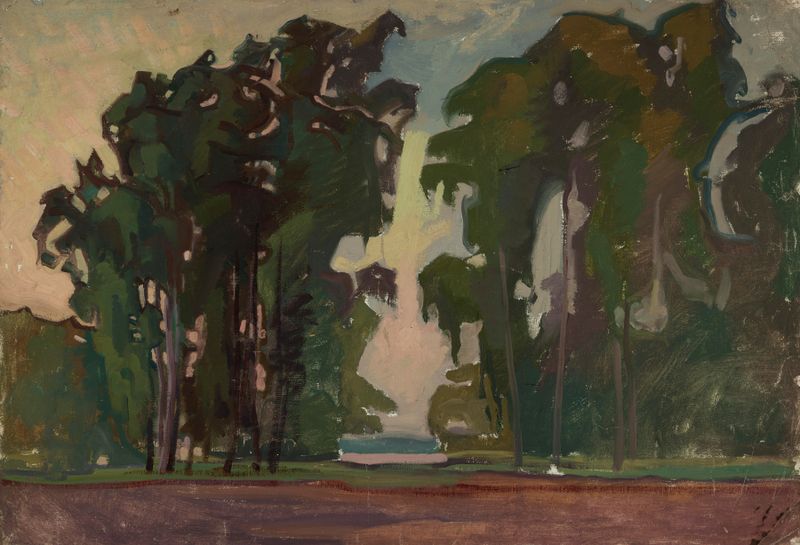
This sentiment resonates deeply in the realm of loss, where colors meld and memories linger, transforming sorrow into something poignant and beautiful. Look to the foreground, where a cascade of earthy tones flows seamlessly into vibrant greens. The brush strokes dance across the canvas, creating a textured landscape that invites exploration. Your gaze travels upward, meeting a sky brushed in soft pastels, hinting at the fragile boundary between day and night.
Notice how the luminous light filters through the foliage, casting playful shadows that breathe life into the scene, suggesting both a serene moment and an underlying tension. Hidden within the layers of paint are echoes of longing and nostalgia. The way the horizon meets the land speaks to the fragility of existence, while the uneven application of color hints at the artist's emotional turmoil. Each stroke seems to whisper stories of what once was, a reflection of loss intertwined with a celebration of nature's resilience.
The juxtaposition of calm beauty against the chaos of the natural world resonates profoundly, evoking a bittersweet sense of remembrance. In 1929, during a period of personal and artistic reassessment, Triik created this work in Estonia, amid a shifting cultural landscape. The post-war world was filled with uncertainty, yet his commitment to capturing the essence of his homeland remained unwavering. This painting encapsulates his journey of reconciling personal grief with the tranquil beauty of Saaremaa, the island that inspired him, showcasing a moment where art transcends individual experience to touch on universal themes.