Öine maastik — History & Facts
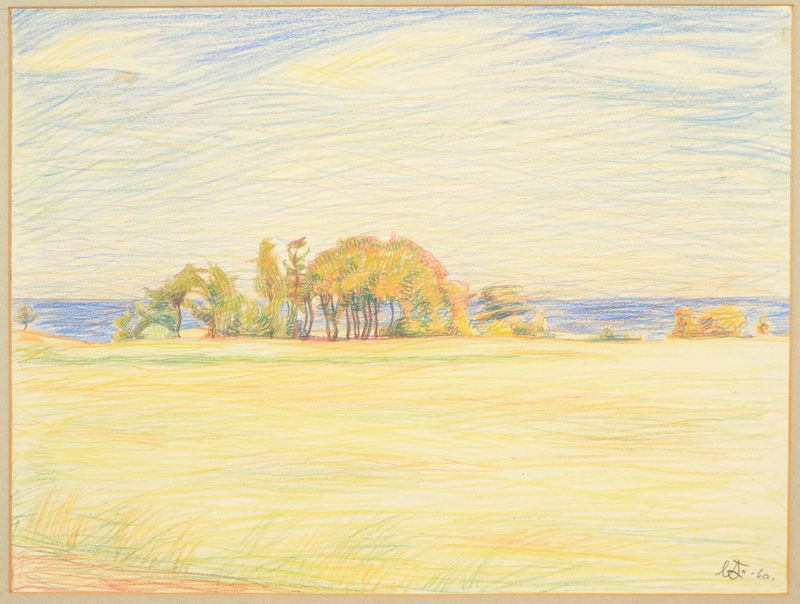
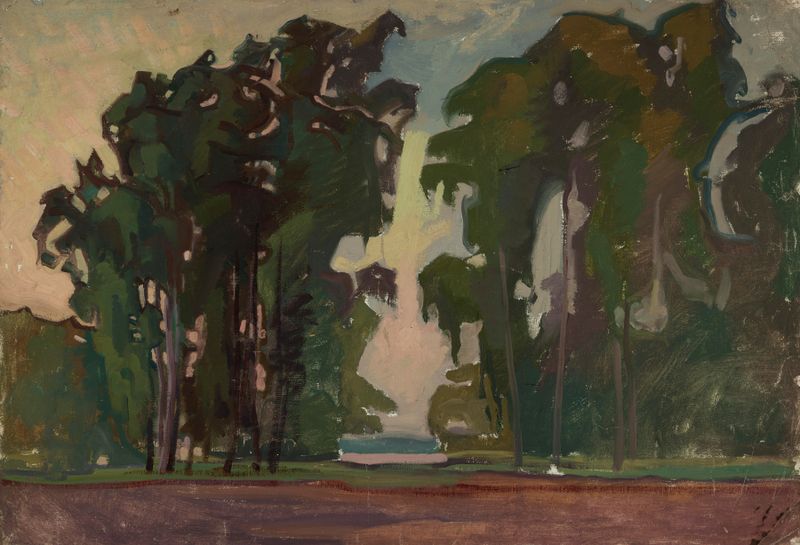
Who listens when art speaks of silence? In Öine maastik, the whispers of twilight intertwine with the weight of melancholy, inviting the viewer into a realm where silence holds its own language. Look to the left at the subtle gradient of blues and blacks that envelop the canvas, evoking the stillness of night. The composition strategically draws your eye towards the darkened landscape, punctuated by scattered luminescent stars that play against the deepening sky. The artist's brushwork is both fluid and deliberate, capturing the elusive quality of the nocturnal scene while mirroring the contemplative mood of solitude. As you explore the painting, notice the contrast between the serene night sky and the dense, shadowy terrain beneath.
This juxtaposition reflects a deeper emotional tension: the longing for connection amidst the vastness of nature. The delicate yet powerful interplay of light and shadow suggests a world brimming with unspoken stories, hinting at the mysteries that dwell within the silence. Each element harmonizes, creating an atmosphere that both enchants and evokes introspection. Nikolai Triik painted this work between 1906 and 1908, during a period of significant transition in Estonian art.
The early 20th century was marked by a growing sense of national identity and a movement toward modernism. At this time, Triik was exploring his style, blending elements of symbolism and impressionism, while engaging with the cultural shifts surrounding him. The painting embodies his response to the evolving artistic landscape and a personal reflection on the serene yet somber essence of the night.