Maastik puudega — History & Facts
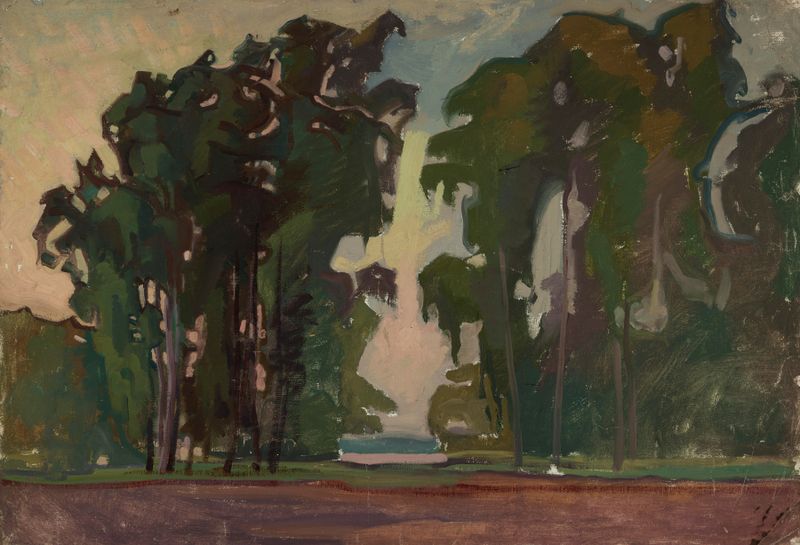
In the quiet embrace of decay, life whispers its most profound truths through the stillness of nature. The remnants of existence linger, cradling the essence of what once was and inviting us to reflect on the passage of time. Look to the lower left corner, where the gnarled roots of trees intertwine with the earth, their shapes a testament to resilience amidst decline. Notice how the muted palette of greens and browns envelops the canvas, capturing the somber yet intimate relationship between the living and the dying.
The brushstrokes are deliberate, imbuing each element with a tangible texture that draws the viewer into the scene’s serene yet melancholic atmosphere. As light dances over the foliage, it reveals the contrast of vitality and desolation, the dynamic interplay between life and decay. The smooth surfaces of the leaves, now tinged with age, resonate with a sense of nostalgia, while the shadows cast by the trees suggest an ever-present, encroaching silence. Hidden within the layers of this composition is an emotional tension that speaks of transience, urging one to confront the inevitability of change. In 1931, Nikolai Triik painted this work during a time of significant transformation in Estonia, as the nation sought to assert its identity following independence from Russia.
The artist was deeply influenced by the natural landscape of his homeland, reflecting both personal and cultural upheaval. This period marked a critical intersection in his career, as he sought to capture the essence of his surroundings while navigating the shifting currents of modernism and national identity in art.