Old Garden — History & Facts
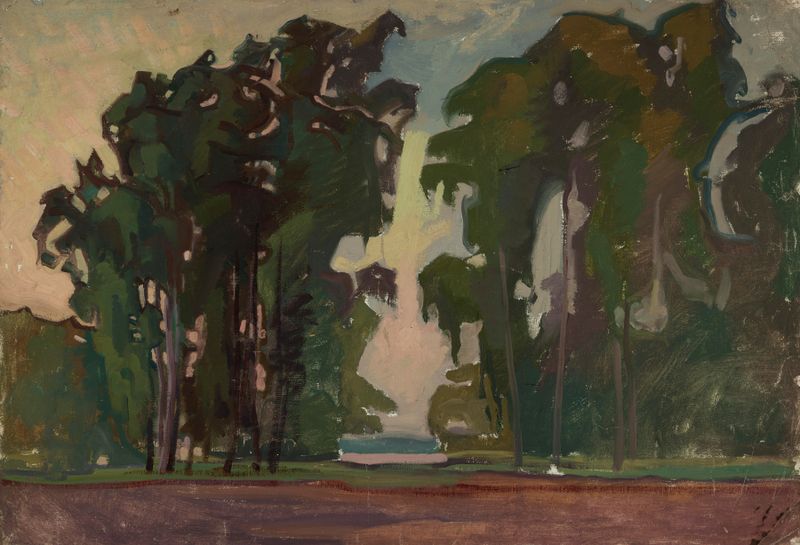
The air is thick with the scent of blooming lilacs, their vibrant purples swaying gently in the late afternoon sun. Soft laughter and whispers resonate, echoing the joy of a secret garden. A young girl, caught in a moment of pure delight, twirls amidst the lush greenery, her arms outstretched as if to embrace the world around her. Look to the left at the girl clad in a flowing white dress, her figure a radiant focal point against the deep greens and earthy browns of her surroundings.
Notice how the dappled light filters through the leaves, creating a dance of shadows and brightness across the ground. The painter’s brush strokes convey both movement and tranquility, weaving a tapestry of texture that invites the viewer into this enchanted space. Yet beneath the surface of this idyllic scene lies a tension between innocence and the impending changes of the world. The vibrancy of the garden symbolizes fleeting joy, juxtaposed against the historical backdrop of 1917, a year marked by unrest and transformation.
The remnants of the past linger within the foliage, hinting at the loss of simplicity as the outside world looms large, threatening to intrude upon this sanctuary. In the summer of 1917, Triik was deeply influenced by the social upheaval and artistic movements surrounding him in Estonia. It was a tumultuous time, as the country faced the impacts of war and revolution. Amidst this chaos, he found solace in depicting scenes of natural beauty, reflecting both the joys and sorrows of human experience through his vivid representation of life in Old Garden.