Interjöör — History & Facts
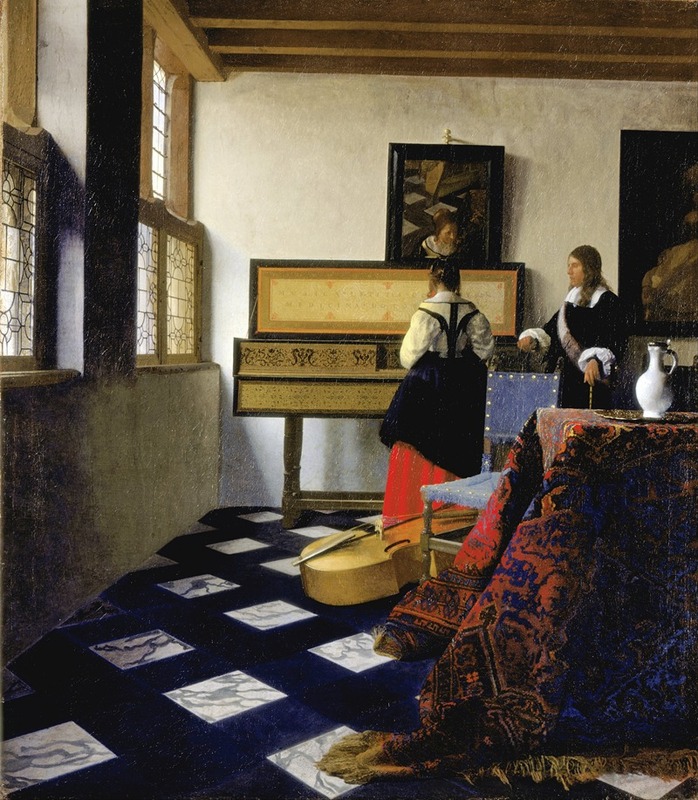
Is this a mirror — or a memory? The questions arise as the viewer stands before the canvas, drawn into a world where stillness blurs the line between the internal and external. Look to the left at the figure seated at the table, bathed in soft, diffused light. The warm colors of ochre and earthy browns create a sense of intimacy, inviting us into a quiet moment of reflection. Notice how the patterned wallpaper envelops the scene, its delicate motifs echoing the complexity of the emotions at play.
The muted tones contrast beautifully with the brighter highlights on the figure’s face, suggesting an awakening to something deeper and more profound. Yet, there is an underlying tension in this moment of solitude. The empty chair across the table speaks volumes — a reminder of absence, perhaps a lost connection. The gentle tilt of the figure’s head hints at contemplation, while the stillness of the setting evokes a sense of yearning.
Each element, from the arrangement of the objects to the placement of light, invites viewers to explore their own memories and emotions, bridging the gap between the observed and the personal. Between 1906 and 1908, Nikolai Triik created Interjöör during a transformative period in Estonia, as the country began to embrace its national identity amid political turmoil. The artist, influenced by the Symbolist movement, sought to express the richness of inner life through his work. As a pioneer of modern Estonian painting, he explored themes of solitude and introspection, seeking to capture the essence of personal experience in a rapidly changing world.