
Madonna and Child with St. John the Baptist and an angel — History & Facts
Few paintings by Sandro Botticelli have sparked as much curiosity as Madonna and Child with St. John the Baptist and an angel, for the simple reason that at least five versions of this composition exist, scattered across museums and collections worldwide. Scholars still debate which came first, and whether Botticelli himself painted each one or delegated parts to his workshop.
This proliferation speaks to the popularity of the subject in Florence around 1480, when private devotion and family pride often found their outlet in images of the Virgin and Child, sometimes with the young John the Baptist—a Florentine patron saint—close at hand. Here, Botticelli captures a moment of gentle intimacy: the Christ Child, seated on his mother's lap, leans toward his cousin John, who offers him a delicate gesture of blessing. An angel, often interpreted as a symbol of divine protection or the human soul, looks on, binding the group together with his gaze. The Virgin’s blue mantle and red robe, traditional colors for Mary, signal her purity and suffering, while the pomegranate in the Child’s hand hints at his future Passion.
The figures are set against a serene, almost otherworldly landscape, their delicate outlines and flowing hair recalling Botticelli’s Primavera rather than the more robust Madonnas of Leonardo da Vinci. The exact origins of this painting remain uncertain, as documentation from the period is scarce, and the medium—whether tempera or oil—has not been definitively established. It is likely that a wealthy Florentine family commissioned the work for private devotion, as was common in late 15th-century Florence. Over the centuries, versions of this composition have traveled widely, sometimes misattributed or caught up in disputes over authenticity.
Today, each version is prized for its grace and harmony, and the painting stands as a testament to Botticelli’s enduring appeal during a time when Florence was the beating heart of the Renaissance.
More Artworks by Sandro Botticelli
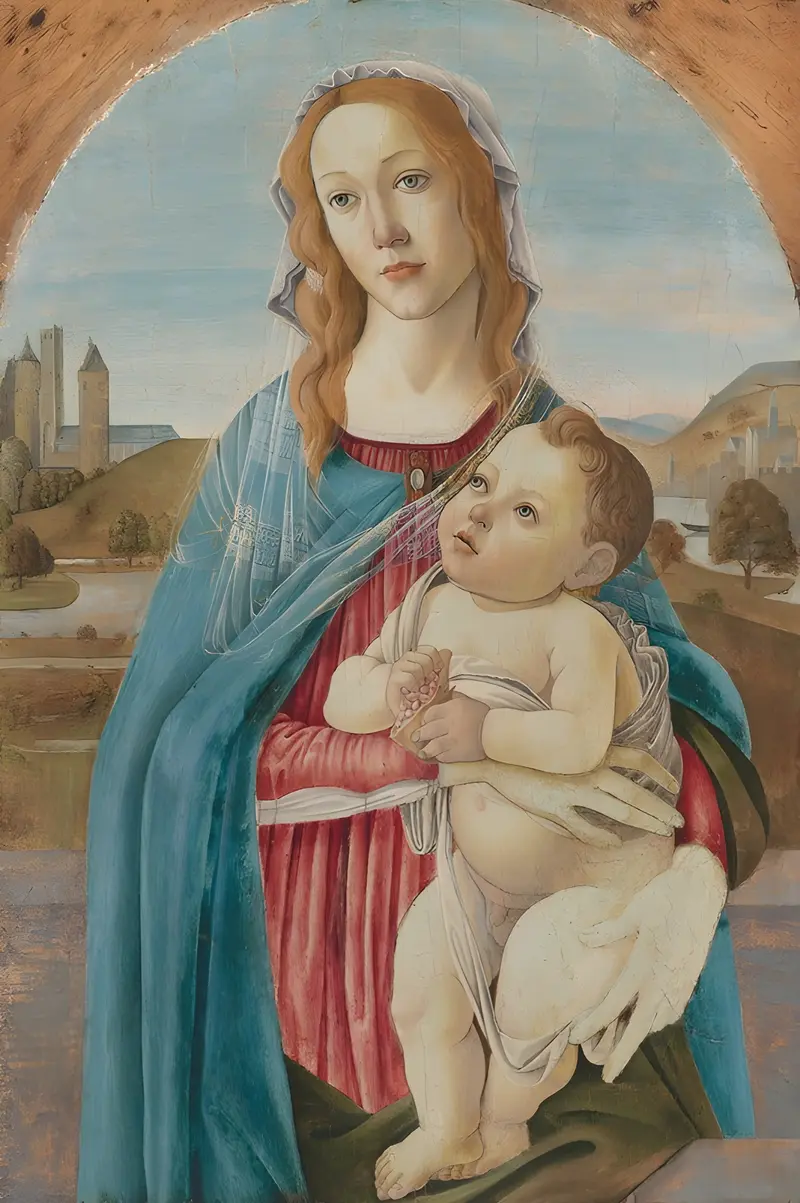
Virgin and Child
Sandro Botticelli
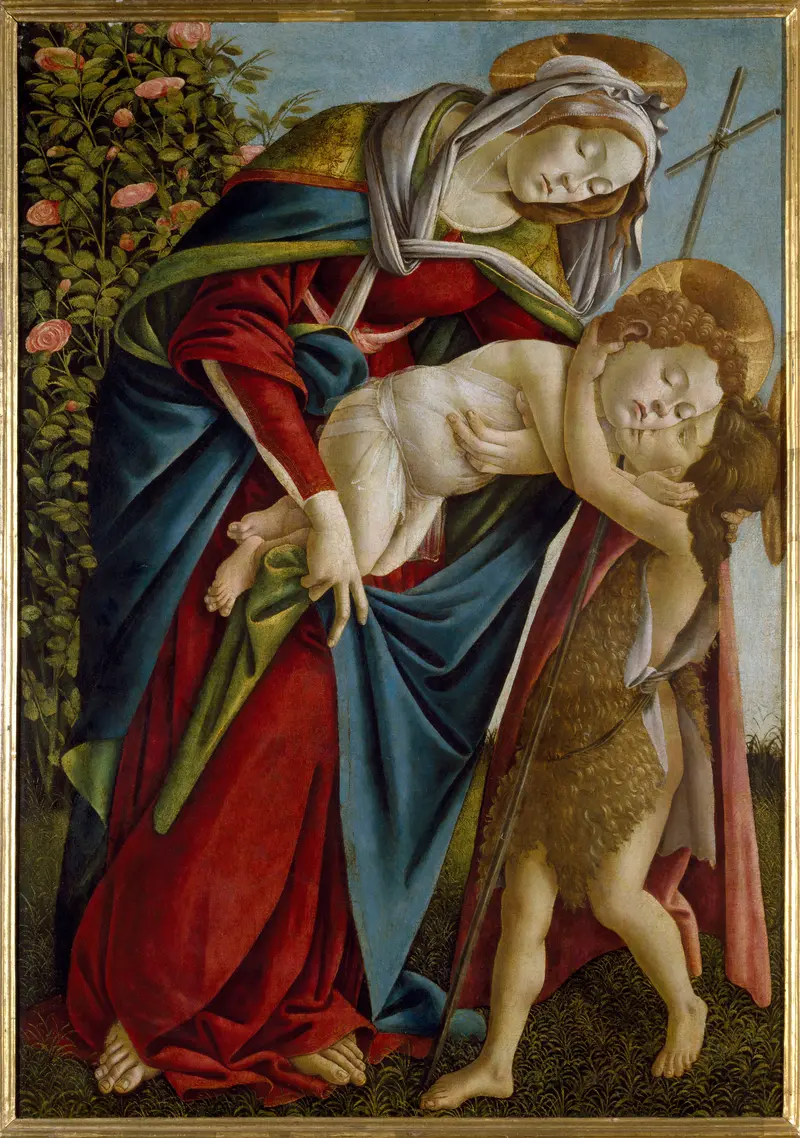
Madonna and Child and the Young St John the Baptist
Sandro Botticelli
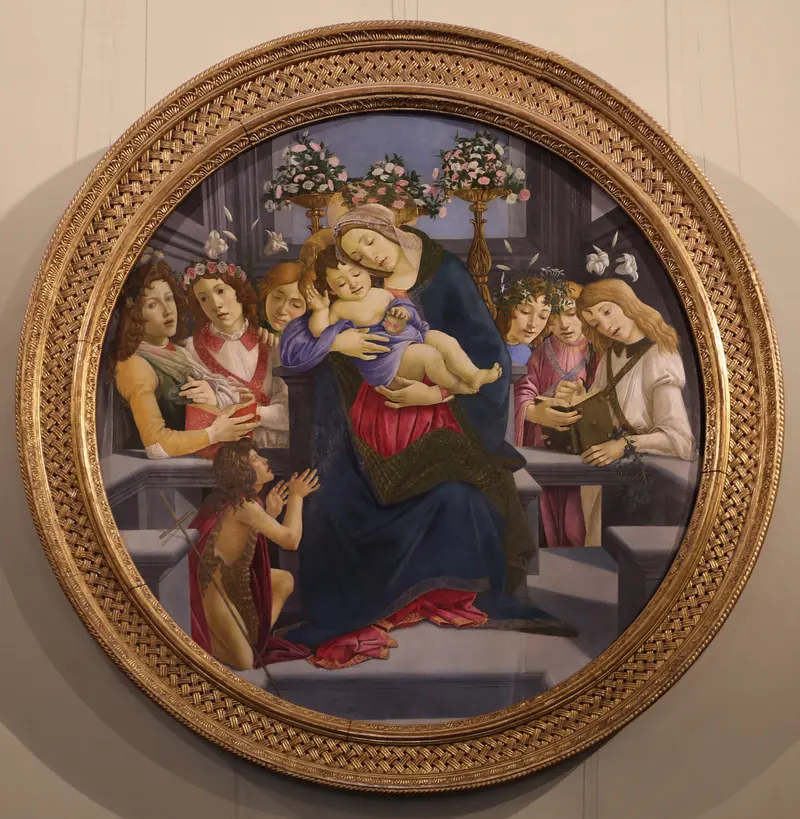
Madonna and Child with six angels and Saint John the Baptist as Child
Sandro Botticelli
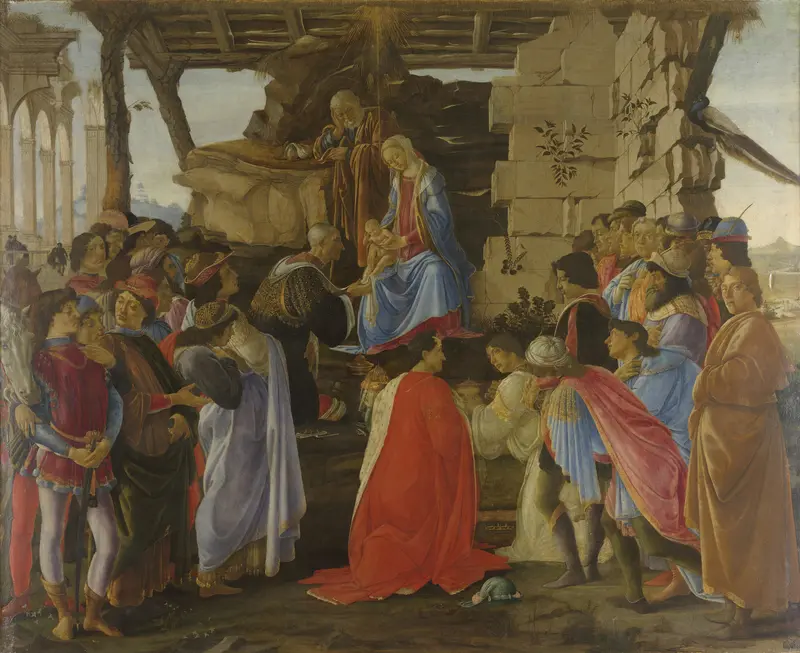
Adoration of the Magi
Sandro Botticelli

Virgin and Child with the Young Saint John the Baptist
Sandro Botticelli
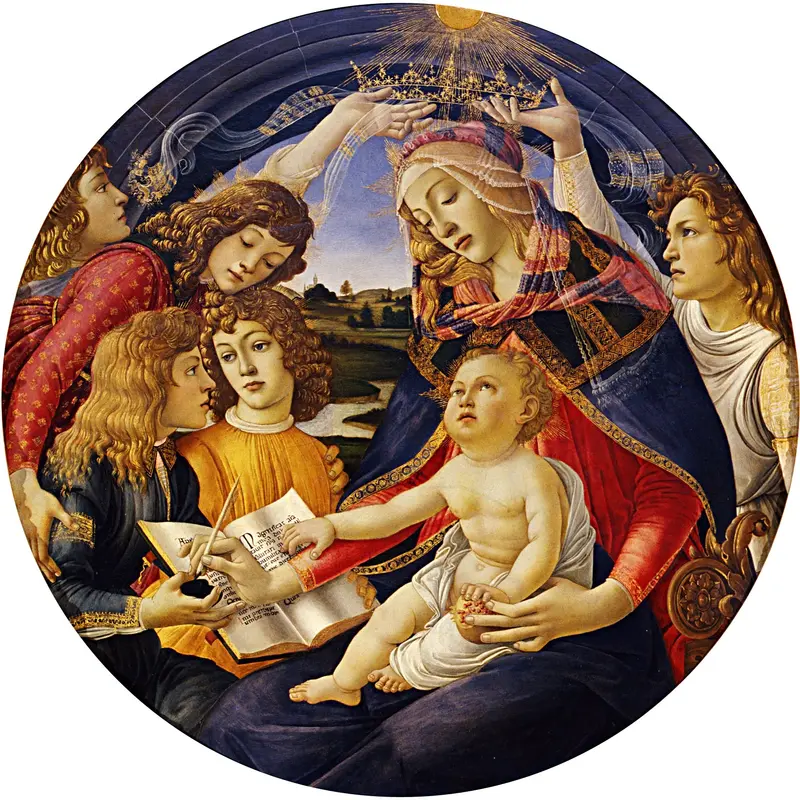
Madonna of the Magnificat
Sandro Botticelli
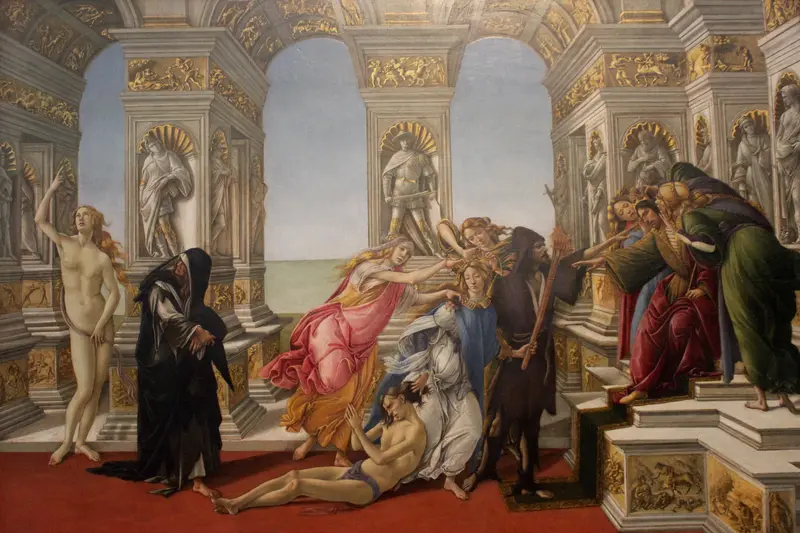
Calumny of Apelles
Sandro Botticelli
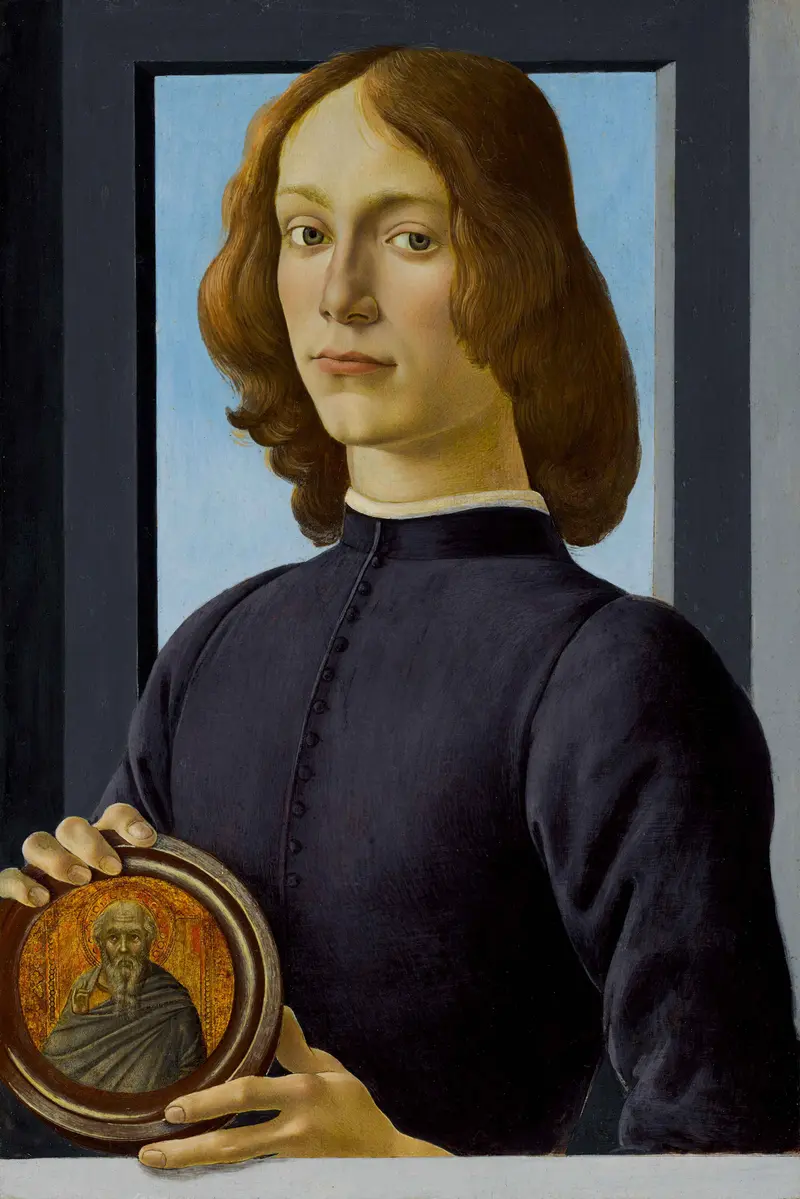
Portrait of a young man holding a roundel
Sandro Botticelli

The Trinity with Saint Mary Magdalene and Saint John the Baptist, the Archangel Raphael and Tobias
Sandro Botticelli
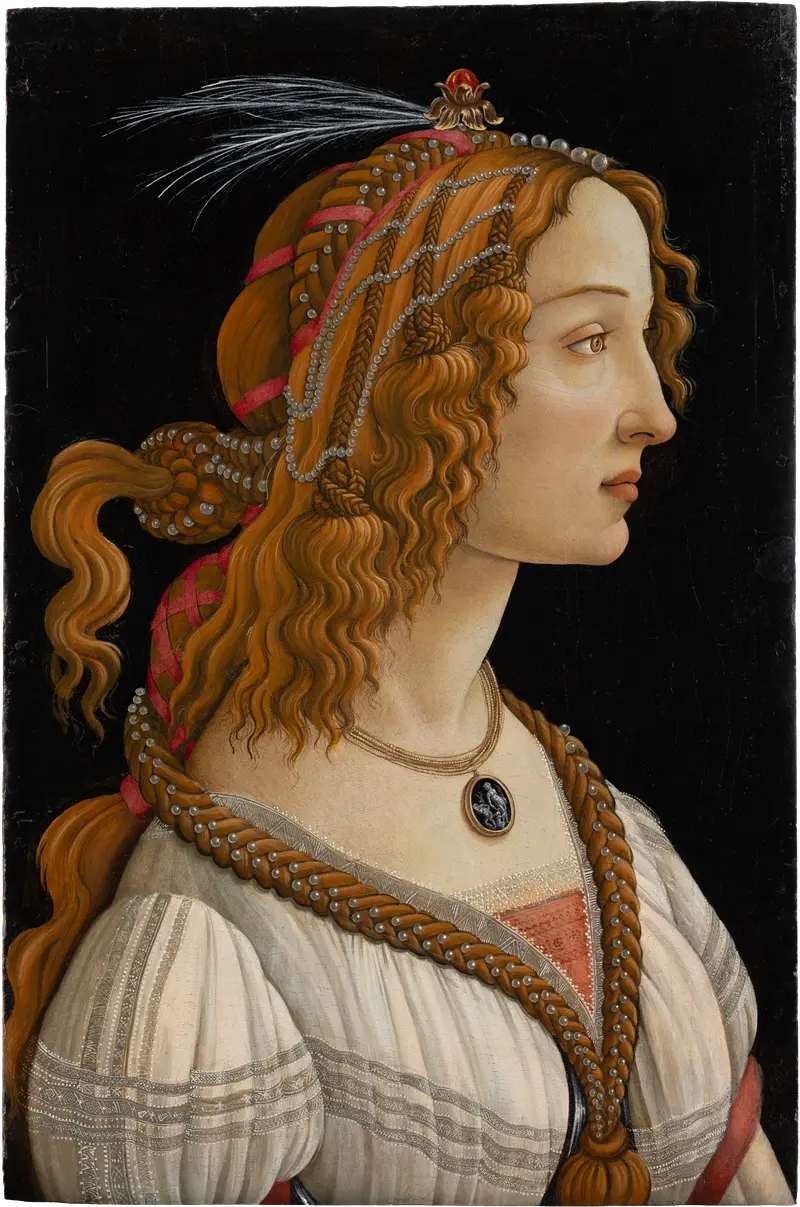
Idealized Portrait of a Lady (Portrait of Simonetta Vespucci as Nymph)
Sandro Botticelli





