
Madonna Bardi — History & Facts
When Sandro Botticelli painted Madonna Bardi around 1500, he was working for one of Florence’s most influential banking families, the Bardi. The commission was a mark of both piety and prestige, intended for a private chapel and meant to secure the family’s legacy in the city’s spiritual and social life. What makes this painting especially notable is that it stands at the threshold of Botticelli’s late style, where the grace of his earlier works gives way to a more introspective and austere mood.
Unlike his famed mythological scenes, Madonna Bardi is a meditation on devotion at the turn of a century marked by political upheaval and spiritual anxiety. Botticelli selects a moment of quiet intimacy between the Virgin and Child, with Mary’s gaze lowered in gentle contemplation as she supports the infant Christ. The Christ Child’s hand reaches toward a pomegranate, a symbol of resurrection and the Passion, while the Madonna’s blue mantle and red dress allude to purity and sacrifice. The gold background, still echoing medieval tradition, sets the figures apart from the everyday world, inviting reflection rather than narrative action.
Compared to Leonardo da Vinci’s Madonna of the Rocks, Botticelli’s figures are less naturalistic but more focused on the psychological bond between mother and child, emphasizing a spiritual connection over physical realism. The exact provenance of Madonna Bardi is not fully documented, but its association with the Bardi family is widely accepted due to historical inventories and stylistic evidence. Over the centuries, the painting has remained in Florence, passing through private collections and ecclesiastical hands before entering public view. Today, it is recognized as a key work from Botticelli’s later years, reflecting the somber mood that followed the death of Lorenzo de’ Medici and the rise of Savonarola’s influence.
While the medium is still debated—some suggest tempera, others oil—the painting stands as a testament to Botticelli’s enduring ability to blend devotional intensity with Florentine elegance.
More Artworks by Sandro Botticelli

Virgin and Child
Sandro Botticelli

Madonna and Child and the Young St John the Baptist
Sandro Botticelli

Madonna and Child with six angels and Saint John the Baptist as Child
Sandro Botticelli

Adoration of the Magi
Sandro Botticelli

Virgin and Child with the Young Saint John the Baptist
Sandro Botticelli
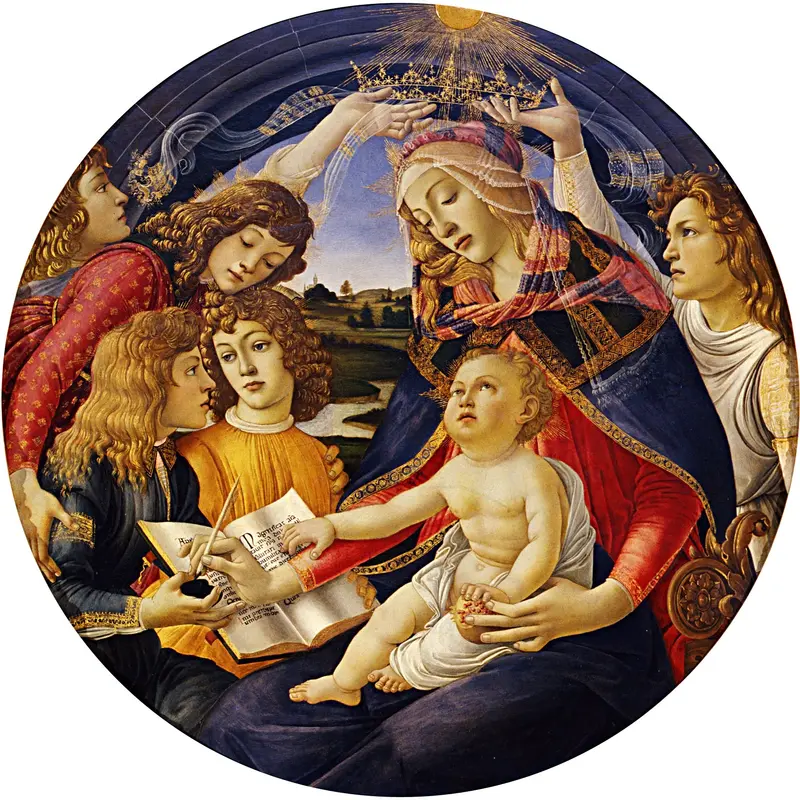
Madonna of the Magnificat
Sandro Botticelli
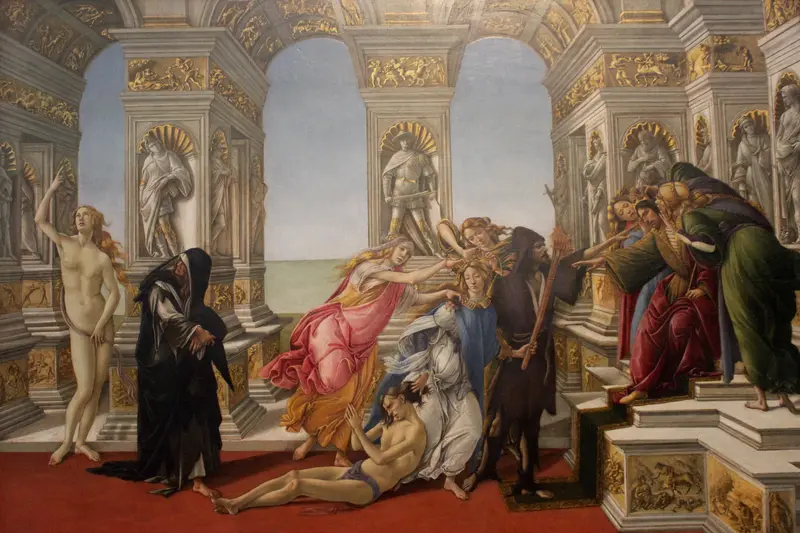
Calumny of Apelles
Sandro Botticelli

Portrait of a young man holding a roundel
Sandro Botticelli

The Trinity with Saint Mary Magdalene and Saint John the Baptist, the Archangel Raphael and Tobias
Sandro Botticelli

Idealized Portrait of a Lady (Portrait of Simonetta Vespucci as Nymph)
Sandro Botticelli





