
Madonna del Padiglione — History & Facts
The most intriguing detail about Madonna del Padiglione is that its title refers to a small, striped tent—a “padiglione”—which shelters the Virgin and Child, an unusual motif in Florentine painting of the late 15th century. The tent’s presence has sparked debate: some scholars see it as a symbol of the tabernacle, the dwelling place of God, while others point to its allusion to the temporary shelters used during religious festivals. Painted by Sandro Botticelli around 1490, the work sits at a crossroads in his career, balancing the lyrical grace of his earlier Madonnas with the more introspective mood of his later years.
The painting’s intimate scale suggests it was intended for private devotion rather than public display. At the heart of the scene, the Virgin Mary gently lifts the curtain of the tent to reveal the Christ Child, who sits upright on her lap, blessing the viewer with a tiny, raised hand. The canopy’s rich red and gold stripes catch the eye, framing the holy figures and suggesting both protection and revelation. The infant John the Baptist kneels in adoration at the left, his reed cross a quiet foreshadowing of Christ’s fate.
Botticelli’s delicate lines and soft modeling of faces lend the scene a sense of quiet intimacy, distinct from the grandeur of Leonardo da Vinci’s Virgin of the Rocks, where the figures are enveloped in mysterious shadow. Here, light falls gently, illuminating the Madonna’s serene expression and the playful curls of the Child, inviting a personal, almost tender encounter with the divine. The precise origins of Madonna del Padiglione remain uncertain, as no contemporary documents record its commission or early ownership. What is clear is that the painting belongs to a flourishing tradition of private devotional images produced by Botticelli and his workshop in Florence during the 1480s and 1490s.
Over the centuries, the work passed through several collections, at times attributed to Filippino Lippi before consensus returned to Botticelli. Today, it is housed in the Museo del Prado, where it offers visitors a glimpse into both the spiritual life and artistic innovation of Renaissance Florence.
More Artworks by Sandro Botticelli
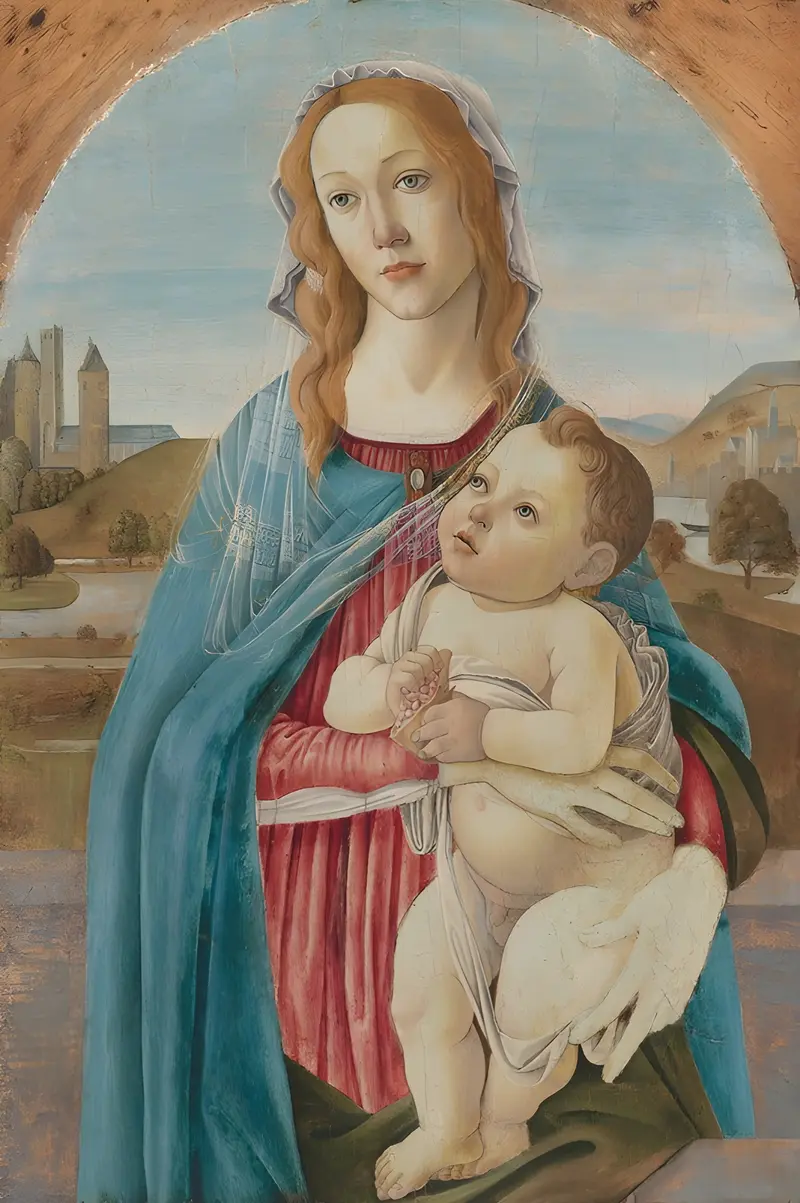
Virgin and Child
Sandro Botticelli
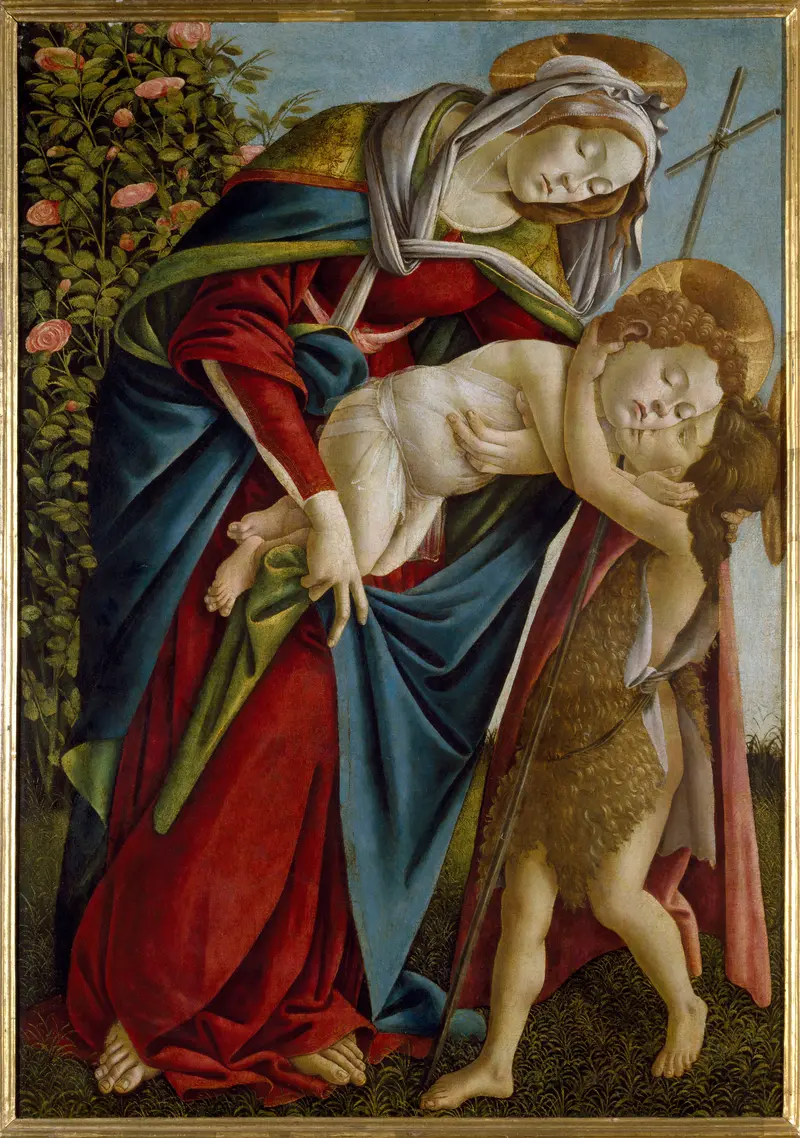
Madonna and Child and the Young St John the Baptist
Sandro Botticelli
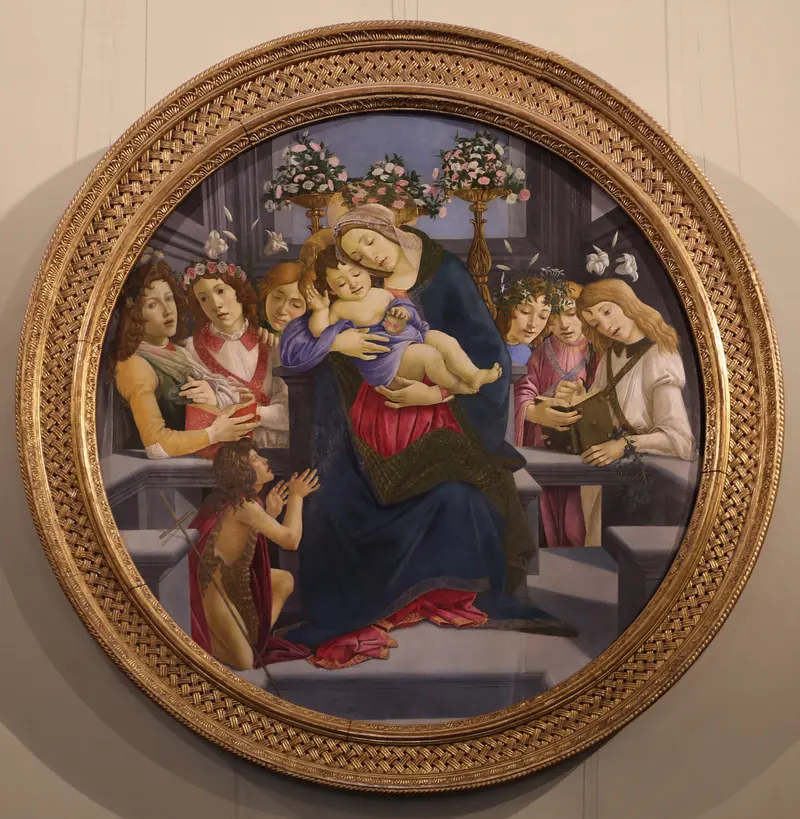
Madonna and Child with six angels and Saint John the Baptist as Child
Sandro Botticelli
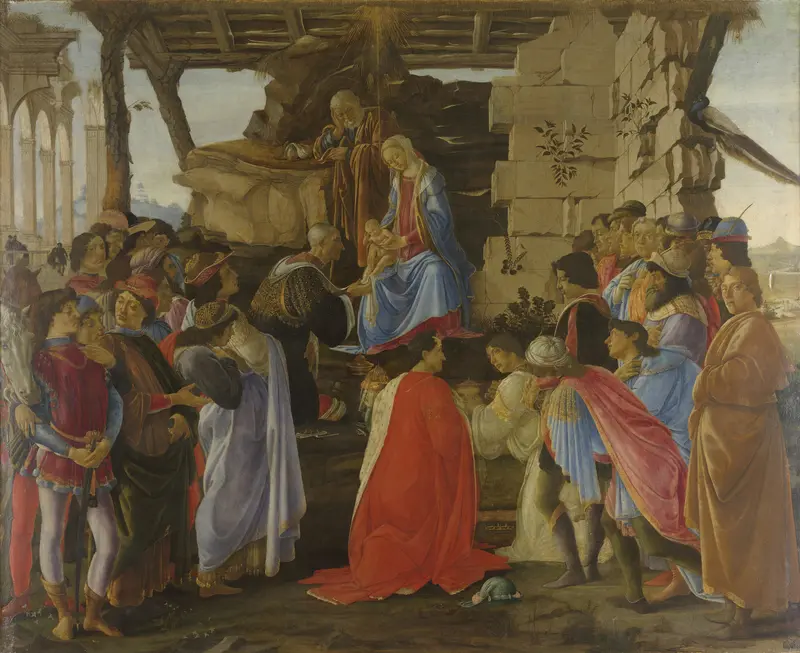
Adoration of the Magi
Sandro Botticelli

Virgin and Child with the Young Saint John the Baptist
Sandro Botticelli
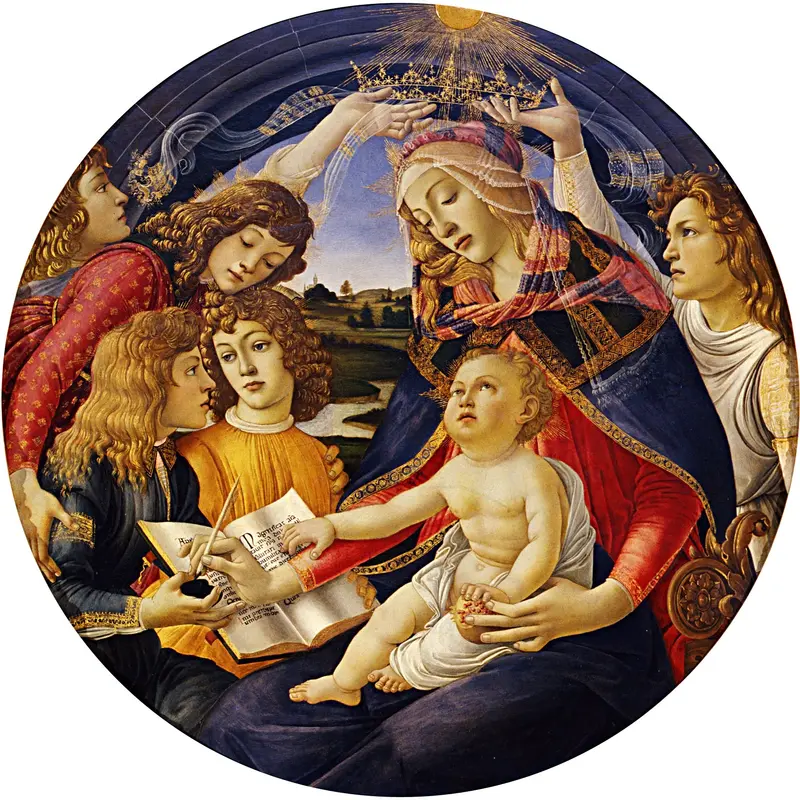
Madonna of the Magnificat
Sandro Botticelli
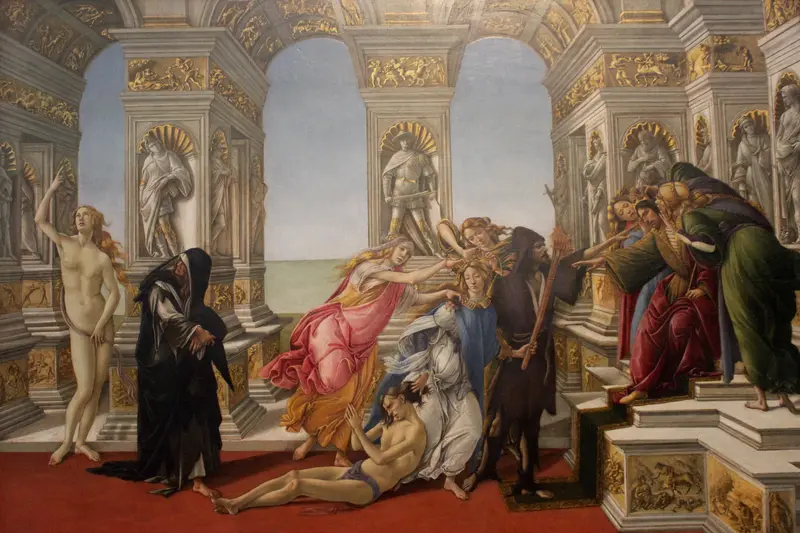
Calumny of Apelles
Sandro Botticelli
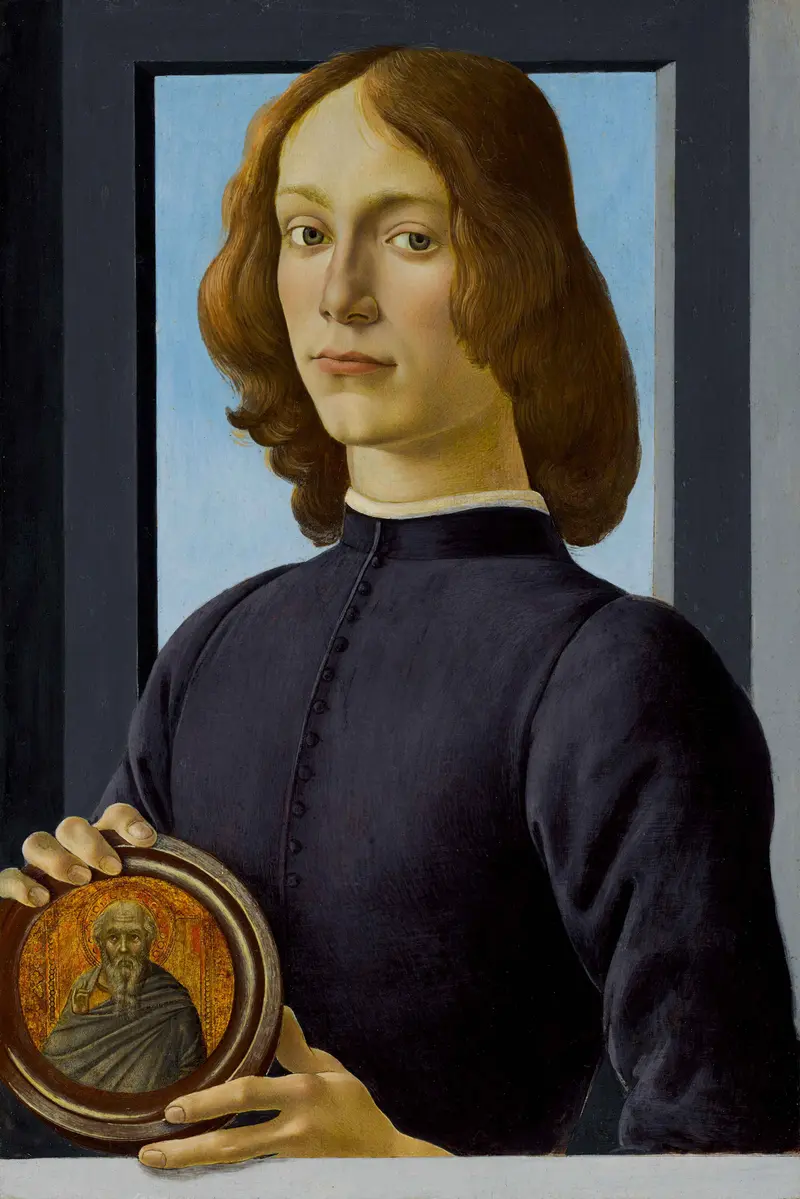
Portrait of a young man holding a roundel
Sandro Botticelli

The Trinity with Saint Mary Magdalene and Saint John the Baptist, the Archangel Raphael and Tobias
Sandro Botticelli
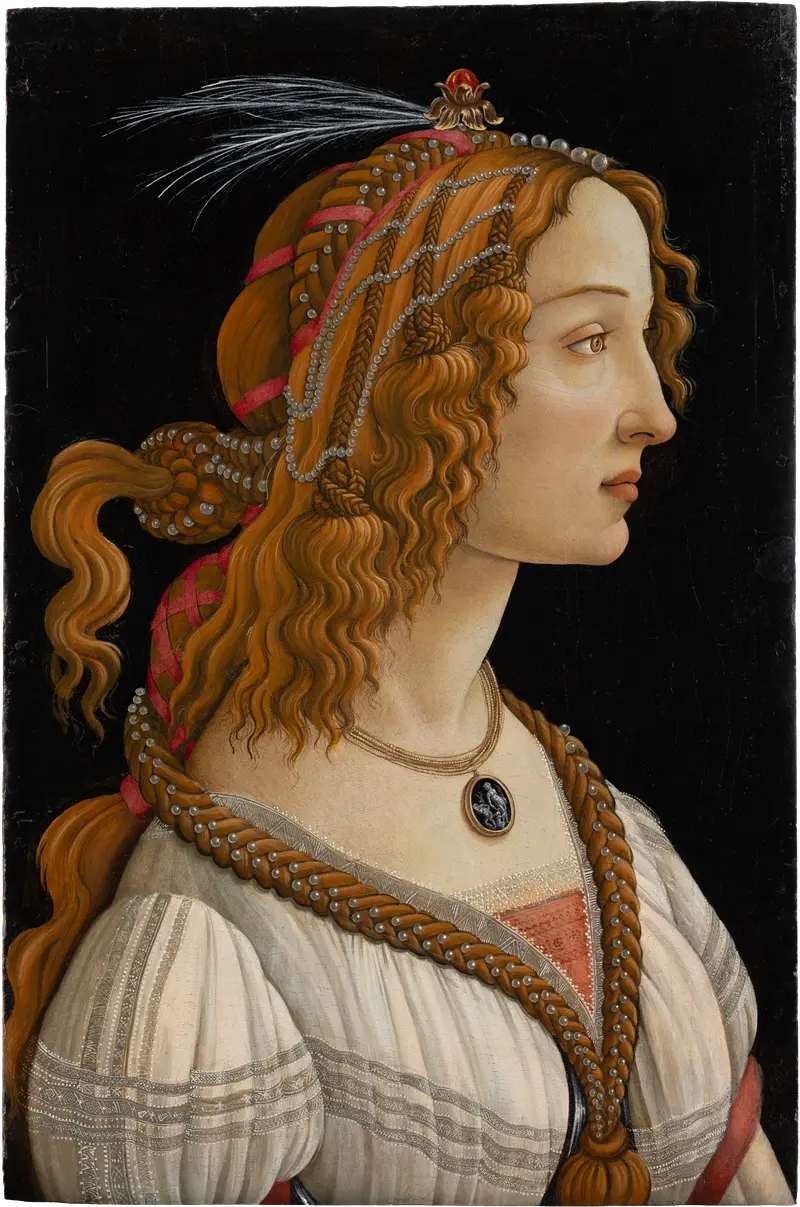
Idealized Portrait of a Lady (Portrait of Simonetta Vespucci as Nymph)
Sandro Botticelli





