
Art movement · c. 1150–1500s · Europe
Gothic Art and Paintings
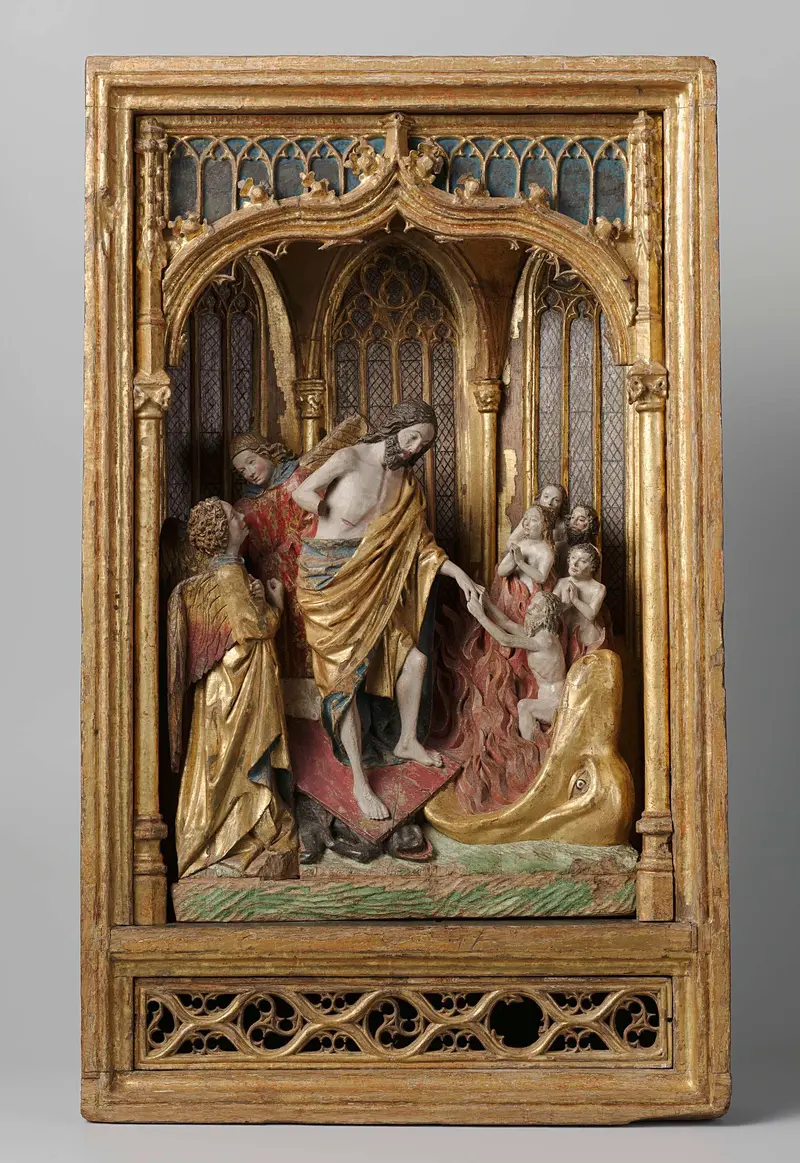
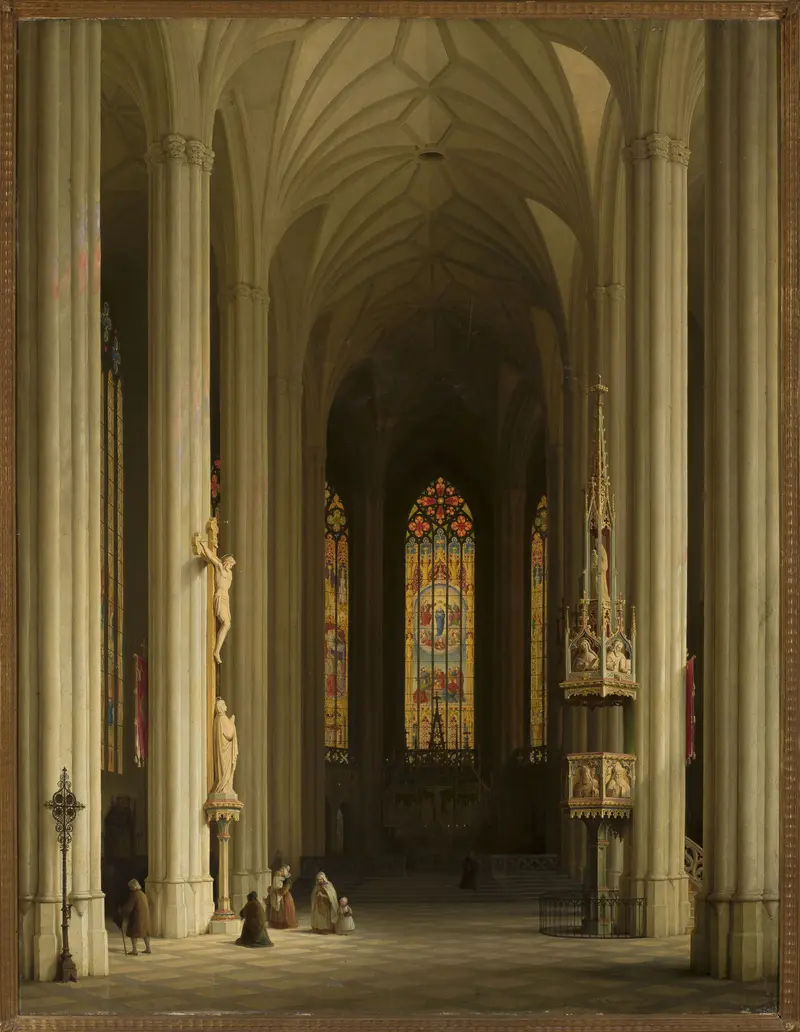
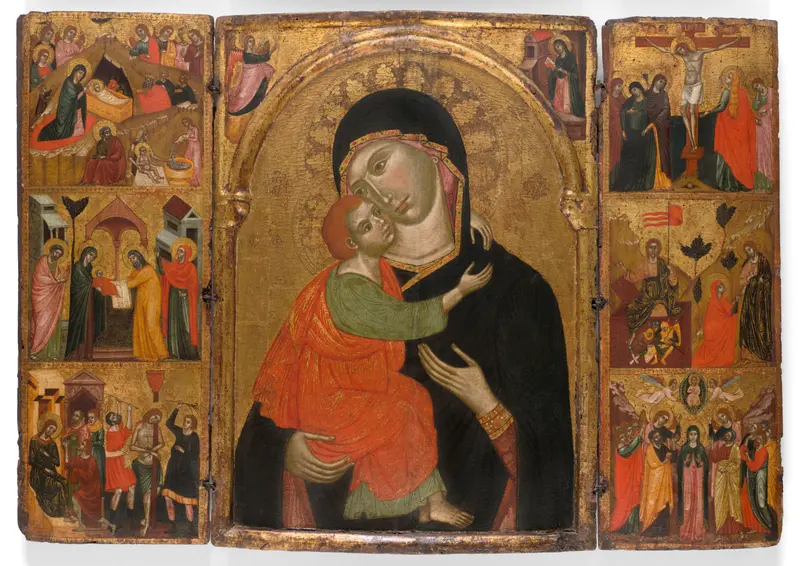
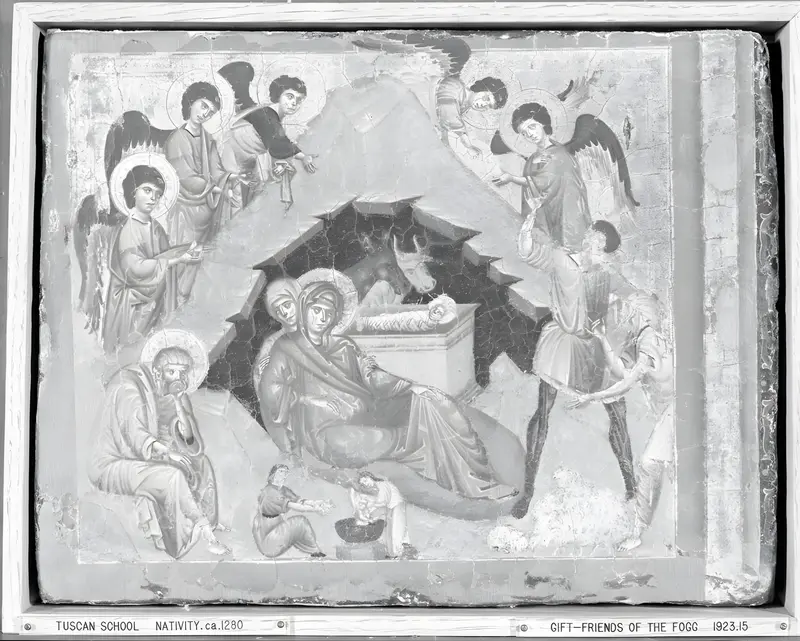
Gothic art is the style of late medieval European art that began in northern France in the mid-1100s and spread across western Europe over the next hundred years. Its painters worked for the Church and for princely courts, on altarpieces with gold backgrounds, painted crosses, wall paintings and illuminated manuscripts, and their figures are elongated, with flowing drapery, bright color and intricate detail. They include Cimabue, Giotto, Duccio, Simone Martini and the Limbourg brothers.
From the late 1300s a courtly version, International Gothic, rich in color, gold and natural detail, was practiced at courts in France, Italy and Bohemia. Gothic gave way to the Renaissance at different times in different places: in Florence in the early 1400s, in northern Europe a little later. The Très Riches Heures, the prayer book the Limbourg brothers painted for the Duke of Berry, holds 66 large miniatures and 65 small ones on 206 leaves.
Browse 354 Gothic paintings and artworks below, all public domain and free to download.
Selected and written by Pavel MazuelasUpdated November 5, 2026
Part of Art Movements and Painting StylesRelated: Renaissance, Northern Renaissance, Famous Religious Paintings
All Gothic paintings and artworks
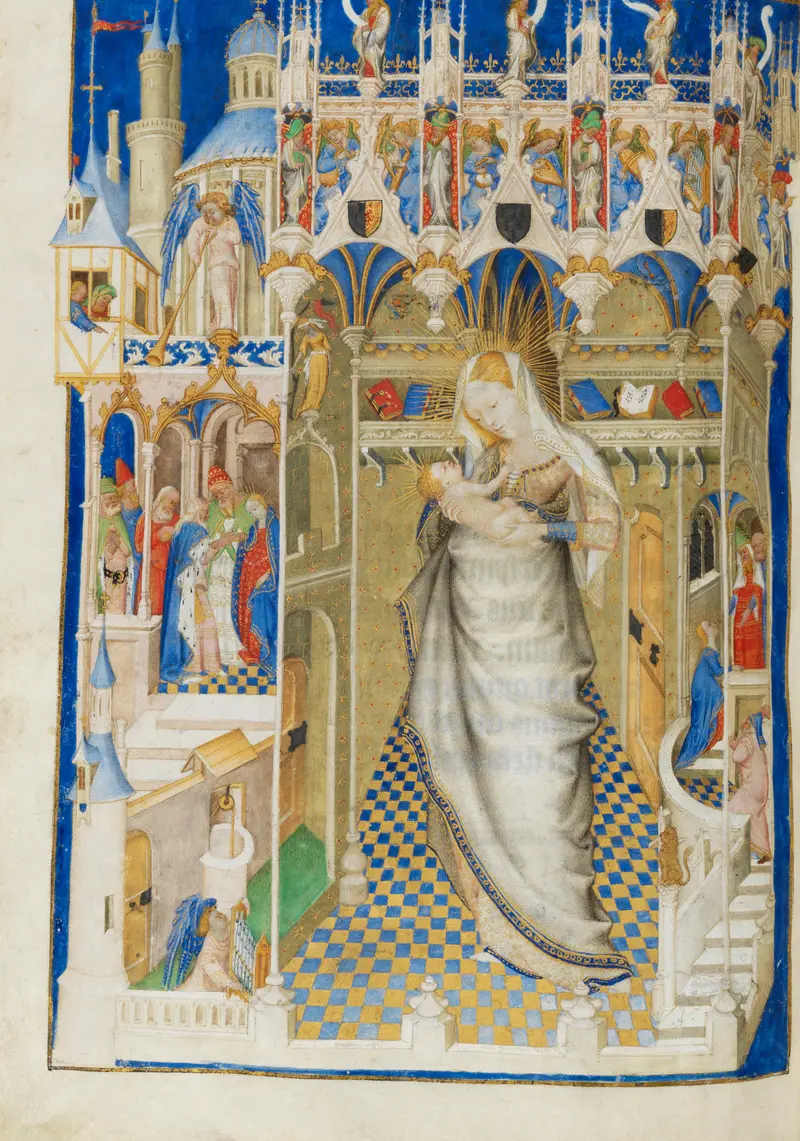
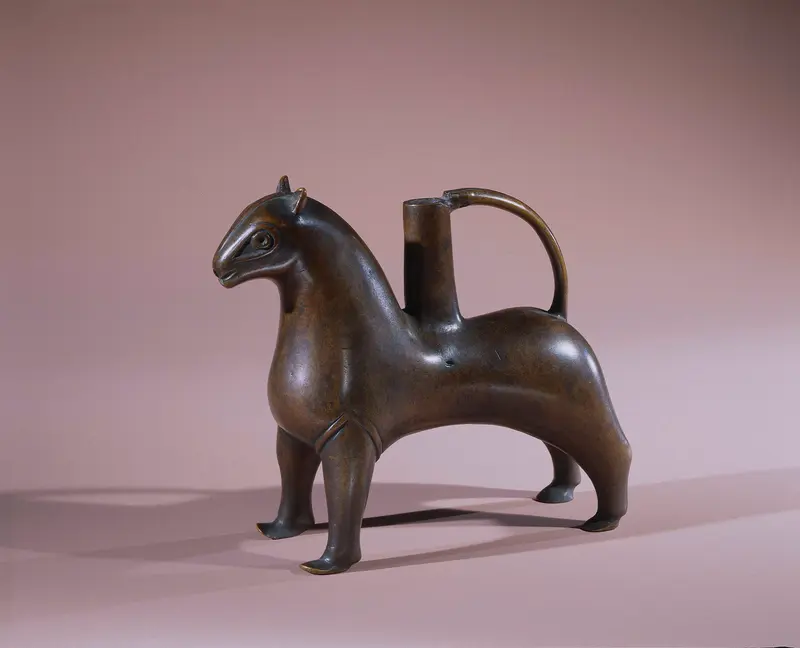
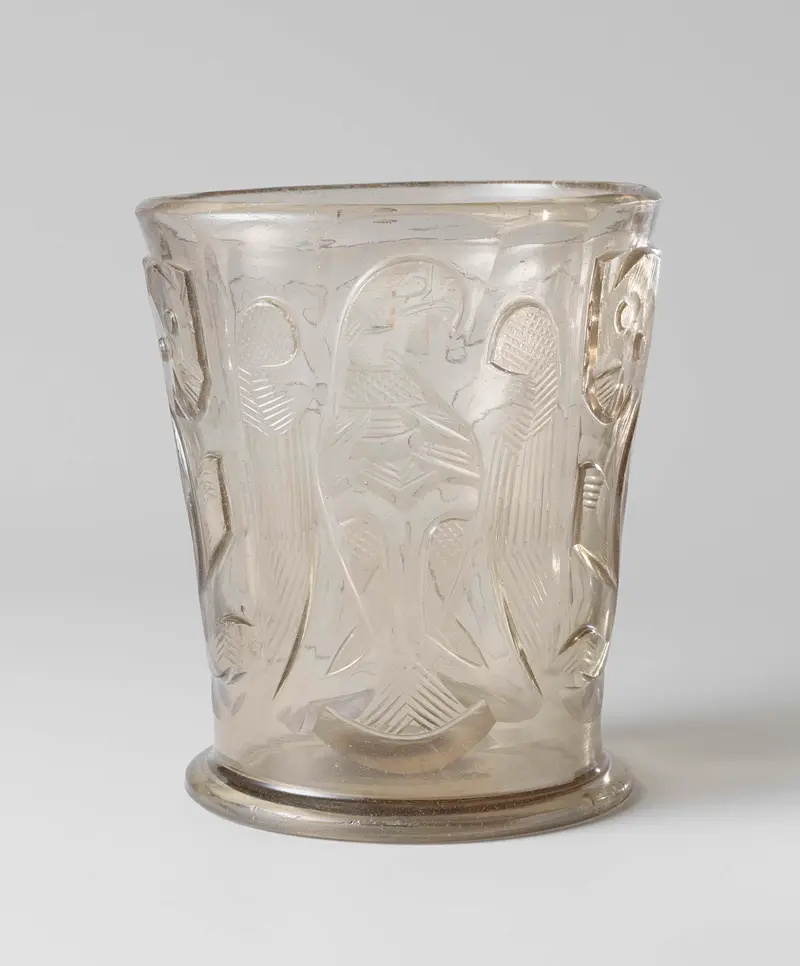
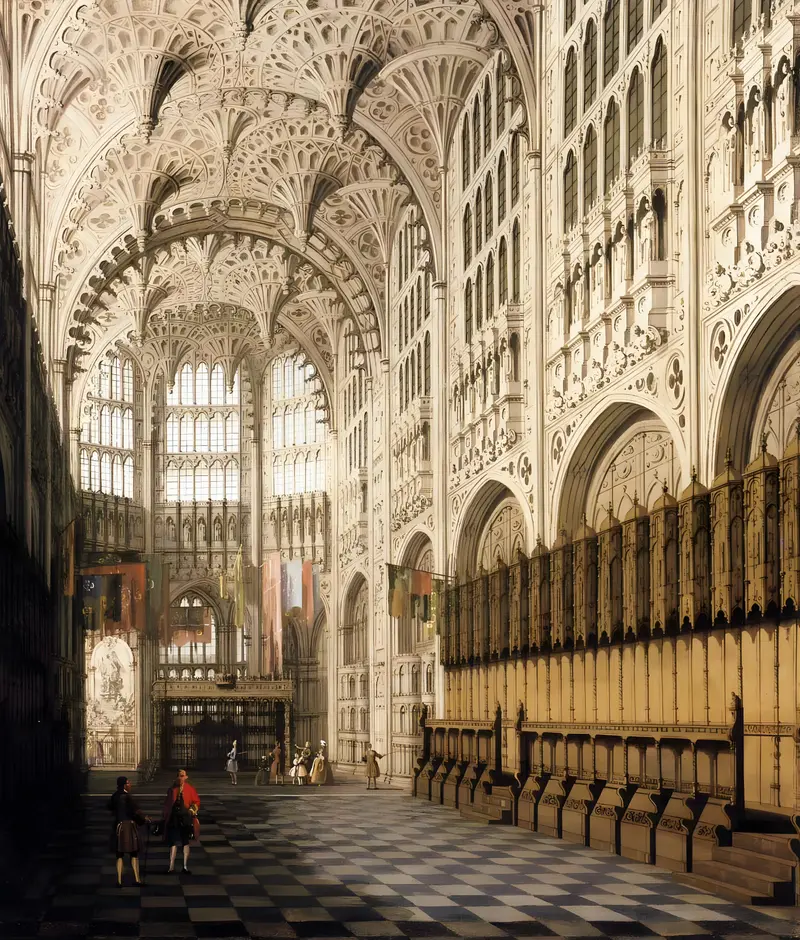
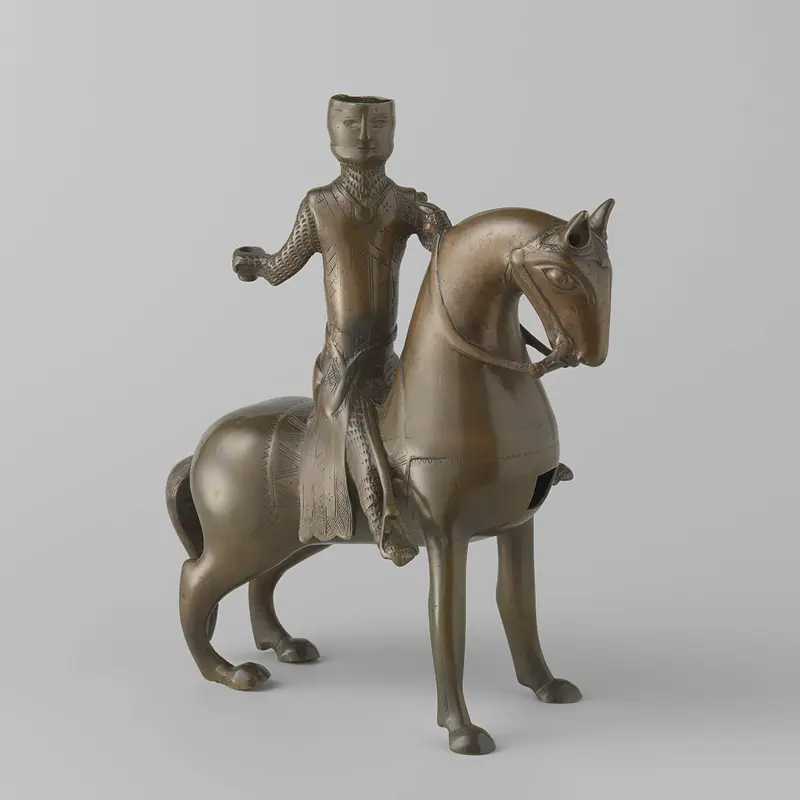
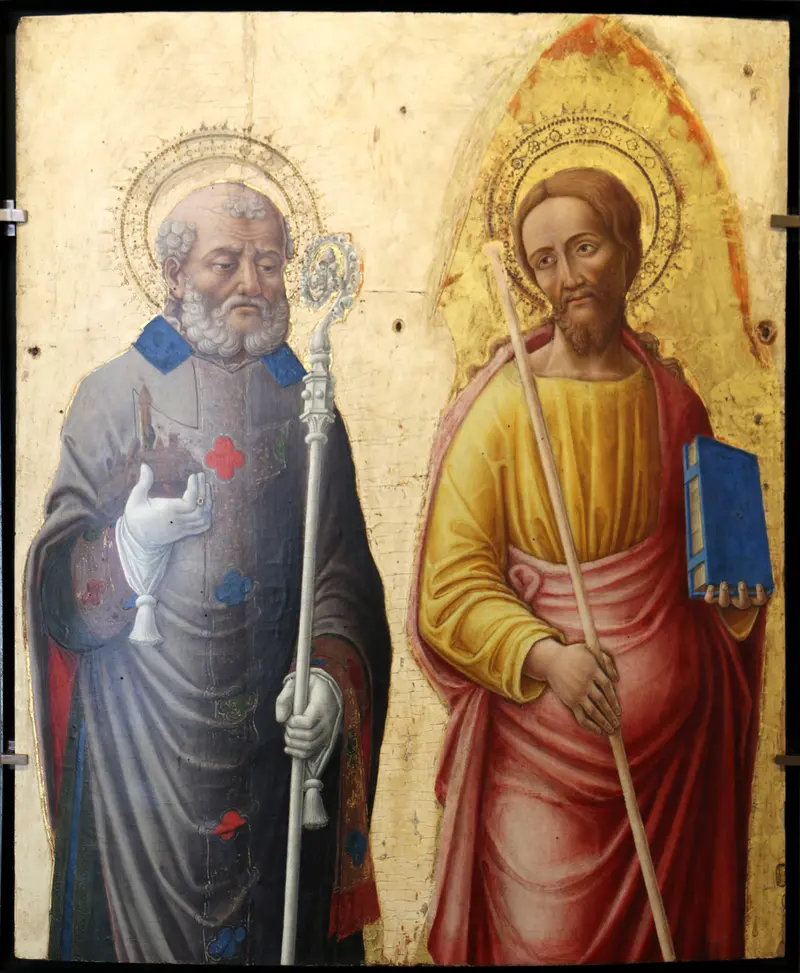
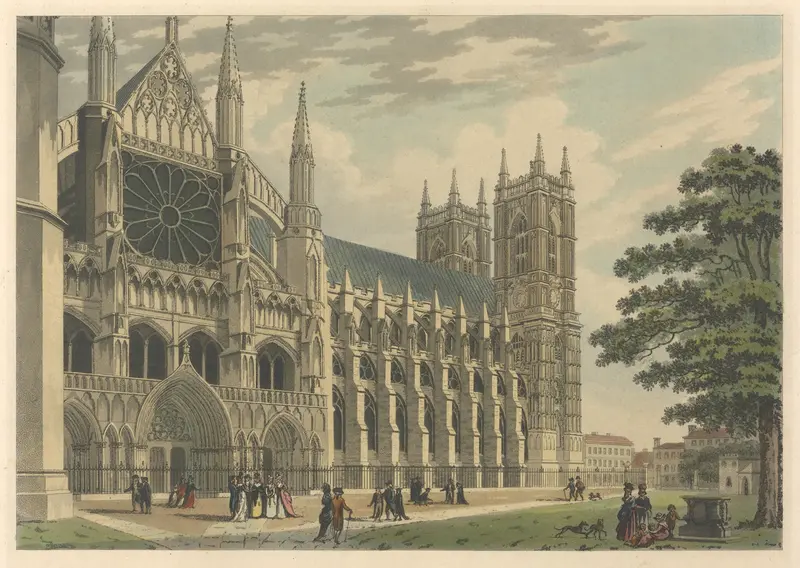
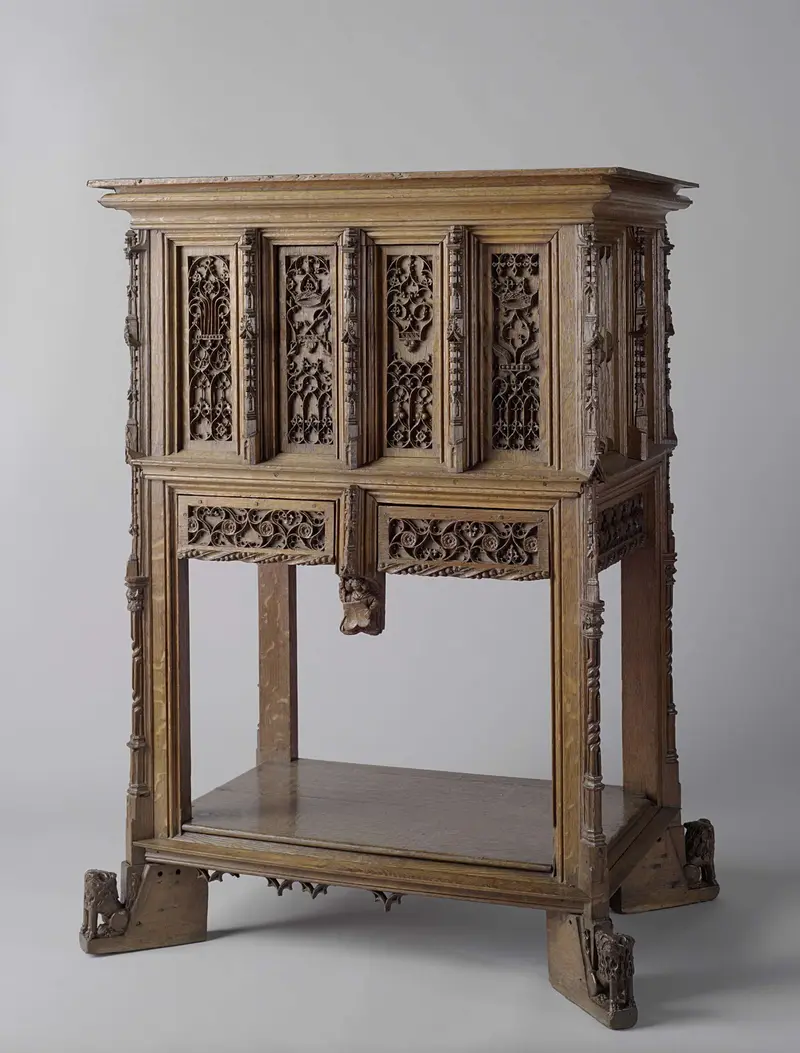
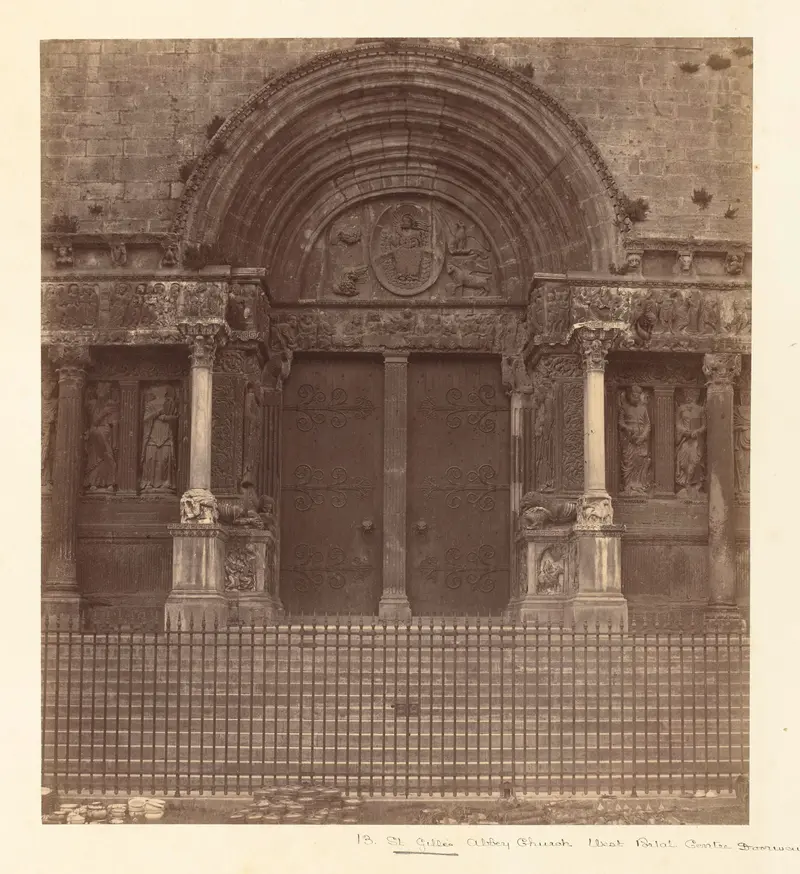
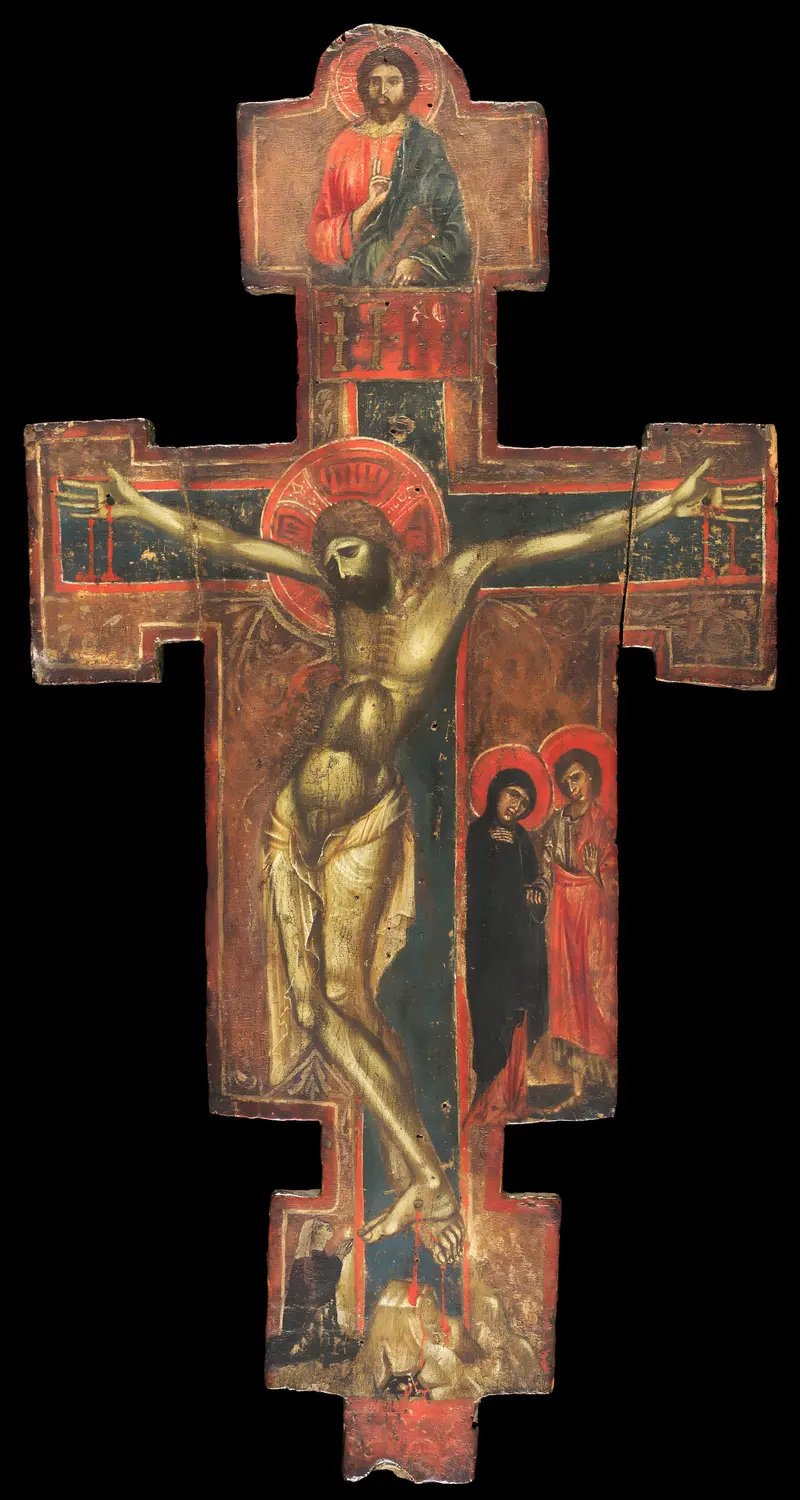
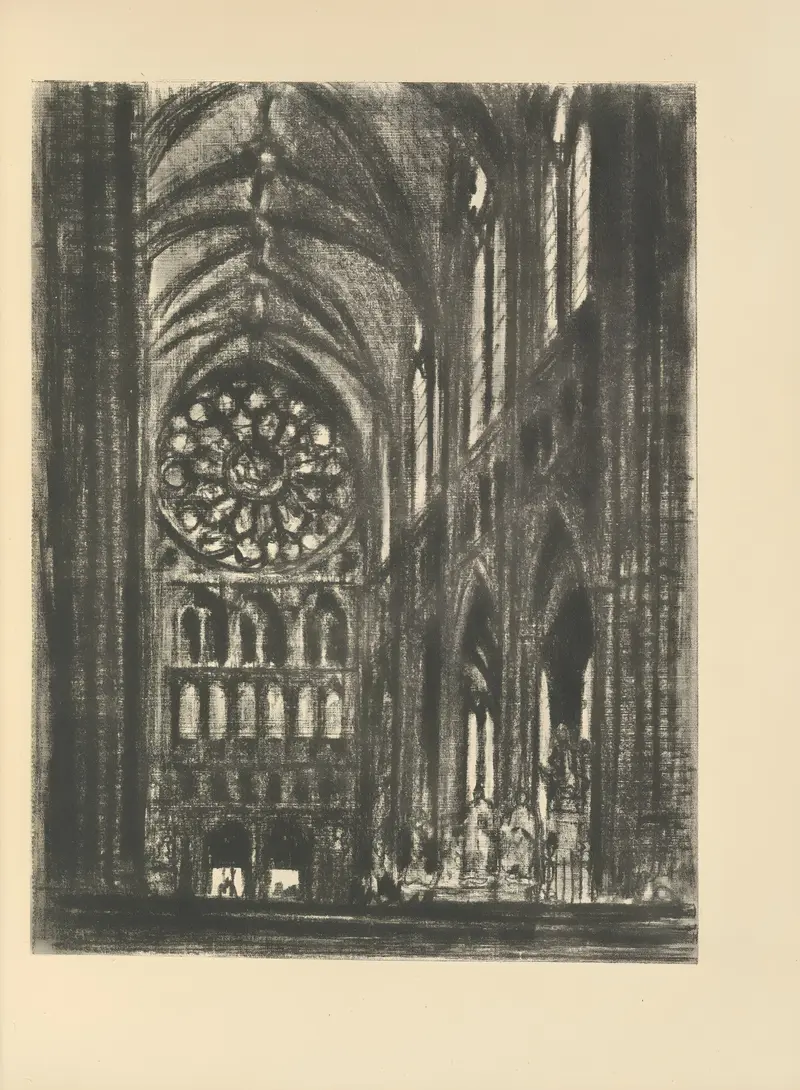
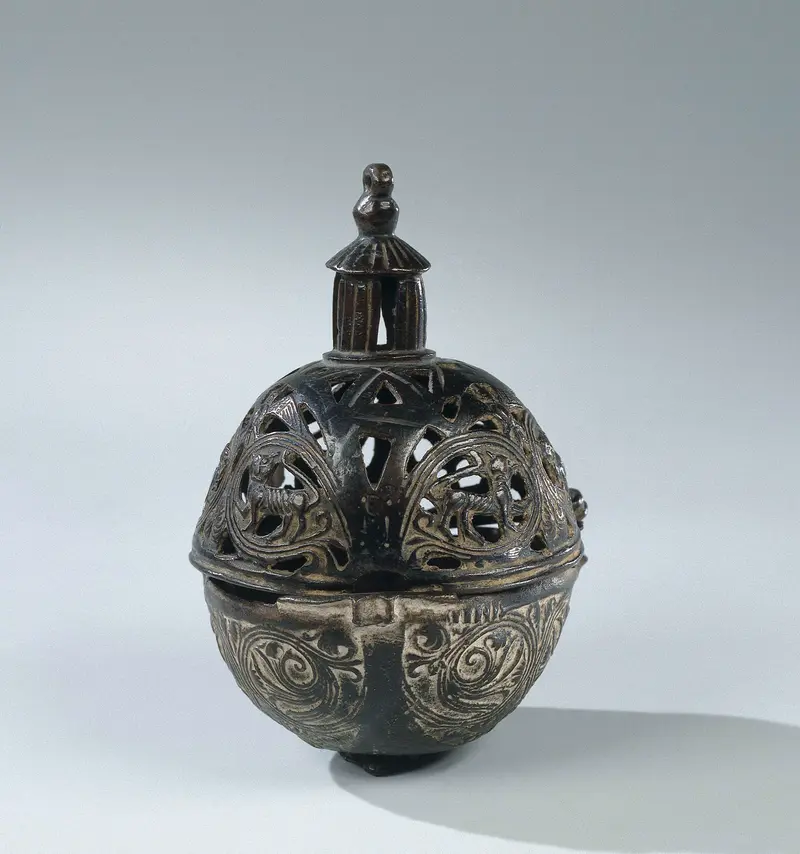
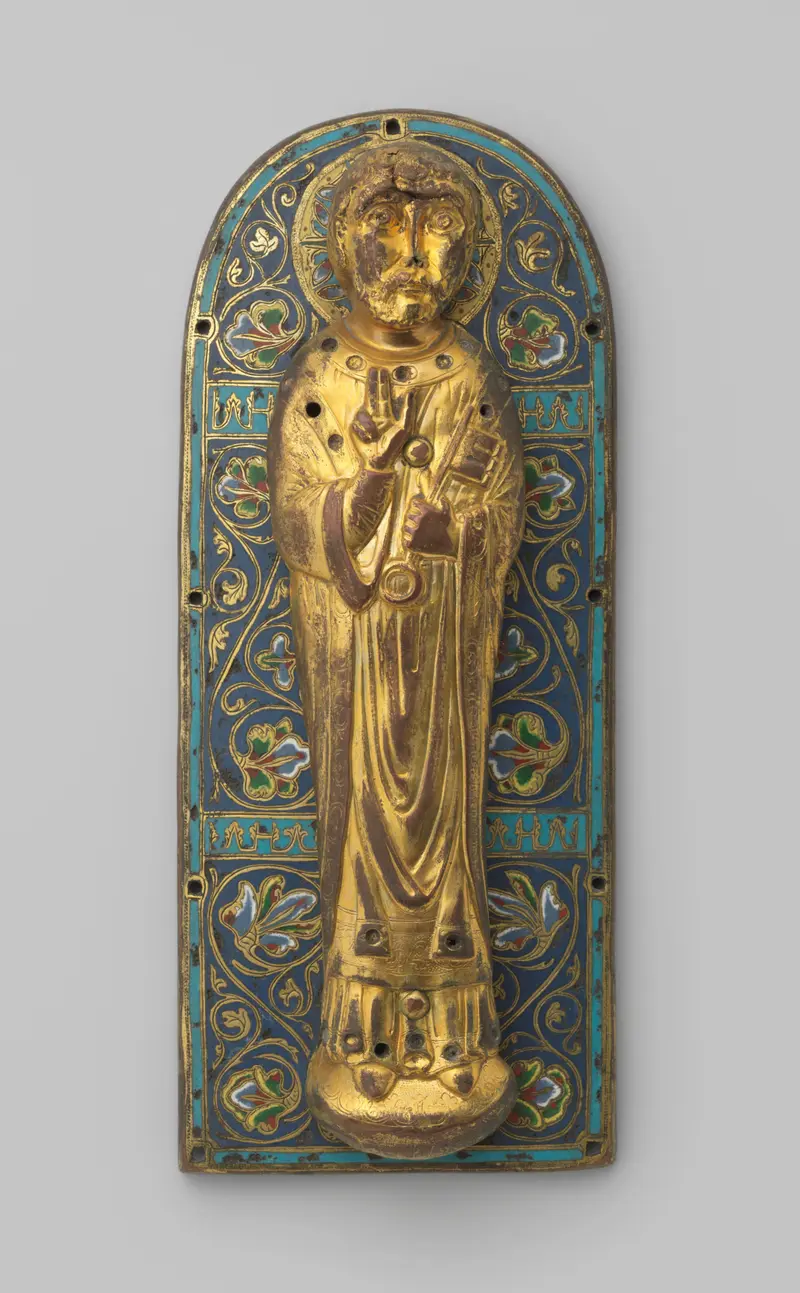
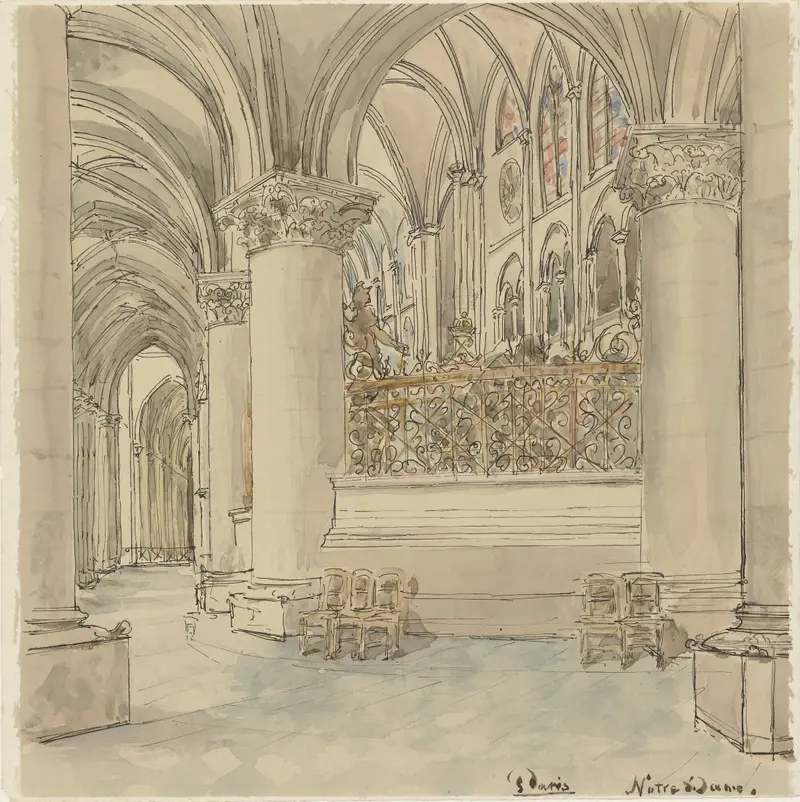
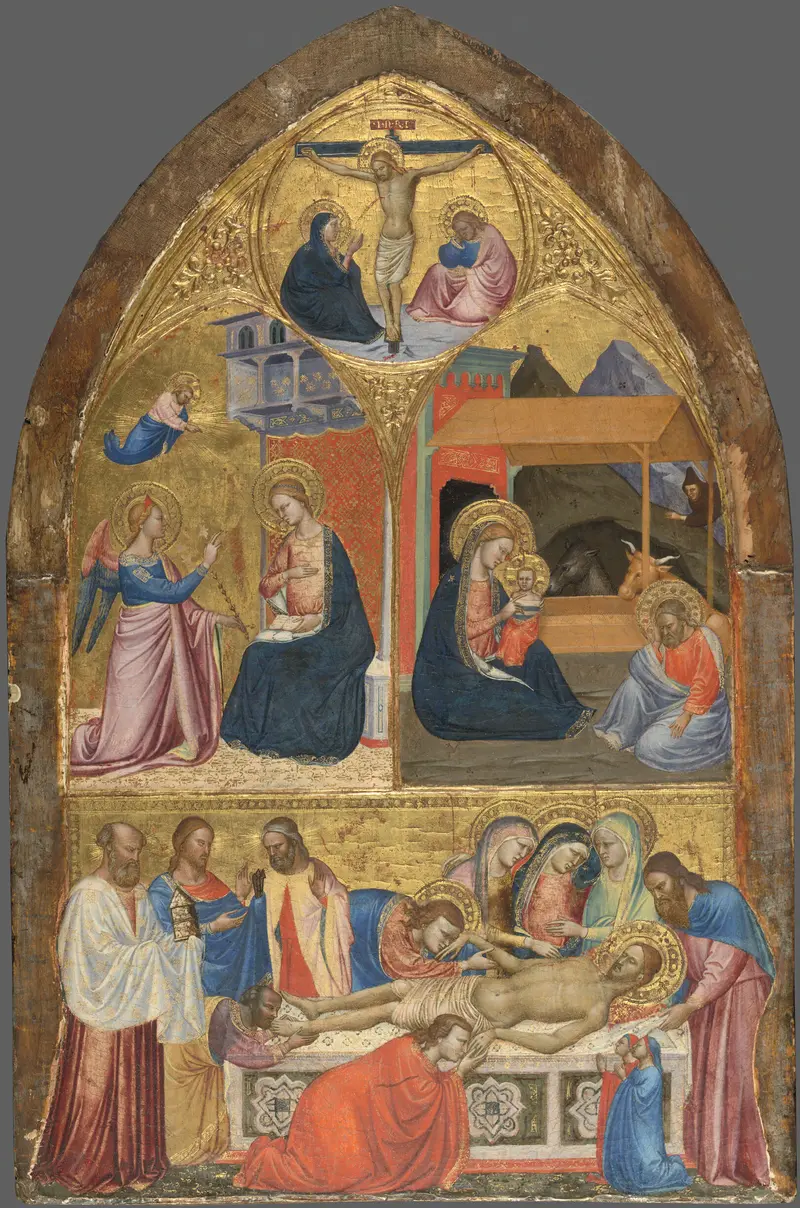
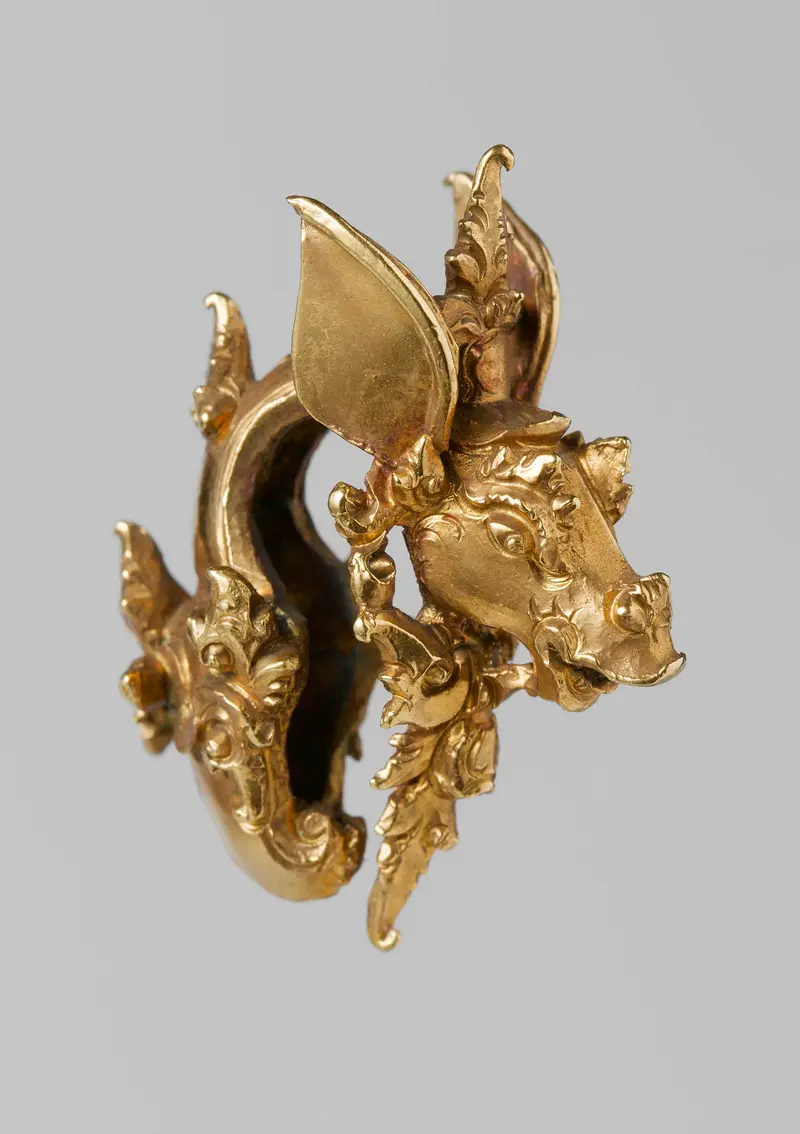
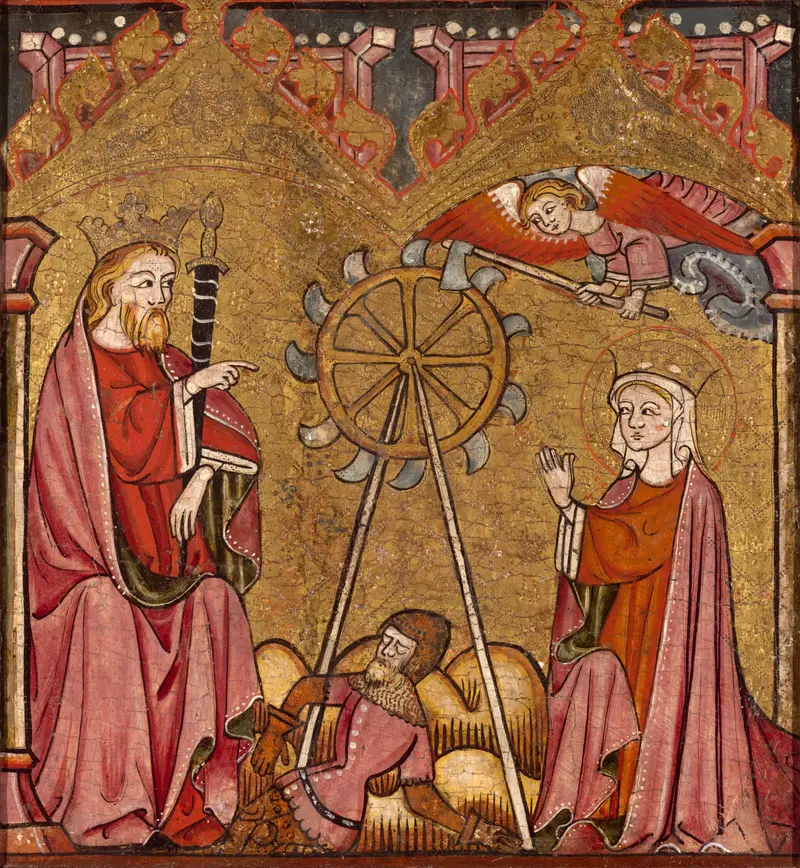
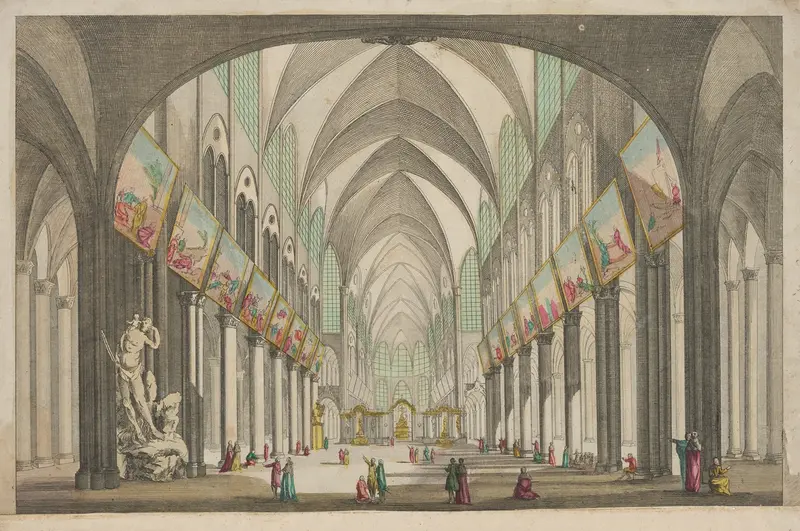
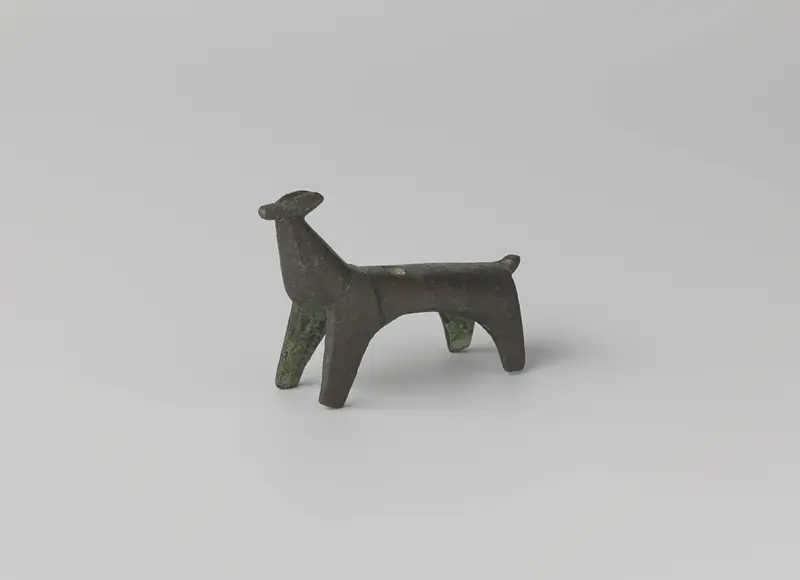
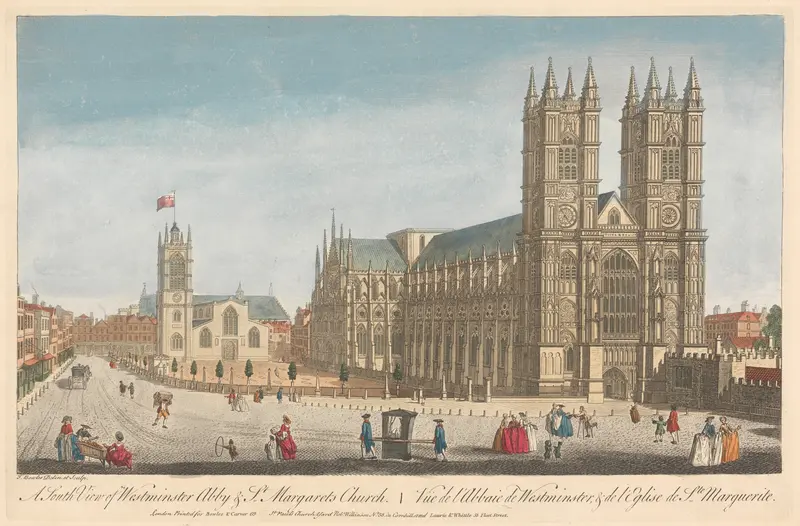
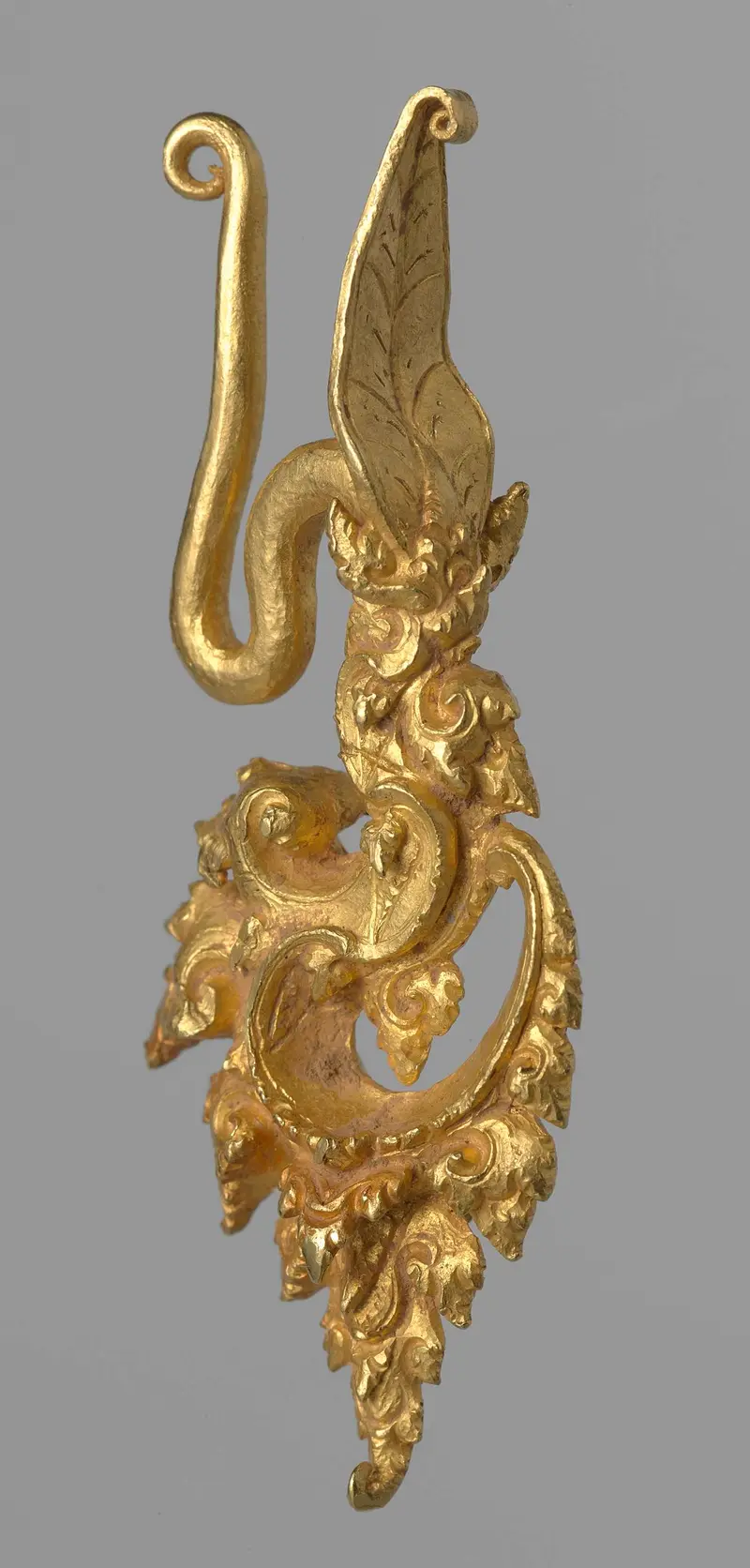
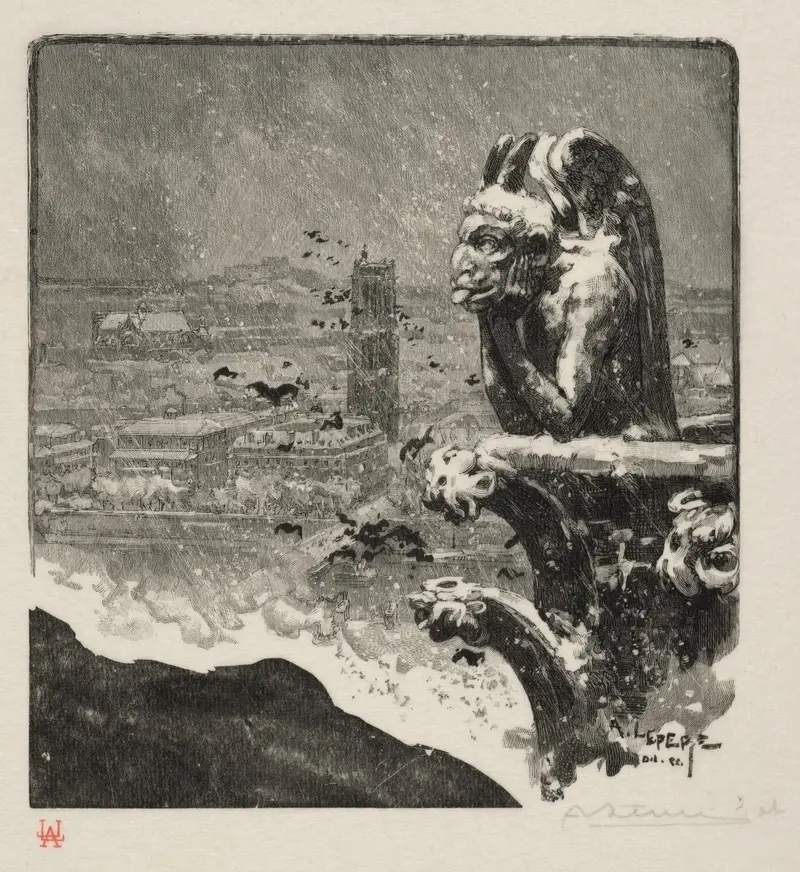
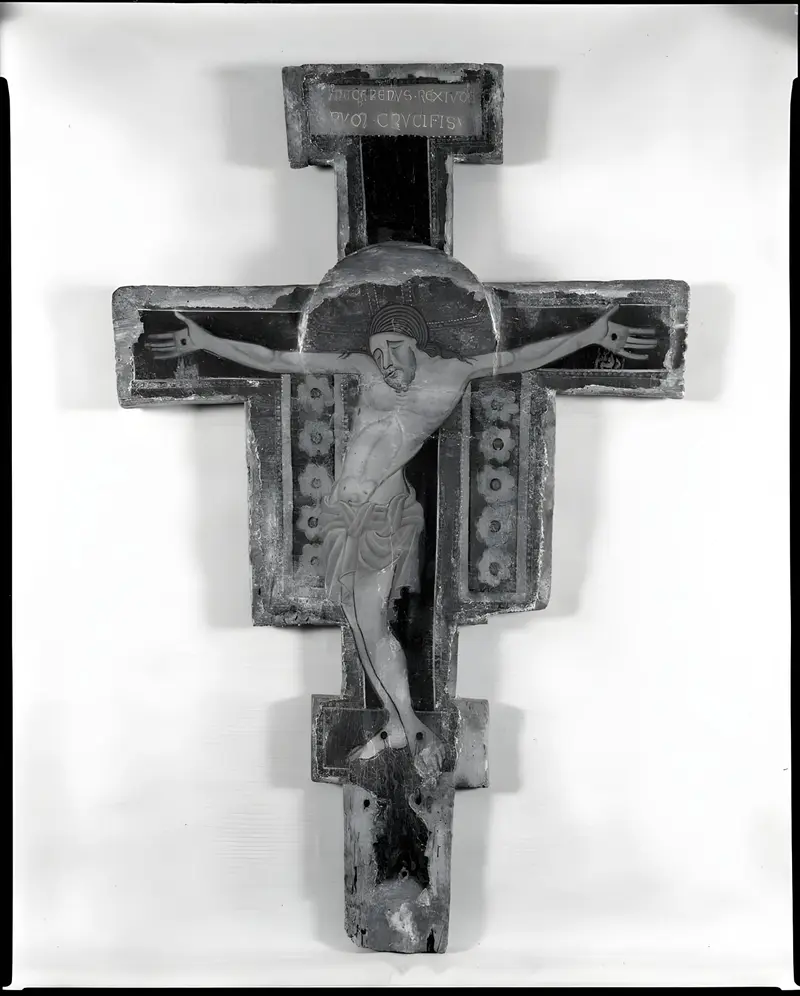
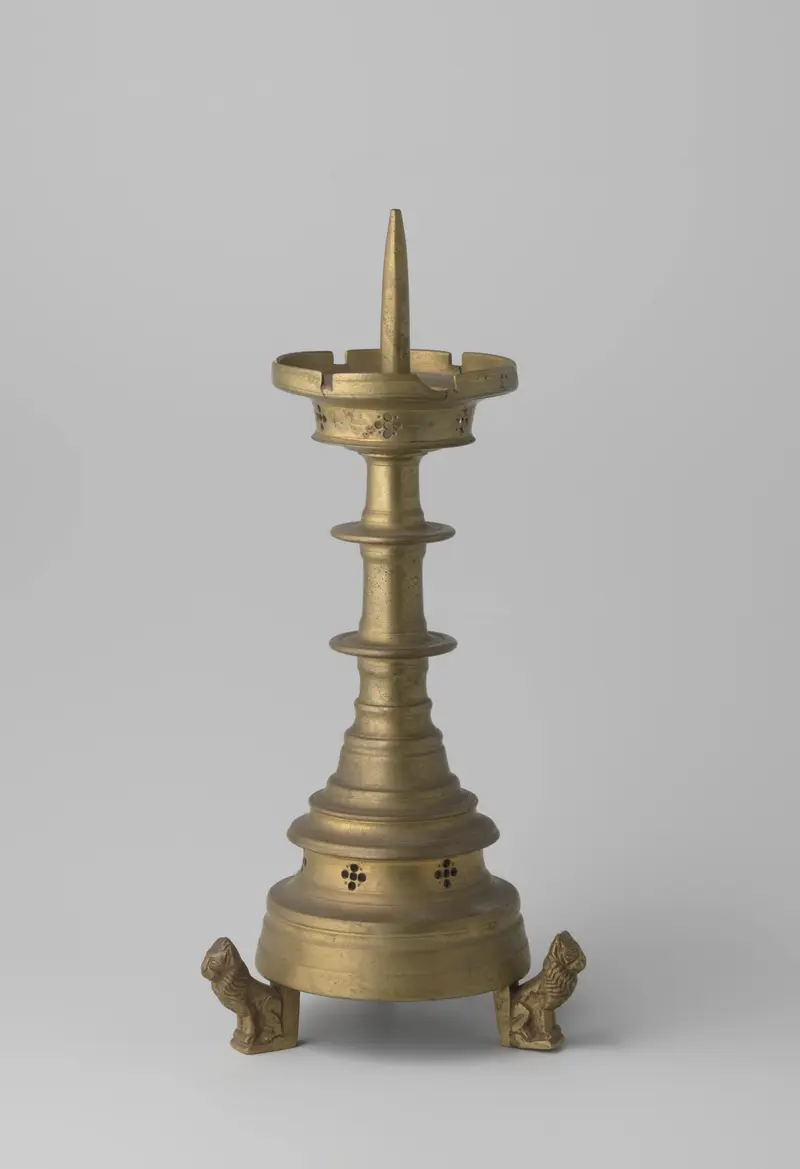
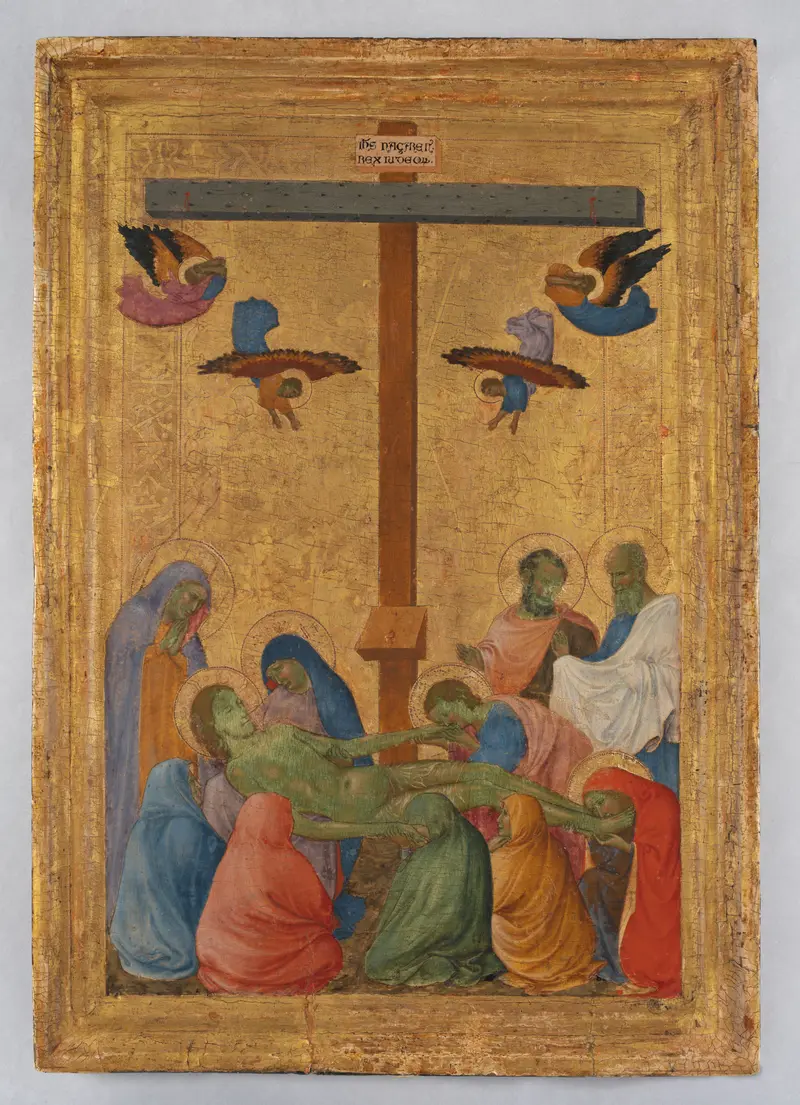
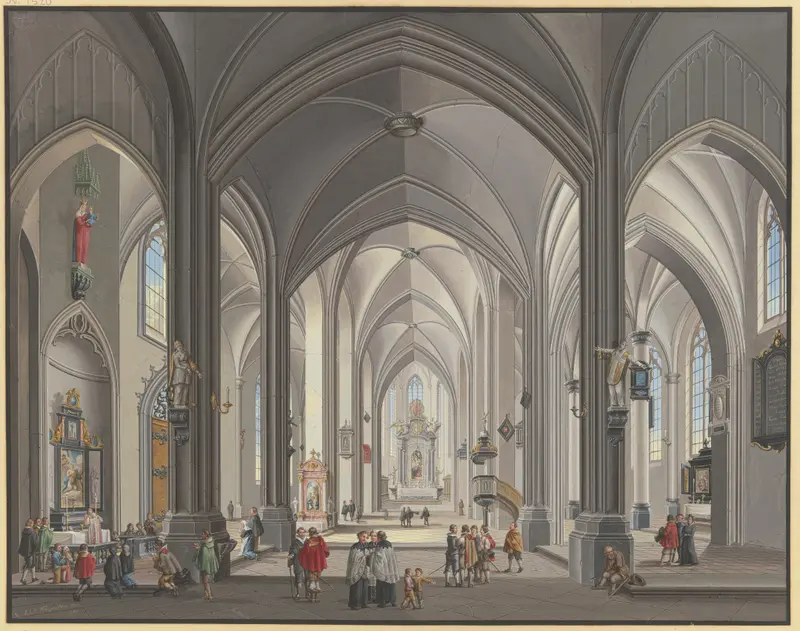
Altarpieces, illuminated manuscript pages and painted crosses, medieval metalwork and glass, and many later prints and drawings of Gothic churches. All public domain, free to download.



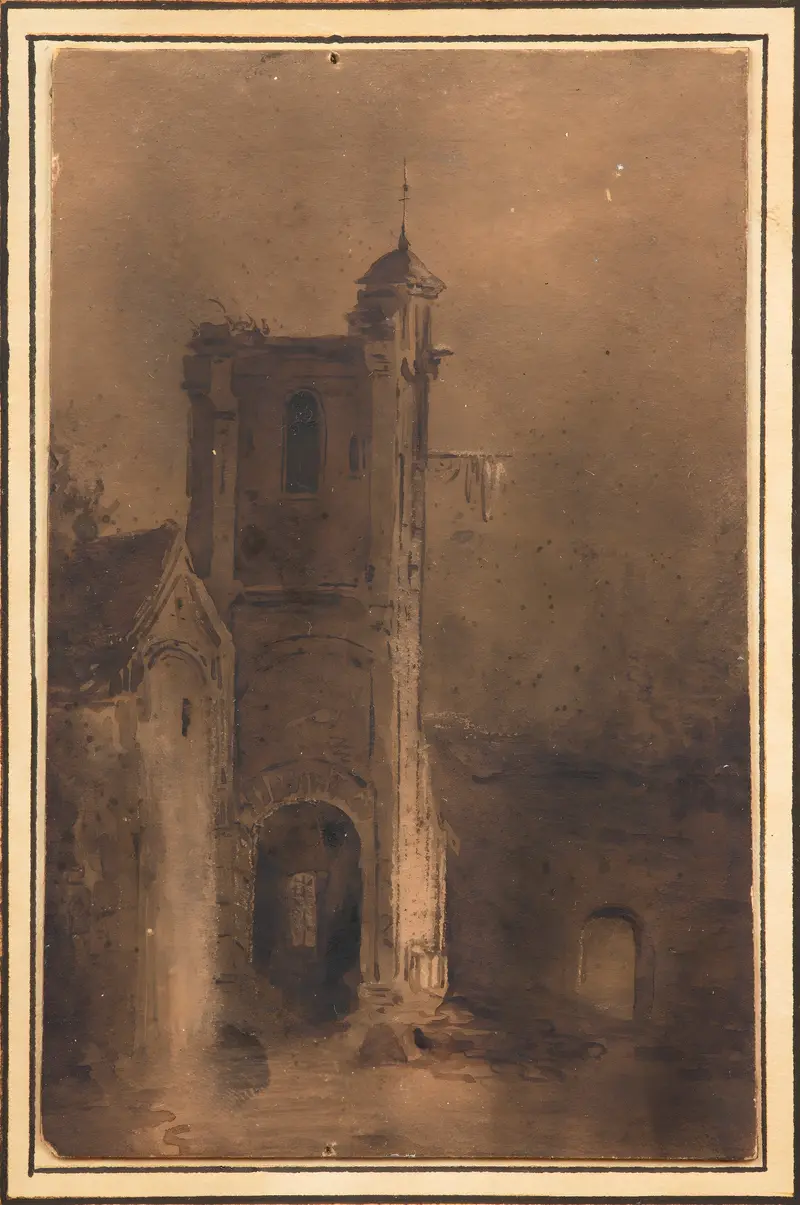
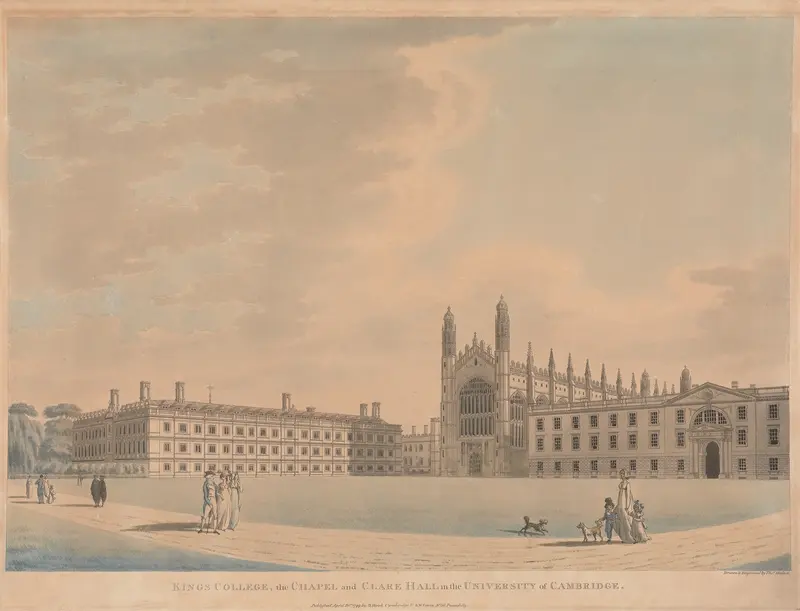
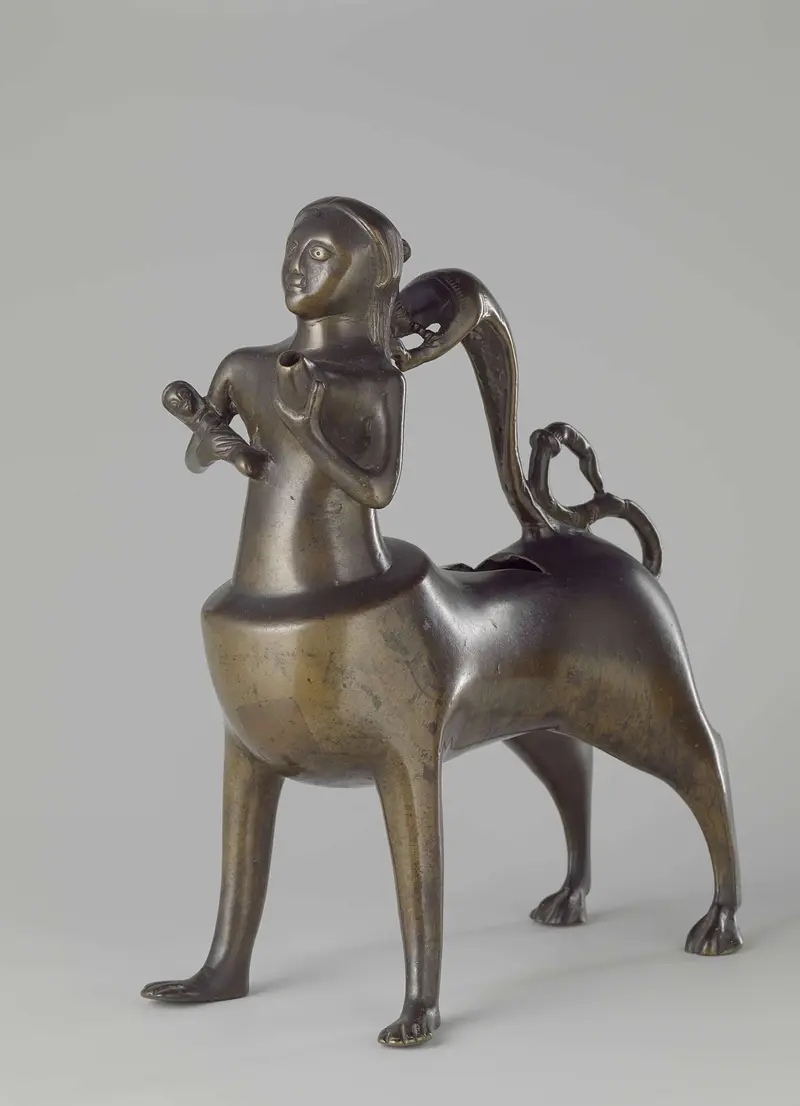

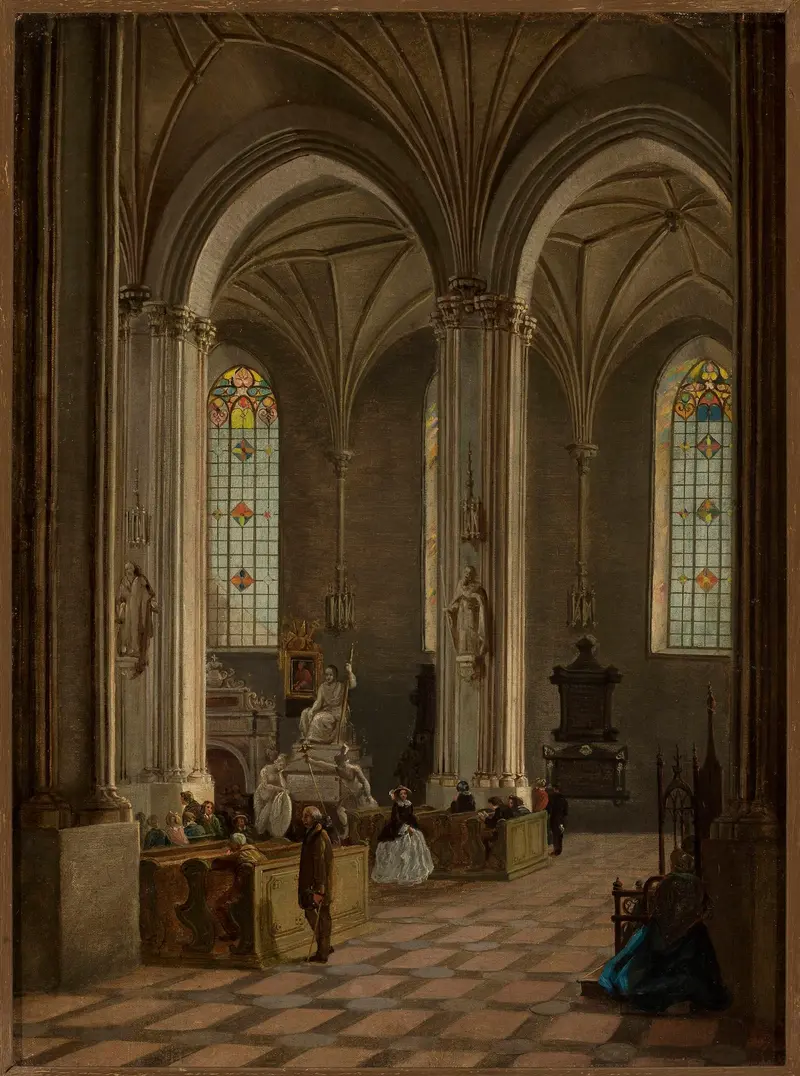



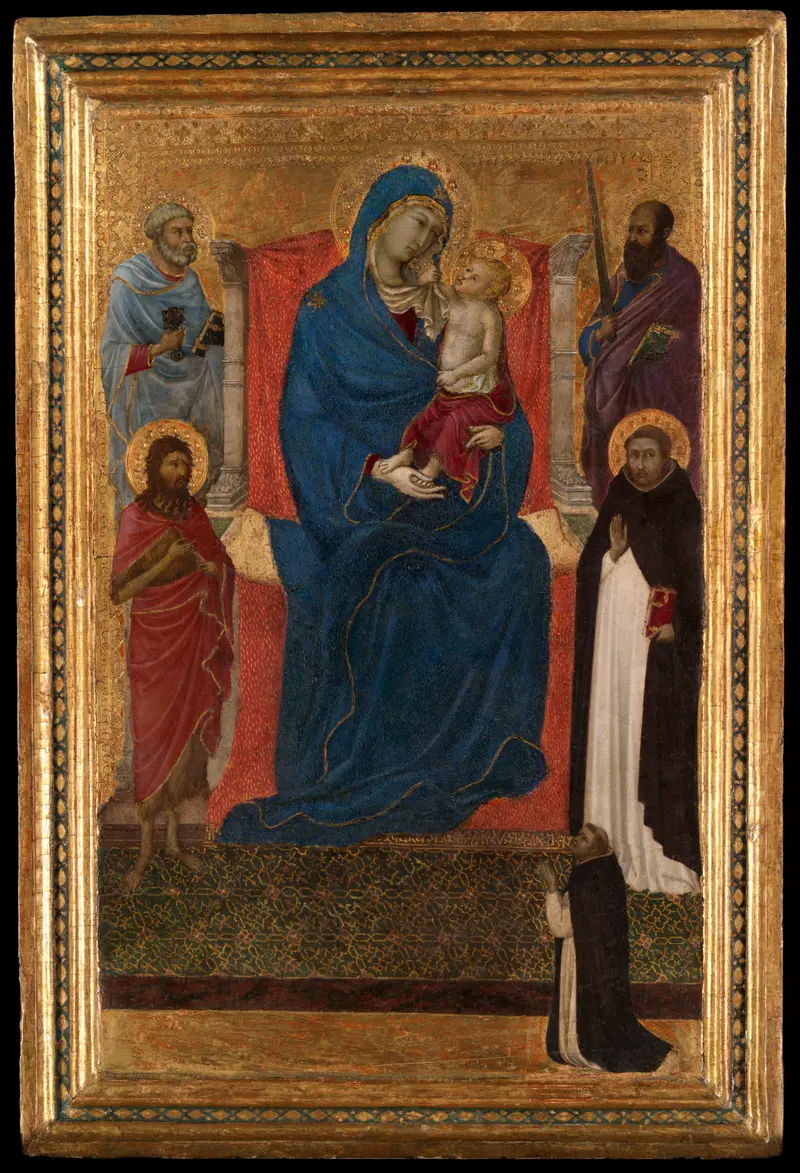
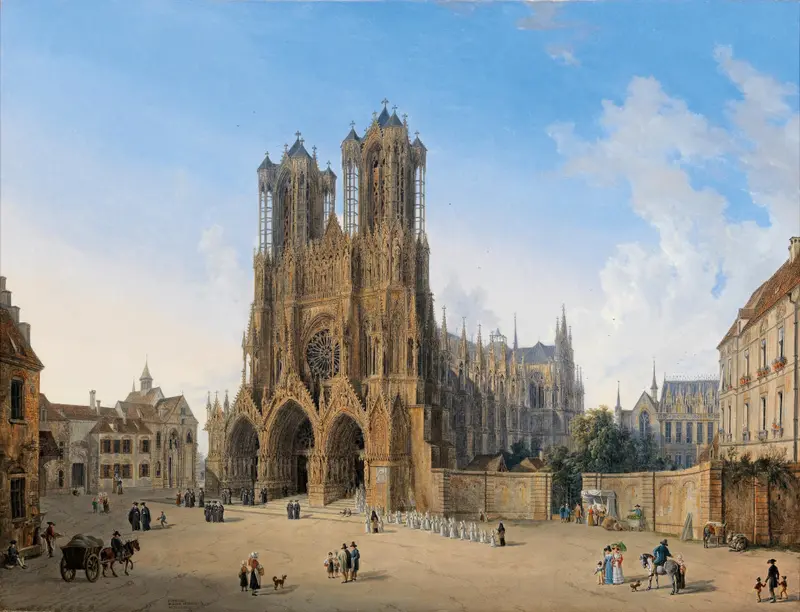
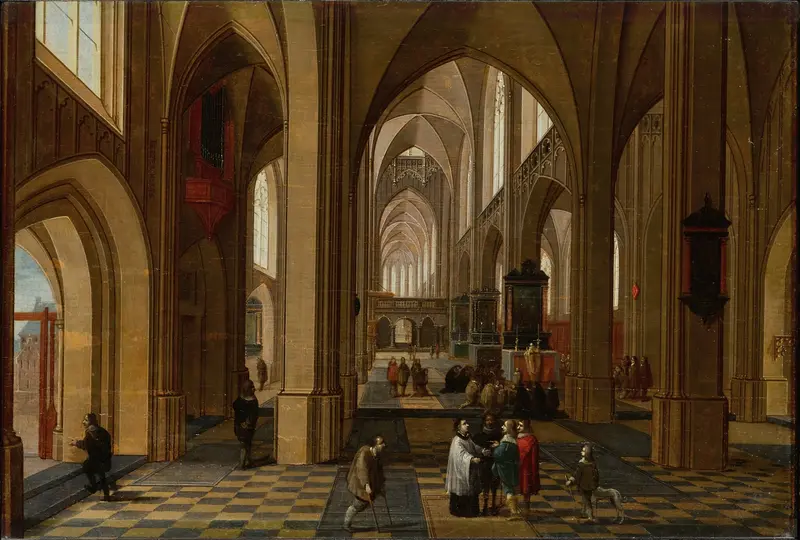
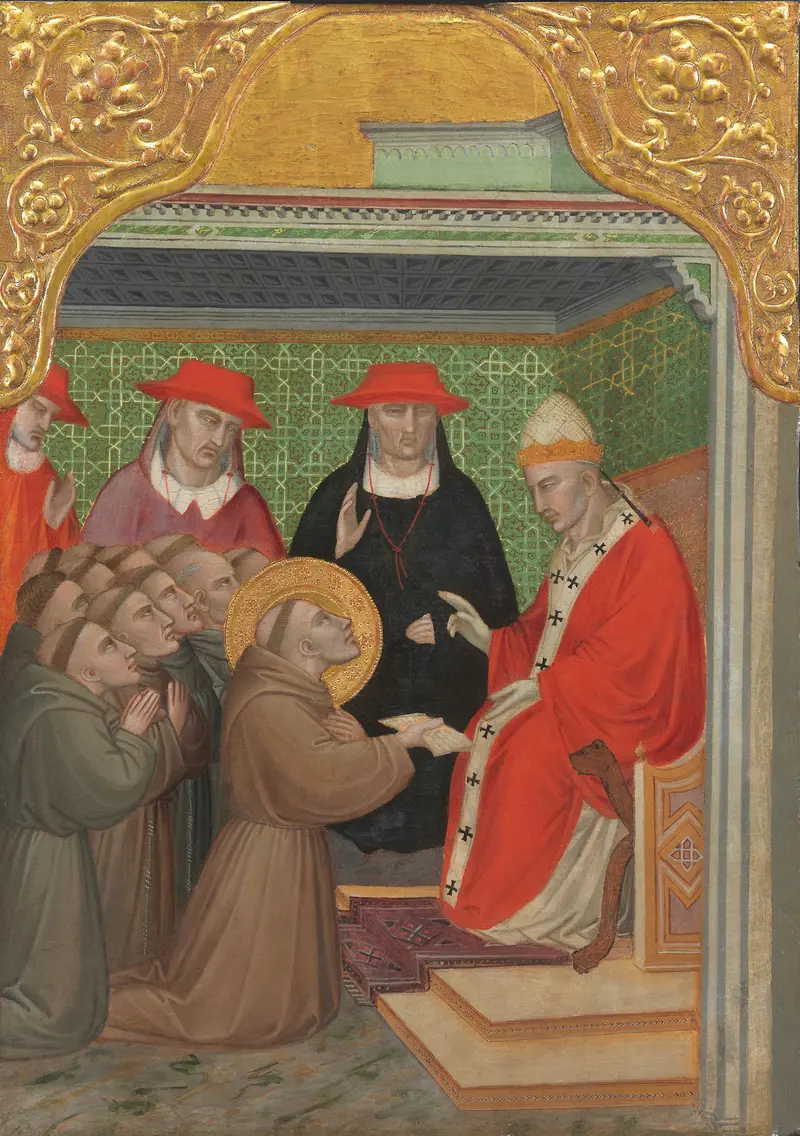








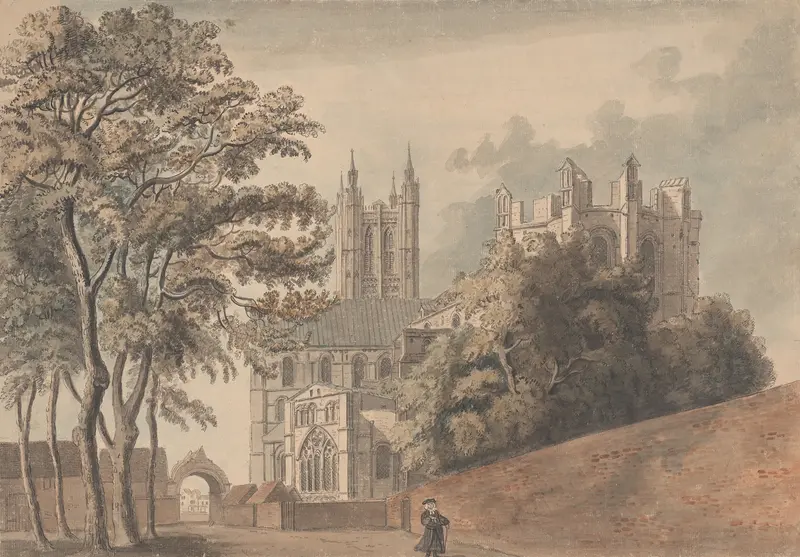

Famous Gothic paintings
Medieval altarpieces, illuminated manuscripts and frescoes from about 1250 to 1450. Click any work to see it up close and download it free.
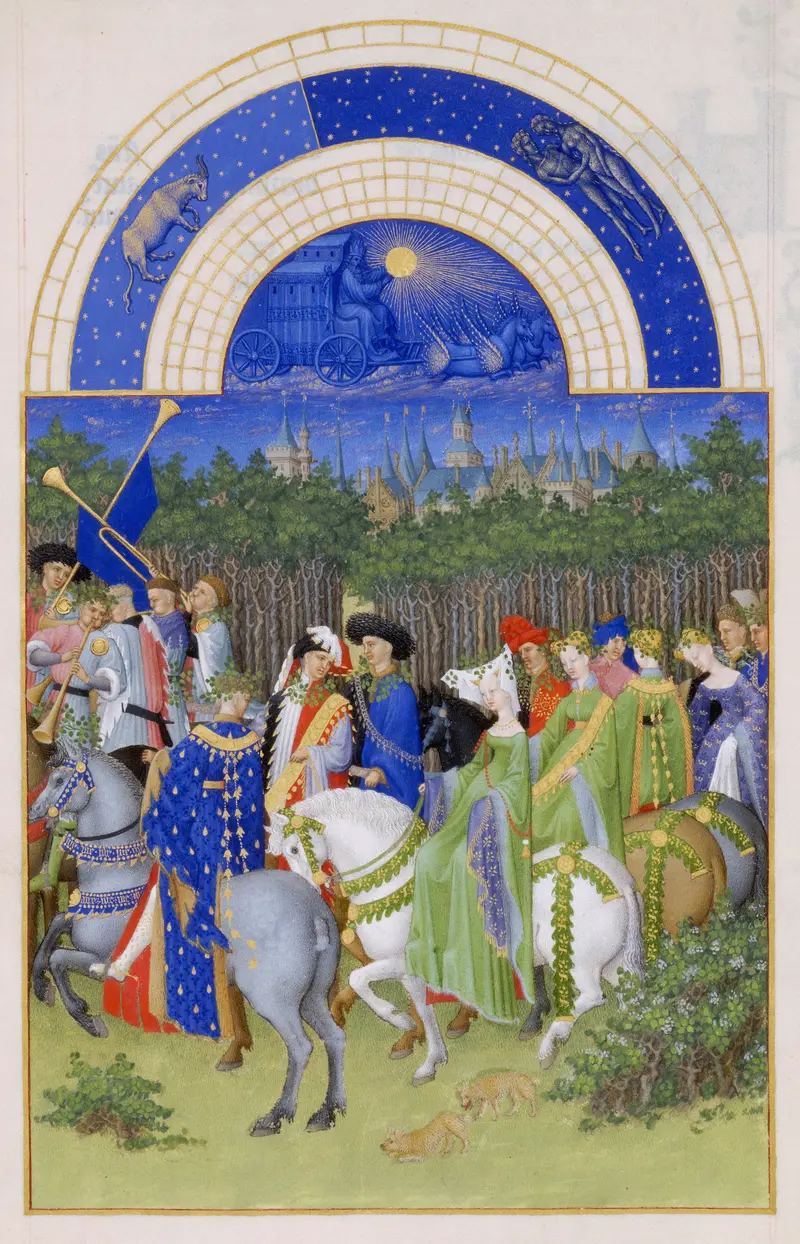 Très Riches Heures du Duc de Berry: MayLimbourg brothers
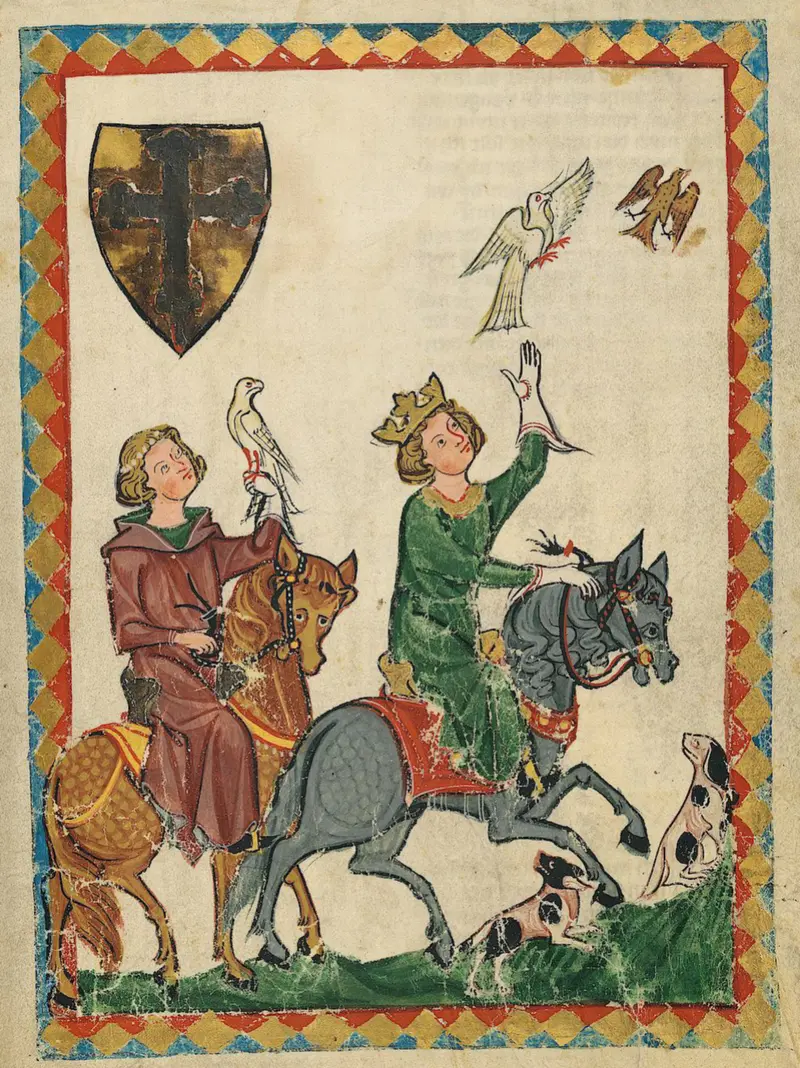 Codex Manesse: King Conradin Hawking (fol. 7r)Unknown artist
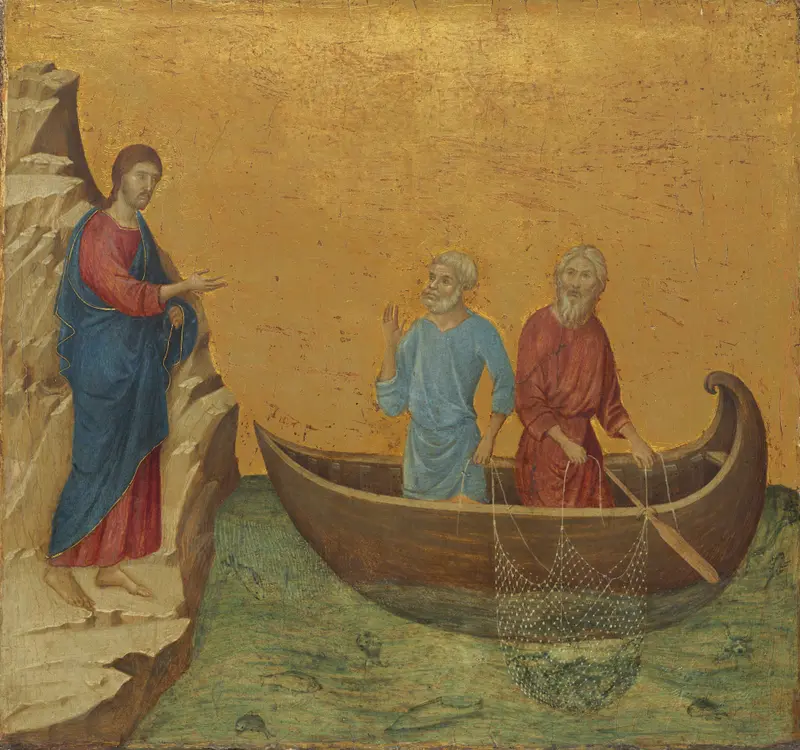 Maestà: The Calling of the Apostles Peter and AndrewDuccio di Buoninsegna
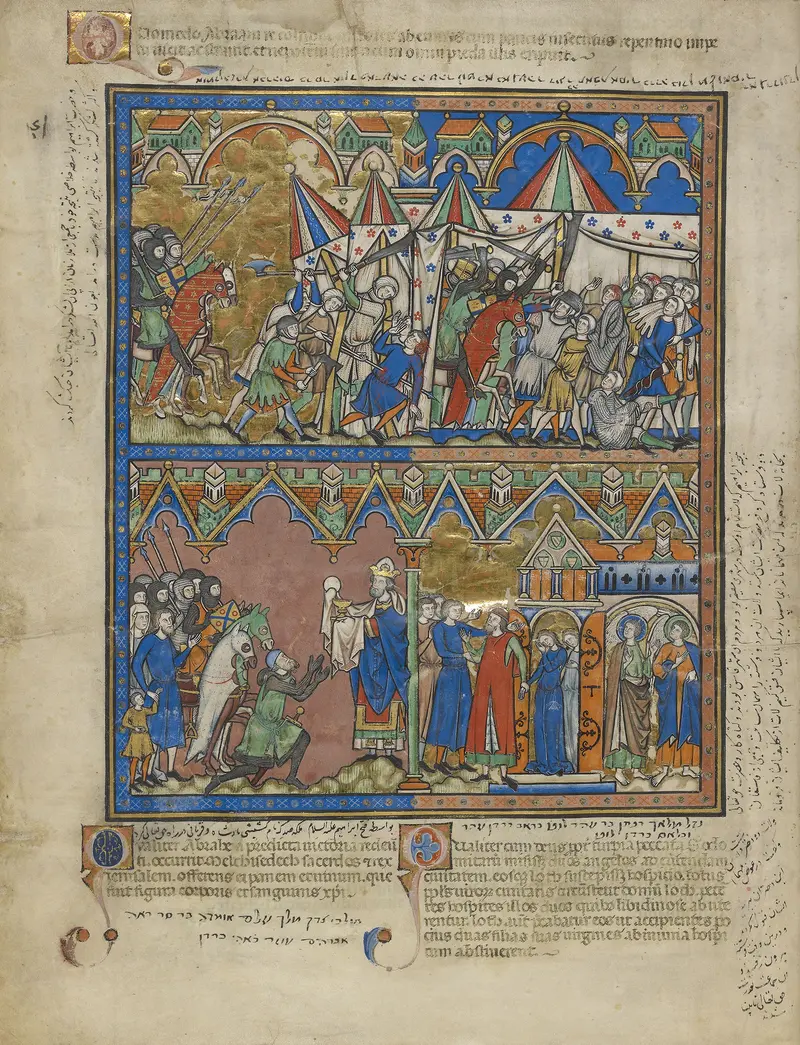 Morgan Bible (Maciejowski Bible), fol. 3vUnknown artist
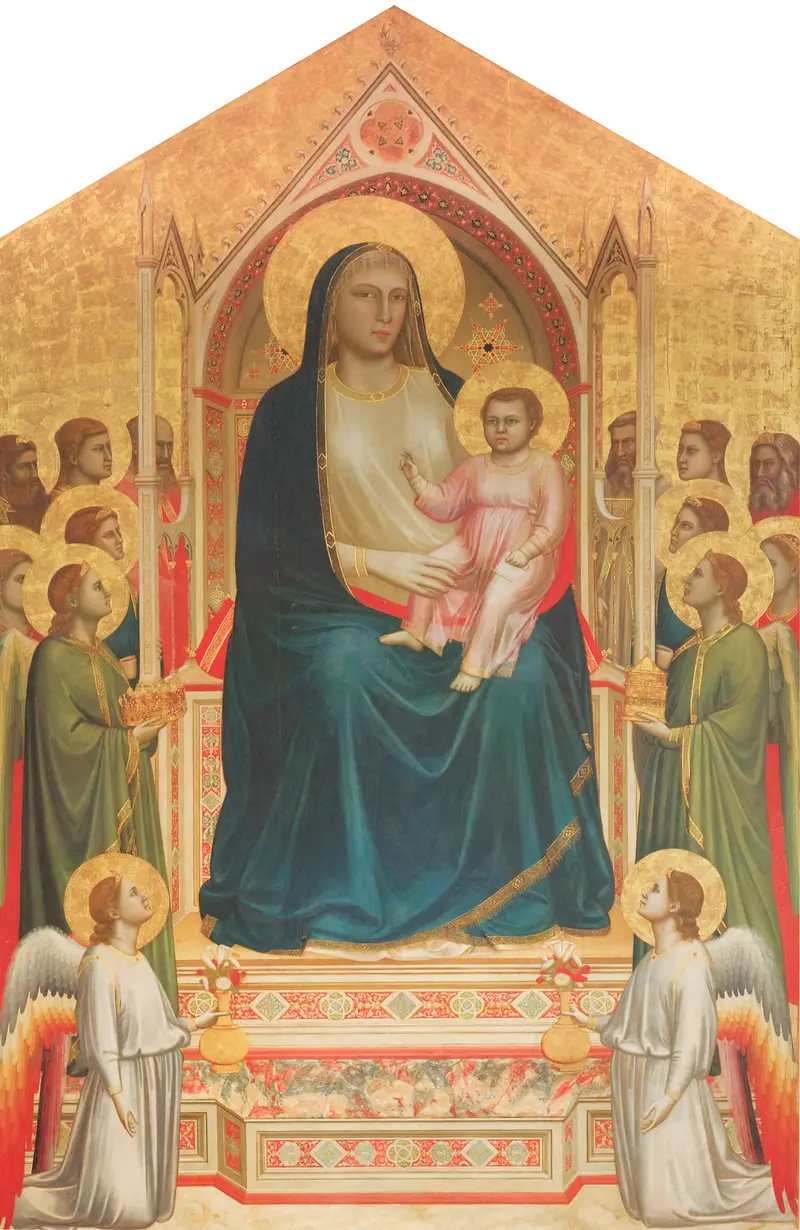 Ognissanti MadonnaGiotto
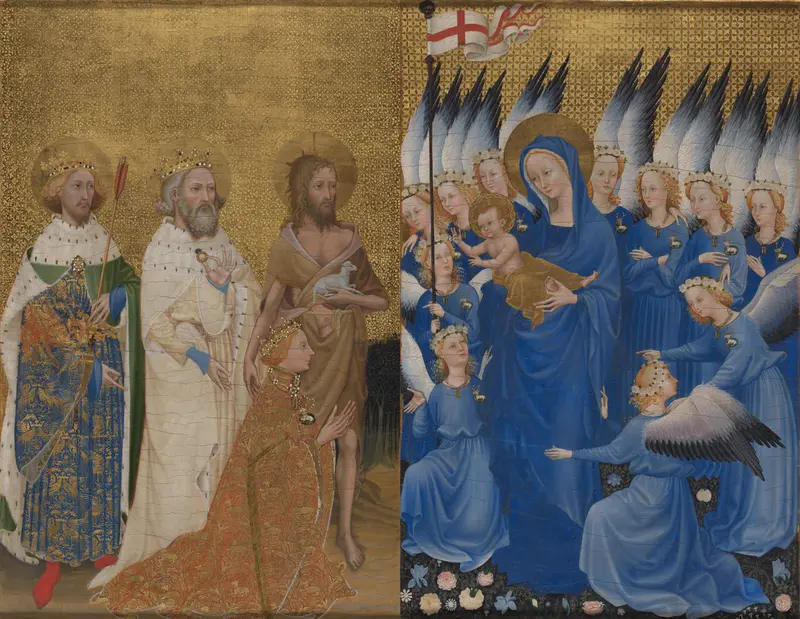 The Wilton DiptychUnknown English or French painter
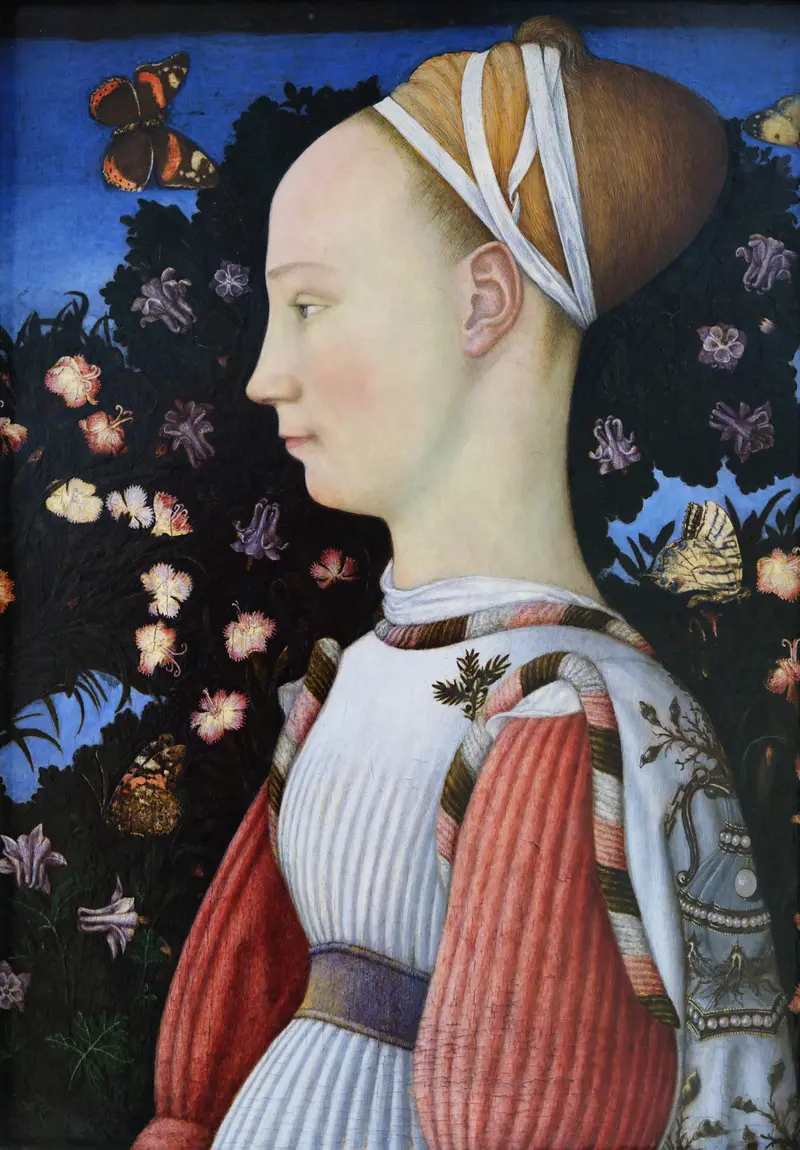 Portrait of a Princess of the House of EstePisanello
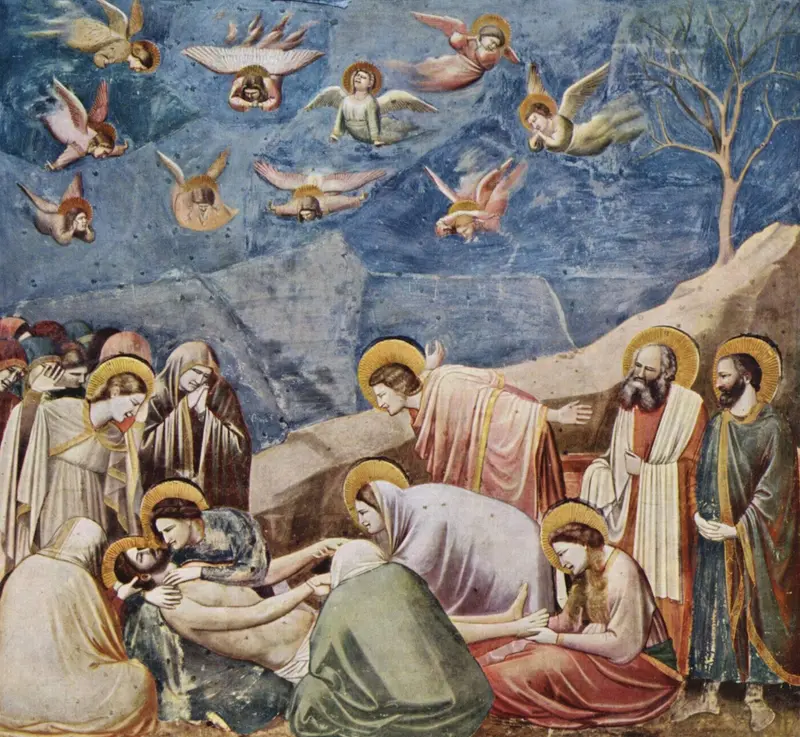 Lamentation (The Mourning of Christ)Giotto
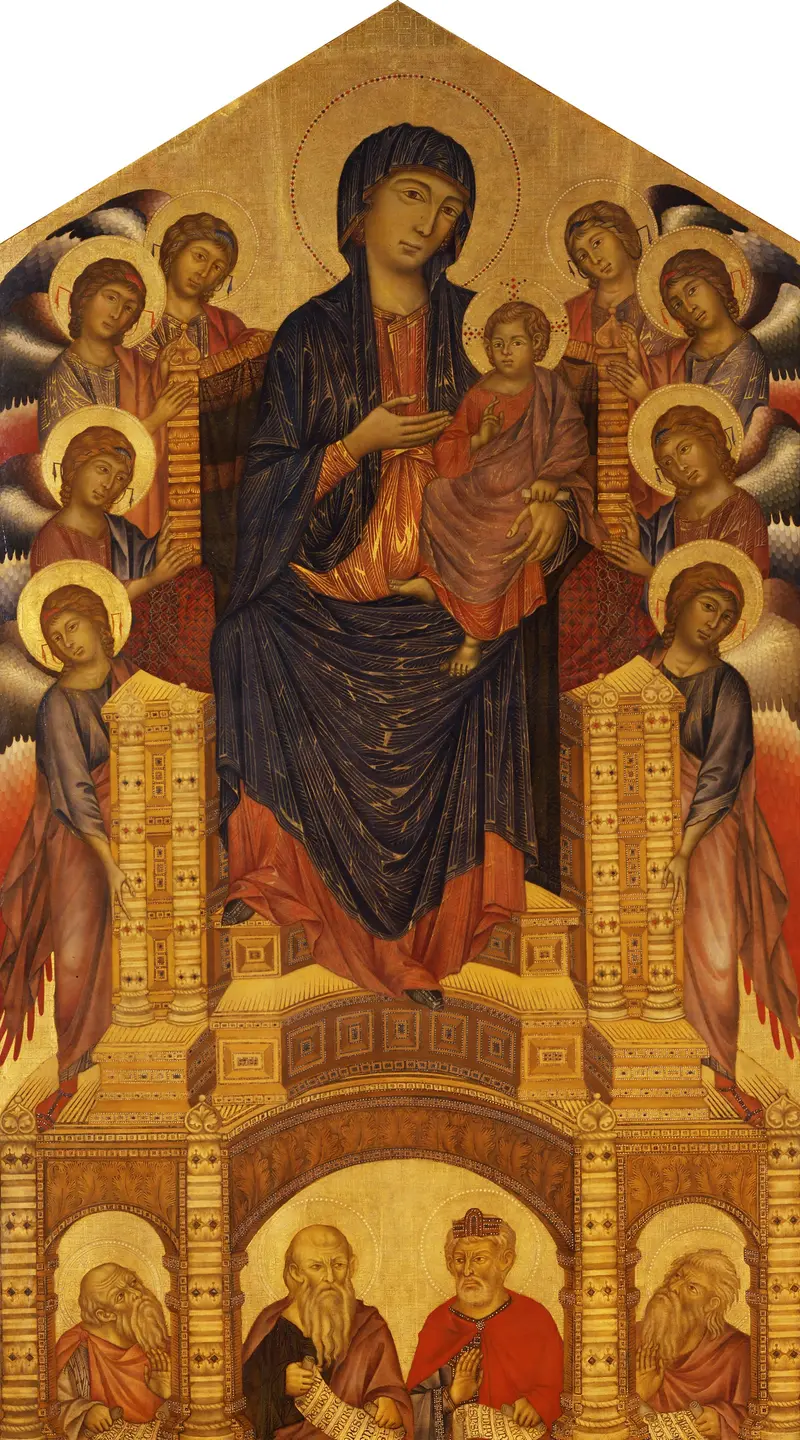 Santa Trinita MaestàCimabue
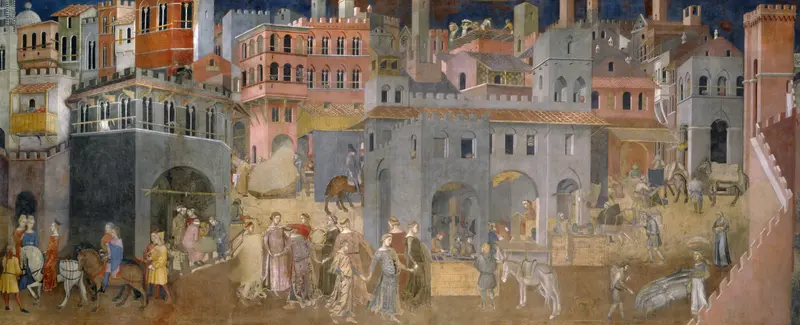 Effects of Good Government in the CityAmbrogio Lorenzetti
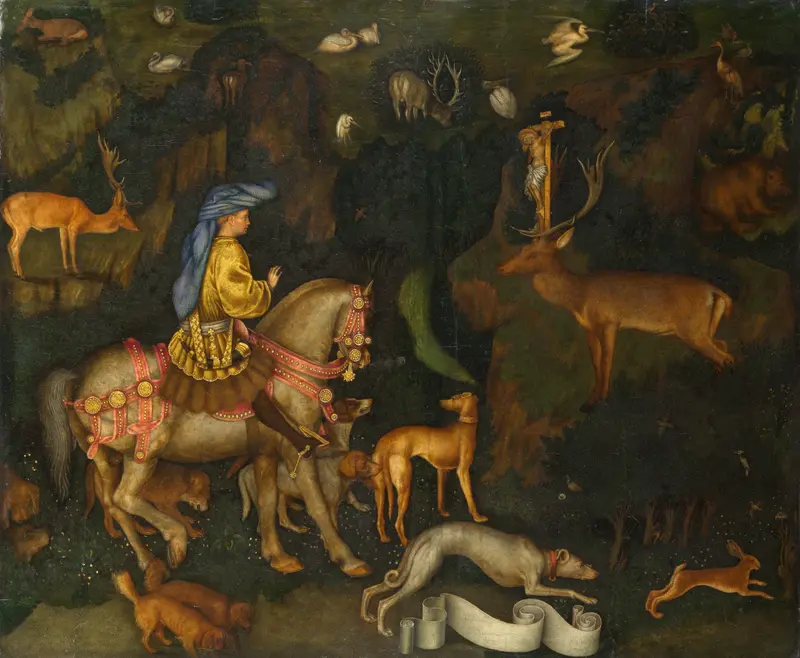 The Vision of Saint EustacePisanello
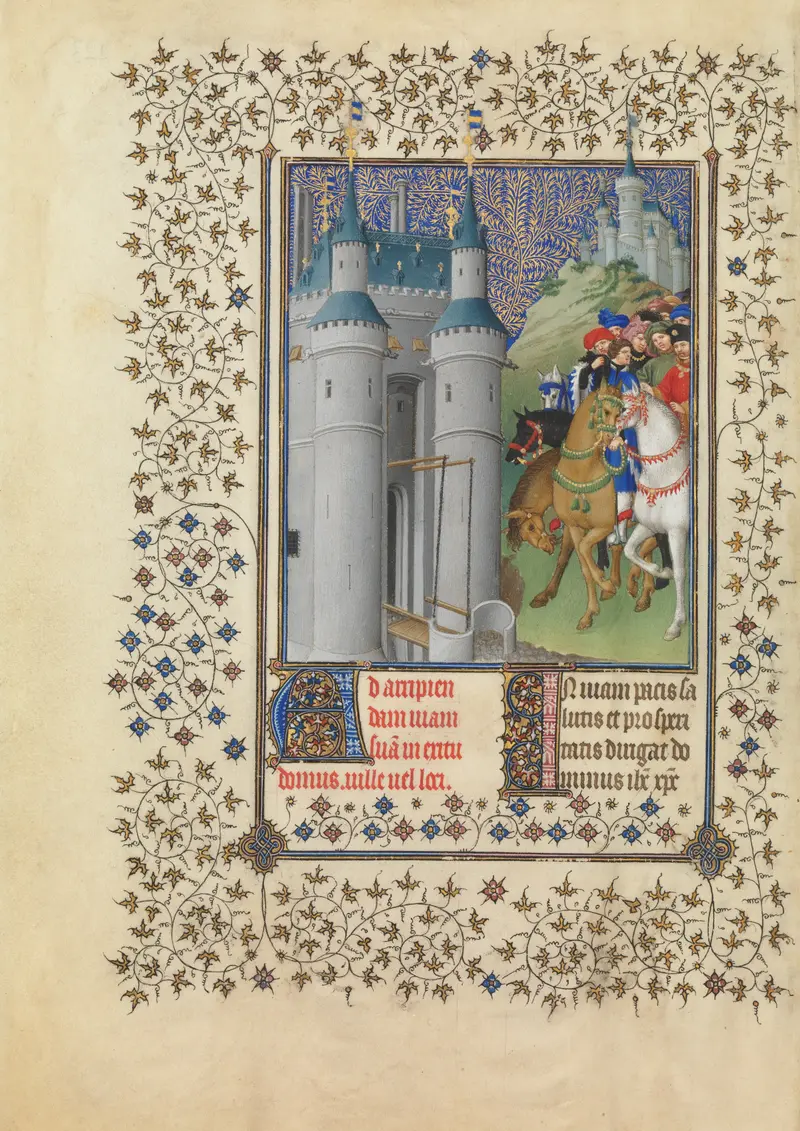 Belles Heures: The Duke of Berry on a Journey (fol. 223v)Limbourg brothers
Famous Gothic artists
Ten Gothic artists at the heart of the style, from Cimabue, Giotto and Duccio to Pisanello, the Limbourg brothers and Stefan Lochner. Each link opens all their works.
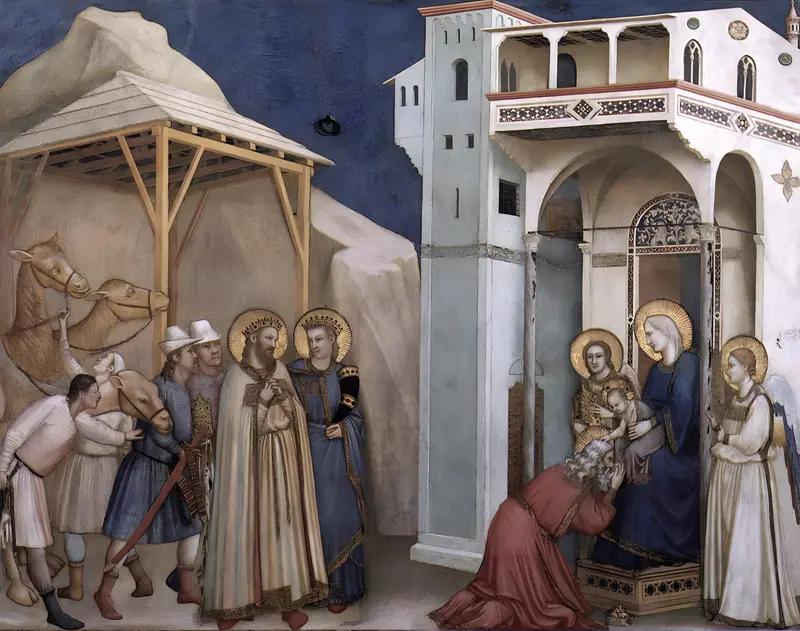 GiottoAbout 1265–1337. The Florentine painter the National Gallery in London calls the chief liberator of Italian painting from the Byzantine style; his main fresco cycle, in the Arena Chapel in Padua, probably dates from just before 1305.
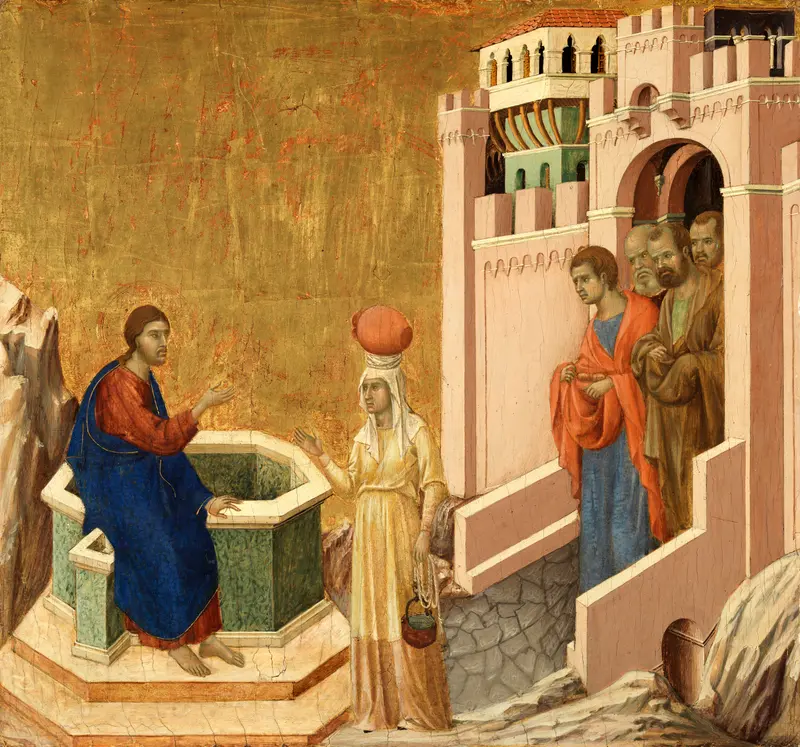 Duccio di BuoninsegnaActive 1278, died 1319. The leading painter of Siena, whose workshop shaped generations of Sienese artists; his double-sided Maestà of 1308–1311 was one of the largest and most complex altarpieces ever produced.
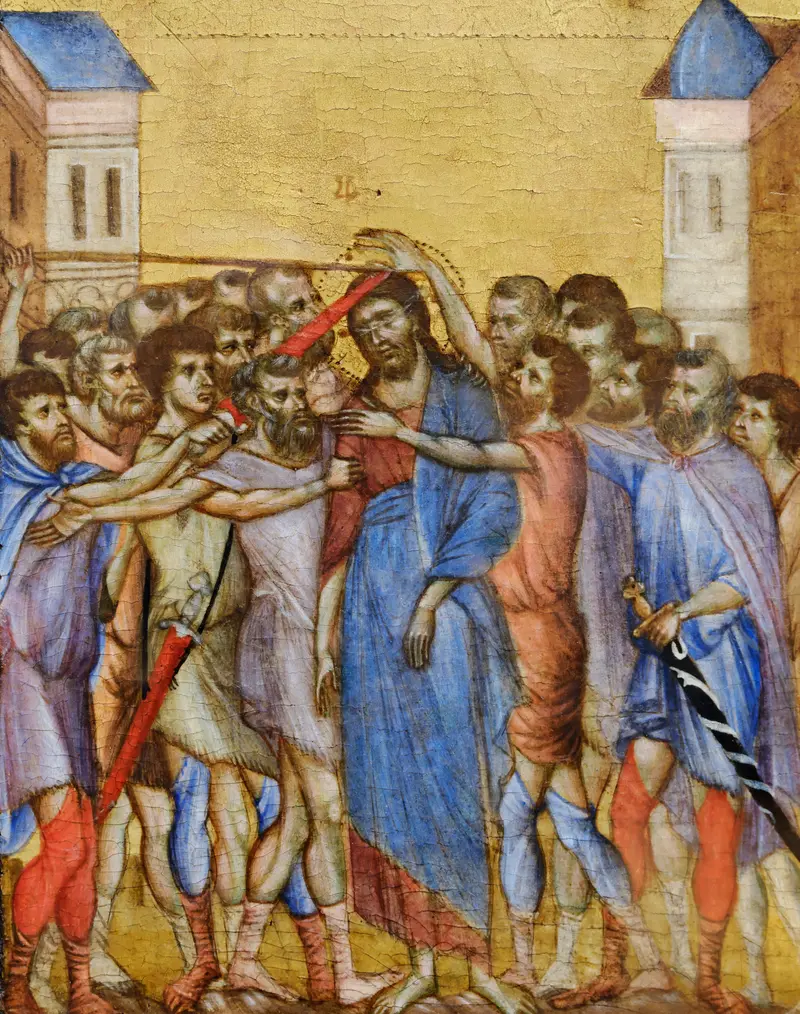 CimabueAbout 1240–1301/1302. Florentine painter whom the Uffizi calls the most important painter of central Italy in the second half of the 13th century; in his late work he blended the innovations of his pupil Giotto with the Byzantine tradition.
 Simone MartiniAbout 1284–1344. Sienese painter who may have helped finish Duccio's Maestà; he worked for Siena's government, ran a workshop with his brother-in-law Lippo Memmi and spent his last years at the papal court in Avignon.
- Ambrogio LorenzettiActive 1319, died 1348/49. With his brother Pietro he brought Giotto's style to Siena, says the National Gallery in London; his frescoes in Siena's Palazzo Pubblico are his most important work.
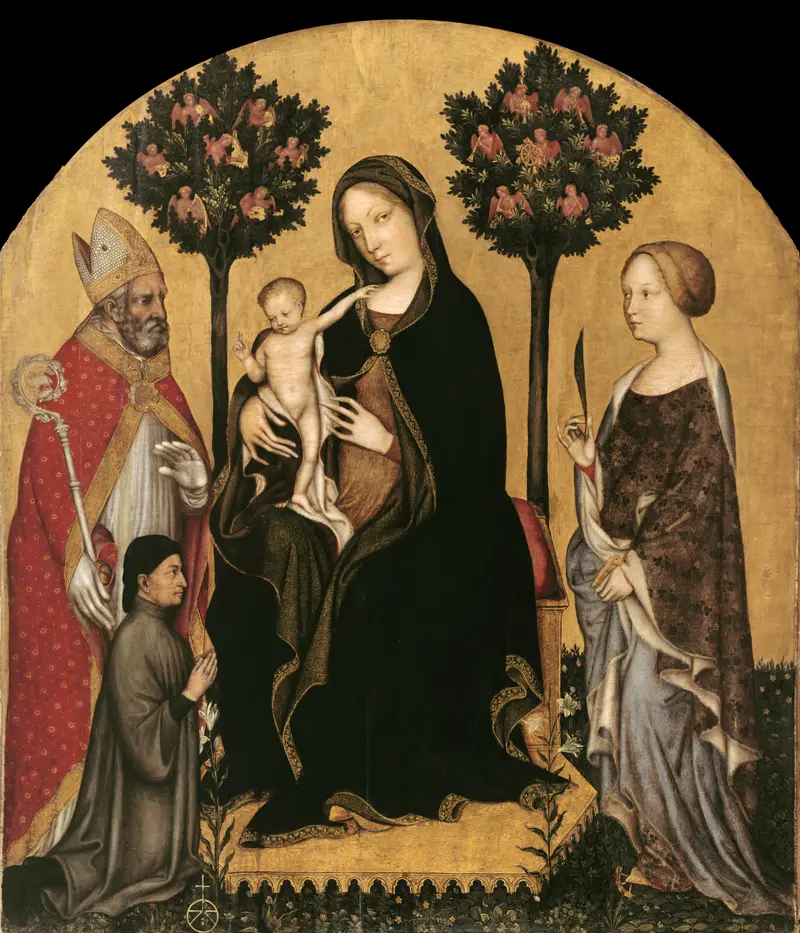 Gentile da FabrianoDied 1427. One of the leading Italian masters of International Gothic, say the Berlin museums; he joined the Florentine painters' guild in 1422 and painted the Strozzi altarpiece of the Adoration of the Magi in 1423.
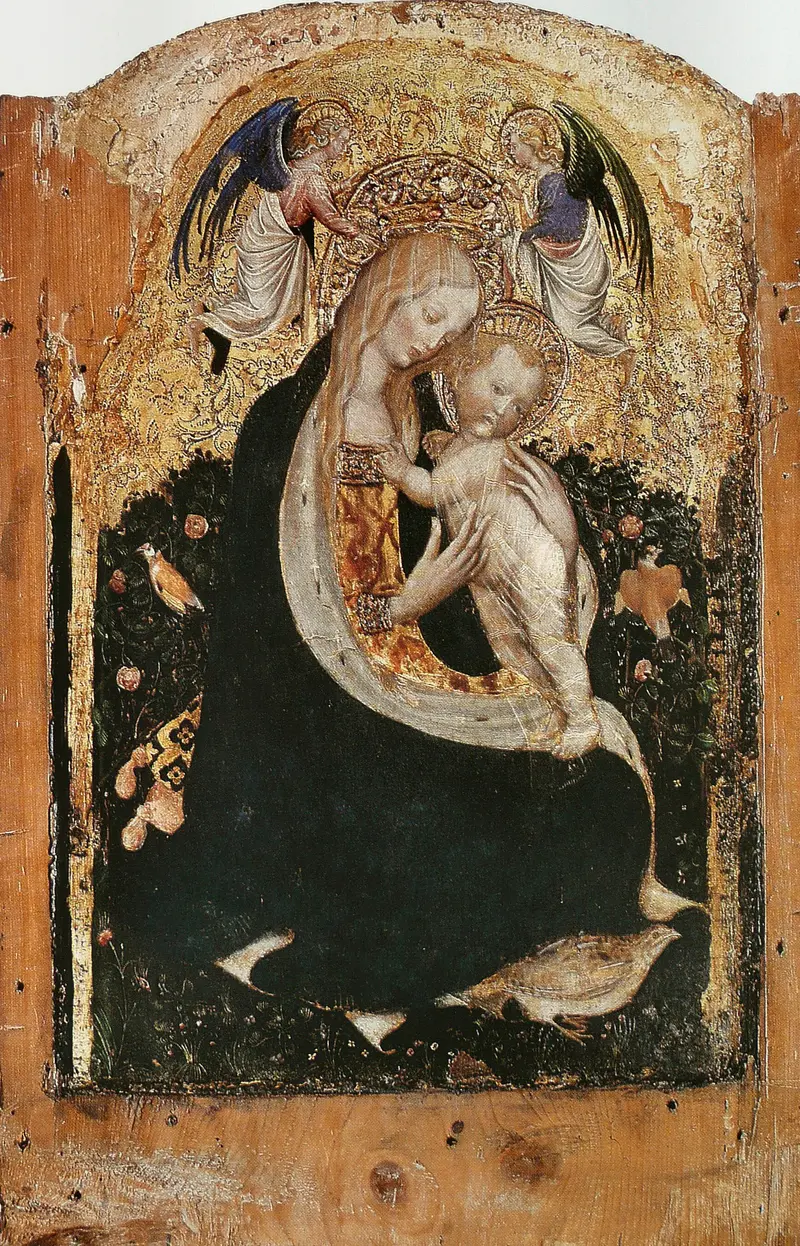 PisanelloBorn before 1395, died about 1455. Son of a Pisan merchant and a Veronese mother, trained in Verona and admired by princes; the National Gallery in London says he was especially famous for his animals.
- Limbourg brothersPaul, Jean and Hermann de Limbourg, from Nijmegen, died in 1416. They painted the Belles Heures and the Très Riches Heures for John, Duke of Berry; the Getty calls them the leading northern European artists of their time.
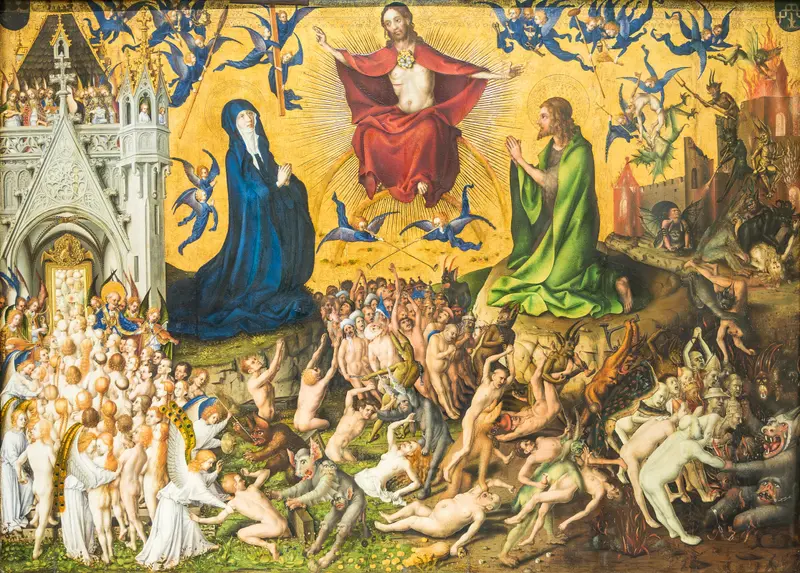 Stefan LochnerDied 1451. German painter whom the National Gallery in London names among the notable exponents of International Gothic; both his panels here are in the Wallraf-Richartz-Museum in Cologne.
 Giovanni di PaoloActive by 1417, died 1482. The main painter, after Sassetta, of early 15th-century Siena, best known for lively narrative scenes; the National Gallery names him among the notable exponents of International Gothic.
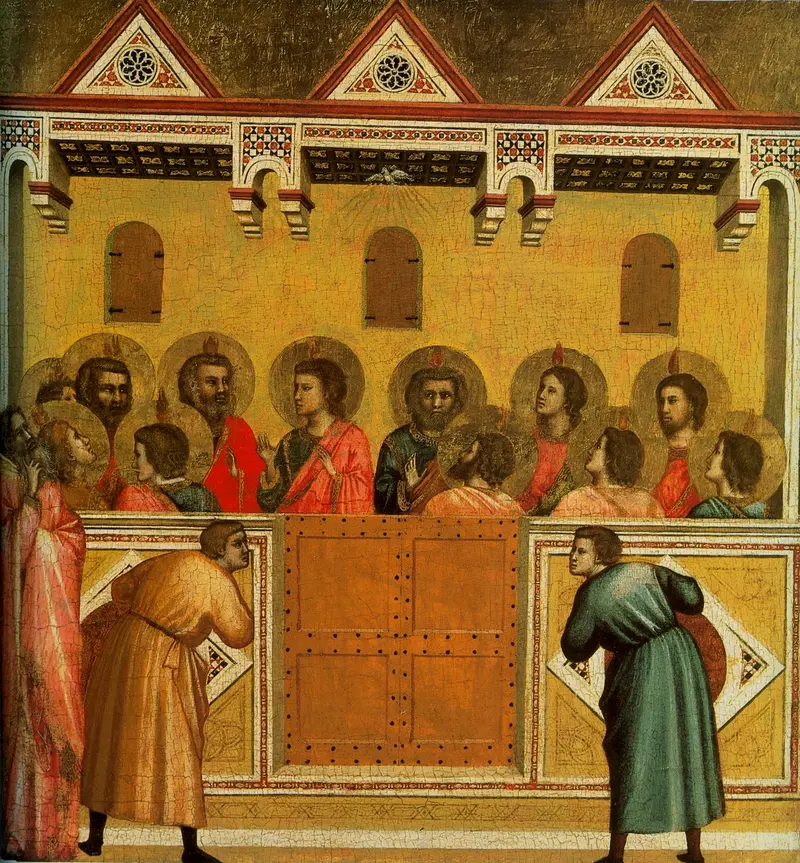
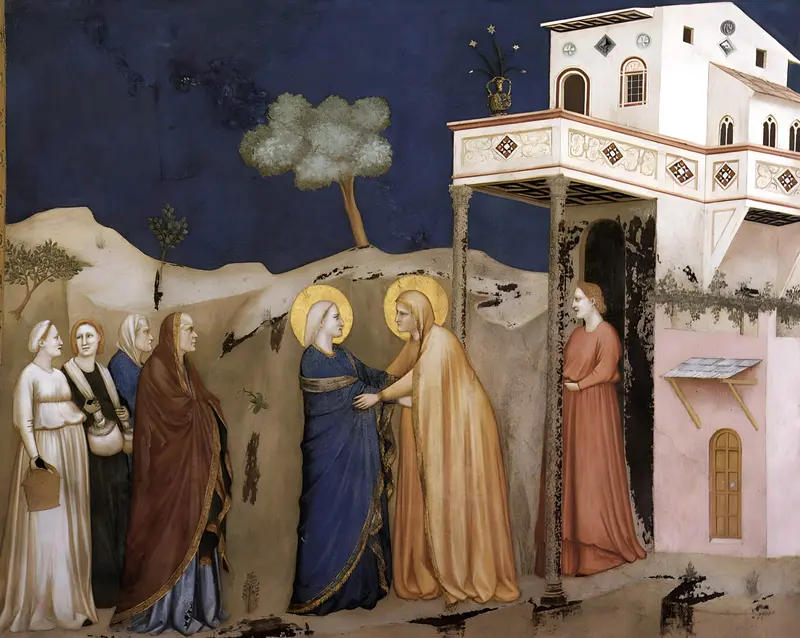
Giotto paintings
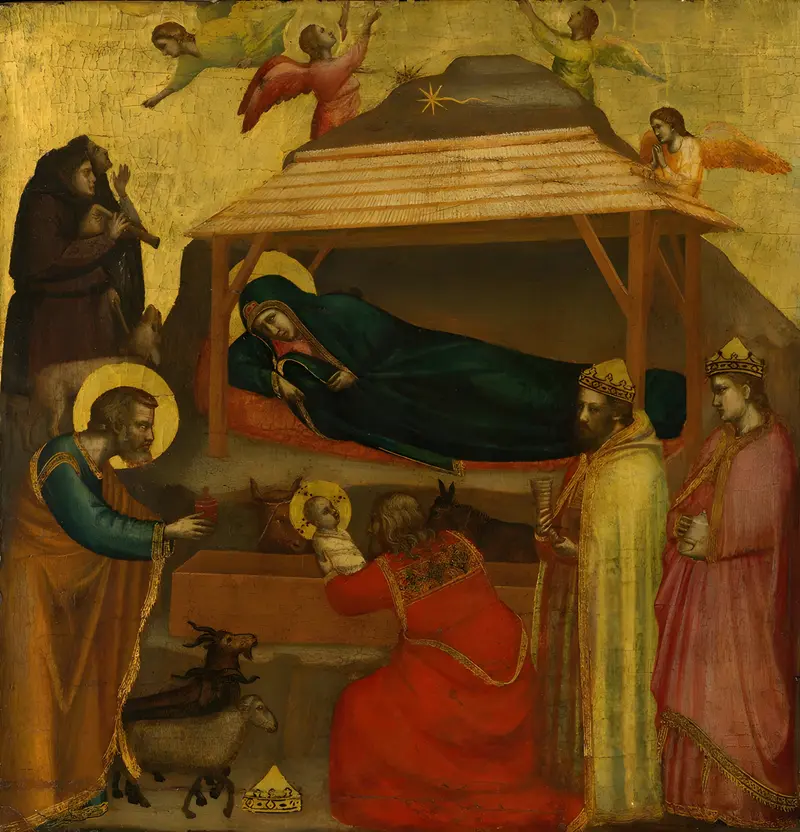
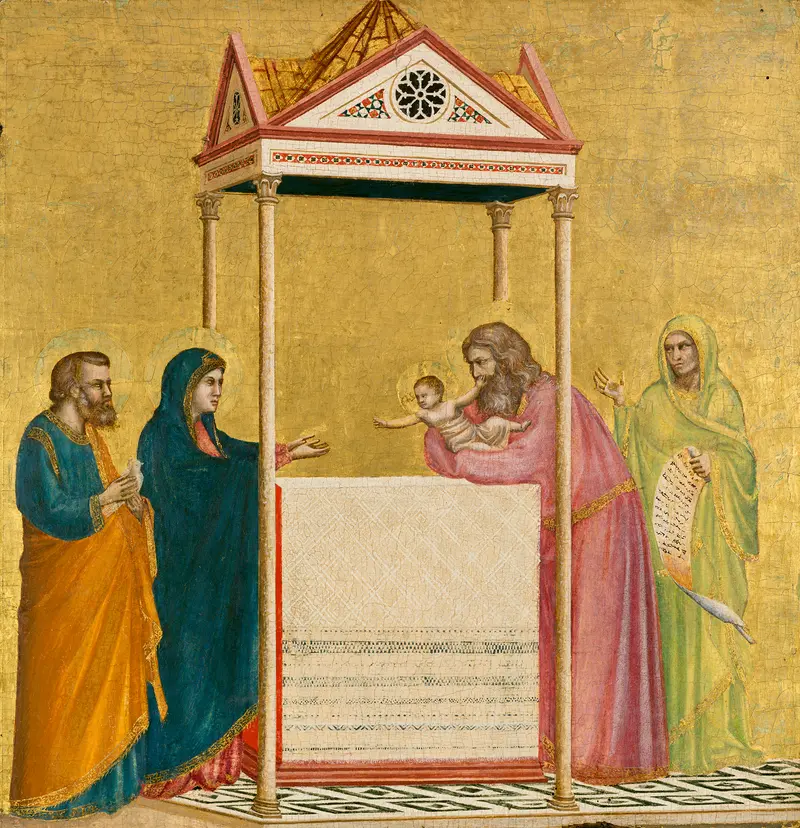
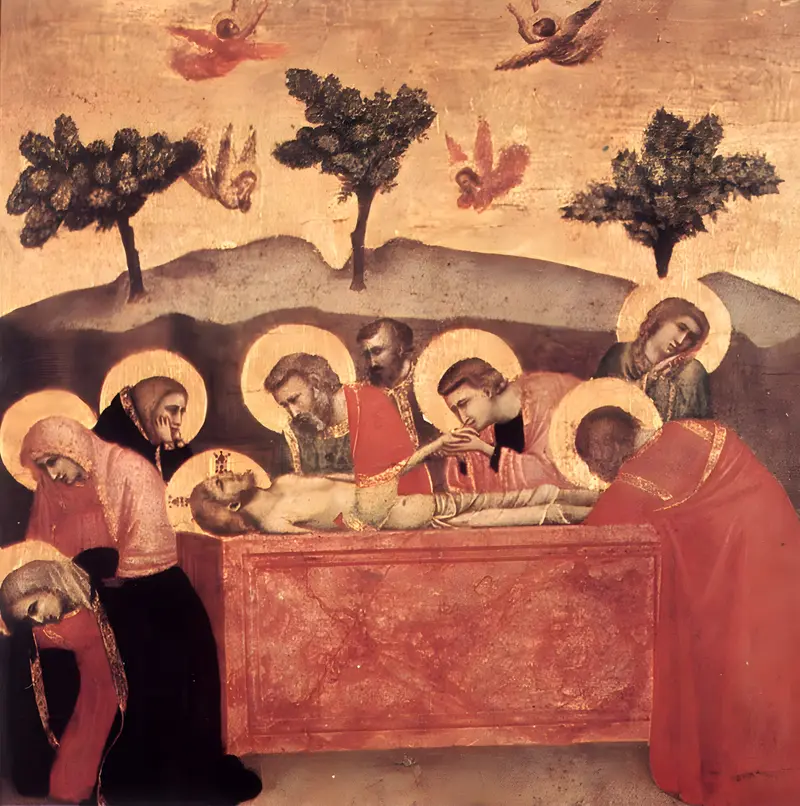
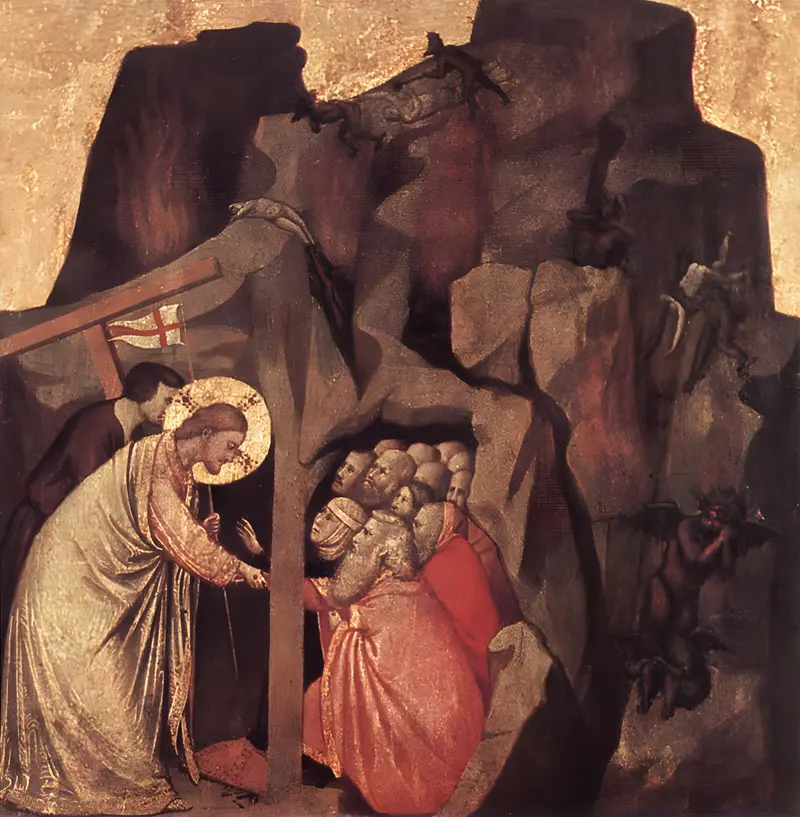
Concentration and gravity are the hallmarks of Giotto's style, says the National Gallery in London: his figures have a three-dimensional weightiness and stand in convincing architectural spaces. The National Gallery of Art in Washington adds that his innovations developed, a century later, into the Italian Renaissance.
International Gothic paintings
From the late 1300s to the mid-1400s a courtly style of decorative patterns, rich color and gold spread across France, Italy and Bohemia, the National Gallery in London says, and it names Giovanni di Paolo among its leading painters. In Florence, Starnina, back from ten years in Spain in 1401, joined the vivid colors of Spanish painting to a Tuscan sense of space, the Harvard Art Museums say.
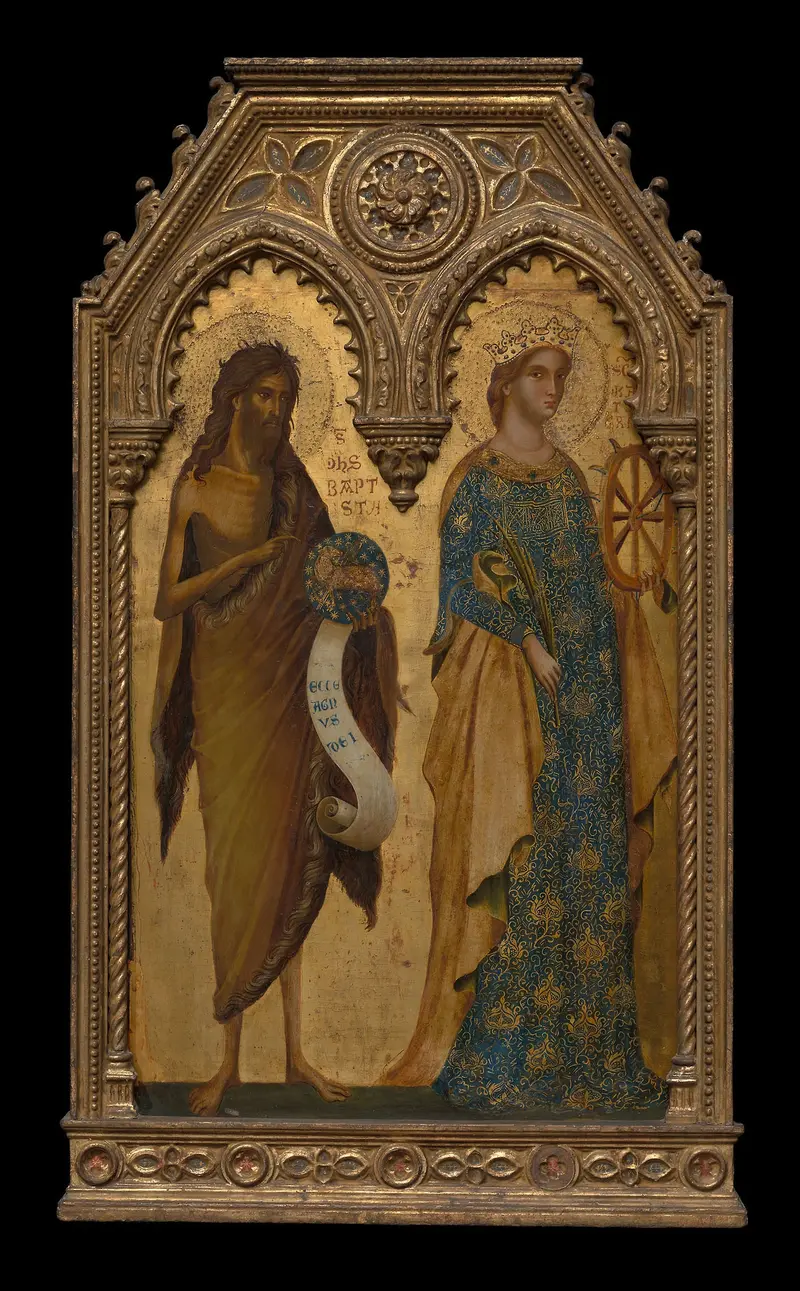
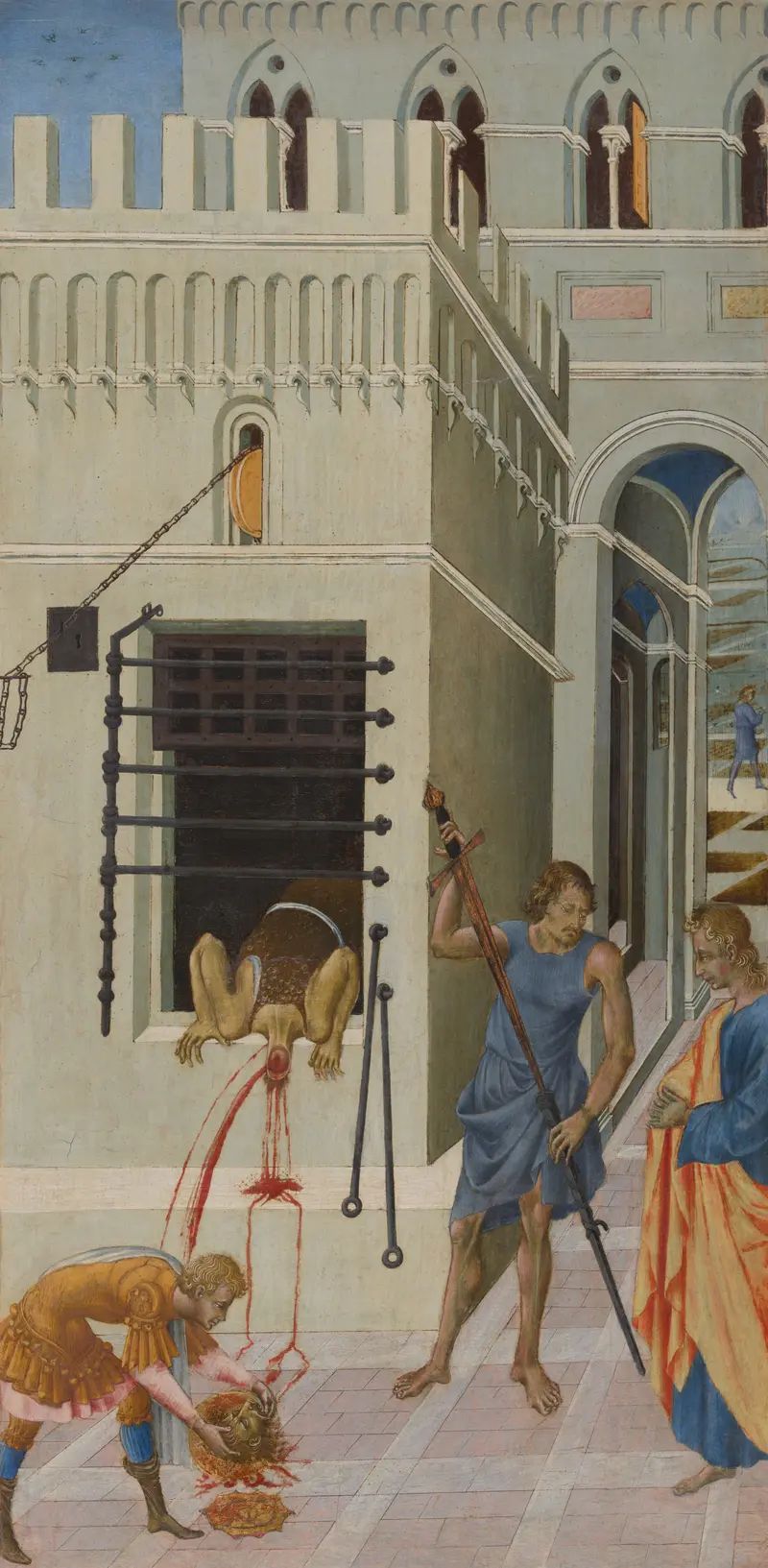 The Beheading of Saint John the BaptistGiovanni di Paolo
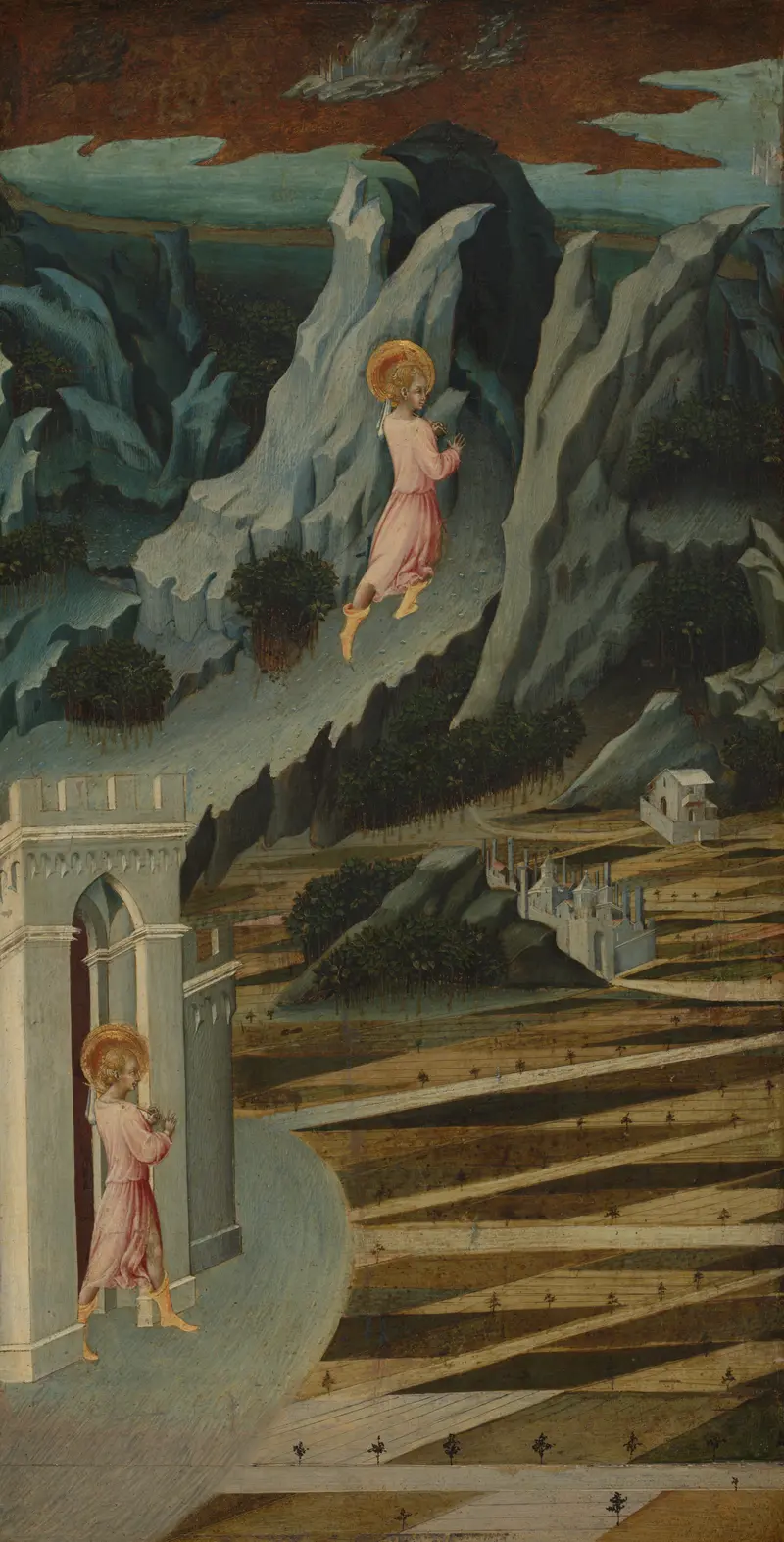 Saint John the Baptist Entering the WildernessGiovanni di Paolo
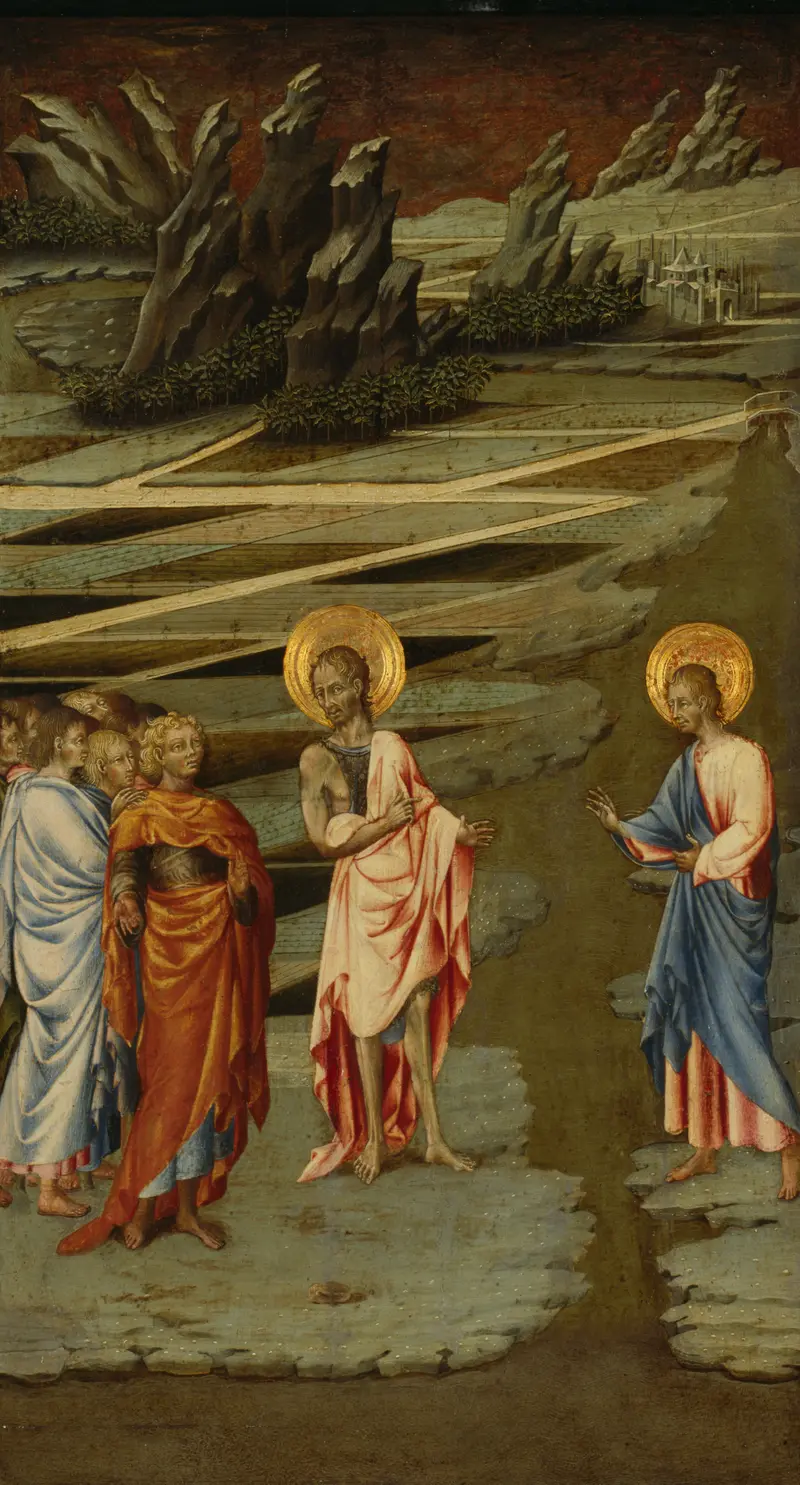 Ecce Agnus DeiGiovanni di Paolo
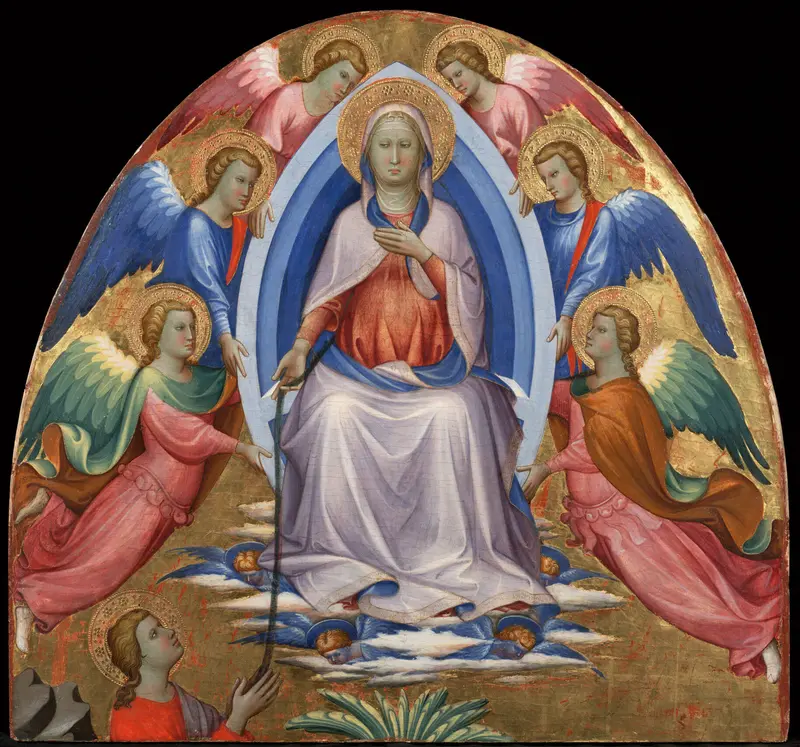 The Assumption of the VirginGherardo Starnina
 The Death of the VirginGherardo Starnina
 Processional Cross with Saint Mary Magdalene and a Blessed HermitLorenzo Monaco
Sienese Gothic painting
Duccio ran a large workshop that shaped generations of Sienese painters, the National Gallery in London says, and the Rijksmuseum sees his refined linear style in the work of his followers. Giovanni di Paolo's altarpieces still followed traditional Sienese designs in the 1400s, and the Harvard Art Museums call the Master of the Osservanza's Passion scenes among the most remarkable Sienese paintings of the 15th century.
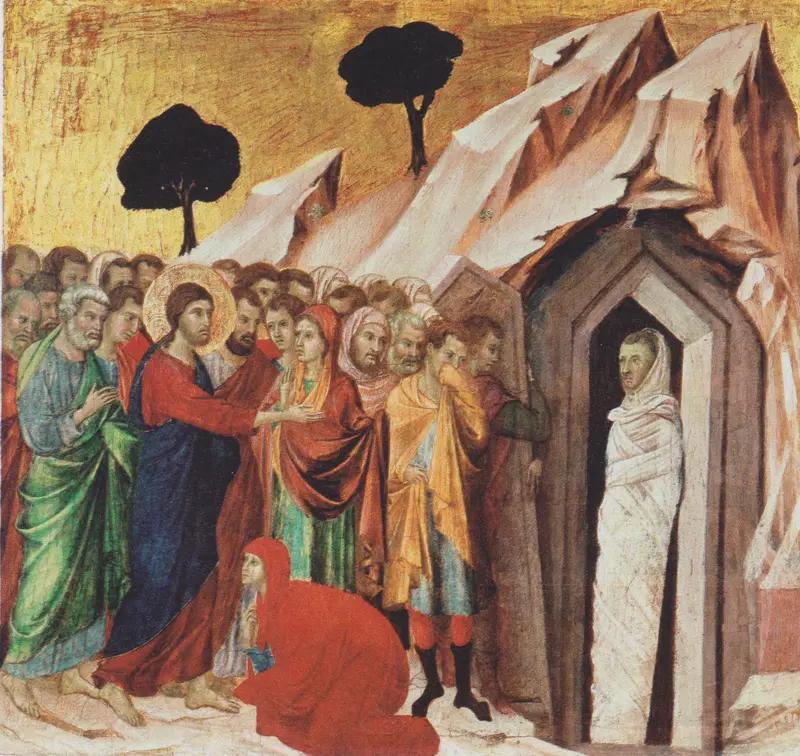 The Raising of LazarusDuccio di Buoninsegna
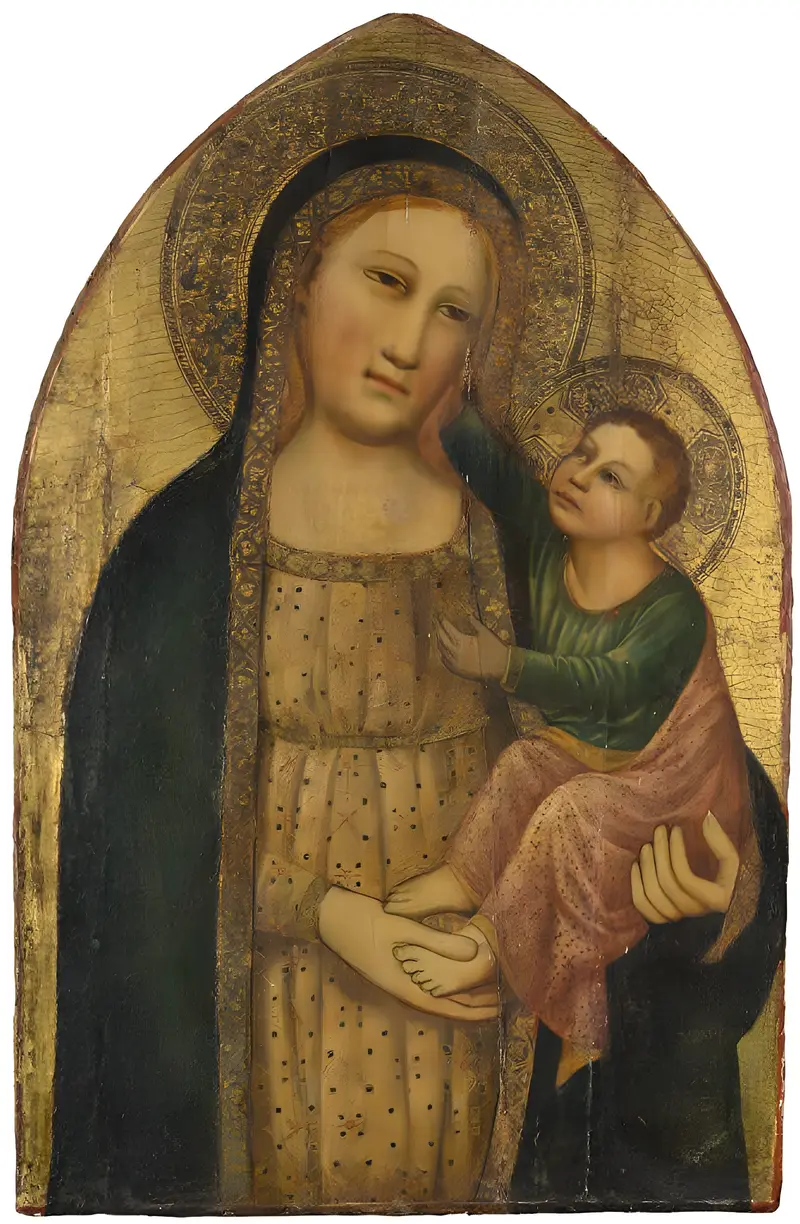
 Virgin and ChildMaster of Badia a Isola
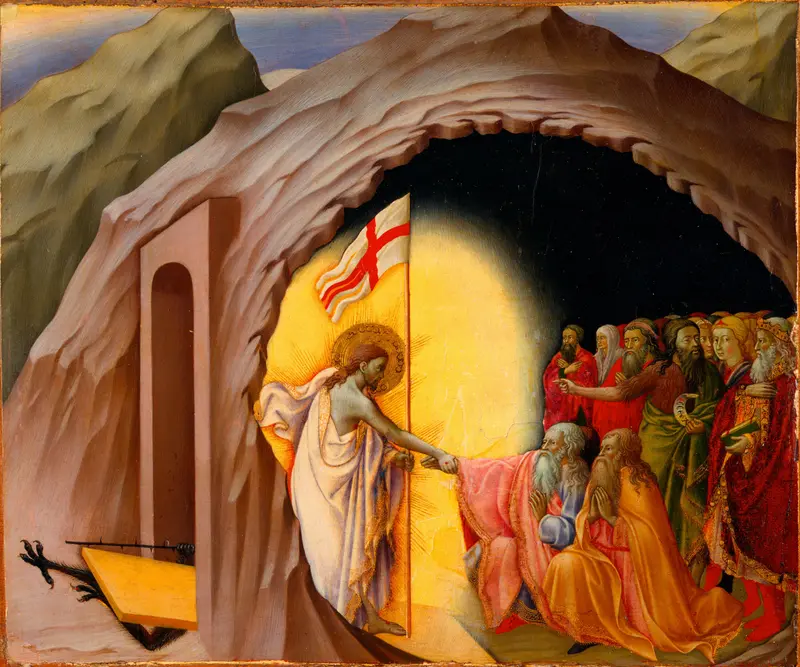 The Descent into LimboMaster of the Osservanza
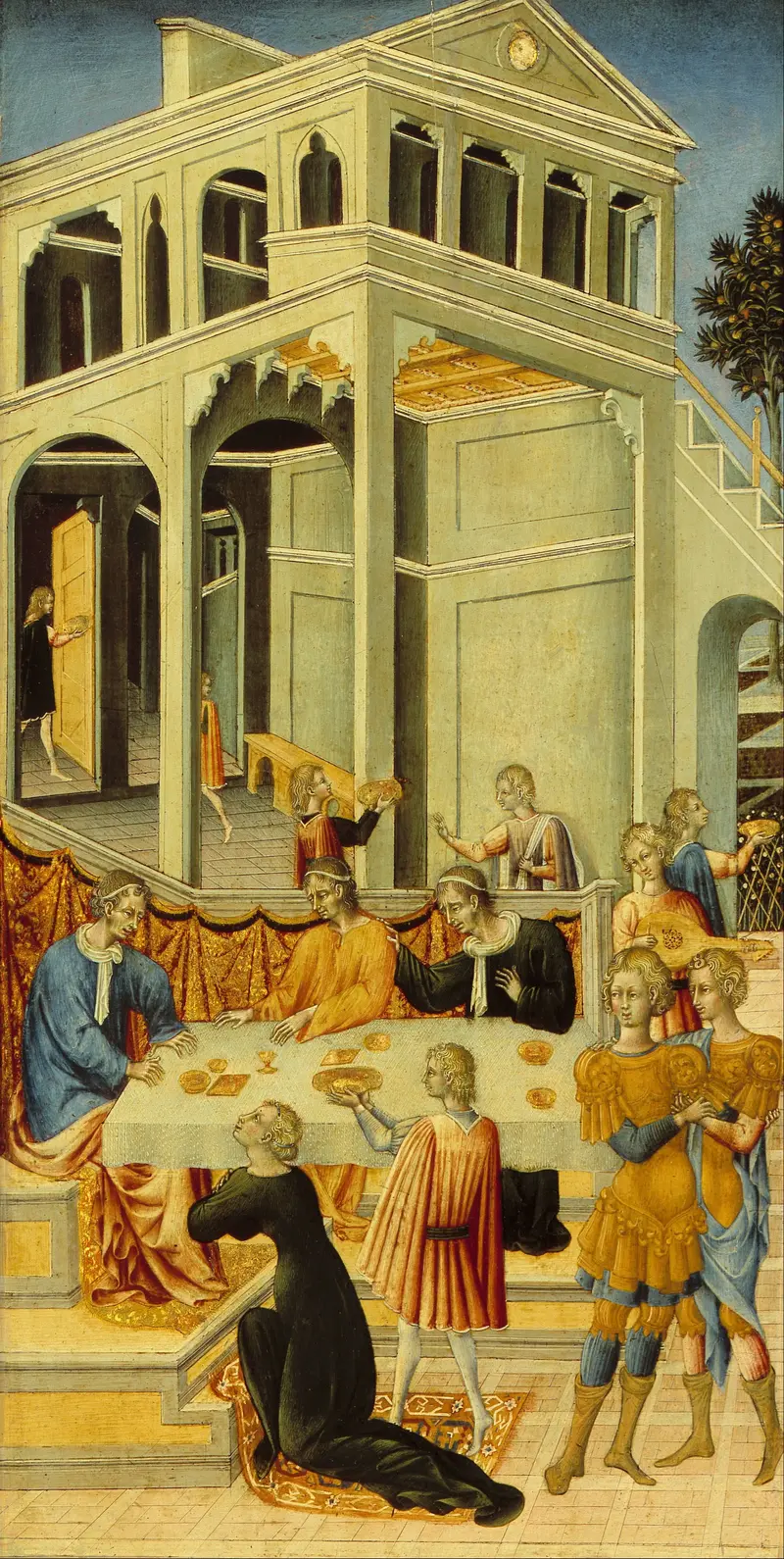 Salome Asking Herod for the Head of Saint John the BaptistGiovanni di Paolo
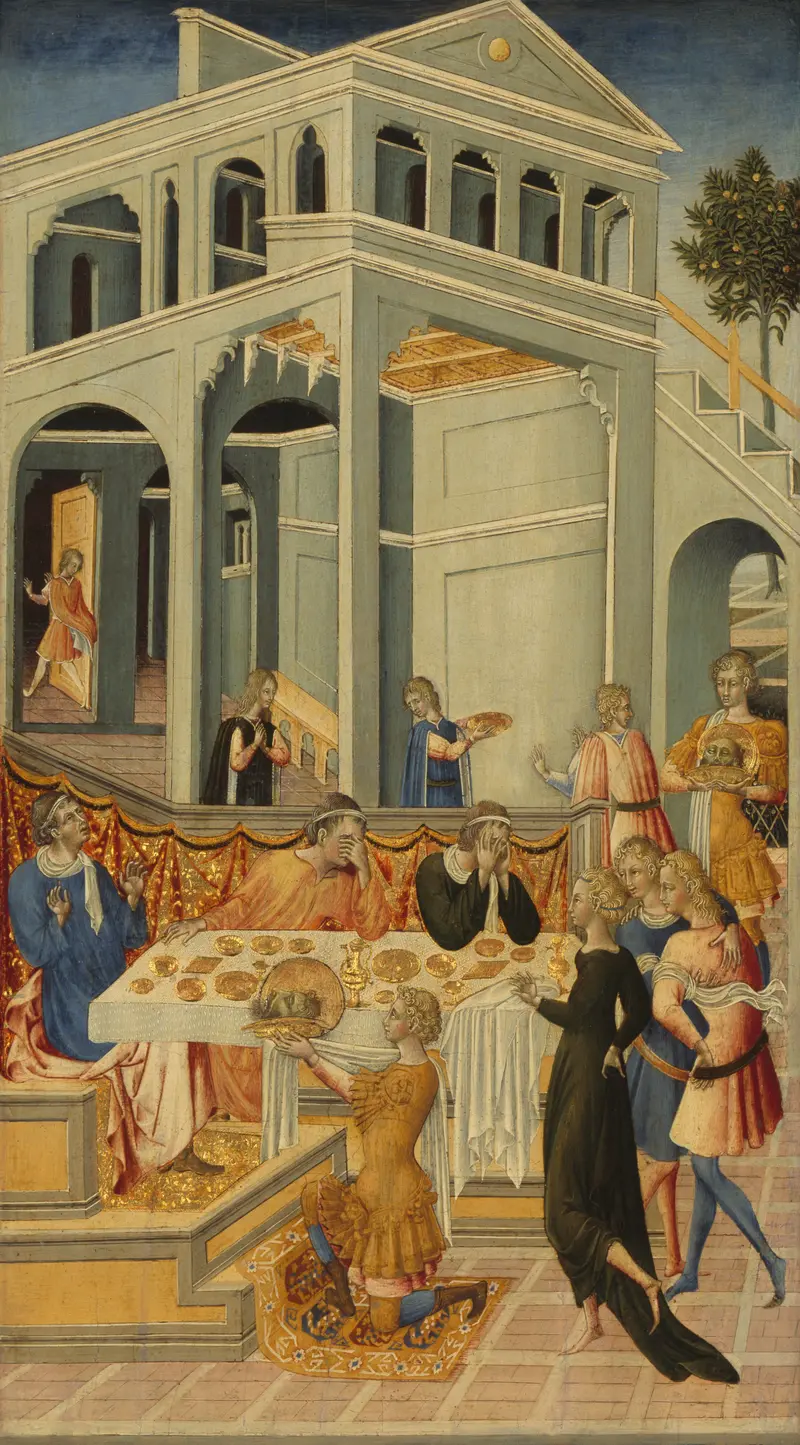 The Head of Saint John the Baptist Brought before HerodGiovanni di Paolo
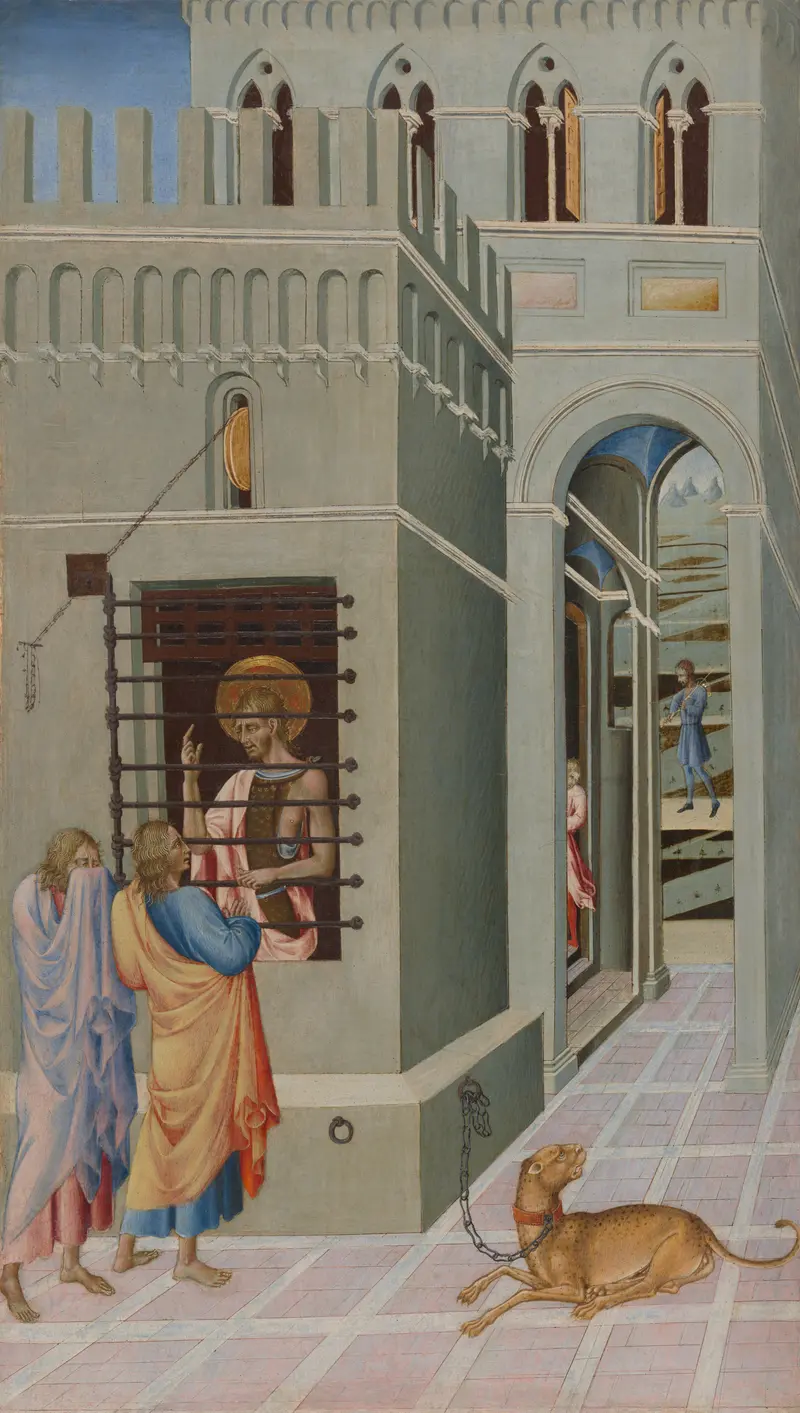 Saint John the Baptist in Prison Visited by Two DisciplesGiovanni di Paolo
Characteristics of Gothic art: how to recognize it
Gold backgrounds
The gold background stands for the divine light of God's face and sets the scene outside earthly time and space, the Uffizi explains; Cimabue's workshop tooled it and the halos with punches. The National Gallery in London lists a rich use of colors and gold among the marks of International Gothic.
Santa Trinita Maestà, Cimabue
Elongated figures, flowing lines
Look at the slender angels in long ultramarine robes, their tall white wings tipped with black. The National Gallery in London names the elongation of the figure and a flowing linear treatment of drapery as the marks of Gothic painting and sculpture.
The Wilton Diptych, Unknown Artist
Stories told with feeling
Every mourner grieves differently, and even the angels cry out in the sky. The Getty's art vocabulary counts emotional narrative among the marks of Gothic art, and the National Gallery in London notes the expressive character of Giotto's figures.
Lamentation (The Mourning of Christ), Giotto di Bondone
New weight and space
Giotto's Virgin has real bulk, and her throne opens into space around her. The National Gallery in London singles out the three-dimensional weightiness of Giotto's figures and their convincing architectural spaces; the National Gallery of Art says his innovations developed, a century later, into the Renaissance.
Ognissanti Madonna, Giotto di Bondone
Courtly detail
Look for the hounds, the hare, the birds and even a bear in the dark forest. The National Gallery in London describes International Gothic as decorative and rich in color, with beautifully observed natural details, and compares Pisanello's meticulous detail here to Jan van Eyck's.
The Vision of Saint Eustace, Pisanello
Pictures in prayer books
Some of the best-known Gothic pictures were painted on the pages of books. The Getty's art vocabulary says the style flourished in manuscript illumination, and the Condé Museum says the calendar scenes of the Très Riches Heures shaped our image of the Middle Ages.
Très Riches Heures du Duc de Berry: May, Limbourg brothers
Before and after Gothic art
- Gothicc. 1150–1500s
 Renaissancec. 1400–1600
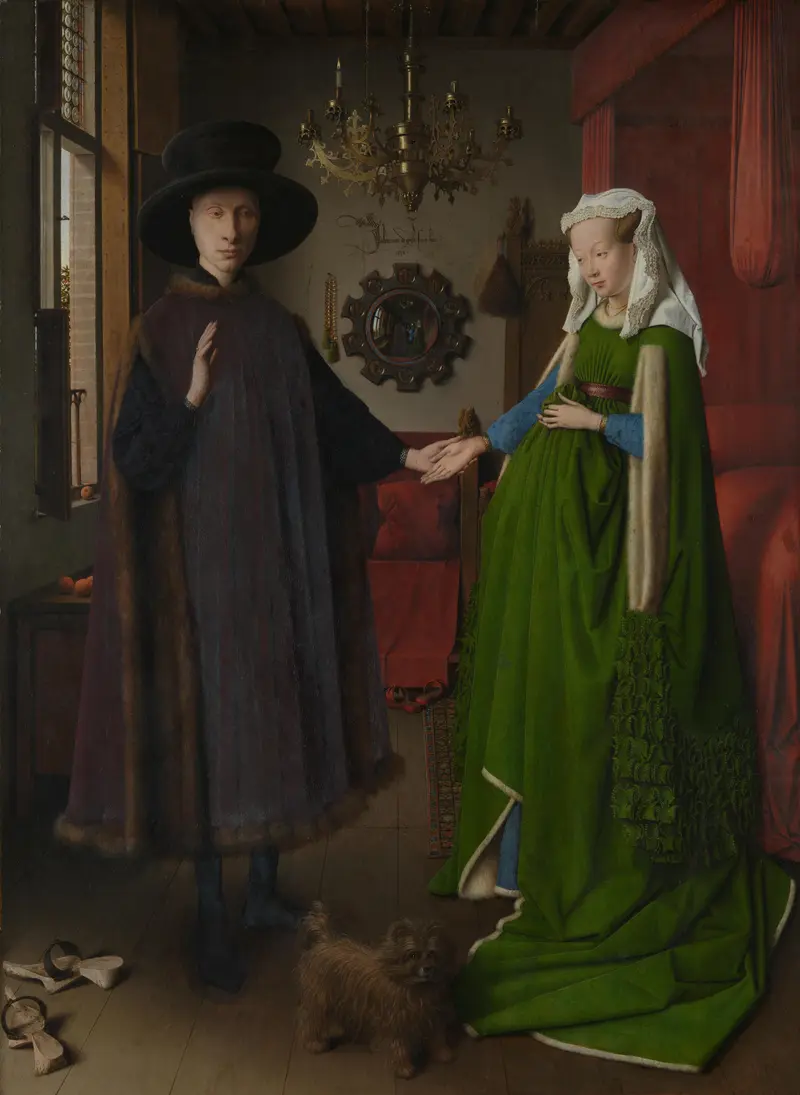 Northern Renaissance15th–16th century
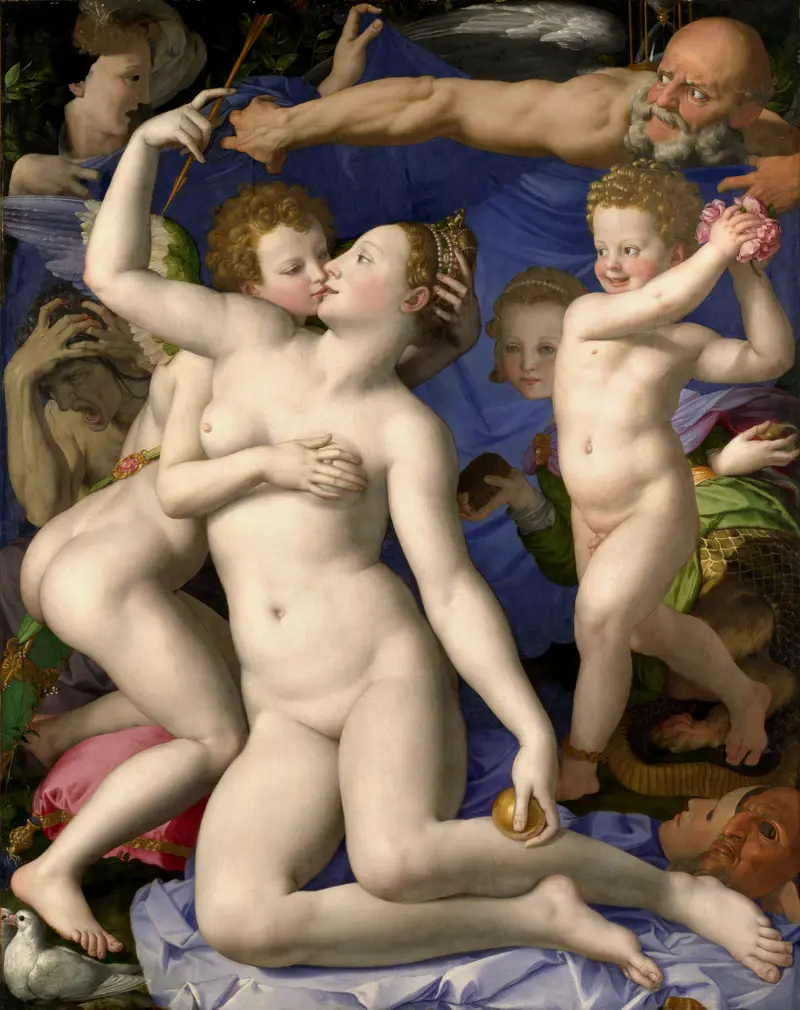 Mannerismc. 1520–1600
 Baroquec. 1590–1750
Gothic vs Romanesque and Renaissance
| Compared | Romanesque | Gothic | Renaissance |
|---|---|---|---|
| When | 10th–13th century | c. 1150–1500s | c. 1400–1600 |
| Buildings | Round arches on piers; massive, stocky churches | Pointed arches, slender supports, flowing tracery | Revival of the architecture of ancient Greece and Rome |
| Painting | Church frescoes meant to teach | Altarpieces on gold, painted crosses, wall paintings, illuminated manuscripts | Weightier, three-dimensional figures in convincing space |
| Figures | — | Elongated, with flowing drapery | Modeled on the art of antiquity |
| Key artists | — | Cimabue, Giotto, Duccio, Simone Martini, the Limbourg brothers | Masaccio, Leonardo, Michelangelo, Raphael |
List of famous Gothic and medieval paintings and their artists
The famous Gothic paintings: who painted them, when, and where each one is today.
Show the listHide the list
| Painting | Painted by | Year | Medium | Size | Located in | City |
|---|---|---|---|---|---|---|
| Très Riches Heures du Duc de Berry: May | Limbourg brothers | before 1416 | Tempera on vellum | 29 × 21.2 cm (11.4 × 8.3 in) (page) | Condé Museum | Chantilly |
| Codex Manesse: King Conradin Hawking (fol. 7r) | Unknown artist | c. 1300–1340 | Illumination on parchment | 35.5 × 25 cm (14 × 9.8 in) (page) | Heidelberg University Library | Heidelberg |
| Maestà: The Calling of the Apostles Peter and Andrew | Duccio di Buoninsegna | 1308–1311 | Tempera on panel | 43.3 × 46.2 cm (17 × 18.2 in) | National Gallery of Art Washington | Washington |
| Morgan Bible (Maciejowski Bible), fol. 3v | Unknown artist | c. 1244–1254 | Illumination on parchment | 39 × 30 cm (15.4 × 11.8 in) (page) | Morgan Library & Museum | New York |
| Ognissanti Madonna | Giotto | c. 1306–1310 | Tempera on panel | 325 × 204 cm (128 × 80.3 in) | Uffizi Gallery | Florence |
| The Wilton Diptych | Unknown English or French painter | about 1395–1399 | Egg tempera on panel | 36.8 × 26.7 cm (14.5 × 10.5 in) (each panel) | National Gallery London | London |
| Portrait of a Princess of the House of Este | Pisanello | c. 1425–1450 | Oil on poplar panel | 43 × 30 cm (16.9 × 11.8 in) | Louvre Museum | Paris |
| Lamentation (The Mourning of Christ) | Giotto | c. 1305 | Fresco | 200 × 185 cm (78.7 × 72.8 in) | Scrovegni Chapel | Padua |
| Santa Trinita Maestà | Cimabue | c. 1280–1300 | Tempera on panel | 385 × 223 cm (151.6 × 87.8 in) | Uffizi Gallery | Florence |
| Effects of Good Government in the City | Ambrogio Lorenzetti | 1330s | Fresco | c. 200 × 770 cm (wall) | Palazzo Pubblico, Siena | Siena |
| The Vision of Saint Eustace | Pisanello | about 1438–1442 | Tempera on panel | 54.8 × 65.5 cm (21.6 × 25.8 in) | National Gallery London | London |
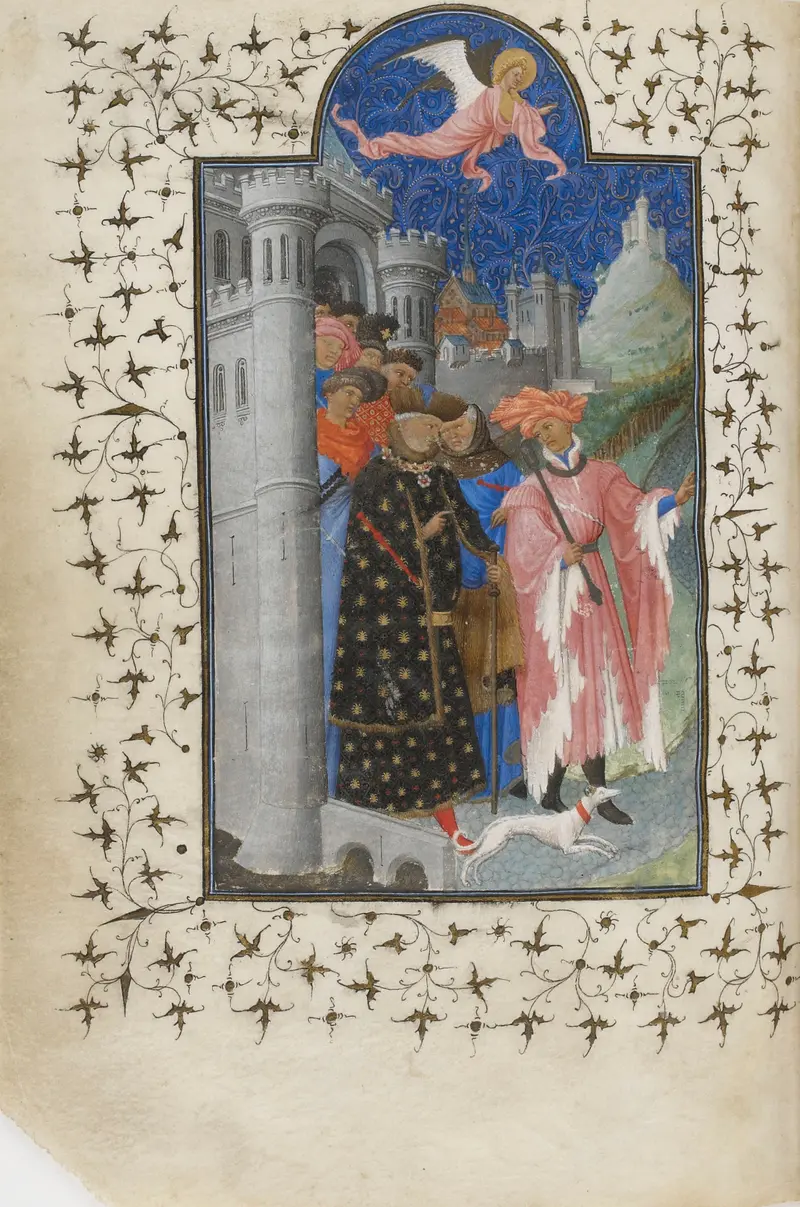
| Belles Heures: The Duke of Berry on a Journey (fol. 223v) | Limbourg brothers | 1405–1409 | Tempera, gold and ink on vellum | 23.8 × 17 cm (9.4 × 6.7 in) (leaf) | Metropolitan Museum of Art | New York |
| Petites Heures: The Duke of Berry Setting Out on Pilgrimage (fol. 288v) | Limbourg brothers | c. 1412–1414 | Illumination on parchment | 21.5 × 14.5 cm (8.5 × 5.7 in) (page) | Bibliothèque nationale de France | Paris |
| The Mocking of Christ | Cimabue | c. 1280 | Tempera on a gold ground on poplar panel | 25.8 × 20.3 cm (10.2 × 8 in) | Louvre Museum | Paris |
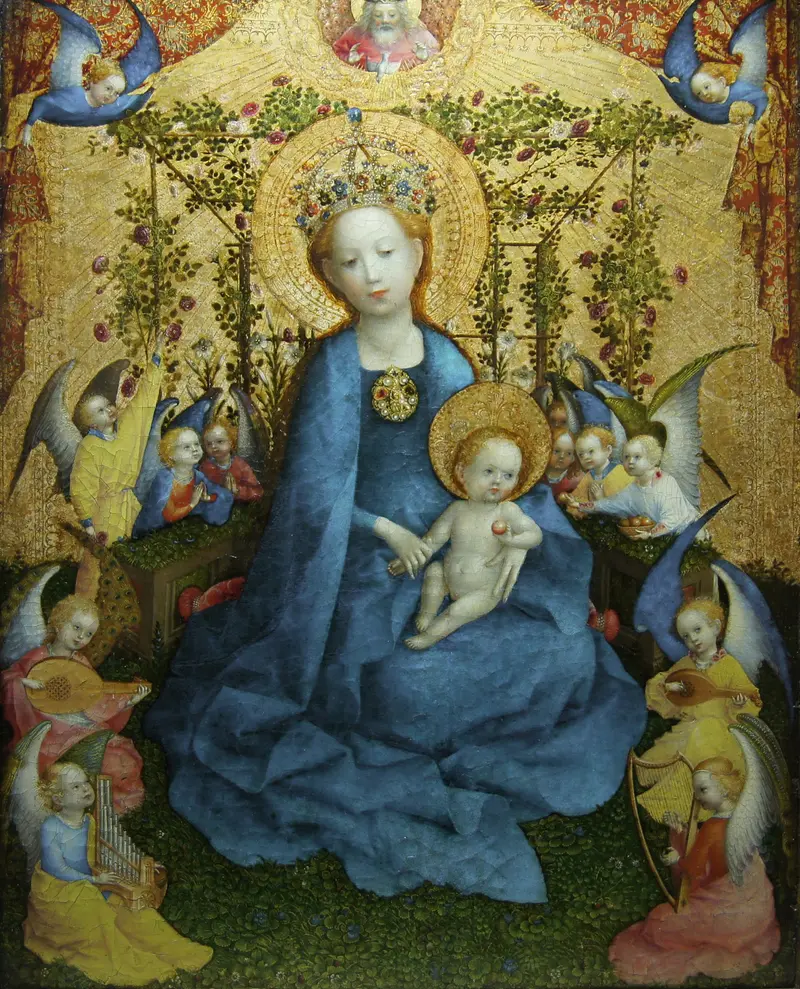
| Madonna of the Rose Bower | Stefan Lochner | 1440s | Oil and tempera on oak panel | 50.2 × 39.6 cm (19.8 × 15.6 in) | Wallraf–Richartz Museum | Cologne |
| Madonna of the Quail | Pisanello | c. 1420 | Tempera on panel | 54 × 32 cm (21.3 × 12.6 in) | Castelvecchio Museum | Verona |
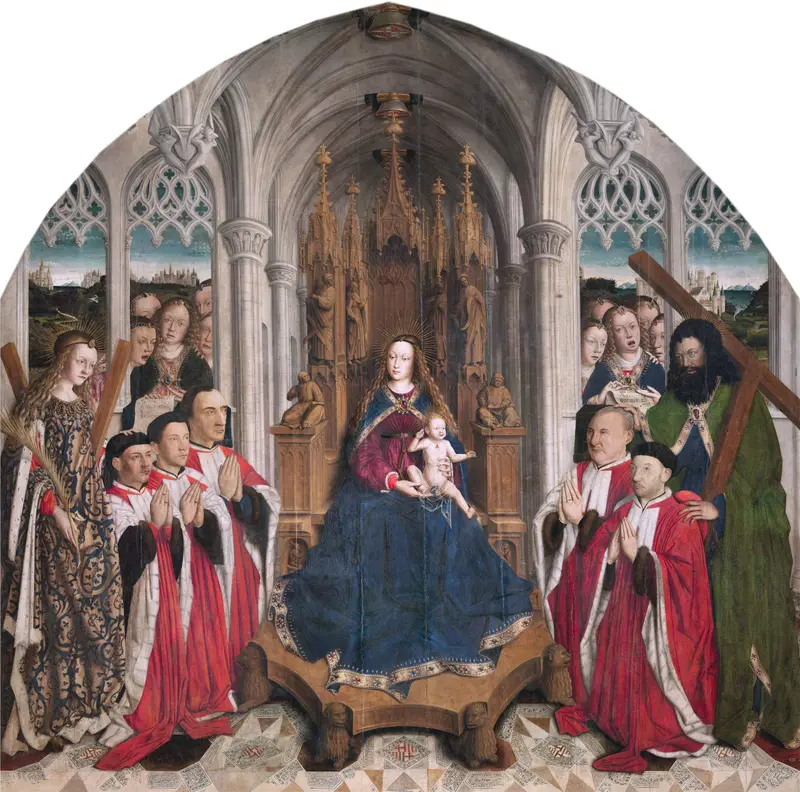
| The Virgin of the Councillors | Lluís Dalmau | 1443–1445 | Oil on panel | 316 × 312.5 cm (124.4 × 123 in) | Museo Nacional de Arte de Cataluña | Barcelona |
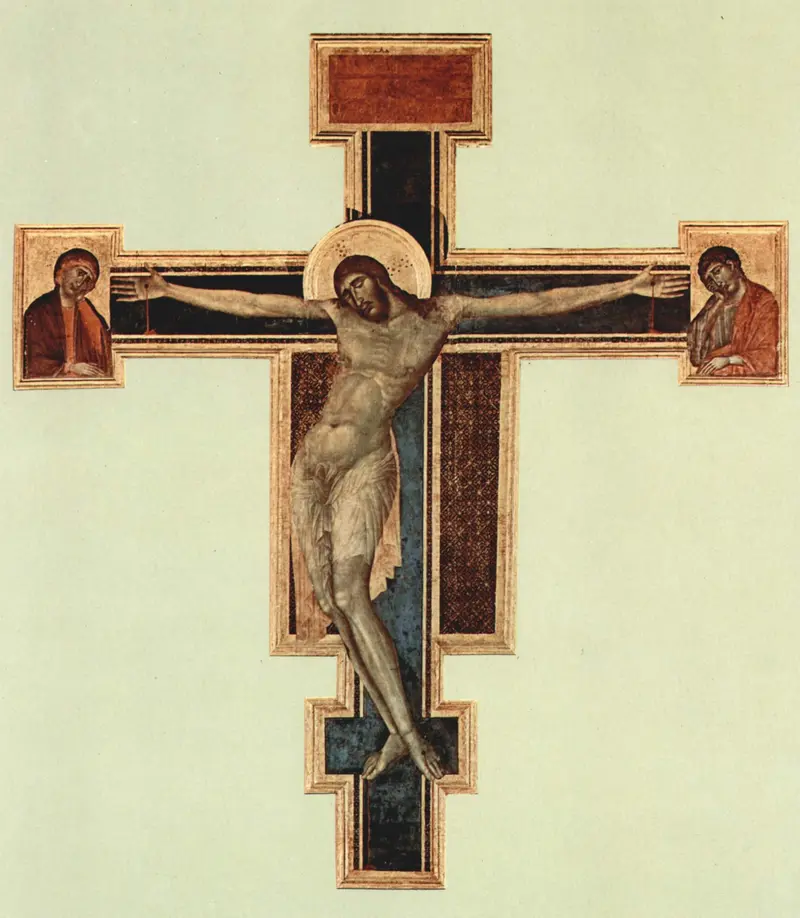
| Santa Croce Crucifix | Cimabue | before 1288 | Tempera on panel | 433 × 390 cm (170.5 × 153.5 in) | Museo dell'Opera di Santa Croce | Florence |
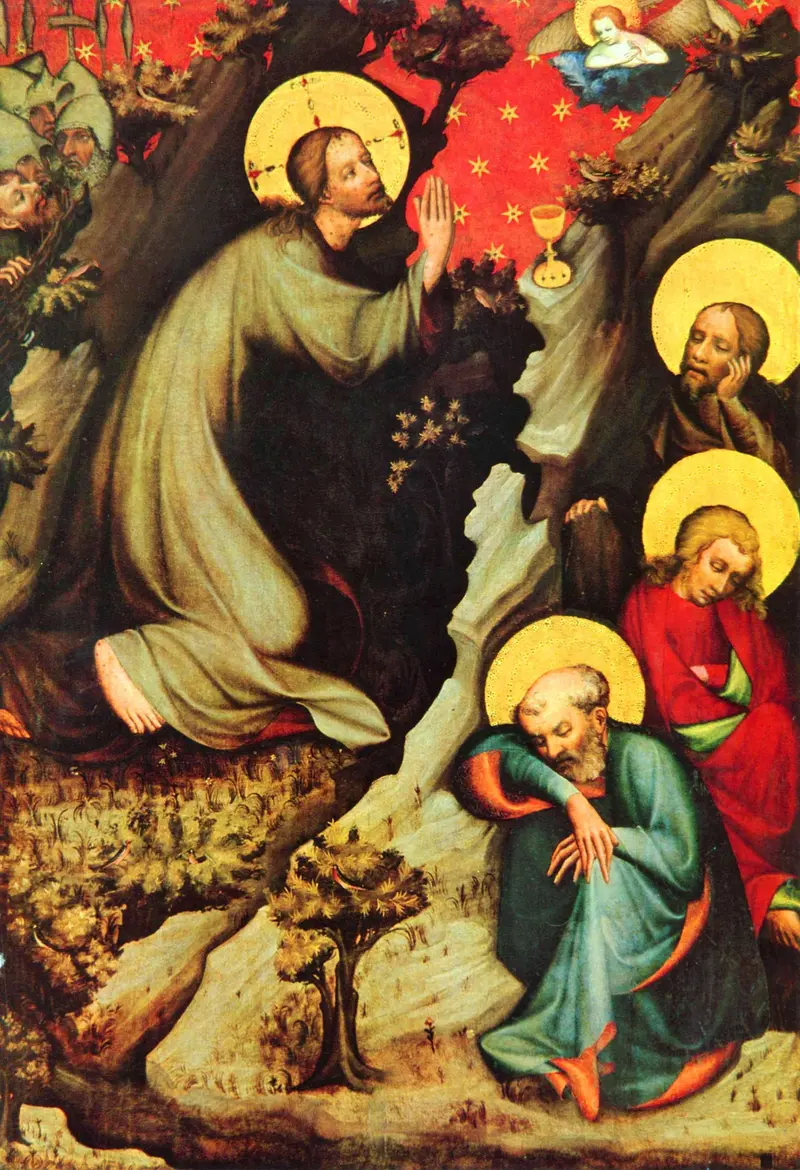
| Třeboň Altarpiece: Christ on the Mount of Olives | Master of the Třeboň Altarpiece | c. 1380 | Painting on panel | 132 × 92 cm (52 × 36.2 in) | National Gallery Prague | Prague |
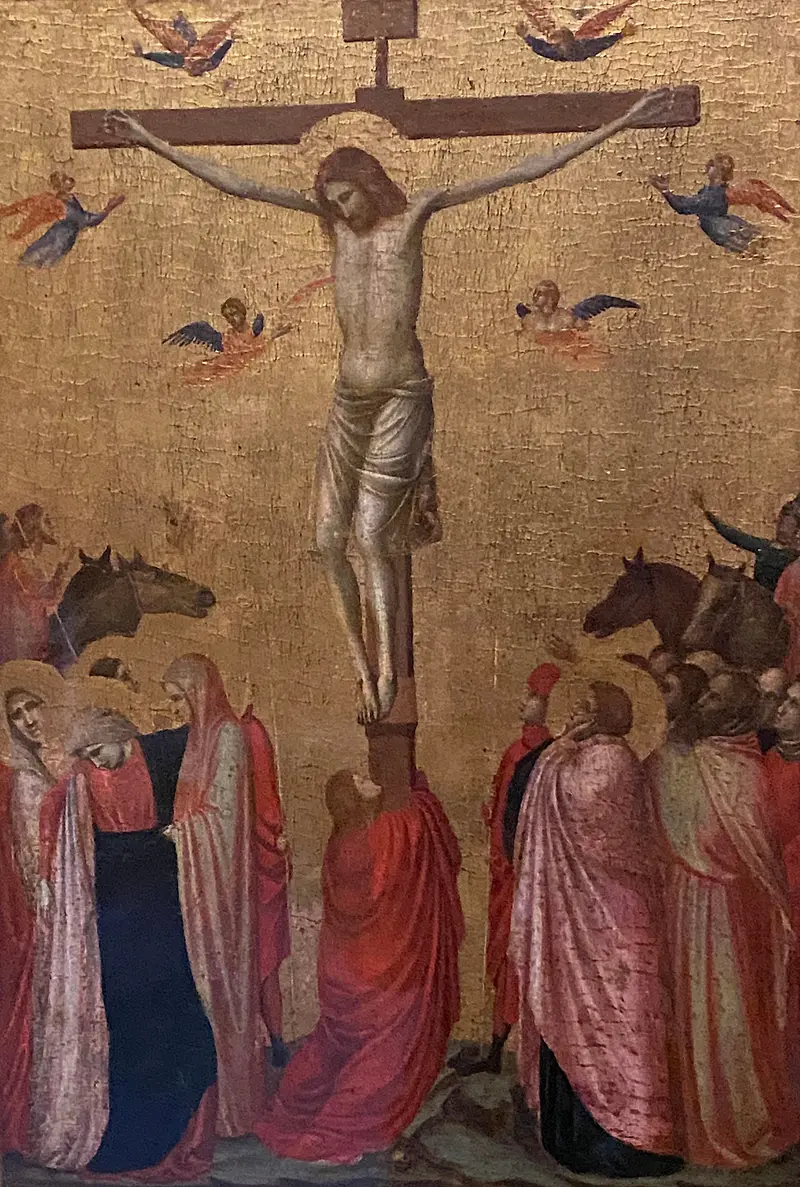
| The Crucifixion (Crucifixion of Strasbourg) | Giotto (workshop) | c. 1315 | Tempera and gold leaf on panel | 45.3 × 32.7 cm (17.8 × 12.9 in) | Musée des Beaux-Arts de Strasbourg | Strasbourg |
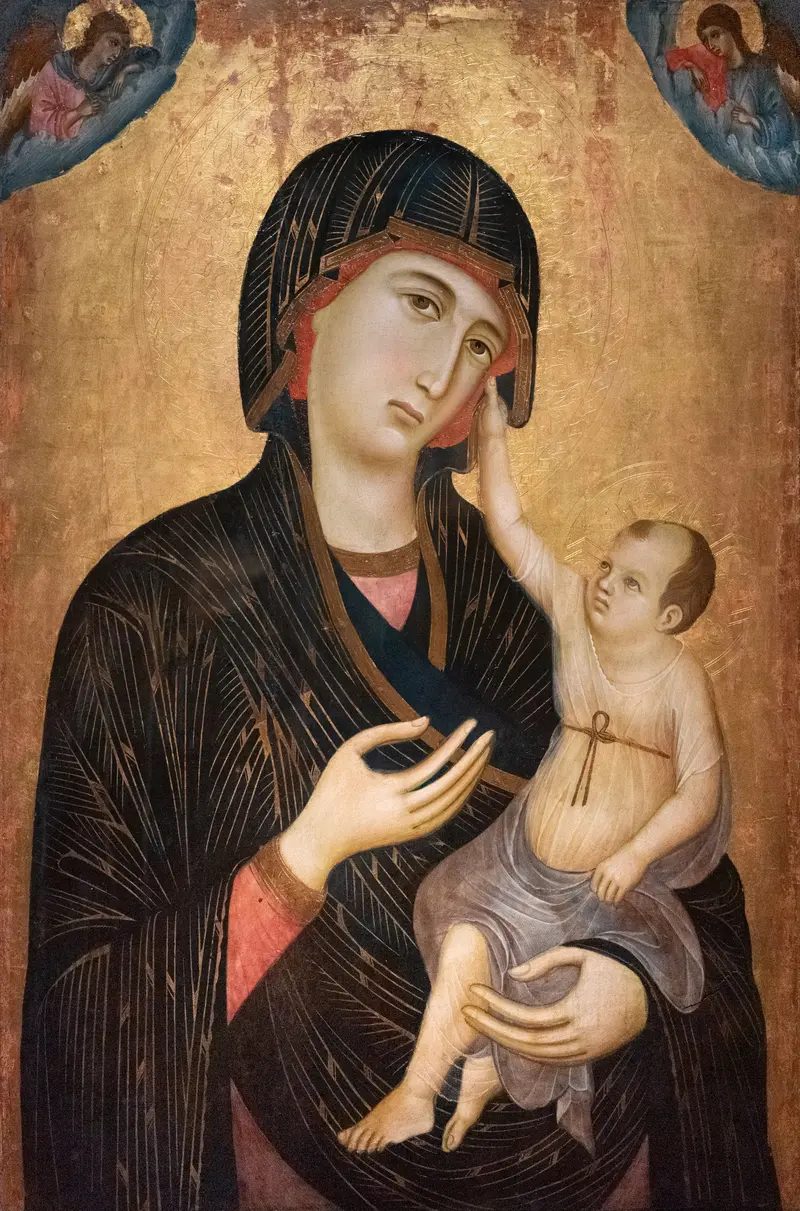
| Madonna di Crevole | Duccio di Buoninsegna | c. 1283 | Tempera on panel | 89 × 60 cm (35 × 23.6 in) | Museo dell'Opera del Duomo, Siena | Siena |
| Madonna and Child with Saints Nicholas and Catherine and a Donor | Gentile da Fabriano | c. 1400–1410 | Tempera and gold on poplar panel | 133.4 × 115 cm (52.5 × 45.3 in) | Gemäldegalerie Berlin | Berlin |
| The Last Judgment | Stefan Lochner | c. 1435 | Oil and gold on oak panel | 124 × 172 cm (48.8 × 67.7 in) | Wallraf–Richartz Museum | Cologne |
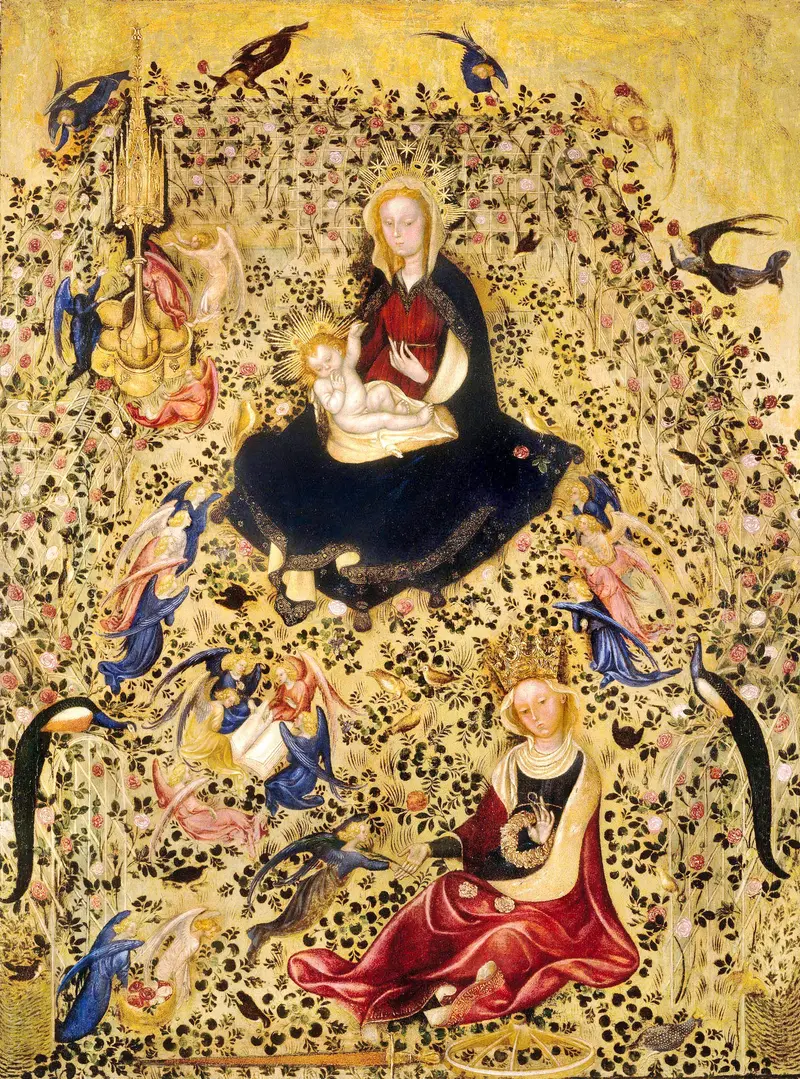
| Madonna of the Rose Garden | Stefano da Verona or Michelino da Besozzo | 1420 | Tempera on panel | 129 × 95 cm (50.8 × 37.4 in) | Castelvecchio Museum | Verona |
| Hours of Isabella Stuart: Virgin and Child in a Church (fol. 141v) | Rohan Master | c. 1417–1431 | Illumination on parchment | 25 × 18.3 cm (9.8 × 7.2 in) (page) | Fitzwilliam Museum | Cambridge |
Gothic art: questions and answers
What does Gothic mean in art?
In art, Gothic is the style of the later Middle Ages in Europe, from the mid-1100s to the 1500s: pointed arches in architecture and, in painting and sculpture, elongated figures with flowing drapery. The National Gallery in London explains that the word comes from the Goths, a Germanic people, and was first used by Italians to describe the art of northern Europe; it now covers architecture and art made in northern Europe between about the 12th and 16th centuries. The Getty's art vocabulary dates the style's beginning to northern France in the mid-12th century.
Sources: National Gallery: Gothic (glossary) · Getty AAT: Gothic (Medieval)
What are the characteristics of Gothic art?
Gothic art is marked by elongated figures, flowing lines of drapery, bright color, gold and intricate detail, almost always in the service of religious stories. The Getty's art vocabulary lists bright color, elongated proportions, intricate detail and emotional narrative content as typical of Gothic stained glass, altarpieces, wall paintings and manuscripts, and the National Gallery in London names the elongated figure and flowing linear drapery. In Italy most of these paintings were made in egg tempera on wooden panels, the National Gallery adds.
Sources: Getty AAT: Gothic (Medieval) · National Gallery: Gothic (glossary) · National Gallery: Tempera (glossary)
When was the Gothic period in art?
The Gothic period in art ran from the mid-1100s to the 1500s. The Getty's art vocabulary says the style began in northern France in the mid-12th century, spread to the rest of western Europe over the next 100 years and evolved into the Renaissance at different times in different parts of Europe. The National Gallery in London places International Gothic, its late courtly phase, between the late 14th and the mid-15th centuries, and dates the Early Renaissance of Masaccio and Donatello in Florence to the 15th century.
Sources: Getty AAT: Gothic (Medieval) · National Gallery: International Gothic (glossary) · National Gallery: Early Renaissance (glossary)
Where did Gothic art start?
Gothic art started in northern France in the mid-1100s, in the building of cathedrals. The Getty's art vocabulary says the style evolved in cathedral architecture, with immense interiors, towers, spires and soaring height made possible by pointed arches and flying buttresses, and then flourished in stained glass, sculpture, elaborate altarpieces, wall painting and manuscript illumination. Italian painters took it up in their own way: Duccio's art, the National Gallery in London says, was deeply influenced by French Gothic metalwork.
Sources: Getty AAT: Gothic (Medieval) · National Gallery: Duccio
Who are the most famous Gothic painters?
The most famous Gothic painters are Giotto, Duccio and Simone Martini in 14th-century Italy, Cimabue before them, and the Limbourg brothers in France. The National Gallery in London calls Giotto the chief liberator of Italian painting from the Byzantine style, Duccio one of the most important painters of 14th-century Italy and Simone Martini one of the greatest painters of the 14th century; the Uffizi calls Cimabue the most important painter of central Italy in the later 1200s, and the Getty calls the Limbourg brothers the leading northern European artists of their time.
Sources: National Gallery: Giotto · National Gallery: Duccio · National Gallery: Simone Martini · Uffizi Gallery: Cimabue and the Santa Trinita Maestà · J. Paul Getty Museum: The Belles Heures of Jean de France, Duc de Berry · National Gallery: International Gothic (glossary) · Staatliche Museen zu Berlin, Gemäldegalerie (German)
What is International Gothic?
International Gothic is the courtly painting style that spread across Europe from the late 1300s to the mid-1400s, with decorative patterns, rich colors and gold. The National Gallery in London says it was practiced mainly at courts in France, Italy and Bohemia, and that its pictures are often spatially illogical but include beautifully observed natural details. On this page, the Limbourg brothers' Très Riches Heures, Pisanello's Vision of Saint Eustace, whose detail the Gallery compares to Jan van Eyck's, and Gentile da Fabriano's Berlin Madonna show the style.
Sources: National Gallery: International Gothic (glossary) · National Gallery: The Vision of Saint Eustace · Condé Museum, Château de Chantilly: Les Très Riches Heures du duc de Berry · Staatliche Museen zu Berlin, Gemäldegalerie (German)
What is the difference between Gothic and Romanesque art?
Romanesque came first: a style of round arches and massive, stocky churches that began in the 10th century and, the National Gallery in London says, endured until the 13th century, when Gothic replaced it. Gothic architecture is marked by the pointed arch and, in later forms, by slender supports and flowing tracery, and in painting and sculpture its figures grew elongated, with flowing drapery. Romanesque church interiors were decorated with frescoes meant to teach.
Sources: National Gallery: Romanesque (glossary) · National Gallery: Gothic (glossary)
How is Gothic art different from Renaissance art?
Gothic painters set stylized, elongated figures against gold; Renaissance painters, from the 1400s in Florence, revived the art of ancient Greece and Rome and gave their figures weight in convincing space. The National Gallery in London says that in the Early Renaissance style of Masaccio and Donatello figures became weightier and more three-dimensional and the space they occupied more convincingly constructed. The change was gradual: the Getty's art vocabulary says Gothic evolved into the Renaissance at different times in different parts of Europe.
Sources: National Gallery: Early Renaissance (glossary) · National Gallery: Renaissance (glossary) · Getty AAT: Gothic (Medieval)
Is Giotto Gothic or Renaissance?
Giotto (about 1265–1337) worked in the Gothic period, but his weighty, lifelike figures pointed the way to the Renaissance, so both claim him. The National Gallery in London calls him the chief liberator of Italian painting from the Byzantine style and notes the three-dimensional weightiness of his figures in convincing architectural spaces. The National Gallery of Art in Washington says his explorations developed, a full century later, into the Italian Renaissance, while he still painted conservative Byzantine-style gold backgrounds.
Sources: National Gallery: Giotto · National Gallery of Art, Washington (Google Arts & Culture)
What is the difference between Gothic art and medieval art?
Medieval art covers the whole Middle Ages, from the 5th century to the Renaissance; Gothic art is its later phase, from the mid-1100s. The Getty's art vocabulary dates the medieval period from the Christianized Roman Empire of the fifth century to the Renaissance, which began between the 13th and the 15th century depending on the country, and dates Gothic from the mid-12th century. Before Gothic came Romanesque, which the National Gallery in London says Gothic replaced in the 13th century.
Sources: Getty AAT: Medieval (European) · Getty AAT: Gothic (Medieval) · National Gallery: Romanesque (glossary)
How were Gothic paintings made?
Most Gothic paintings in Italy were made in egg tempera on wooden panels, often on a ground of gold leaf, and many were parts of large altarpieces. The National Gallery in London says most early Italian paintings are in egg tempera, paint bound with egg yolk, and that a polyptych joined many panels above a predella of small narrative scenes; most have since been taken apart and scattered among museums. Duccio's Maestà, for example, was sawn apart in the 1770s, and its panels are now in London, Washington and other museums.
Sources: National Gallery: Tempera (glossary) · National Gallery: Polyptychs (glossary) · National Gallery of Art, Washington (Google Arts & Culture) · National Gallery: Duccio
Where can you see famous Gothic paintings?
The Uffizi in Florence holds Giotto's Ognissanti Madonna and Cimabue's Santa Trinita Maestà, both there since 1919, and the Condé Museum at Chantilly the Très Riches Heures. The National Gallery in London has the Wilton Diptych and Pisanello's Vision of Saint Eustace, and the Louvre in Paris his Princess of the House of Este and Cimabue's Mocking of Christ, bought in 2023. In New York, the Metropolitan Museum of Art keeps the Belles Heures in its Cloisters Collection and the Morgan Library & Museum the Morgan Bible.
Sources: Uffizi Gallery (Google Arts & Culture) · Uffizi Gallery (Google Arts & Culture) · Condé Museum, Château de Chantilly: Les Très Riches Heures du duc de Berry · National Gallery: The Wilton Diptych · National Gallery: The Vision of Saint Eustace · Louvre Museum · Louvre Museum · Metropolitan Museum of Art · Morgan Library & Museum (Google Arts & Culture)
What are the most famous Gothic illuminated manuscripts?
The most famous Gothic illuminated manuscripts are the Très Riches Heures of the Duke of Berry, the Codex Manesse and the Morgan (Maciejowski) Bible. The Condé Museum at Chantilly, which owns the Très Riches Heures, says the Limbourg brothers began the prayer book for the Duke of Berry and left it unfinished when they died in 1416, and that its calendar scenes shaped our image of the Middle Ages. The Codex Manesse, a songbook of German courtly love poetry with 137 portraits of poets, is in Heidelberg University Library and on UNESCO's Memory of the World register.
Sources: Condé Museum, Château de Chantilly: Les Très Riches Heures du duc de Berry · Château de Chantilly: exhibition Les Très Riches Heures du duc de Berry (French) · UNESCO Memory of the World: Codex Manesse (French) · J. Paul Getty Museum: The Belles Heures of Jean de France, Duc de Berry · Metropolitan Museum of Art
Is Gothic art in the public domain, and can I download it free?
Yes. The famous works on this page were made between about 1245 and 1450, centuries before modern copyright, so they are in the public domain in the United States and everywhere copyright ends 70 years after the artist's death. The full collection below also holds later prints and drawings of Gothic buildings; each artwork page gives its own date. You can download these images free and use them for anything, including commercial projects. A few countries have their own rules on photographs of artworks, so check them if you publish outside the U.S.
Sources: Cornell University Library: Copyright Term and the Public Domain
How we chose the famous paintings
The famous paintings on this page are the Gothic works known most widely around the world, measured by the number of languages that have an encyclopedia entry about each one, checked in November 2026. No painter has more than three. Books and altarpieces count once: we show one page of the Très Riches Heures, the Codex Manesse, the Morgan Bible, the Belles Heures and the Petites Heures, one panel of Duccio's Maestà and of the Třeboň Altarpiece, and one wall of Ambrogio Lorenzetti's Good Government frescoes.
We include works that our catalogue, the holding museum or Wikidata classes as Gothic, and Giotto and Duccio, whom the Art Movements timeline counts as Gothic painters. Where works tie, the better-known painter comes first, then the older work. A few famous works are left out because every free photograph of them shows the frame, among them Simone Martini's Annunciation and Gentile da Fabriano's Adoration of the Magi.
Dates, sizes and locations come from the museums' own records and from Wikidata.
Spotted a mistake? Tell us and we will correct it.