
Maison dite de Saint-Louis et hangar. — History & Facts
Did the painter know this moment would outlive them? Destinies are woven into the fabric of art, capturing the essence of a place that may otherwise fade into obscurity. Look to the foreground of Maison dite de Saint-Louis et hangar, where the house stands proud against the backdrop of a cloudy sky. The textured brushwork imbues the structure with character, while the muted color palette of browns and grays suggests a somber mood. Focus on the intricate details of the façade—the windows framed like watchful eyes, and the weathered wood hints at countless stories nestled within its walls.
The careful placement of the hangar to the left draws the eye, creating a visual narrative that speaks of labor, livelihood, and the passage of time. Bénard’s choice of composition is laden with significance. The juxtaposition of the sturdy house against the ephemeral sky evokes a sense of permanence amidst change—an exploration of human resilience against the inevitable march of time. Look closely, and you might note the shadow play on the ground, hinting at the unseen lives that once walked there, entangled in their own destinies.
The quiet interplay between light and shadow suggests a fleeting moment, capturing the transience of life itself. In 1837, while creating this piece, Bénard was immersed in the evolving art world of France, responding to both Romanticism's heightened emotionality and the emerging Realist movement. This was a time of political upheaval and social change, influencing artists to reflect on their surroundings with a more profound sense of purpose. As he painted, he navigated a landscape of innovation, all while sculpting an enduring legacy through the portrayal of everyday life and architecture.
More Artworks by Auguste-Sébastien Bénard
Browse all →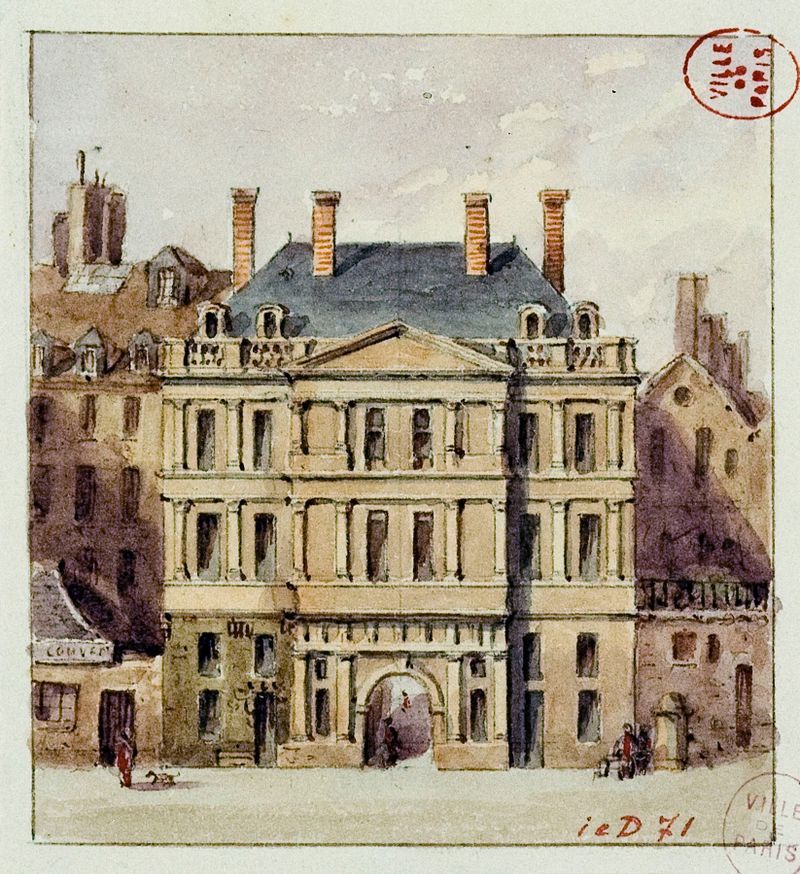
Cour de la Sainte Chapelle.
Auguste-Sébastien Bénard
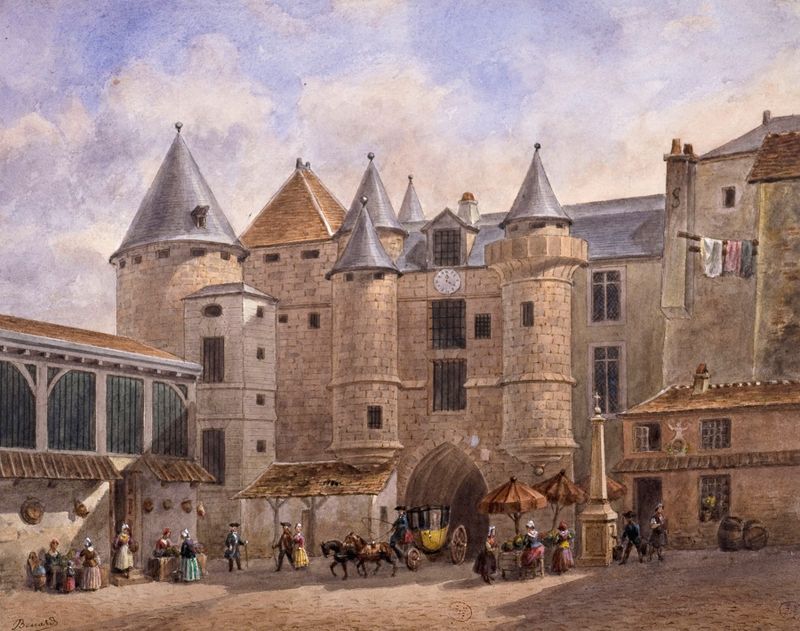
Le Grand Châtelet du XVIIIème siècle.
Auguste-Sébastien Bénard

Place de l’Hôtel de Ville.
Auguste-Sébastien Bénard

Salle souterraine du Palais de Justice.
Auguste-Sébastien Bénard

Voûtes du quai de Gesvres
Auguste-Sébastien Bénard

Monument expiatoire élevé à la mémoire du duc de Berry, à l’emplacement de l’ancien Opéra
Auguste-Sébastien Bénard
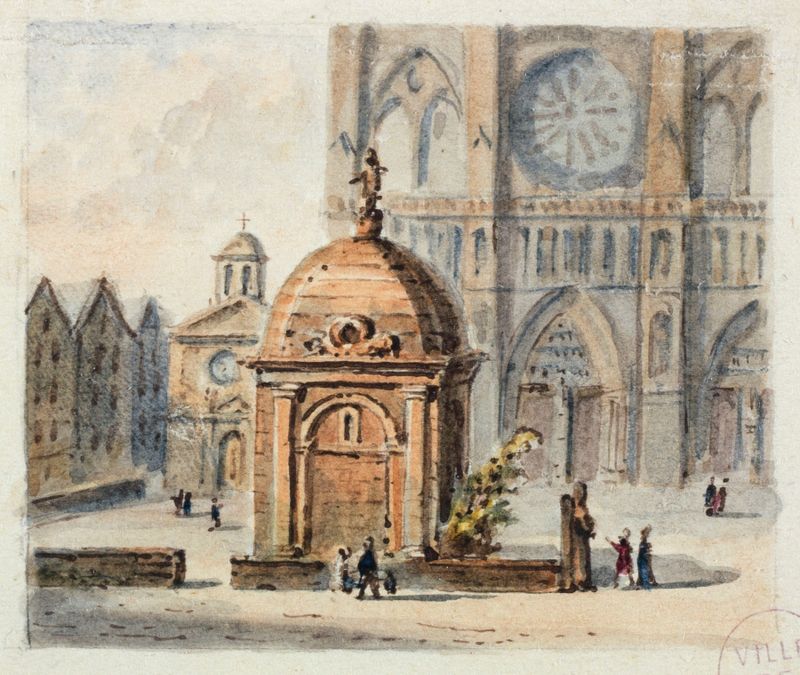
Le parvis de Notre-Dame de Paris
Auguste-Sébastien Bénard

Rue des chantres (entre le quai aux fleurs et la rue Chanoinesse).
Auguste-Sébastien Bénard

L’entrée de l’ancienne forteresse du Grand Châtelet, un jour de Carnaval
Auguste-Sébastien Bénard
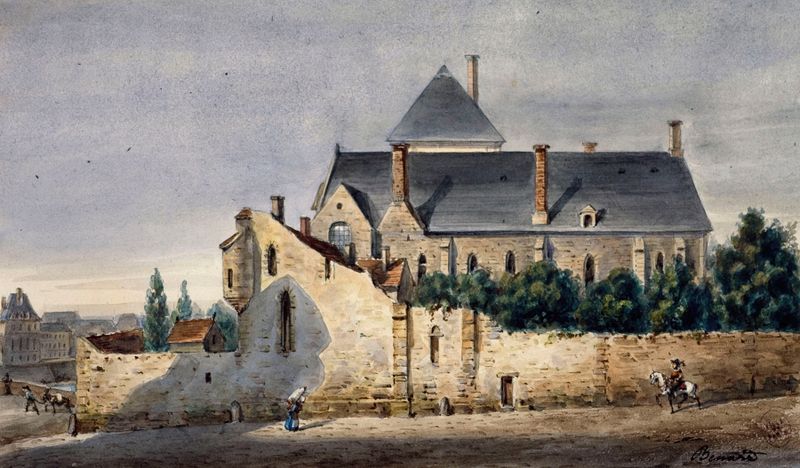
Les restes des bâtiments de l’hôtel du Petit Bourbon.
Auguste-Sébastien Bénard





