Maisons dans un paysage — History & Facts
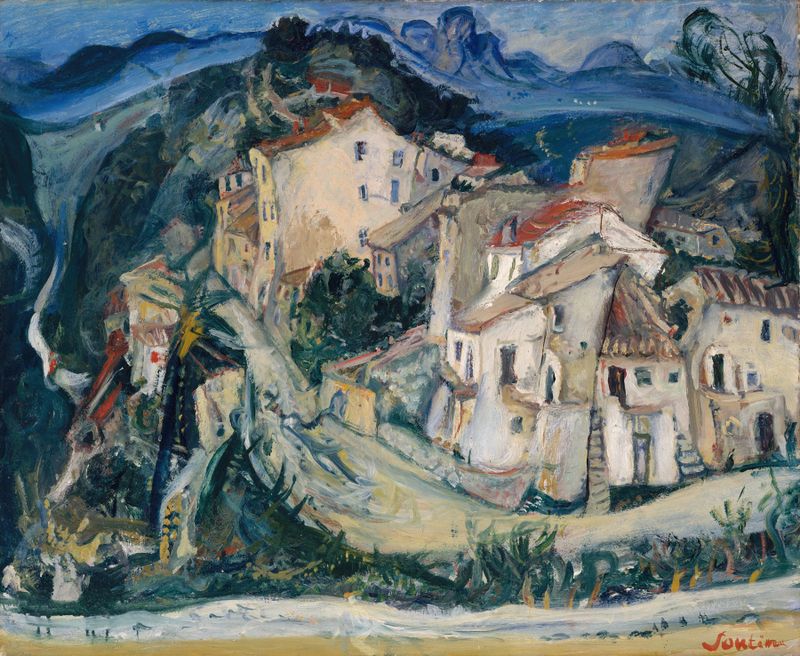
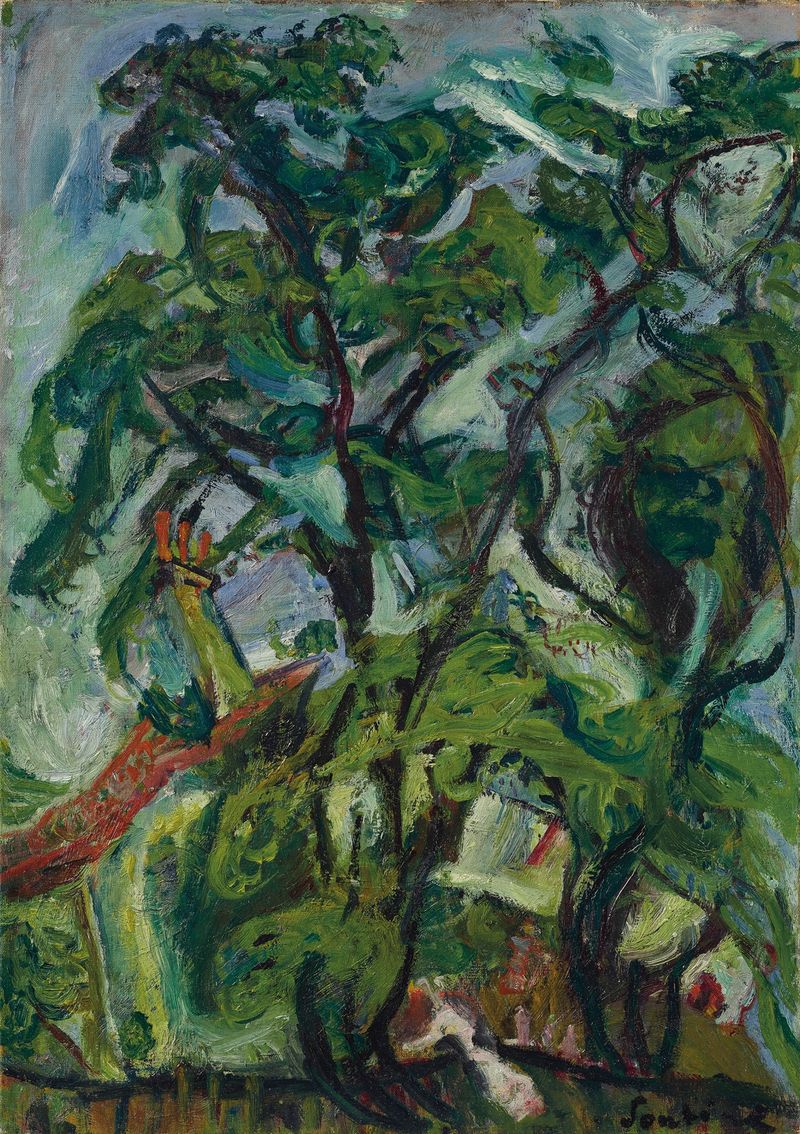
Where does light end, and longing begin? In the vibrant brushstrokes of a landscape, beauty intertwines with melancholy, offering a glimpse into the human spirit's quest for connection and solace. Look to the center of this canvas, where the clustered houses emerge with a palpable urgency. Soutine's dynamic strokes animate the scene, as soft blues and deep greens collide with bursts of warm ochre, creating a rhythm that pulls the eye inward. Notice how the trees bend and sway, as if the landscape itself breathes under a sky brushed with emotion, the clouds swirling in shades of twilight.
The perspective feels both intimate and expansive, inviting viewers to lose themselves in the intricate dance of color and form. Beneath the surface lies a tapestry of contrasts; the sturdy homes, symbols of stability, stand against a tempestuous sky that hints at uncertainty. The vibrant colors exude life, yet there is a haunting quality to the way they swirl and blend, suggesting the fragility of existence. Each stroke conveys Soutine's inner turmoil, revealing an artist grappling with the duality of beauty and despair, hope and fear, as he immortalizes a fleeting moment. Created between 1918 and 1919 during a tumultuous post-war period, the artist found himself in Paris, a city grappling with change and uncertainty.
This work emerged as Soutine navigated his own struggles, both personally and in the art world, where he sought to express emotion through an innovative approach to landscape. As modernism surged, he carved his niche, transforming traditional scenes into powerful explorations of depth and feeling.