View of Cagnes — History & Facts
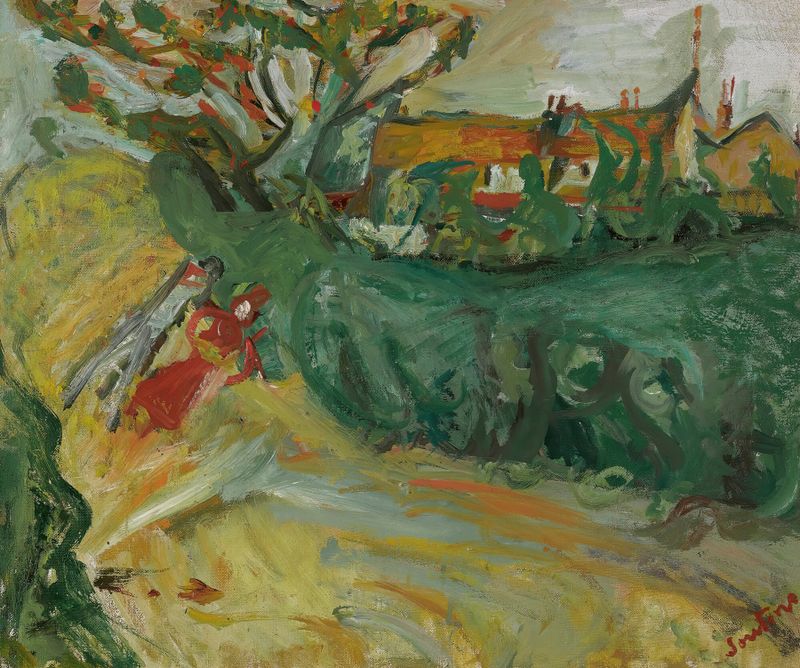
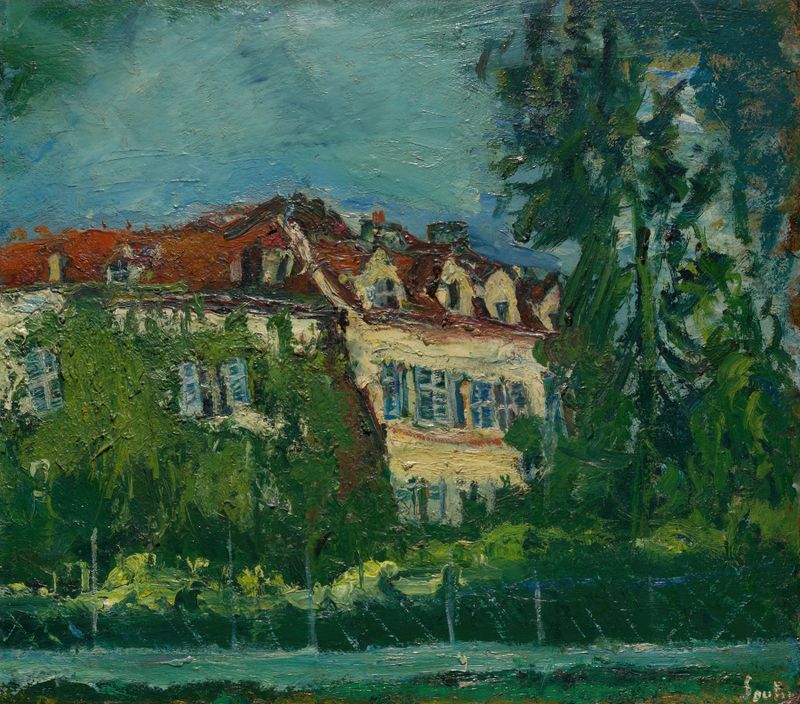
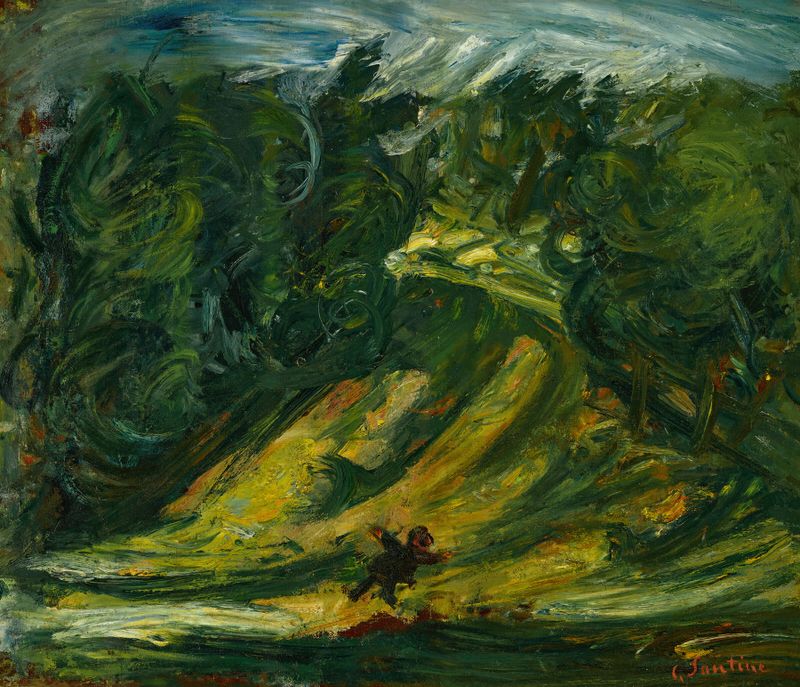
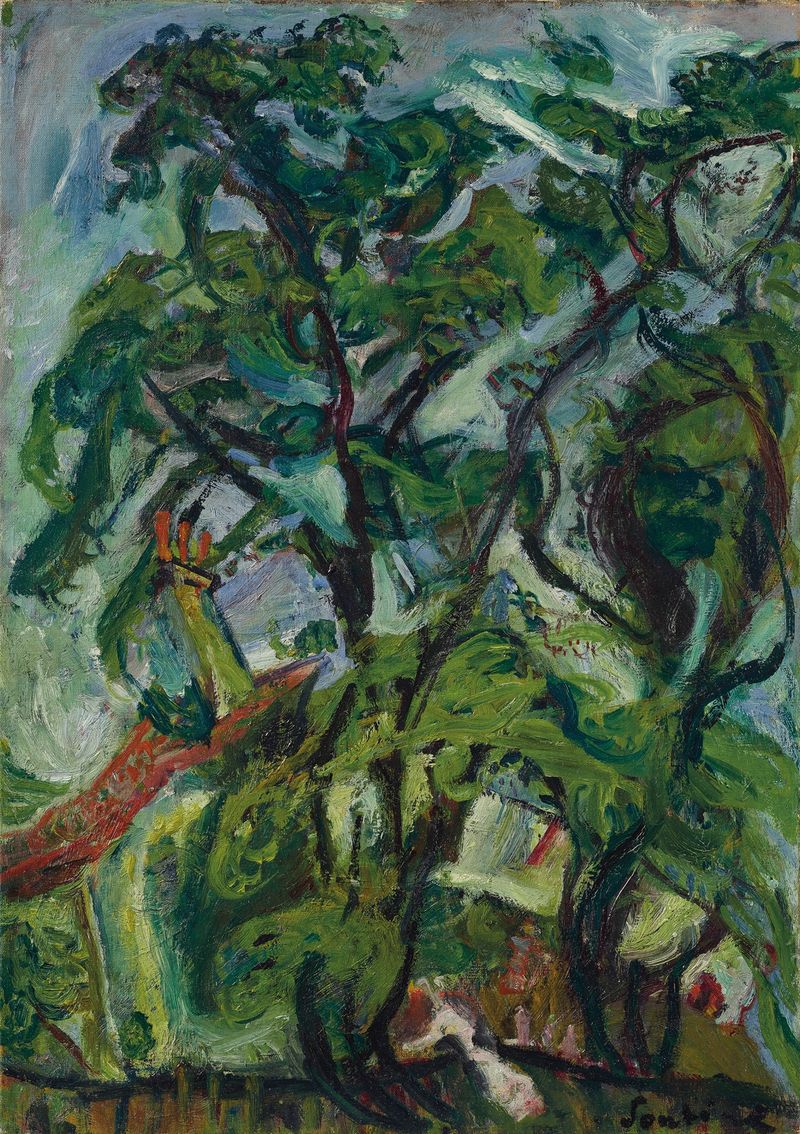
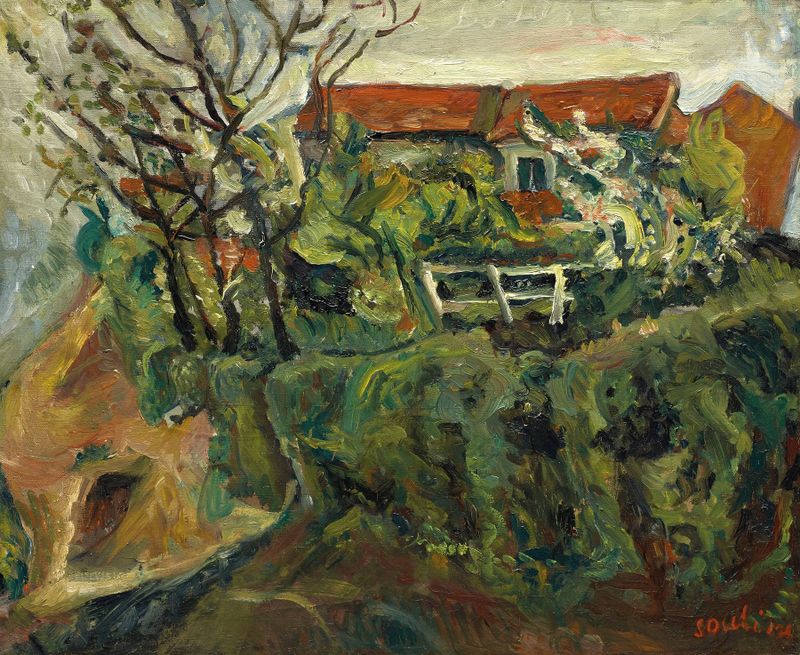
In the delicate realm of View of Cagnes, fragility intertwines with vibrancy, revealing the tender balance between life’s turmoil and its quiet moments of beauty. Look to the foreground, where the undulating greens and blues of the landscape invite you into Soutine’s world. Notice how the brushstrokes pulse with emotion, each stroke a testament to the artist’s inner landscape. The sky looms above, a tumult of swirling clouds that contrast with the serene village nestled below, bathed in twilight hues.
This tension between the brushwork and the serene setting speaks to a deeper, abiding fragility, as if the world is caught in a fleeting moment before the storm. Within the vibrant colors lie hints of vulnerability. The houses, while sturdy in form, seem almost ephemeral, as if they might dissolve under the weight of the tumultuous sky. The juxtaposition of the serene village against the chaotic backdrop suggests a fragile peace, a moment suspended in time where beauty coexists with uncertainty.
This tension elicits a profound emotional response, reminding viewers of their own fragile existence amidst the chaos of life. In the years 1924–25, Soutine painted this piece in Cagnes-sur-Mer, a region in France that served as an escape from the chaos of the world following World War I. At this time, he was grappling with personal struggles of identity and purpose while exploring the boundaries of expressionism. The art world was shifting, and Soutine’s work captured the essence of a fragile reality, allowing him to document the emotional resonance of place and memory in a post-war landscape.