Paysage — History & Facts
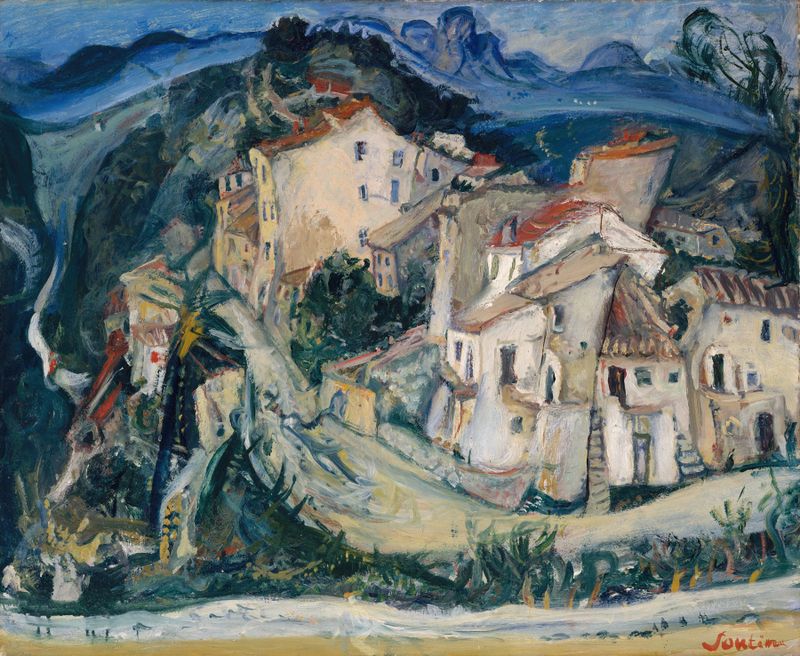
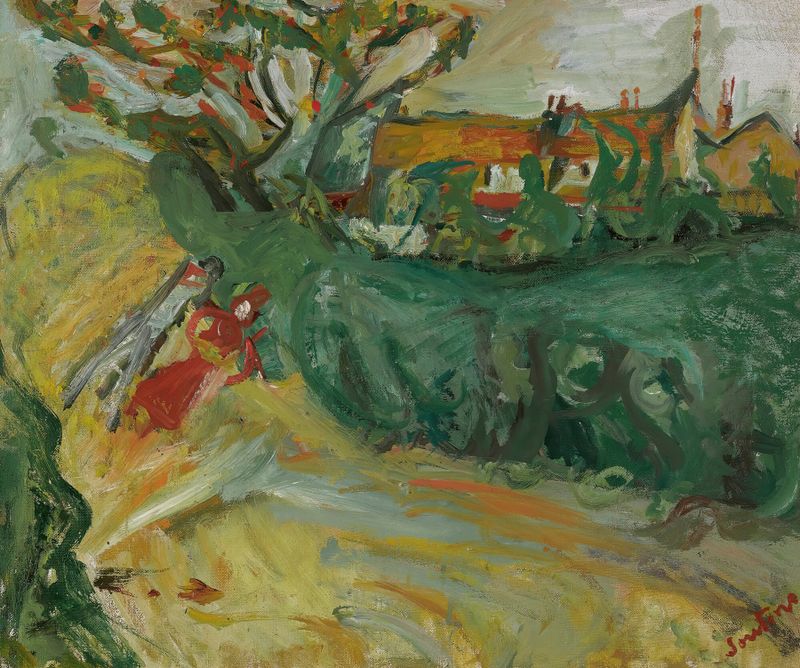
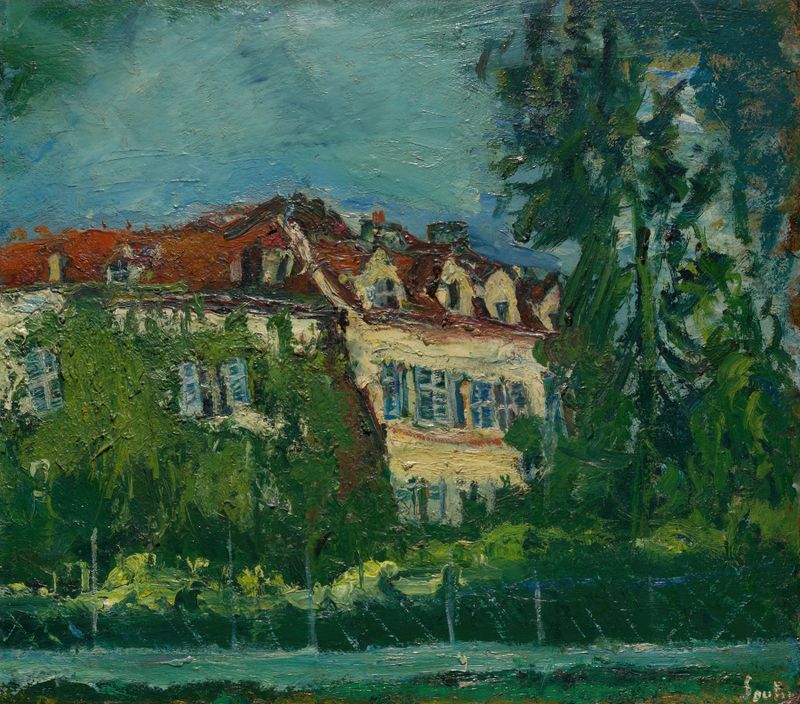
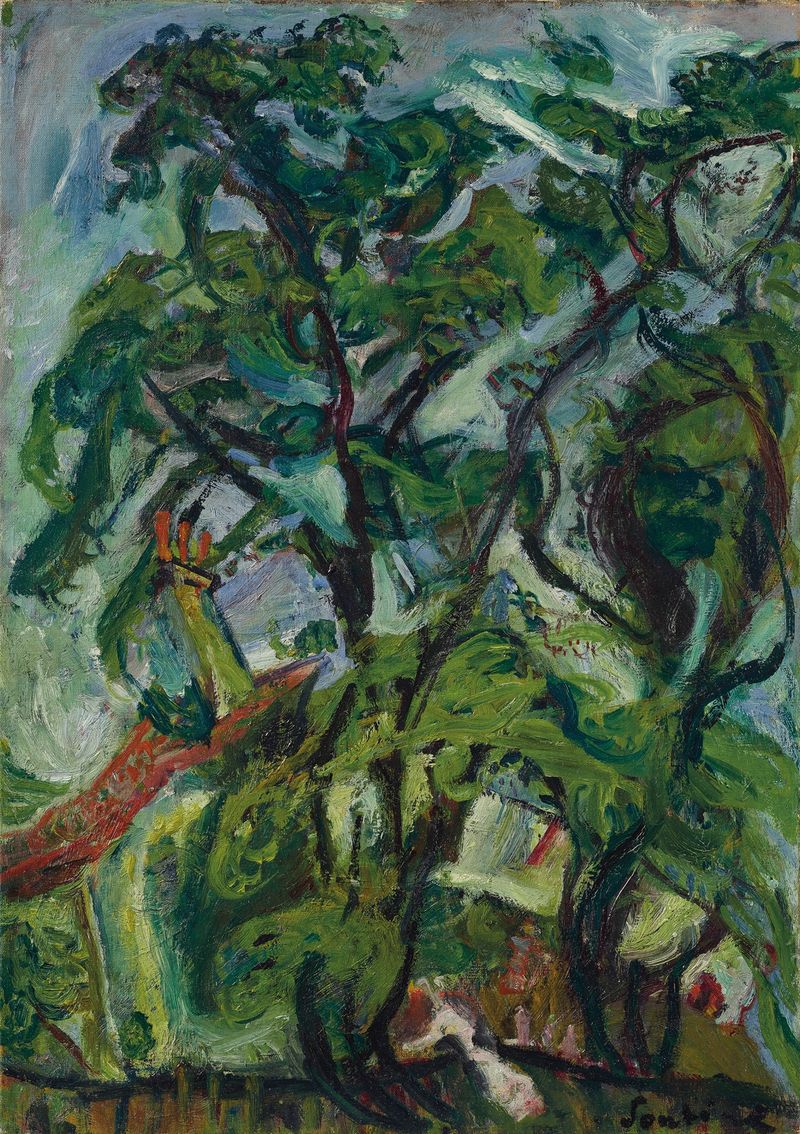
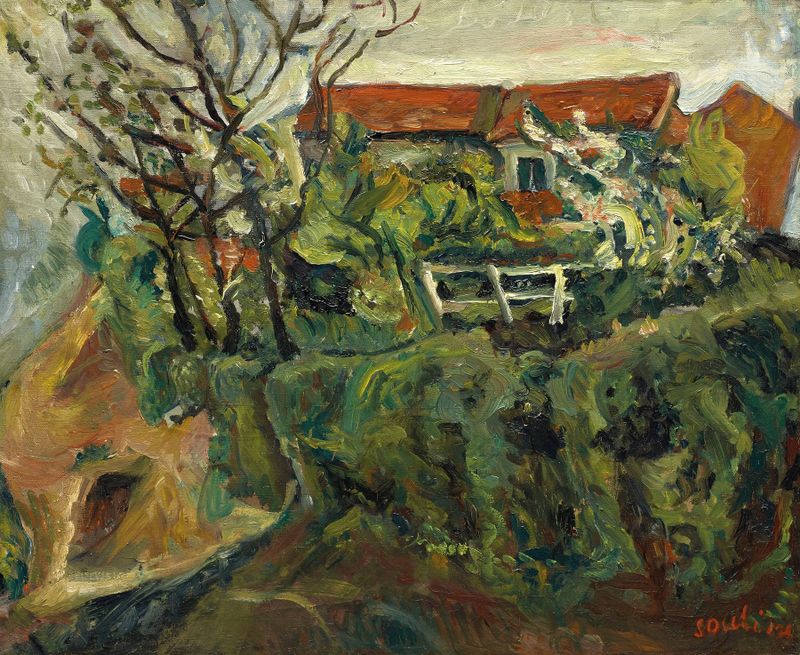
What secret hides in the quiet of the canvas? Within the swirling colors of Chaïm Soutine’s Paysage, a landscape emerges that invites reflection and introspection, whispering stories of both beauty and turmoil. Look to the horizon, where deep greens and earthy browns converge and intermingle, conveying a sense of movement that defies stillness. The brushstrokes, vigorous and almost frenetic, draw your gaze over undulating hills that seem alive, as if nature itself breathes within the paint. Notice how the light dances across the textured surface, illuminating patches of color that pulse with emotion, creating a rhythm that propels the viewer deeper into the scene. Beneath the vibrant surface lies a tension between chaos and peace, a dichotomy reflecting the artist’s inner struggles.
The landscape, while beautiful, hints at unease—perhaps a foreshadowing of the conflict brewing in Europe at the time. The erratic brushwork invites contemplation; it reveals not only the exterior world but also the tumult within the artist, serving as a mirror to the viewer's own reflections and fears. In 1939, Soutine created Paysage amidst rising anxiety as World War II loomed over Europe. Living in Paris, he was a part of the avant-garde movement, exploring expressionism’s depths while grappling with his own identity and the broader implications of societal upheaval.
This piece stands as a testament to his ability to encapsulate complex emotions through landscape, revealing not just the scenery but a world in transition.