Paysage de Cagnes — History & Facts
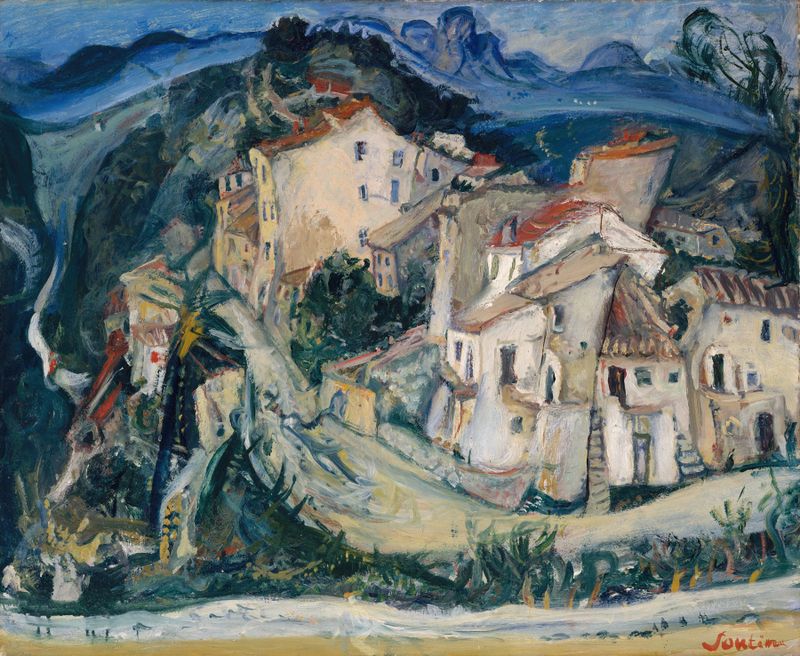
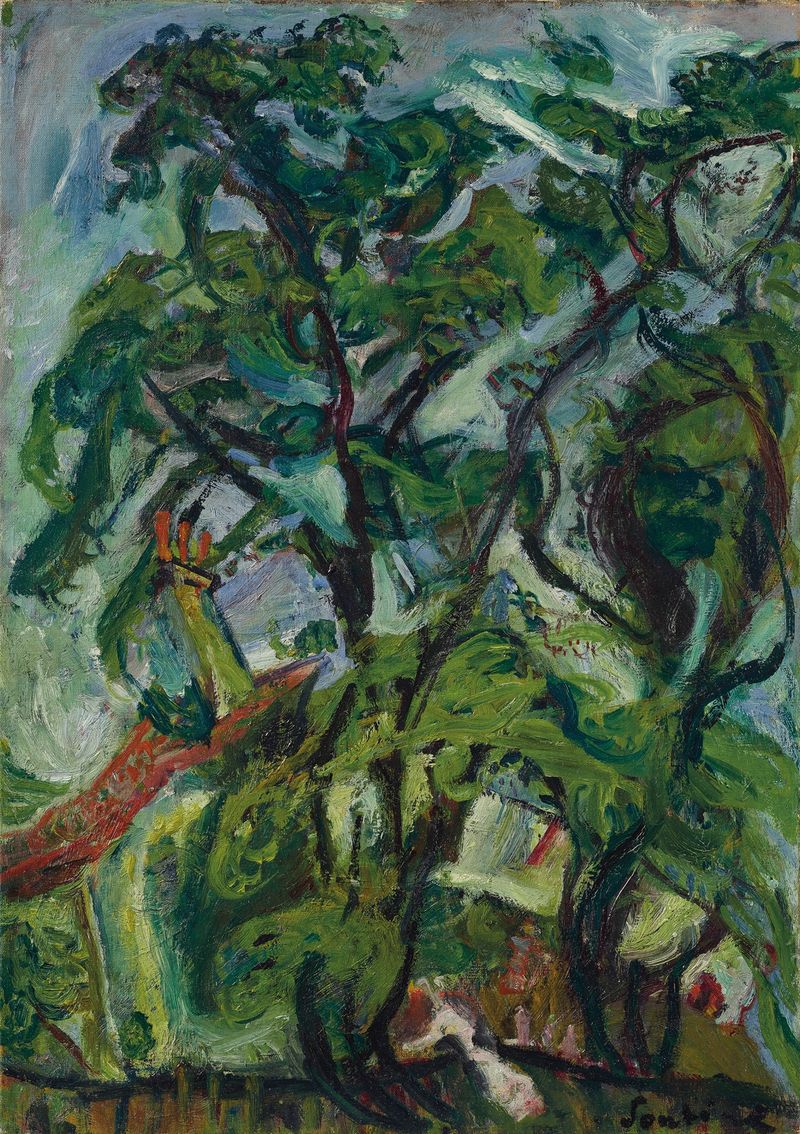
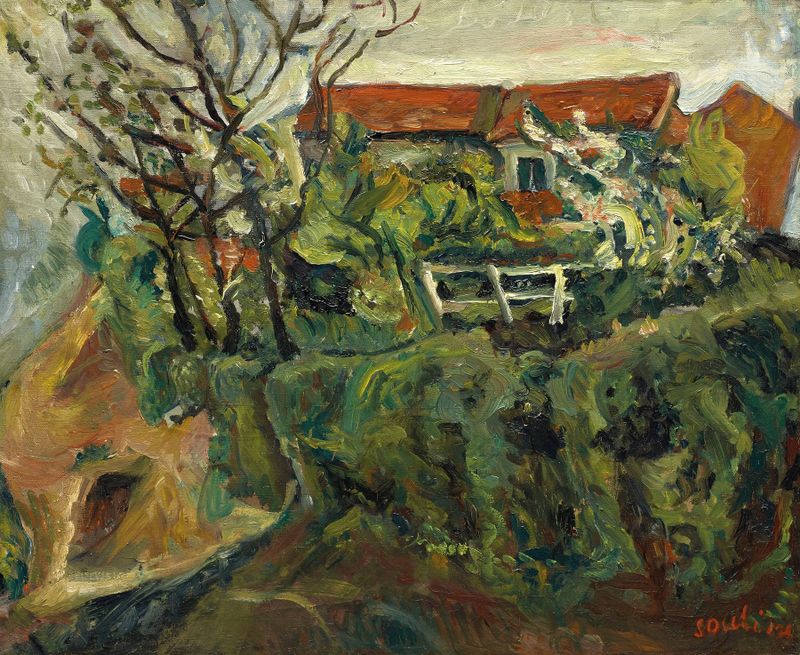
In the vibrant blur of Paysage de Cagnes, you encounter a symphony of hues that beckons introspection. This landscape captures a moment suspended between chaos and tranquility, where each brushstroke whispers a story yet to be uncovered. Look to the left at the riot of greens and blues, the rolling hills undulating beneath an expansive sky. Notice how the painter's thick applications of paint create texture, inviting your fingers to linger just above the canvas.
The contrast of vibrant colors against the softer pastel backgrounds encapsulates a world alive yet harmoniously subdued, revealing Soutine's masterful command of color and form. As you gaze deeper, consider the tension between the wildness of nature and the serenity it belies. The jagged contours of the hills suggest a restless energy, while the gentle blending of the sky evokes a peaceful stillness. Here, the interplay of light and shadow mirrors the balance between turmoil and calm, reflecting Soutine's inner struggles and his quest for harmony amid external chaos. In 1924, Soutine created Paysage de Cagnes during a period of immense personal turmoil, grappling with his mental health and the complexities of modern life.
Residing in France, he was part of an art scene that embraced both abstraction and emotional depth, navigating the influences of Post-Impressionism while forging his unique voice. The painting stands as a testament to his tumultuous spirit and relentless pursuit of balance through art.