Malines — History & Facts
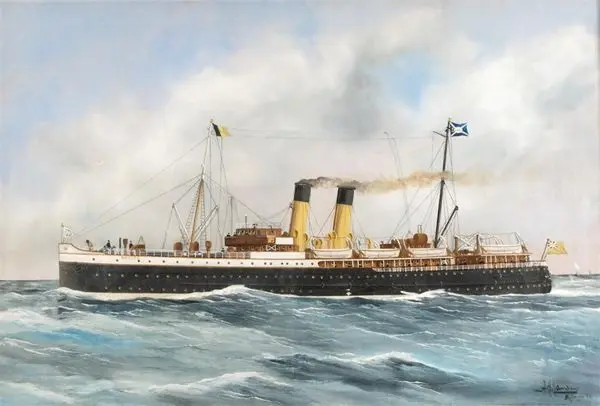
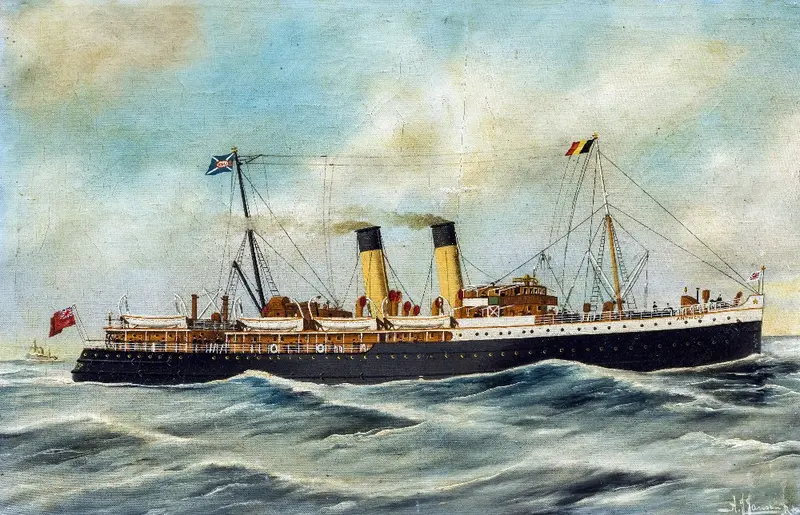
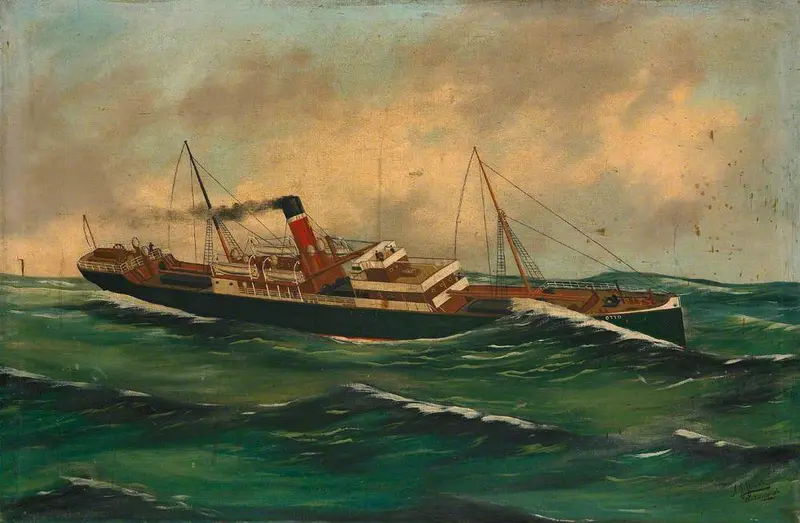
What first draws the eye in Malines by A. J. Jansen is the proud silhouette of a steamship, cutting through choppy waters beneath a sky alive with shifting clouds.
The ship’s twin yellow funnels, capped in black, stand like sentinels above the deck, their color echoed in the flags that flutter at bow and stern. Every line and rigging cable is crisply rendered, as if the artist wanted to anchor the vessel firmly in the viewer’s mind. The sea is restless but not threatening, its rolling waves painted with a rhythmic energy that seems to propel the ship forward.
The palette is both sober and optimistic: the dark hull and white superstructure are set off by the bright funnels and the soft, luminous sky, suggesting a vessel built for both endurance and display. Painted around 1925, this work belongs to an era when steamships were the lifeblood of commerce and migration, their portraits commissioned by proud owners or shipping lines to commemorate a launch or a maiden voyage. Such paintings were often hung in company offices or captains’ quarters, serving as emblems of technological progress and national pride. Little is recorded about A.
J. Jansen or the specific journey of this canvas, now catalogued by mutualart.com, but its style is typical of ship portraiture between the wars: precise, almost diagrammatic, yet invested with the drama of motion and the promise of distant horizons. The ship’s flags and the careful attention to detail invite the viewer to imagine the stories of those who sailed aboard her, and to linger over the artistry that turned a feat of engineering into a subject worthy of a painter’s devotion.