Man Along a Canal — History & Facts
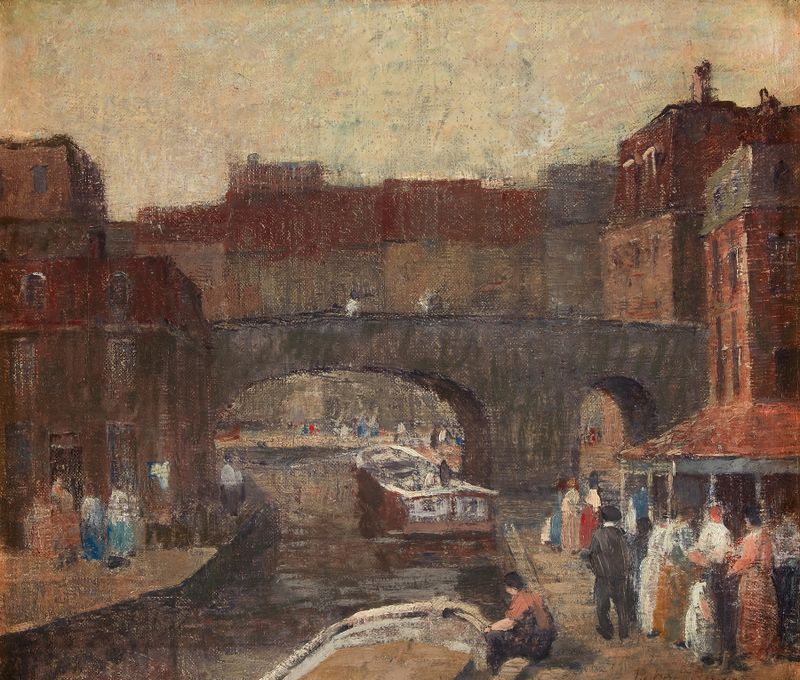
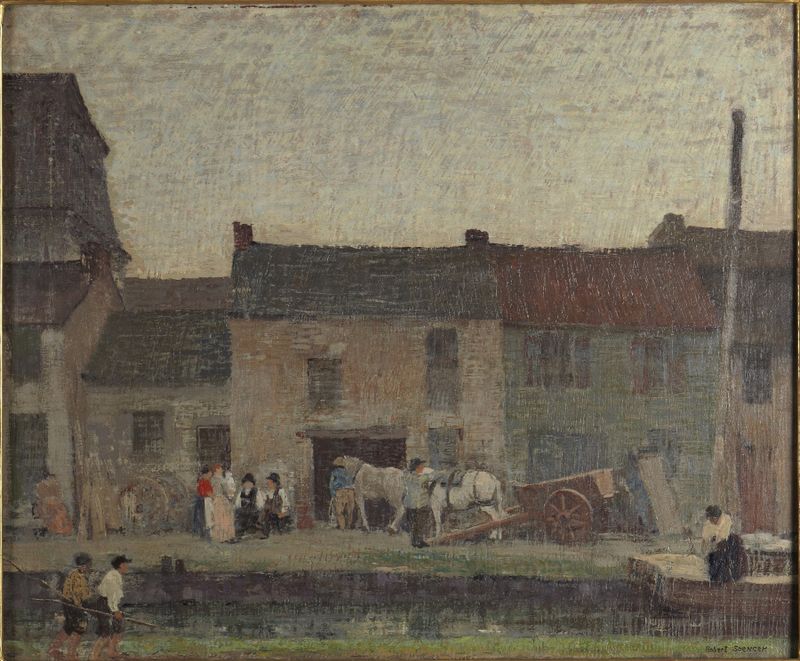
Who listens when art speaks of silence? The stillness captured in this work invites contemplation on the delicate balance between solitude and the world around us, a silent revolution of the spirit. Look closely at the man positioned at the water’s edge; his form is a quiet contrast against the vibrant greens and blues of the canal. The rippling water reflects soft light, creating a shimmering path that draws the eye towards him, while the trees loom in gentle shadows, framing his isolation. The subtle brushstrokes and muted palette convey a sense of tranquility, embodying the weight of unspoken thoughts and emotions. Yet, beneath this serene surface lies an exploration of internal conflict.
The solitary figure suggests both freedom and confinement, as if he is at once liberated by nature and trapped by his own reflections. The untouched waters may symbolize the potential for change, hinting at a world ready to awaken. Additionally, the juxtaposition of the man against the expansive landscape raises questions about his place within it—are we mere spectators of our surroundings, or do we shape the narratives that unfold in the silence? In 1910, Robert Spencer created this piece during a transformative period in American art, when the Ashcan School and a burgeoning interest in realism challenged traditional techniques.
Living in the throes of an evolving society, Spencer sought to encapsulate the profound connections between humanity and nature, reflecting his own artistic journey while responding to the world’s ongoing changes.