Boating Party — History & Facts
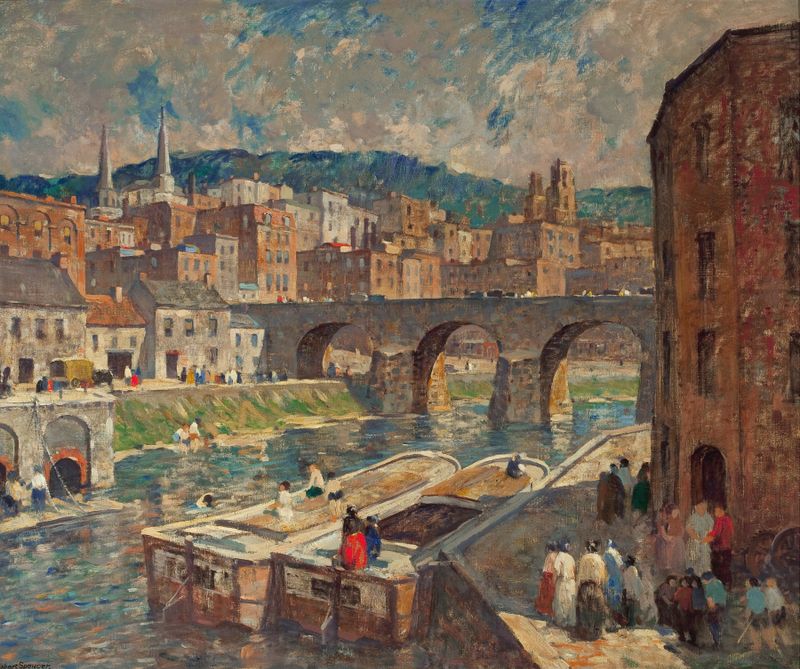
When did color learn to lie? In a world where hues mask the deepest sorrows, the vibrant brushstrokes can often veil a hidden grief that resonates beneath the surface. Look to the right at the joyous congregation of figures, their laughter seemingly suspended in the air, surrounded by lush greenery and a shimmering expanse of water. Notice how the light dances off the canvas, illuminating the faces in vivid color while casting shadows that whisper of something more profound. The composition invites the eye to explore the interplay between the joyous moment captured and the subtle tension lurking in the spaces between the figures, suggesting a deeper narrative that transcends mere enjoyment. Delving deeper, one can sense the discord between the lively scene and an undercurrent of melancholy.
The figures, while engaged in merriment, seem to exist in a world where their smiles do not fully reach their eyes, hinting at unspoken losses or unfulfilled desires. The lush colors may celebrate life, but they also serve as a reminder of the fragility of happiness, inviting viewers to reflect on the bittersweet nature of human experience. Created in a period of artistic transformation, the artist painted this scene in an era marked by the emergence of modernism, yet he remained rooted in traditional representation. This work reflects his desire to capture moments of everyday life, while also grappling with personal challenges and the broader uncertainties of the time.
In this delicate balance of joy and sorrow, we glimpse the artist's own struggles, inviting us to find empathy for both the celebration and the grief that often intertwine.