The Other Shore — History & Facts
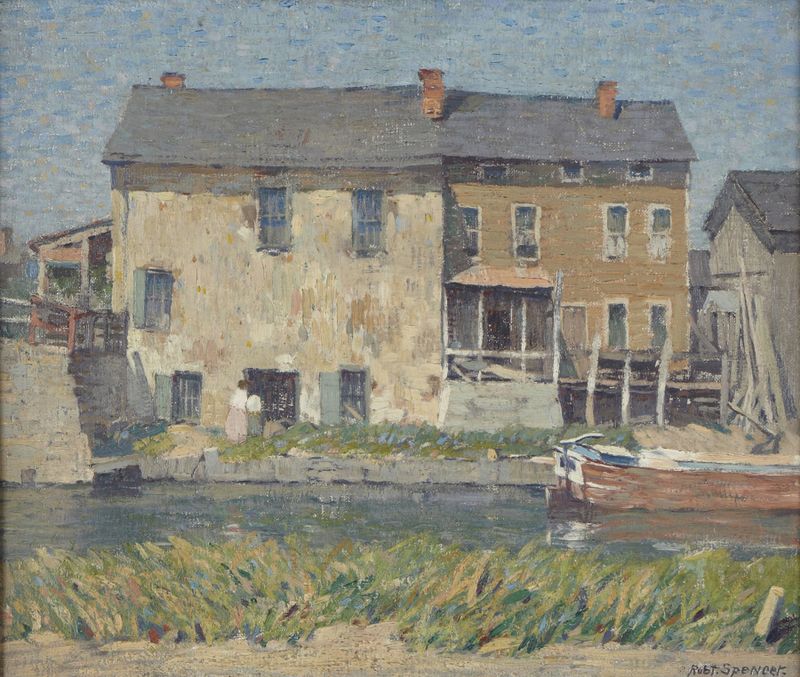
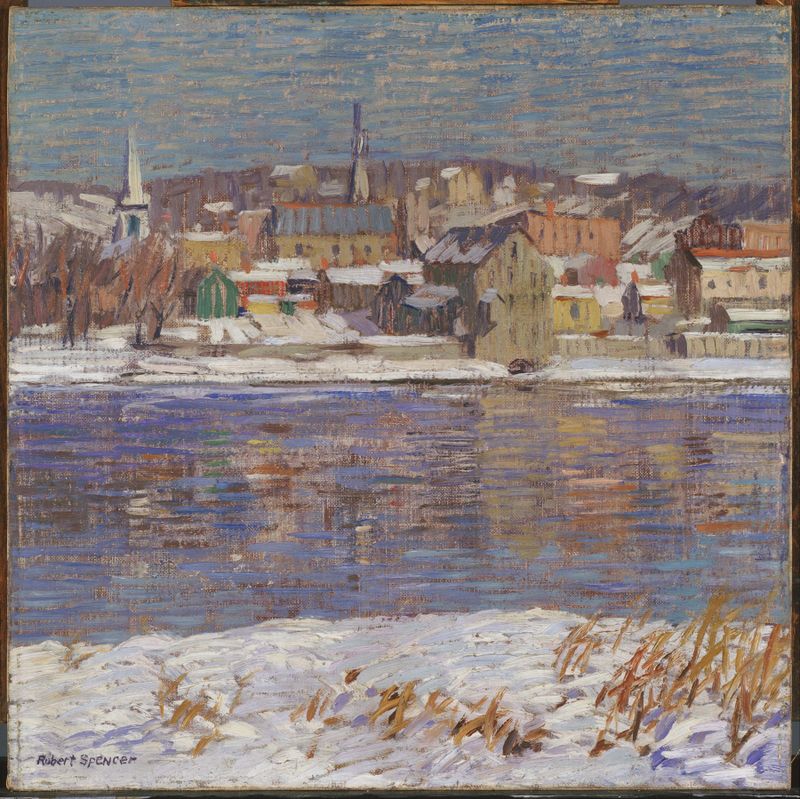
In the stillness of reflection, the artist captures the essence of a moment that reverberates beyond time. Look to the left at the gentle ripples of the water, where reflections dance upon the surface, mirroring the muted colors of a fading day. Notice how the warm browns and greens blend seamlessly into cooler blues, creating a tranquil harmony that draws the eye deeper into the scene. The technique showcases a delicate balance of impressionism and realism, inviting the viewer to appreciate the subtleties of nature in both its chaos and calm. Here, the painting speaks to the inner turmoil of transition—the juxtaposition of light and shadow that mirrors our own struggles between hope and despair.
The shoreline acts as a metaphorical boundary, hinting at the unknown future that lies beyond the water’s edge. The scattered flora, though vibrant, carries an air of melancholy, suggesting the fragility of existence and the fleeting nature of beauty. In 1923, the artist worked on this piece during a time of personal introspection, amidst the broader context of post-World War I recovery. He painted in New England, where the tranquility of the landscape offered a contrast to the chaos of the world around him.
This period saw a resurgence of interest in American Impressionism, reflecting a growing desire for peace and introspection within the artistic community.