The Old City — History & Facts
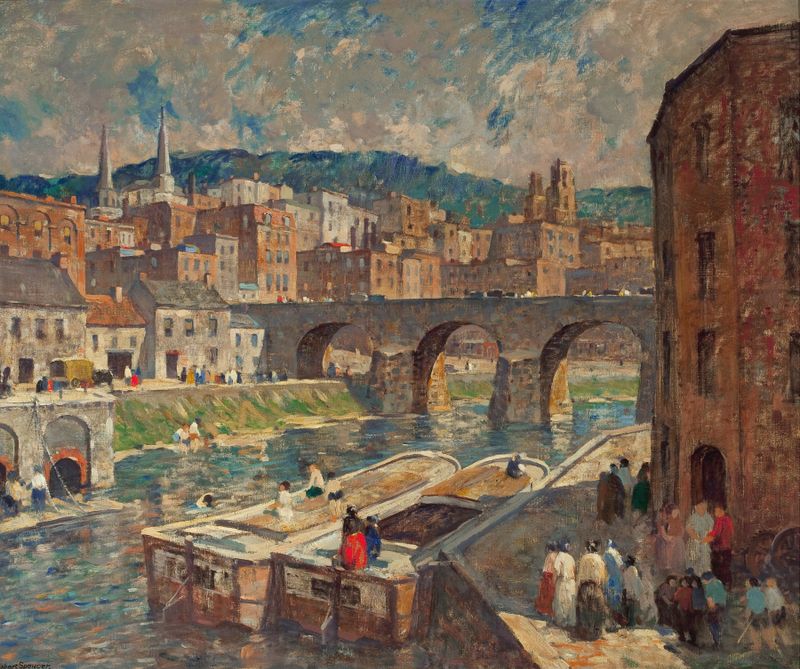
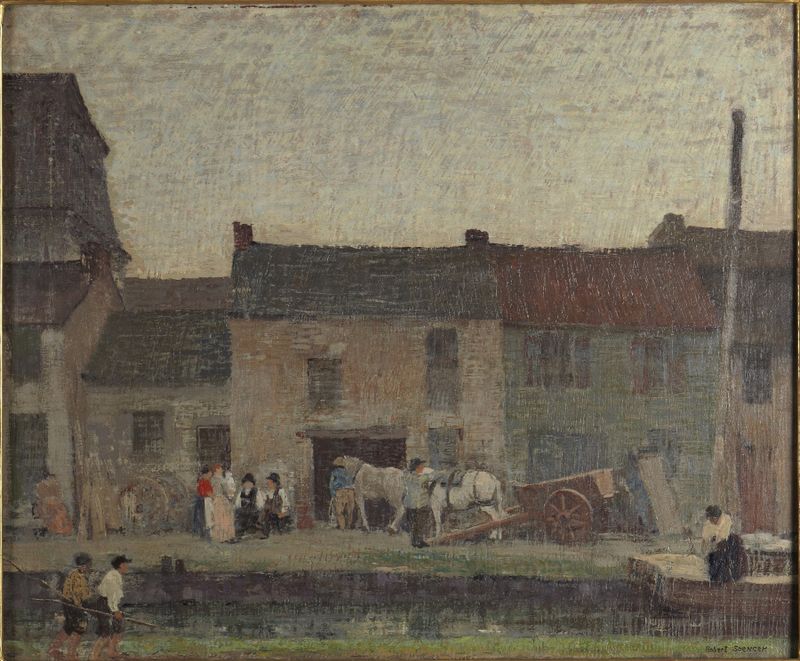
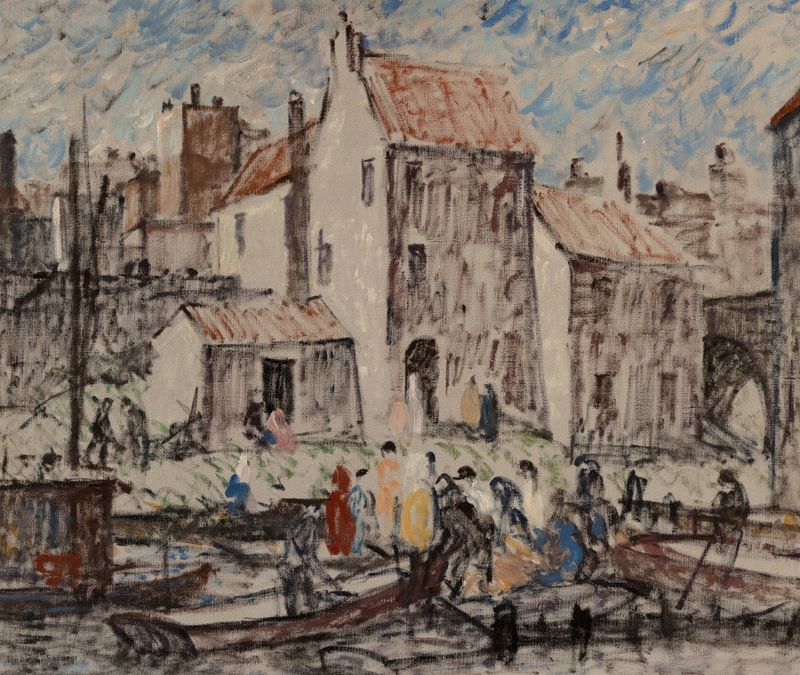
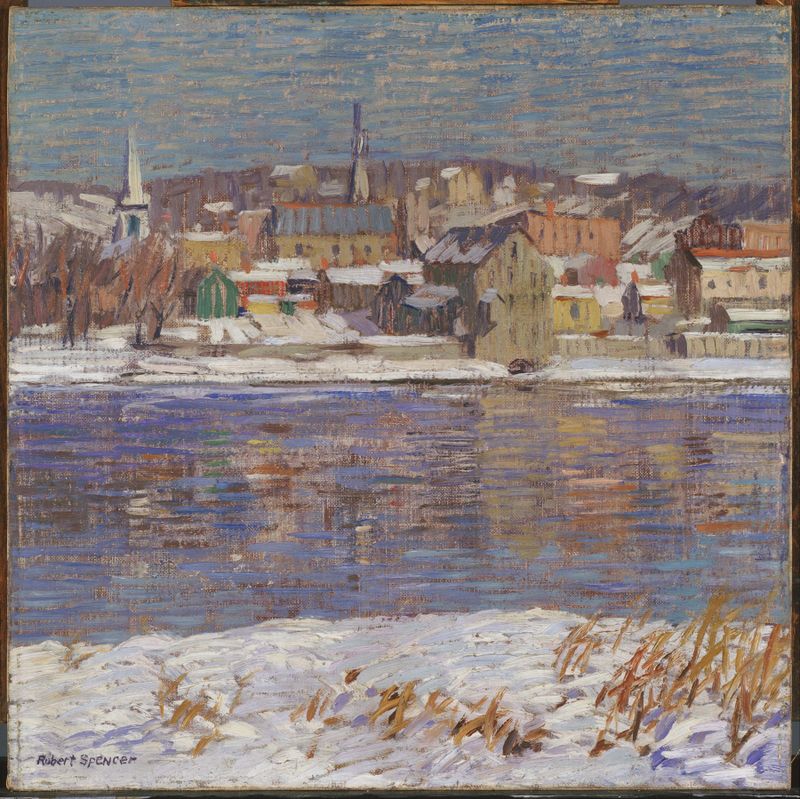
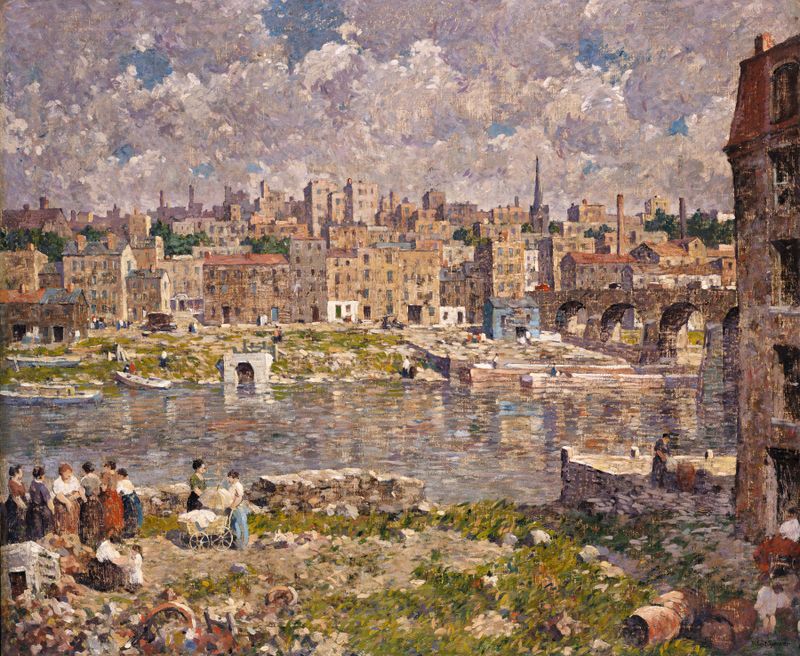
When did color learn to lie? In The Old City, Robert Spencer invites us into a dreamscape steeped in muted hues, where the familiar feels both nostalgic and disorienting. Look to the foreground, where the textured cobblestones emerge under the weight of soft, diffused light, as if whispering secrets beneath the viewer’s gaze. Notice how the warm earth tones blend seamlessly into the cool shadows that envelop the narrow alleyways, guiding your eyes deeper into the composition. The buildings, tall and imposing, seem to lean in, their facades a patchwork of faded blues and ochres, each stroke hinting at the stories held within their weathered walls. Yet, there’s an unsettling quality to this idyllic scene.
The figures, rendered with a gentle abstraction, appear both engaged in their own worlds and strangely disconnected from each other, reflecting a tension between human intimacy and isolation. The play of light suggests an ebb and flow of time, as if the viewer is witnessing a moment suspended between reality and memory—a city that exists both in dreams and in daylight's harsh glare. In 1924, Spencer painted this piece during a time when American artists were increasingly exploring modernism and their own identities. Living in New York City, he was influenced by the urban landscape while grappling with the aftermath of World War I.
The work captures a transition in art, merging personal experience with collective memory, as artists sought to redefine their narratives in a rapidly changing world.