
Manzai Performers — History & Facts
In 1816, Katsushika Hokusai turned his sharp eye to the raucous world of street entertainment, capturing the spirit of Japan's New Year festivities with Manzai Performers. This work stands out as one of the earliest known depictions of manzai—comic duos who would travel from village to village, exchanging witty banter and songs to bring good fortune for the year ahead. At the time, these performers were as much a fixture of the season as the first sunrise, and Hokusai’s attention to their craft hints at his fascination with everyday life, well before his later fame with Thirty-Six Views of Mount Fuji.
The precise medium of this piece is uncertain, but its lively energy is unmistakable. The scene captures a fleeting moment: one performer, dressed in a tall eboshi hat and wielding a folding fan, launches into a playful gesture, while his partner, in a patterned kimono, leans forward with a knowing grin. The fan, a traditional prop, signals the start of their comic exchange, while the bold diagonals of their stances draw the viewer into the rhythm of their repartee. Hokusai’s quick, expressive lines animate the duo, suggesting both movement and the improvisational nature of their act.
Unlike the more formal, static depictions of entertainers by Utagawa Toyokuni, Hokusai’s approach brims with informality and wit, focusing on the chemistry between the two figures rather than the spectacle of costume or stage. The physical history of Manzai Performers is less documented than some of Hokusai’s later prints, and it is not clear for whom the work was originally created. Pieces like this were often produced for popular consumption, perhaps as part of a series celebrating seasonal customs. Today, the artwork survives as a testament to Hokusai’s deep engagement with the world around him, providing a rare glimpse into the popular culture of Edo-period Japan.
Its lively depiction of manzai not only enriches our understanding of Hokusai’s early career but also preserves a tradition that continues to shape Japanese comedy to this day.
More Artworks by Katsushika Hokusai

The Great Wave off Kanagawa
Katsushika Hokusai
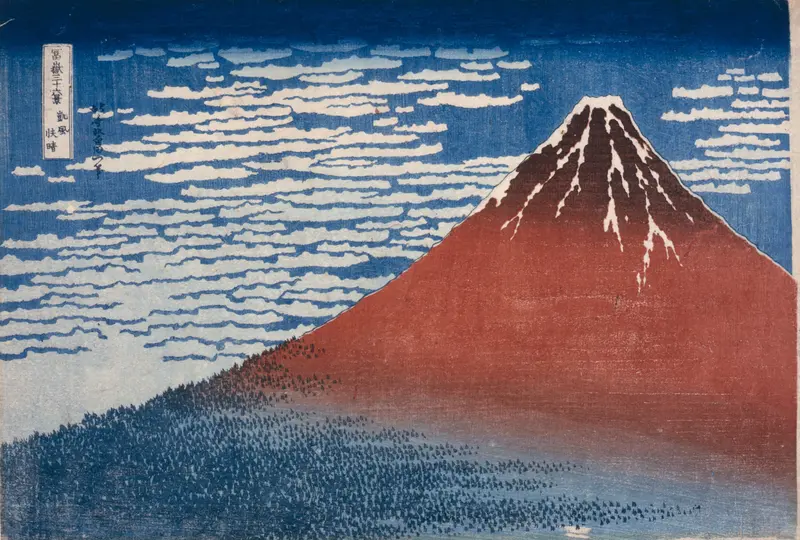
Fine Wind, Clear Morning (Red Fuji)
Katsushika Hokusai
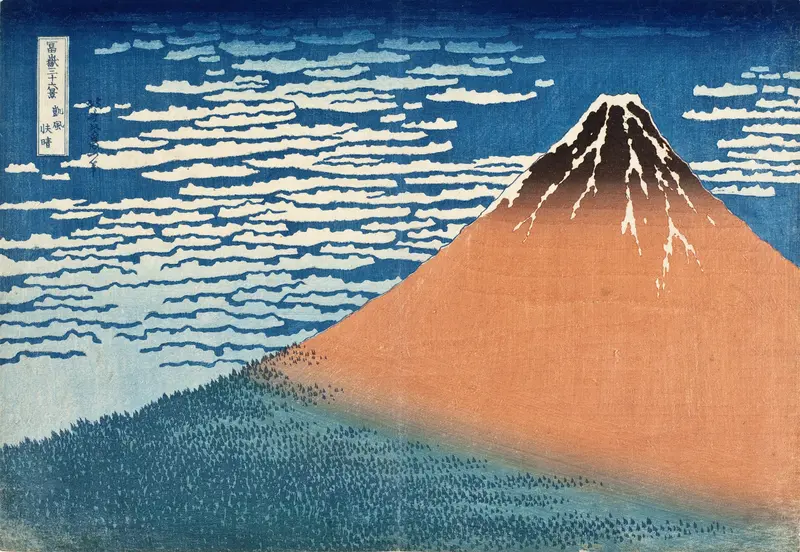
South Wind, Clear Dawn
Katsushika Hokusai
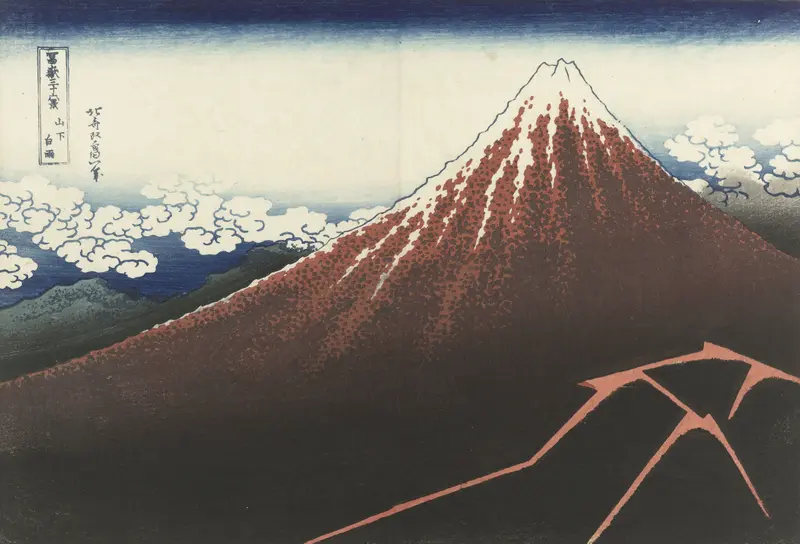
Rainstorm Beneath the Summit
Katsushika Hokusai
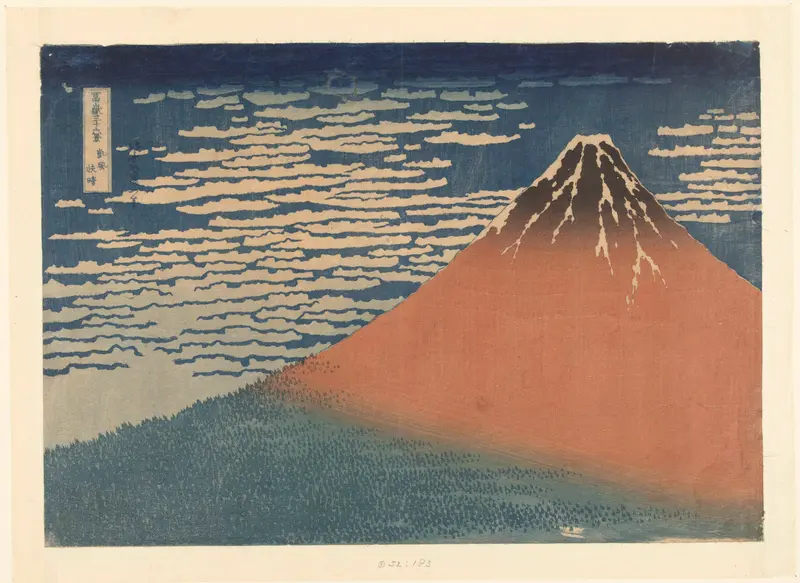
Clear Weather with a Southerly Wind
Katsushika Hokusai
Kōshū kajikazawa
Katsushika Hokusai
Kōshū kajikazawa 2
Katsushika Hokusai
Inume Pass in Kai Province (Kôshû inume-tôge)
Katsushika Hokusai

Yoro Falls in Mino Province (Mino no Yoro no taki), from the series "A Tour of Waterfalls in Various Provinces (Shokoku taki meguri)"
Katsushika Hokusai
Onden no suisha
Katsushika Hokusai
More Genre Scene Art

Banquet of the Officers of the St George Civic Guard
Frans Hals

Rembrandt and Saskia in the Scene of the Prodigal Son
Rembrandt van Rijn

Bal du moulin de la Galette
Pierre-Auguste Renoir

Quadrille at the Moulin Rouge
Henri de Toulouse-Lautrec

A Burial at Ornans
Gustave Courbet

When Will You Marry?
Paul Gauguin