
Marina Piccola, Capri — History & Facts
When did color learn to lie? As the sun dips below the horizon, casting its golden embrace upon the sapphire waves, one can’t help but ponder the bittersweet nature of memory and longing. Nostalgia weaves through the hues, whispering secrets of a time both cherished and lost. Look to the left at the vibrant blue of the sea, where each brushstroke dances like light on water, inviting the viewer into its depths. Notice the clusters of boats, gently bobbing in the harbor, their white sails contrasting sharply against the azure backdrop.
The delicate interplay of light and shadow reveals the rocky shores of Capri, enhancing the idyllic serenity that permeates the landscape, while soft greens and earthy browns ground the composition, evoking a sense of solace. Deeper still, the painting captures a moment suspended in time—where the tranquility of the scene juxtaposes an underlying tension of fleeting beauty. The boats, tethered yet yearning for the open sea, mirror the human condition, caught between the safety of the harbor and the allure of the unknown. The soft brushstrokes hint at a world both inviting and elusive, leaving the viewer with a sense of yearning, as if the scene itself holds the breath of a memory waiting to be uncovered. In 1858, Haseltine painted this piece while living in Italy, a period when the Romantic movement was in full swing.
Surrounded by stunning landscapes, he sought to translate his emotional experiences into vibrant compositions. This artwork reflects not only his personal journey but also the broader Romantic fascination with nature as an embodiment of human emotion, at a time when artists were beginning to break away from strict representation towards a more emotive expression of reality.
More Artworks by William Stanley Haseltine
Browse all →
Mill Dam in Traunstein
William Stanley Haseltine
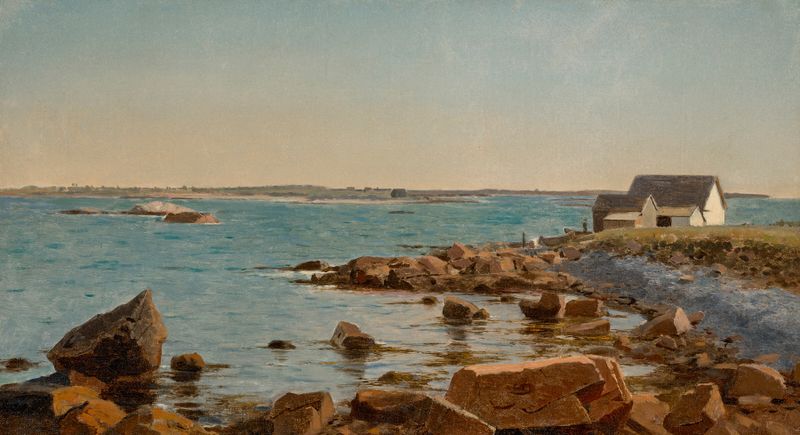
Nahant Coast
William Stanley Haseltine
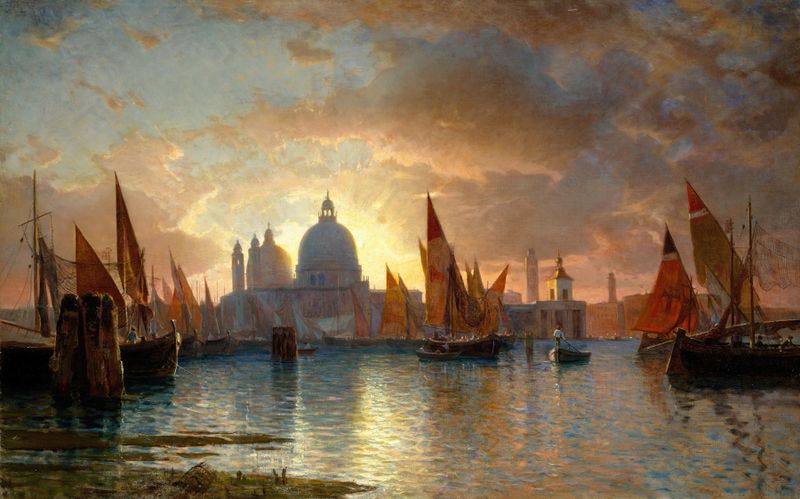
Santa Maria della Salute, Sunset
William Stanley Haseltine
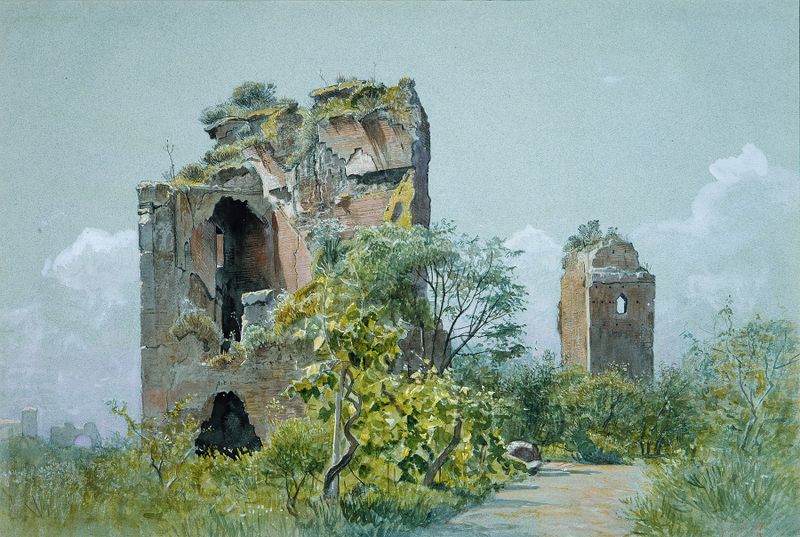
Baths of Trajan (Sette Sale, Villa Brancaccio, Rome)
William Stanley Haseltine
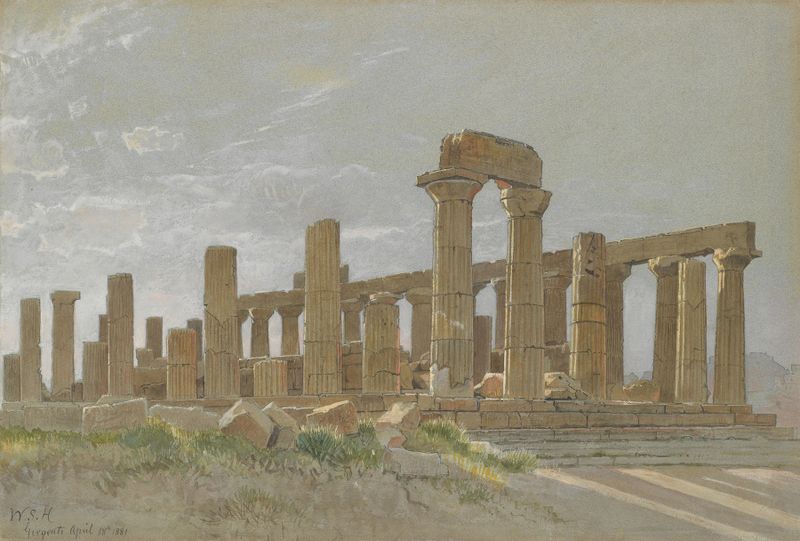
Girgenti (The Temple of Juno Lacinia at Agrigentum)
William Stanley Haseltine

Italian Hills
William Stanley Haseltine
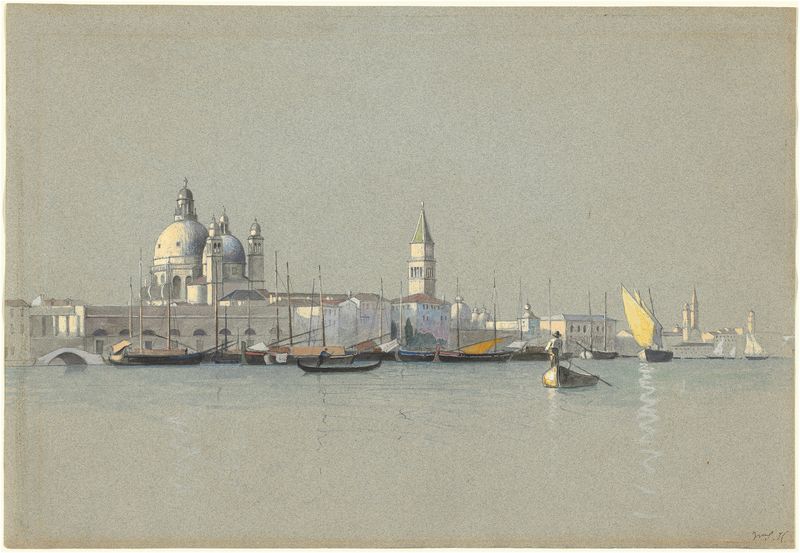
View across the Giudecca Canal toward the Salute and the Campanile of San Marco
William Stanley Haseltine
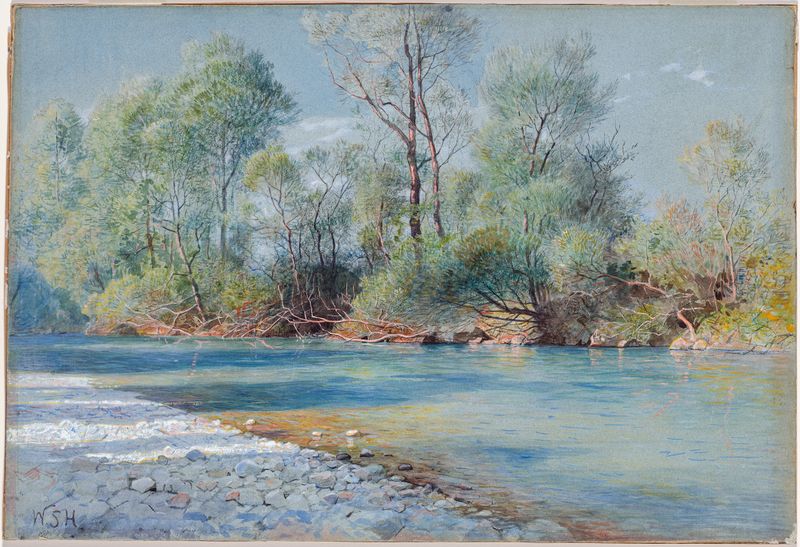
Traunstein River on the Road to Empfig, Bavaria
William Stanley Haseltine

Coast of Capri
William Stanley Haseltine
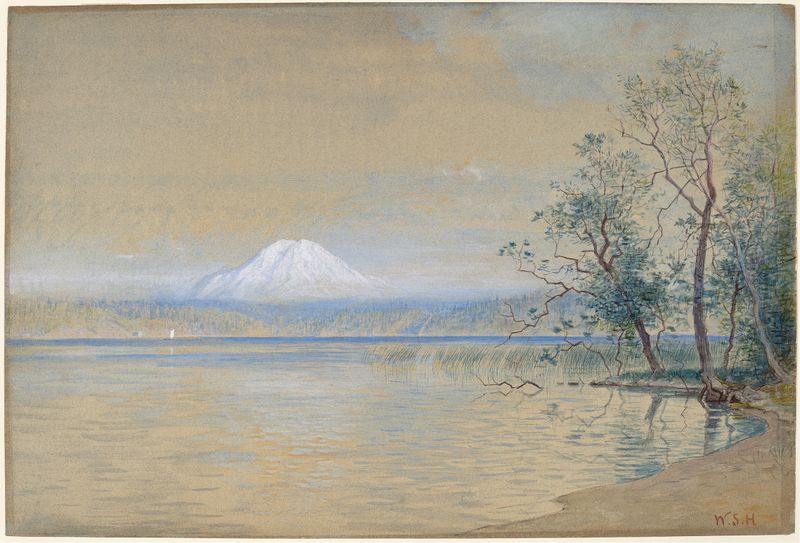
Mount Tacoma
William Stanley Haseltine





