
Marshes opposite Erith — History & Facts
Can paint confess what words never could? In the delicate interplay of light, shadow, and hue, the canvas whispers truths that linger just beyond the reach of language, beckoning us to confront the fragility of existence. Look at the lower left corner, where the gentle strokes of muted greens and browns evoke the marshland's rich yet decaying flora. Notice how the water reflects a silvery sheen, capturing fleeting moments of daylight that dance and shimmer across the surface. The subtle gradations in color suggest both life and the slow encroachment of death, as the marshland stands as a testament to nature’s cyclical beauty and inevitable decline. The composition reveals a profound tension between vitality and desolation.
The dark silhouettes of trees on the horizon loom like specters, hinting at mortality's grasp, while the vibrant strokes of the marsh suggest resilience amidst decay. This duality invites us to ponder our own existence—how we, like the landscape, are shaped by the passage of time, constantly teetering on the edge of flourishing and fading. In 1865, the artist found inspiration in the marshes near Erith, England, amidst a period of personal and artistic exploration. Emerging from the shadows of printmaking into the realm of painting, he was captivated by the beauty of the natural world.
This work reflects a time when the Pre-Raphaelite Brotherhood and the broader art movement were redefining the relationship between nature and humanity, urging viewers to appreciate life's fleeting moments while recognizing the inevitable march of time.
More Artworks by Francis Seymour Haden
Browse all →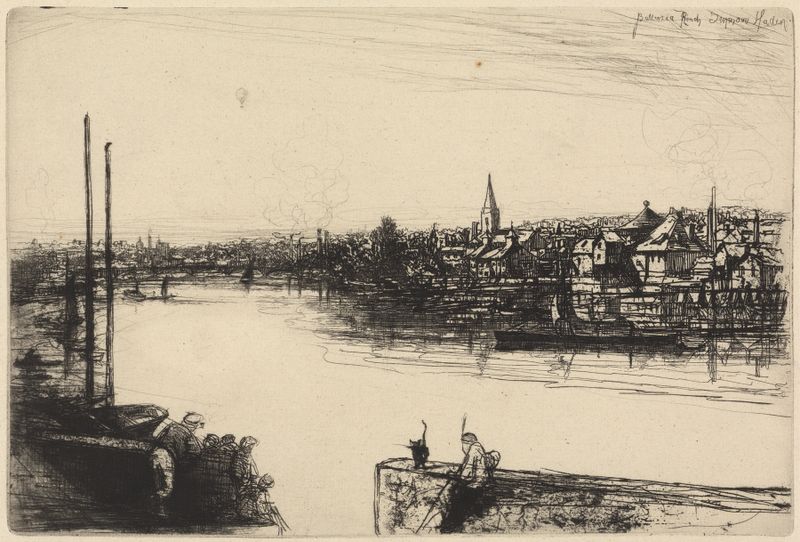
Battersea Reach
Francis Seymour Haden

Nine Barrow Down
Francis Seymour Haden
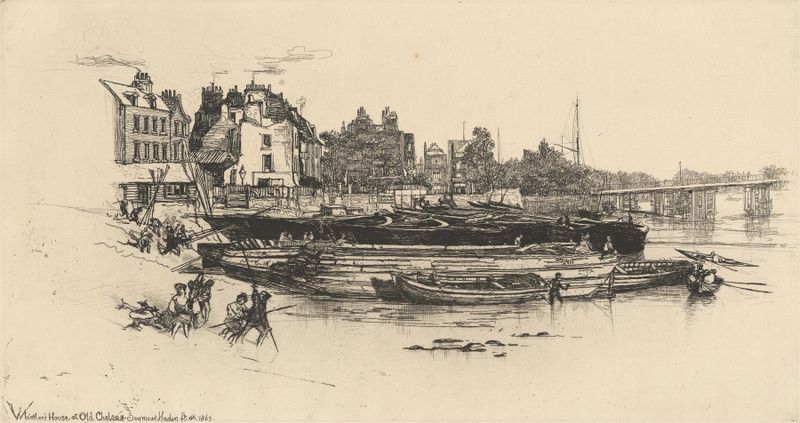
Whistler’s House at Old Chelsea
Francis Seymour Haden

The Mill-Wheel
Francis Seymour Haden
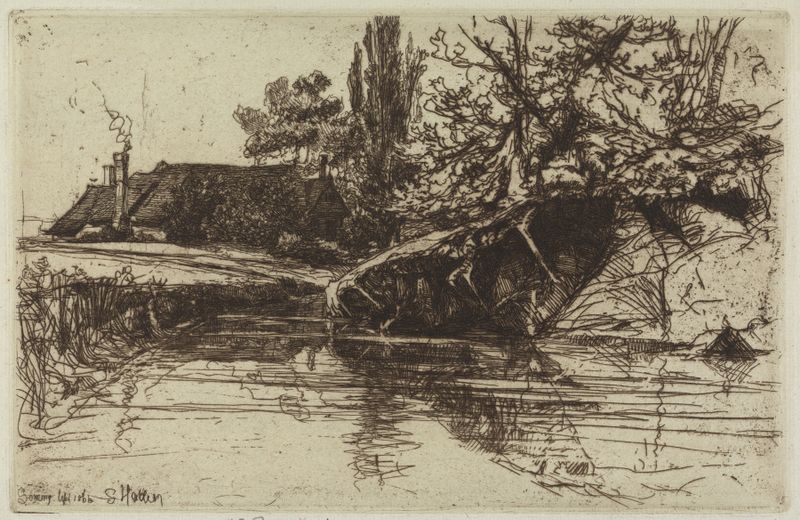
The Moat House
Francis Seymour Haden

By Twickenham
Francis Seymour Haden

Newcastle Emlyn
Francis Seymour Haden
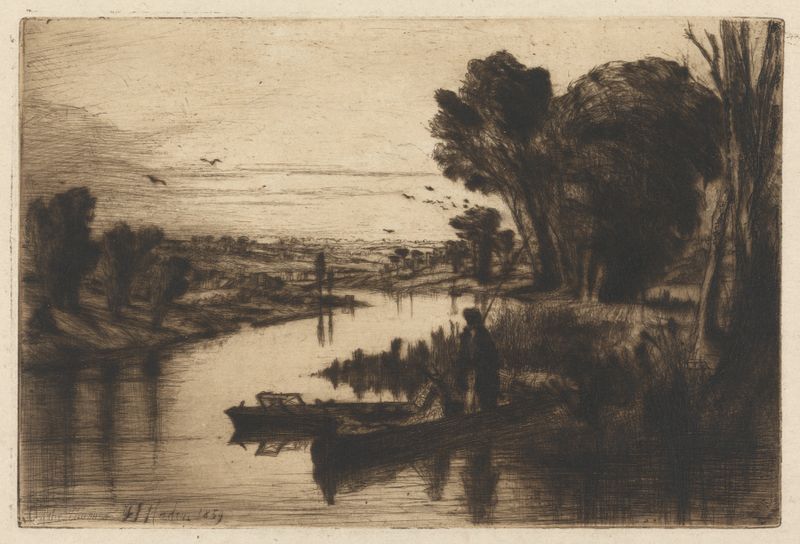
On the Thames
Francis Seymour Haden

Kidwelly Castle
Francis Seymour Haden
Fulham on the Thames
Francis Seymour Haden





