
Merson Allégorie du temps P2725 Musée Carnavalet — History & Facts
What first catches the eye in Allégorie du temps is the shimmering gold mosaic that forms a radiant backdrop, casting the central figures into almost sculptural relief. A woman, draped in classical robes, clings to a barren tree as two winged children—part angel, part putto—encircle her. Their gestures are full of meaning: one child reaches up, pulling gently at her hand, while the other kneels, pointing with a slender stick toward an hourglass at their feet, its sands nearly run through.
The blue-grey palette of the figures and landscape stands in sharp contrast to the luminous gold, creating a sense of suspended time and quiet inevitability. The woman's gaze, distant and unblinking, draws the viewer into a meditation on the passage of time, while the hourglass and scattered flowers at her feet serve as unmistakable emblems of mortality and fleeting beauty. Painted in 1896 by Luc-Olivier Merson, this work belongs to a world where allegory was both a language and a tradition, especially in the academic circles of late nineteenth-century France. Such paintings were often commissioned for public spaces or private contemplation, intended to instruct as well as to delight.
Merson, known for his meticulous technique and symbolic imagination, here channels the era’s fascination with myth, memory, and the cycles of life and death. Now held in the Musée Carnavalet, the painting stands as a testament to a moment when artists sought to make the intangible visible, weaving together the classical past and the anxieties of the modern age. The longer one looks, the more the golden mosaic seems to pulse with the slow, relentless rhythm of time itself.
More Artworks by Luc-Olivier Merson

Esquisse pour l'escalier des fêtes de l'Hôtel de Ville de Paris , Bélier
Luc-Olivier Merson
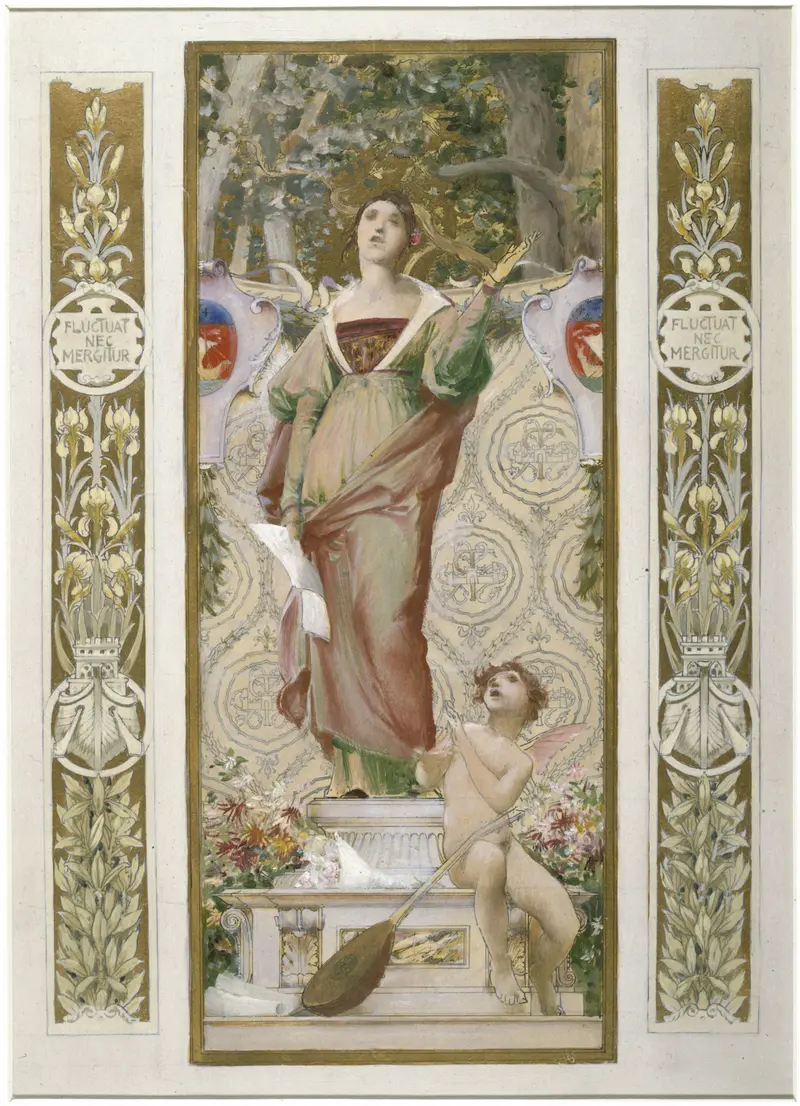
Esquisse pour l'escalier des Fêtes de l'Hôtel de Ville de Paris , Le Chant
Luc-Olivier Merson
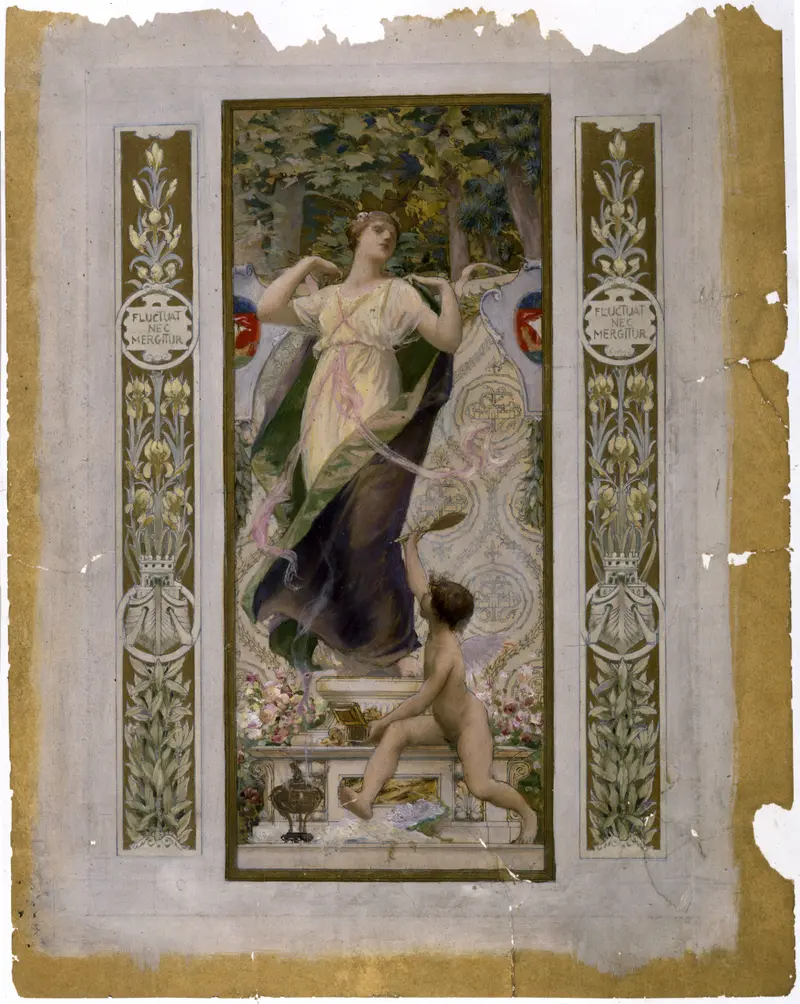
Esquisse pour l'escalier des Fêtes de l'Hôtel de ville de Paris , La Toilette féminine
Luc-Olivier Merson
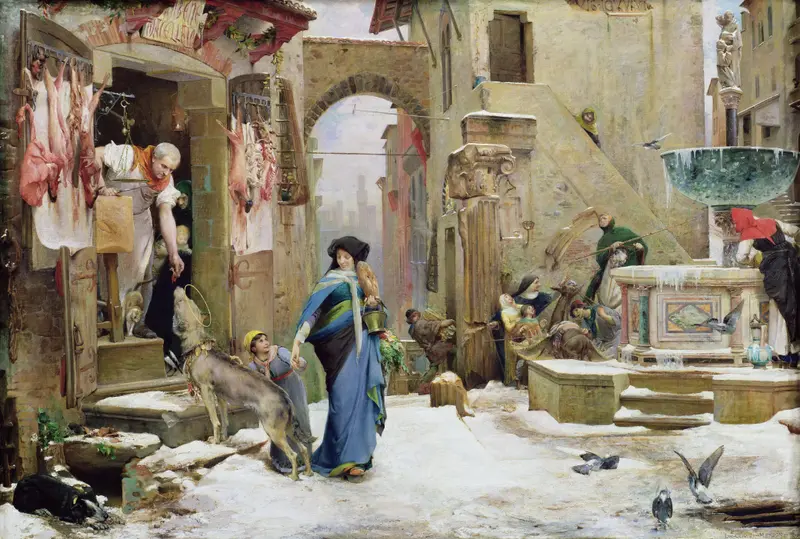
The Wolf of Gubbio
Luc-Olivier Merson
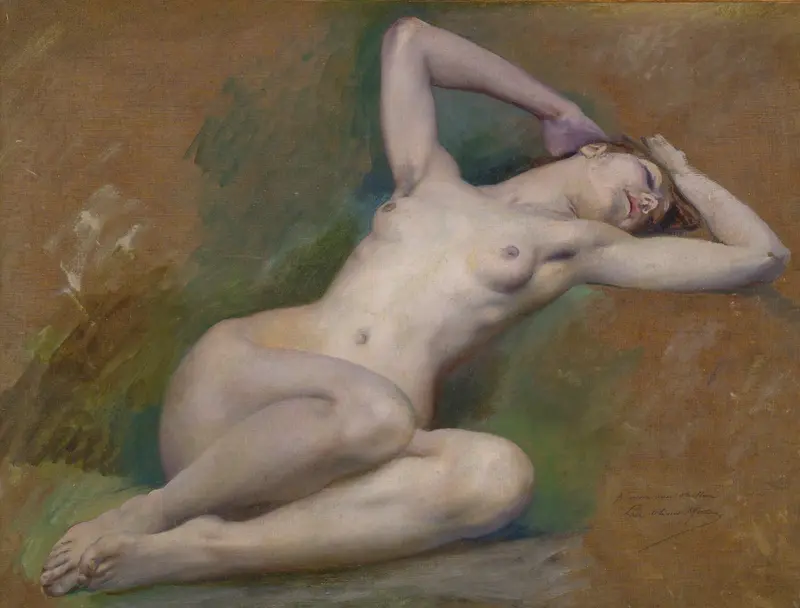
Luc Olivier Merson Study for the figure of Spring
Luc-Olivier Merson
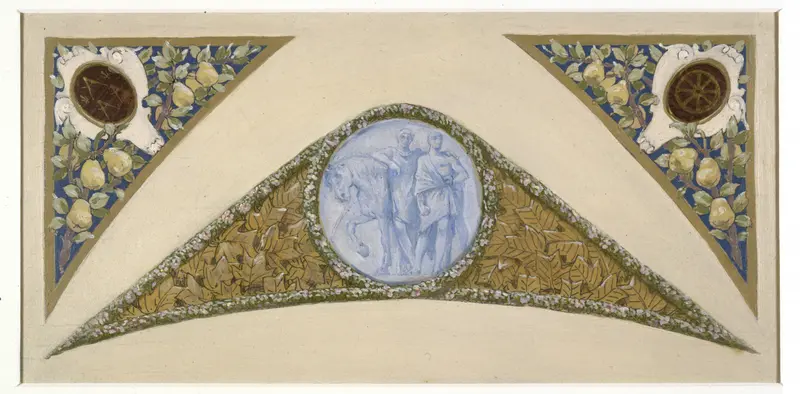
Esquisse pour l'escalier des Fêtes de l'Hôtel de Ville de Paris , Gémeaux
Luc-Olivier Merson
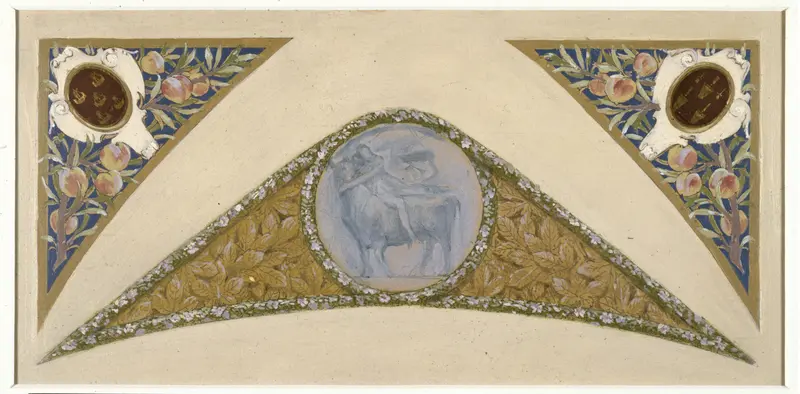
Esquisse pour l'escalier des Fêtes de l'Hôtel de Ville de Paris , Taureau
Luc-Olivier Merson
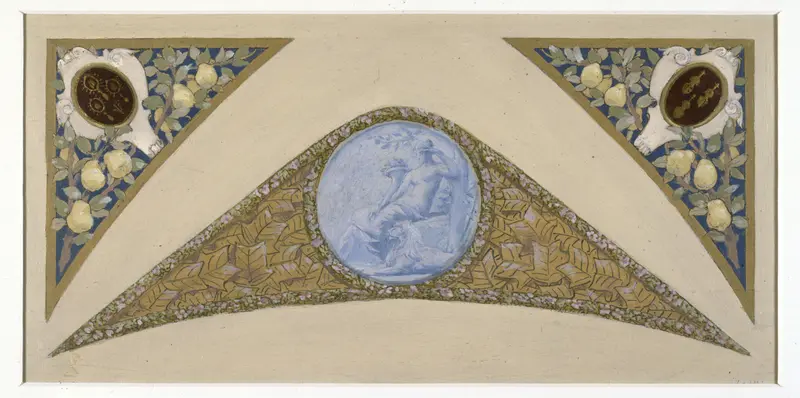
Esquisse pour l'escalier des Fêtes de l'Hôtel de Ville de Paris , Vierge
Luc-Olivier Merson
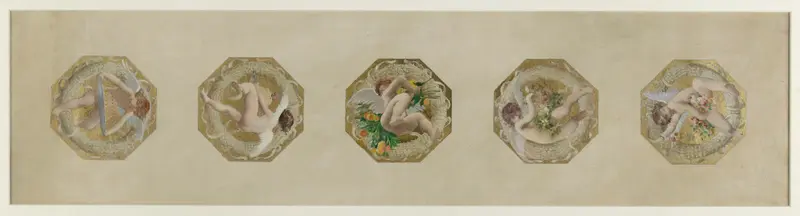
Esquisse pour l'Hôtel de Ville de Paris, escalier des Fêtes , les génies des fêtes
Luc-Olivier Merson
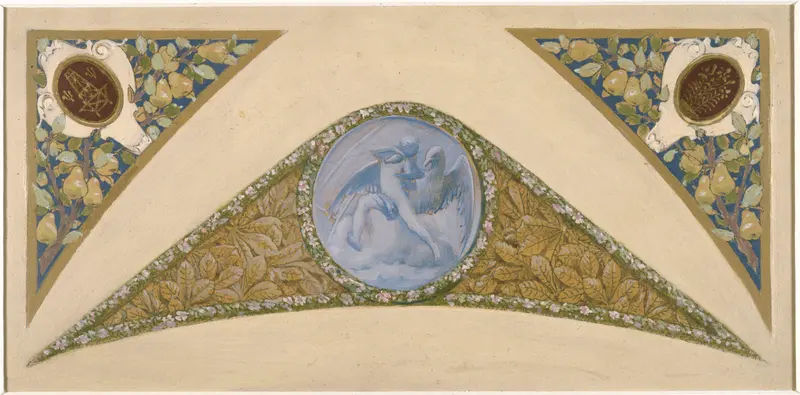
Esquisse pour l'escalier des Fêtes de l'Hôtel de Ville de Paris , Verseau
Luc-Olivier Merson





