
Miasteczko; Dymy — History & Facts
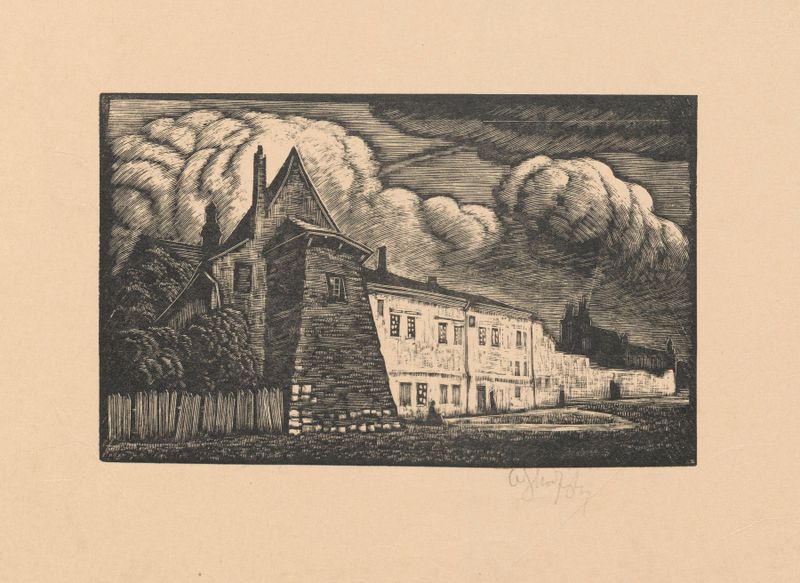
Can beauty exist without sorrow? The stark contrast between joy and grief captures the essence of human experience—a theme that resonates deeply in the heart of this work. Look to the foreground, where delicate outlines of buildings emerge from a misty haze, their weathered facades suggesting stories of both resilience and decay. The muted palette of blues and grays evokes a sense of melancholy, while the soft, diffused light bathes the scene in a dreamlike quality. Notice how the layers of fog intertwine with the architectural forms, creating a dialogue between presence and absence, weight and lightness. As you explore the composition further, consider the juxtaposition of the populated streets with the enveloping mist—an embodiment of loss.
The subtle detailing of the figures, their postures suggesting an unspoken narrative of longing, invites contemplation. This interplay of shadow and light further emphasizes the tension between hope and despair, illustrating that beauty inherently carries the weight of grief. In 1926, Władysław Skoczylas created this evocative piece during a period marked by the socio-political upheaval of post-World War I Europe. Living in Poland, the artist sought to express the emotional landscape of his time, where memories of turmoil were interwoven with a deep yearning for tranquility.
It was a moment when art became a refuge, allowing him to address the complexities of existence through a uniquely personal lens.
More Artworks by Władysław Skoczylas
Browse all →
Motyw ze Starego Miasta
Władysław Skoczylas
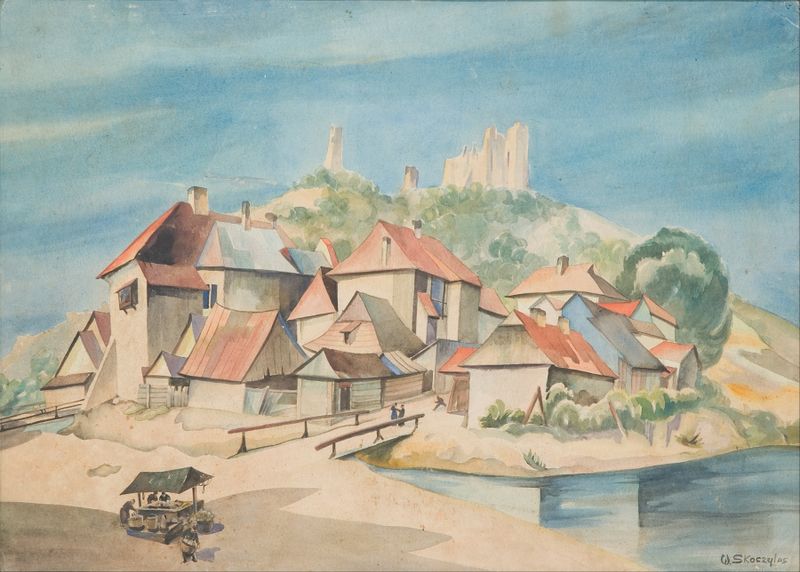
Widok Kazimierza nad Wisłą
Władysław Skoczylas
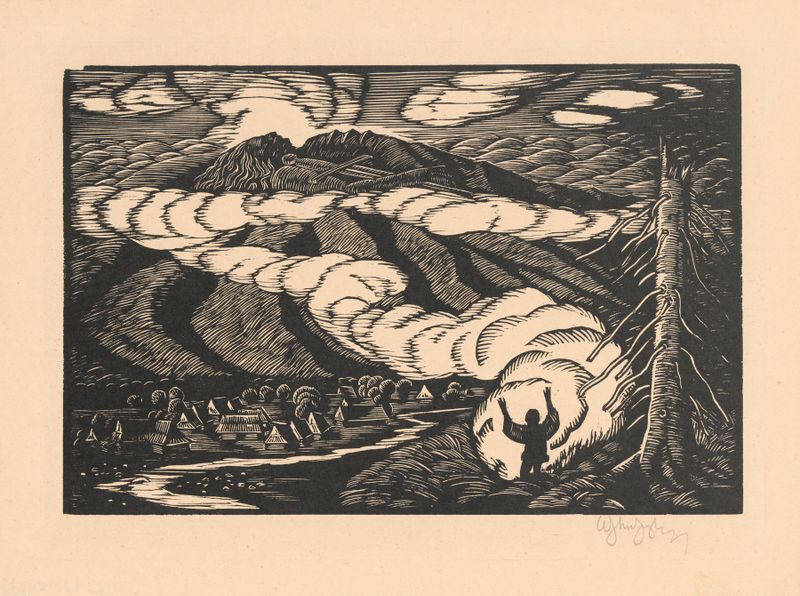
Giewont
Władysław Skoczylas
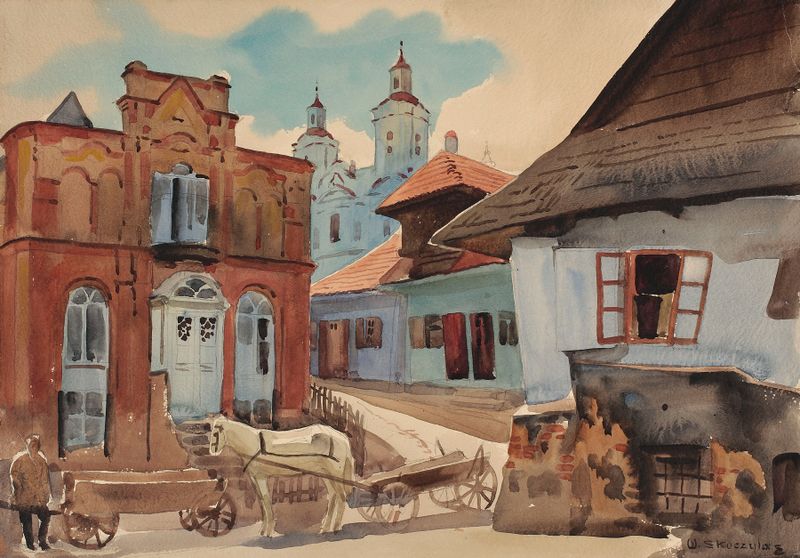
Fragment miasteczka
Władysław Skoczylas

Kościół w Dębnie
Władysław Skoczylas

Ulica w Kazimierzu
Władysław Skoczylas

Rynek w Kazimierzu nad Wisłą
Władysław Skoczylas
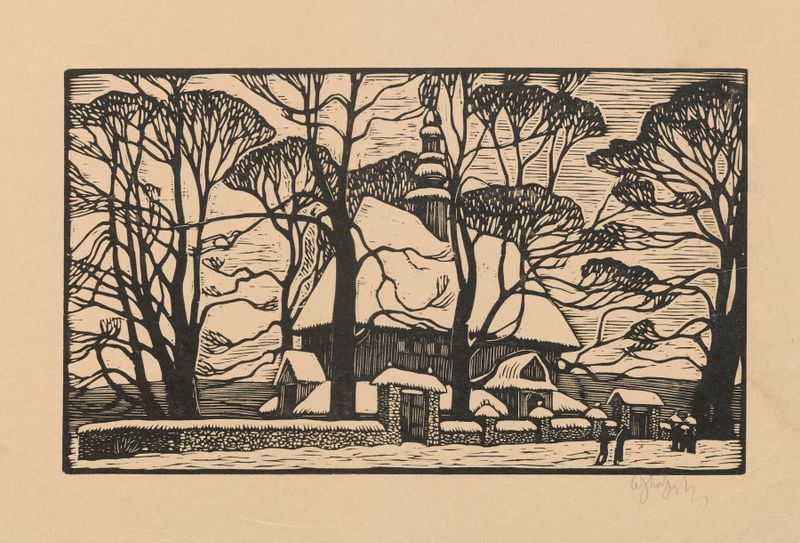
Kościółek w zimie
Władysław Skoczylas

Kolumna Zygmunta
Władysław Skoczylas
Motyw z Krakowa; Baszta Augustianów
Władysław Skoczylas





