
Mine in the Bastion du Mat, Sebastopol, Crimea — History & Facts
Can beauty exist without sorrow? In the heart of conflict, where the shadows of violence dance alongside the light of resilience, one may find poignant truths within the chaos. Look to the left at the figure of a soldier, weary yet resolute, standing against the backdrop of a crumbling bastion. The muted palette of ochres and grays captures the desolation of war, while a hint of blue in the sky suggests an impending dawn, illustrating a fragile hope. Notice how the brushwork creates a texture that mirrors both the rugged landscape and the emotional weight the soldier carries, compelling you to witness not just a moment, but an entire narrative of struggle and endurance. The contrast between the soldier’s solitary presence and the vast ruins surrounding him speaks volumes about isolation amid turmoil.
Each chipped stone in the bastion seems to echo the battles fought, whispering tales of loss and sacrifice. The light filtering through the smoky atmosphere highlights the tension between despair and the glimmer of humanity, sparking a reflection on the cost of beauty in times of strife. In 1856, during the height of the Crimean War, William Simpson created this work while stationed as a war artist, aiming to document the harrowing realities faced by soldiers. This was a pivotal moment for him, as he sought to convey the complex emotions of conflict, blending artistry with journalism in an era when the world was beginning to confront the brutal truths of warfare through visual narratives.
More Artworks by William Simpson
Browse all →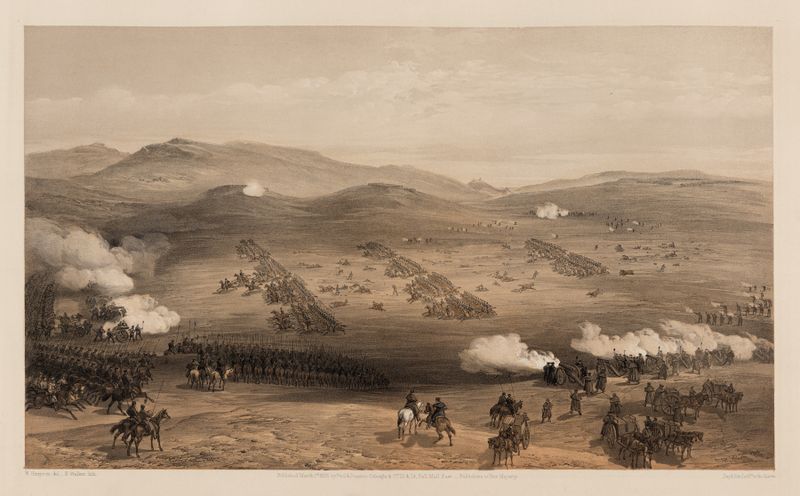
Charge of the light cavalry brigade, 25th Oct. 1854, under Major General the Earl of Cardigan
William Simpson

Charge of the heavy cavalry brigade, 25th Octr. 1854
William Simpson
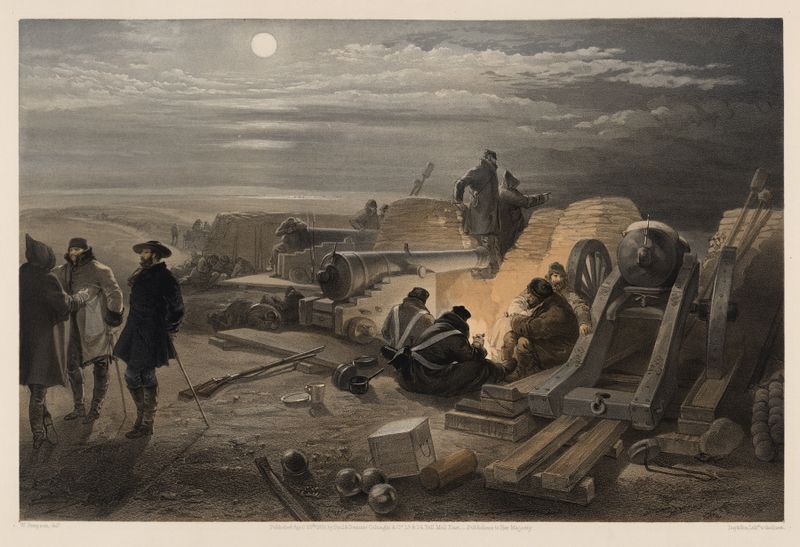
A quiet night in the batteries – a sketch in the Greenhill battery (Major Chapman’s), 29th Jany. 1855
William Simpson

The Great Wall of China
William Simpson
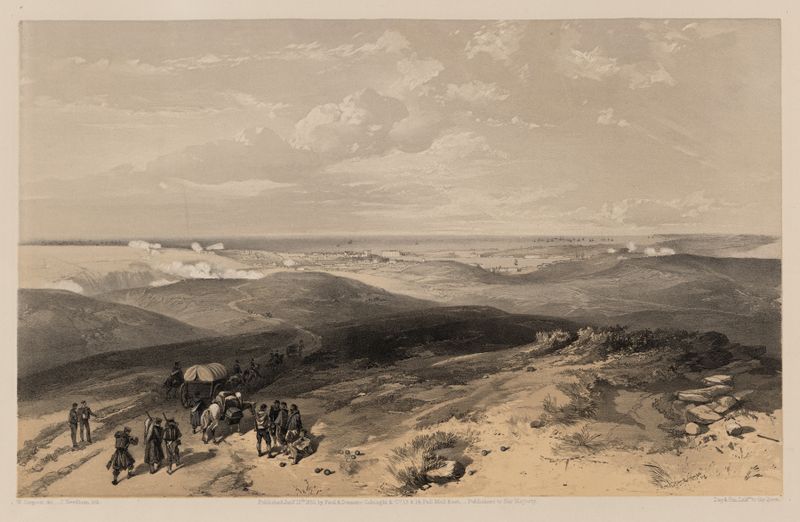
Sebastopol from the rear of the English batteries
William Simpson
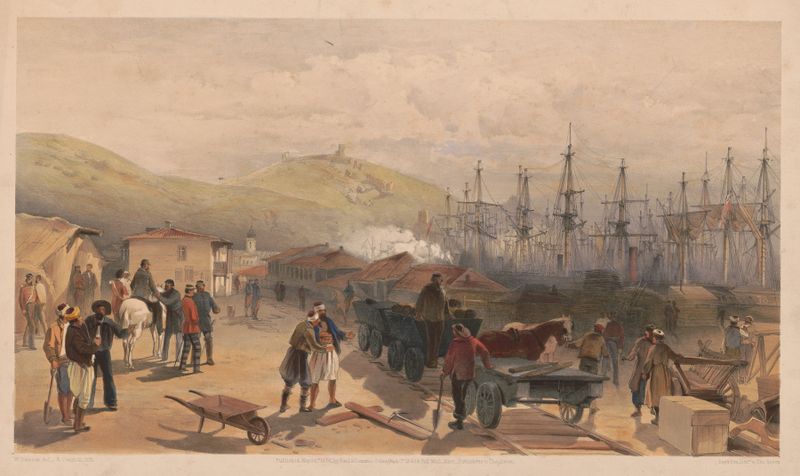
The railway at Balaklava, looking south
William Simpson

The Governor-General’s and Commander-in-Chief’s Camp at Jalandhar, 1 Febuary 1860
William Simpson
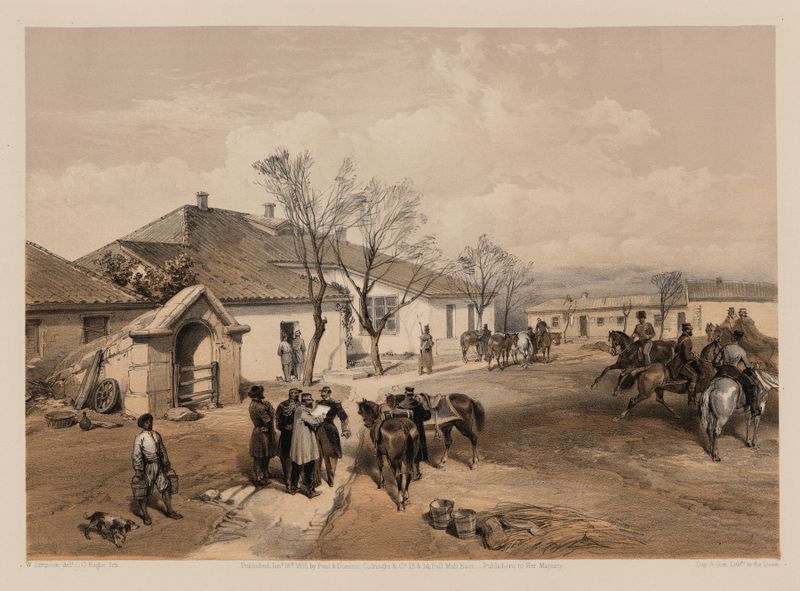
Lord Raglan’s head quarters at Khutor-Karagatch
William Simpson
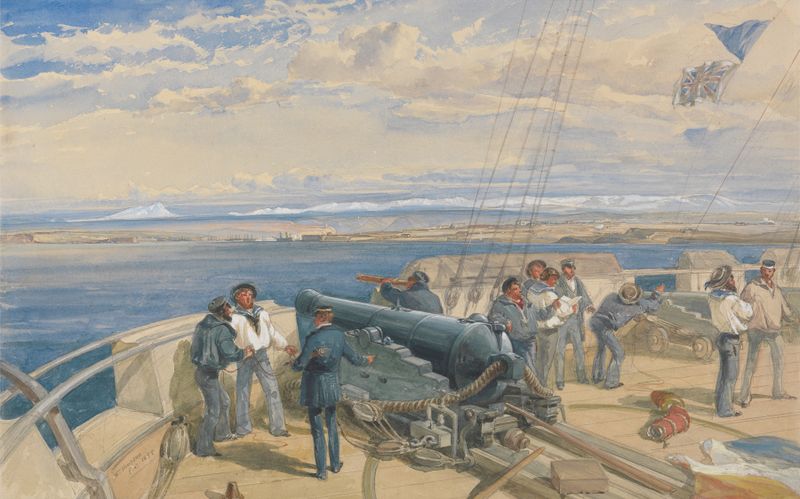
Sebastopol from the Sea, Sketched from the Deck of H. M. S. Sidon, Feb. 1855
William Simpson
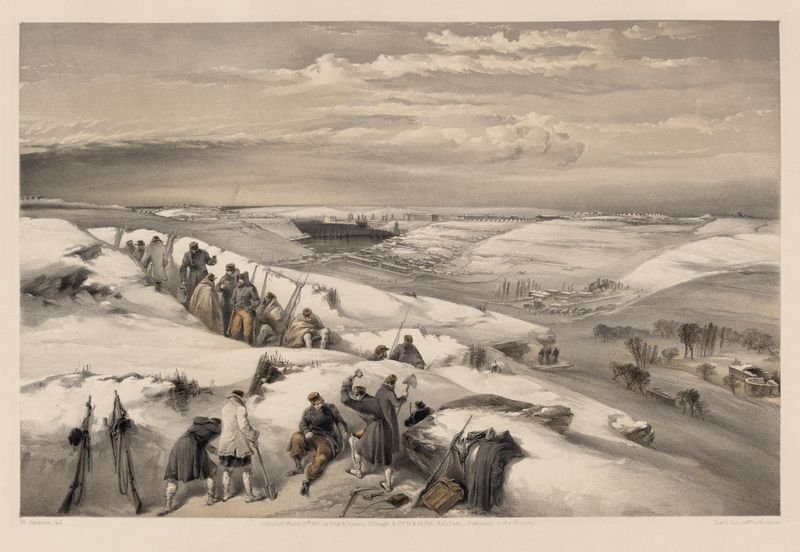
Sebastobol from the 26 gun battery on the extreme right of French attack
William Simpson
More Historical Art
Browse all →
The Night Watch Militia Company of District II under the Command of Captain Frans Banninck Cocq
Rembrandt van Rijn

Lincoln Memorial
Henry Bacon

The Third of May 1808
Francisco de Goya

Isaac and Rebecca, Known as ‘The Jewish Bride’
Rembrandt van Rijn

The Charge of the Mamelukes (1814)
Francisco de Goya

De vier ruiters van de apocalyps
Albrecht Dürer