
Miss Träumerei — History & Facts
A woman leans into her music, her profile caught in a sweep of bold black and pale gold, as if the very air around her shimmers with the sound she creates. The piano’s curves echo the lines of her hair and gown, drawing the viewer’s eye to her poised hands and the open score before her—an invitation to imagine the melody she plays. Around her, extravagant yellow chrysanthemums burst into the scene, their jagged petals a sharp contrast to the smooth geometry of the instrument, suggesting both the wildness and discipline of artistic creation.
The composition is a study in contrasts: light and shadow, control and abandon, the interior world of the musician and the lush exterior world of nature. Created in 1895 as a poster for Albert Morris Bagby’s novel Miss Träumerei, this work by Ethel Reed belongs to a world where art and commerce were beginning to intertwine in new ways. The poster format, with its striking flat colors and stylized forms, reflects the influence of the Art Nouveau movement, which swept through Europe and America in the late nineteenth century—its flowing lines and organic motifs designed to catch the eye in crowded city streets or bookshop windows. Such images were commissioned by publishers eager to capture the attention of a growing reading public, and artists like Reed—one of the few celebrated women in the American poster movement—helped define the visual language of modern advertising.
Few traces remain of many such posters, but this one, preserved in the Library of Congress, still calls the viewer back to its world of music, mystery, and the promise of a story just beginning.
More Artworks by Ethel Reed
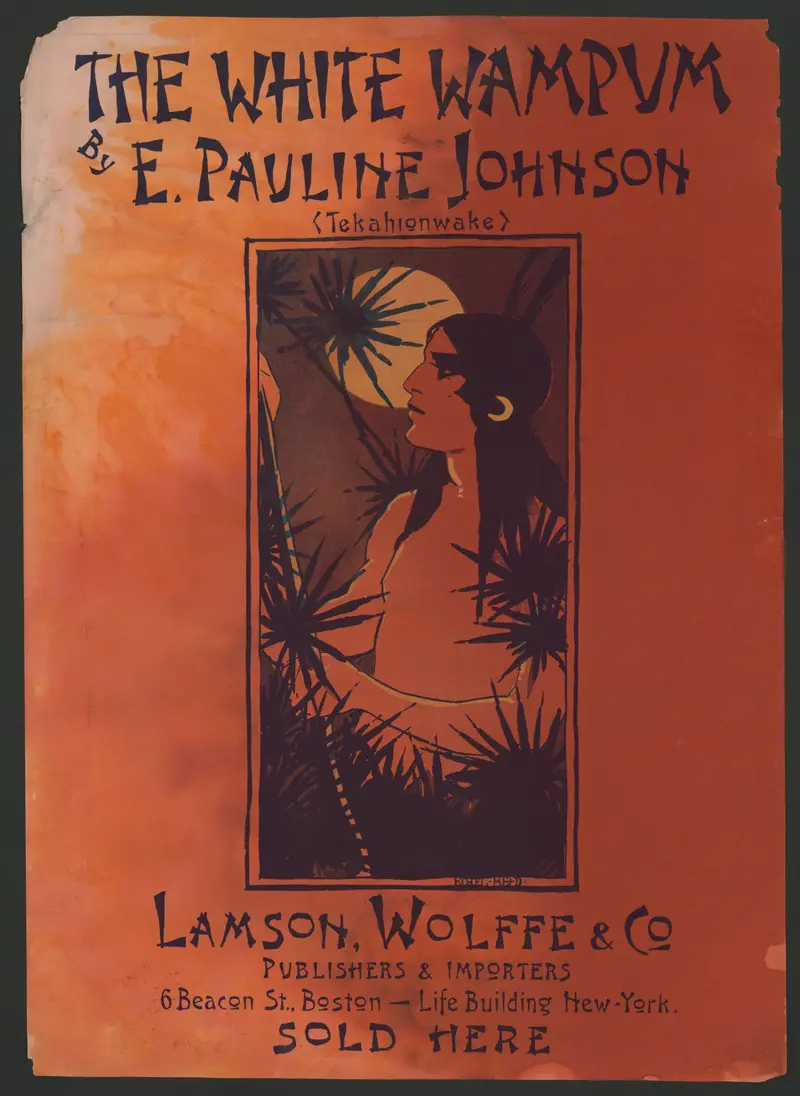
The White Wampum
Ethel Reed
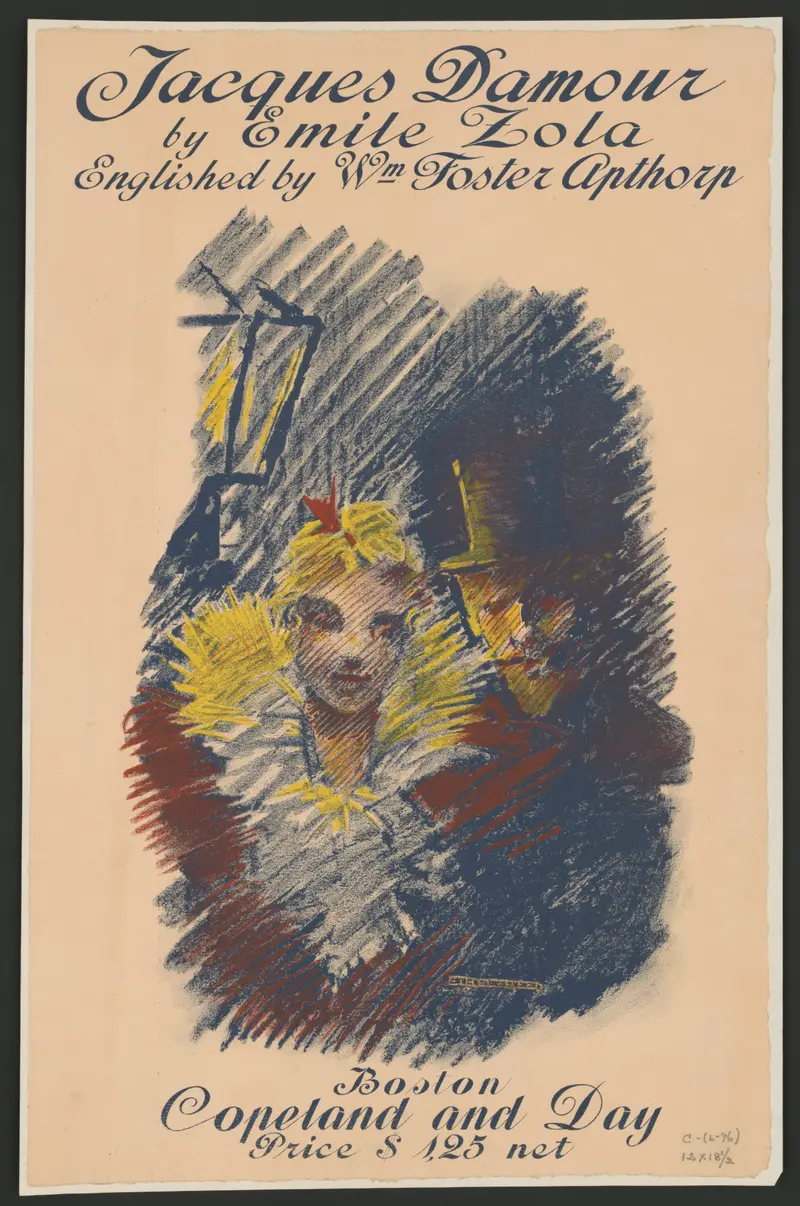
Jacques Damour
Ethel Reed
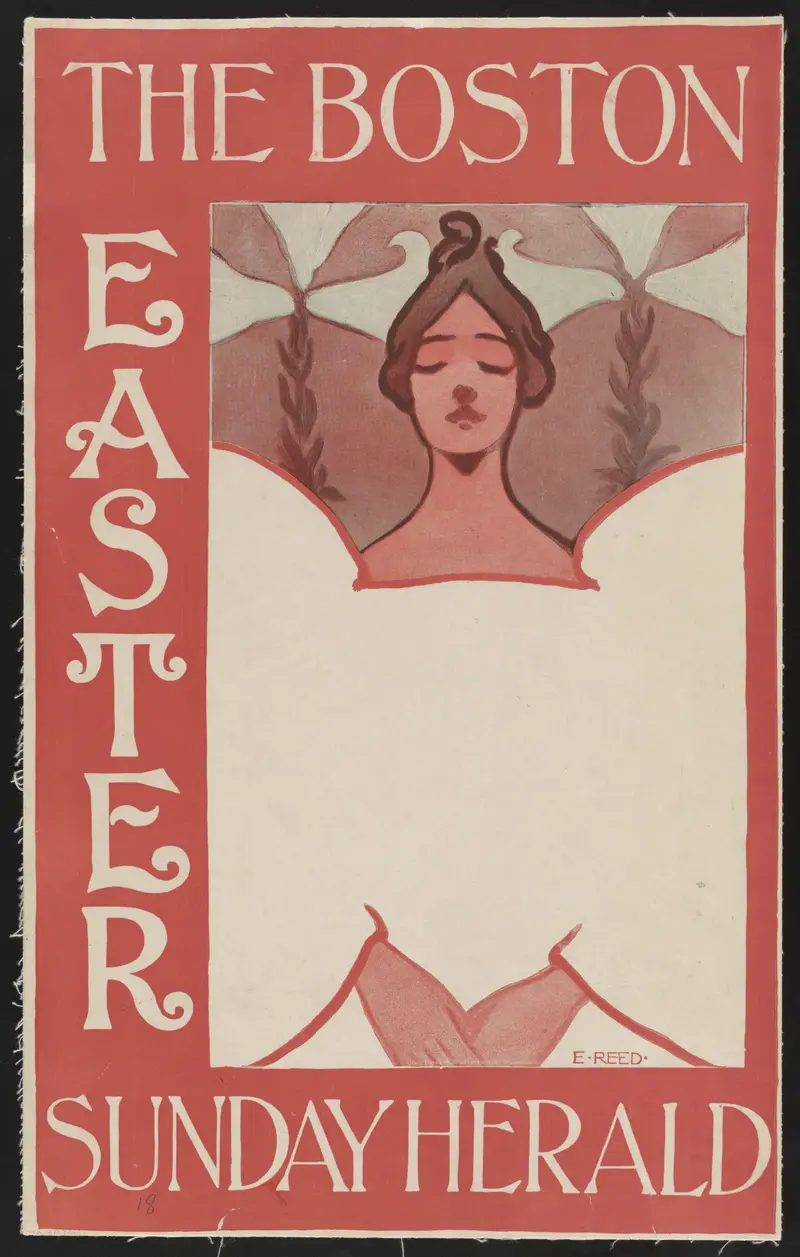
The Boston Sunday Herald: Easter
Ethel Reed
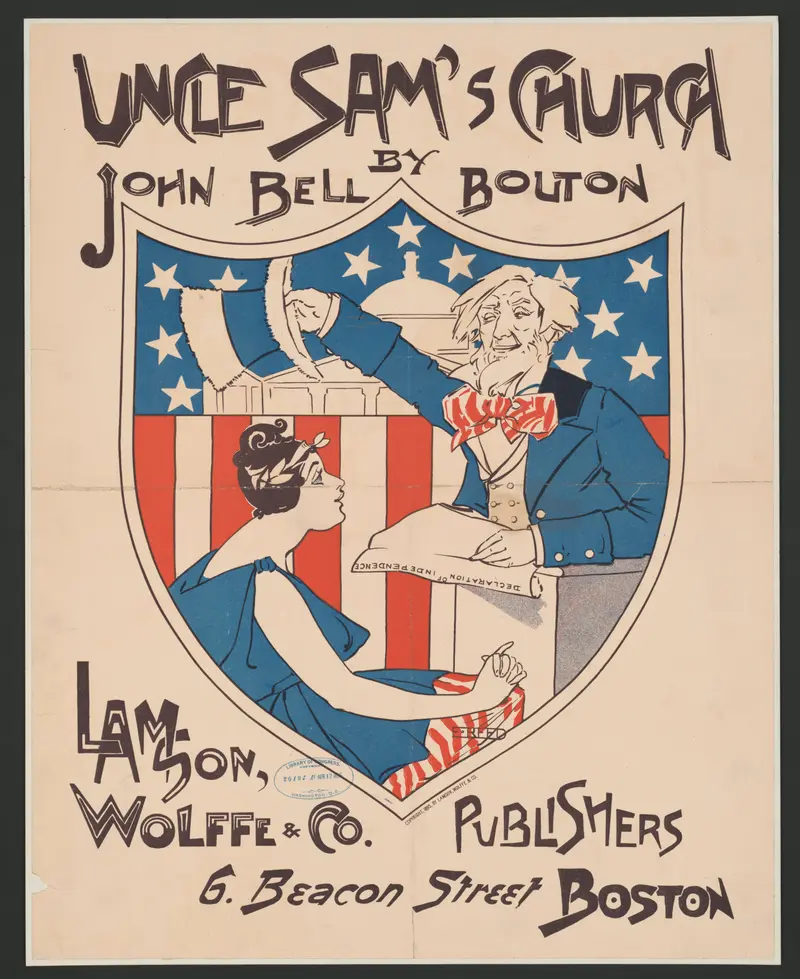
Uncle Sam's Church
Ethel Reed
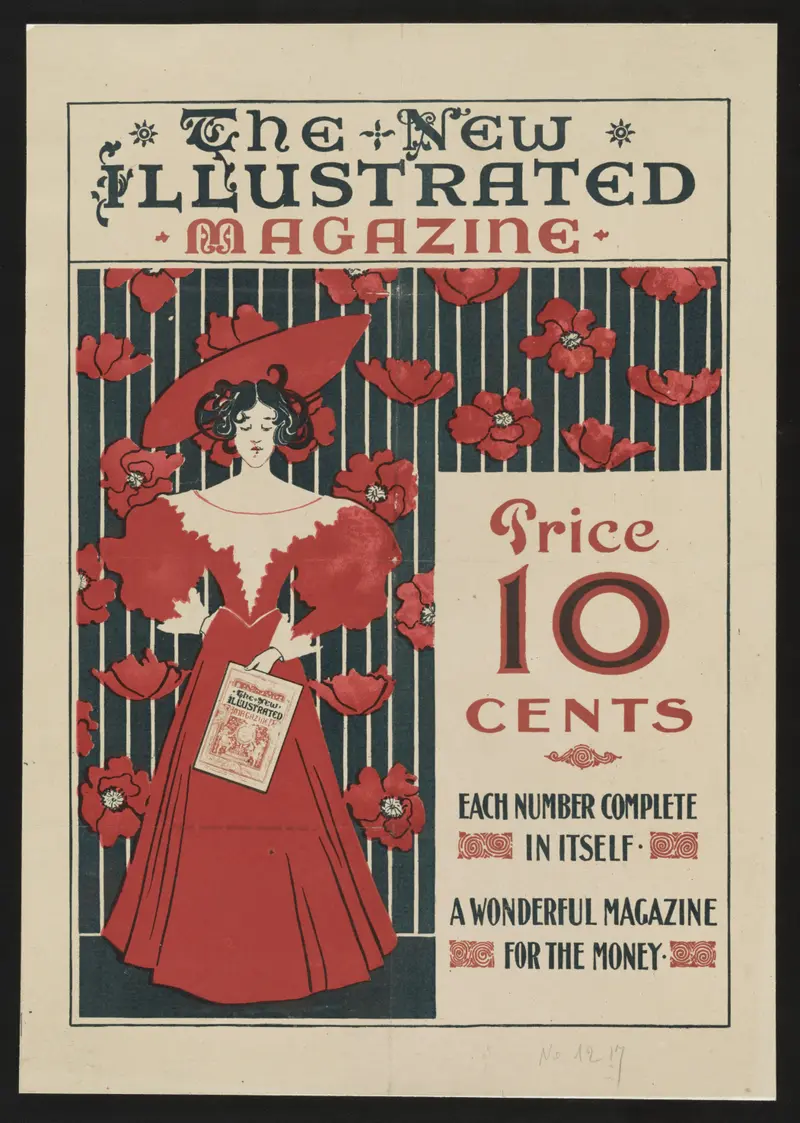
The New Illustrated Magazine
Ethel Reed
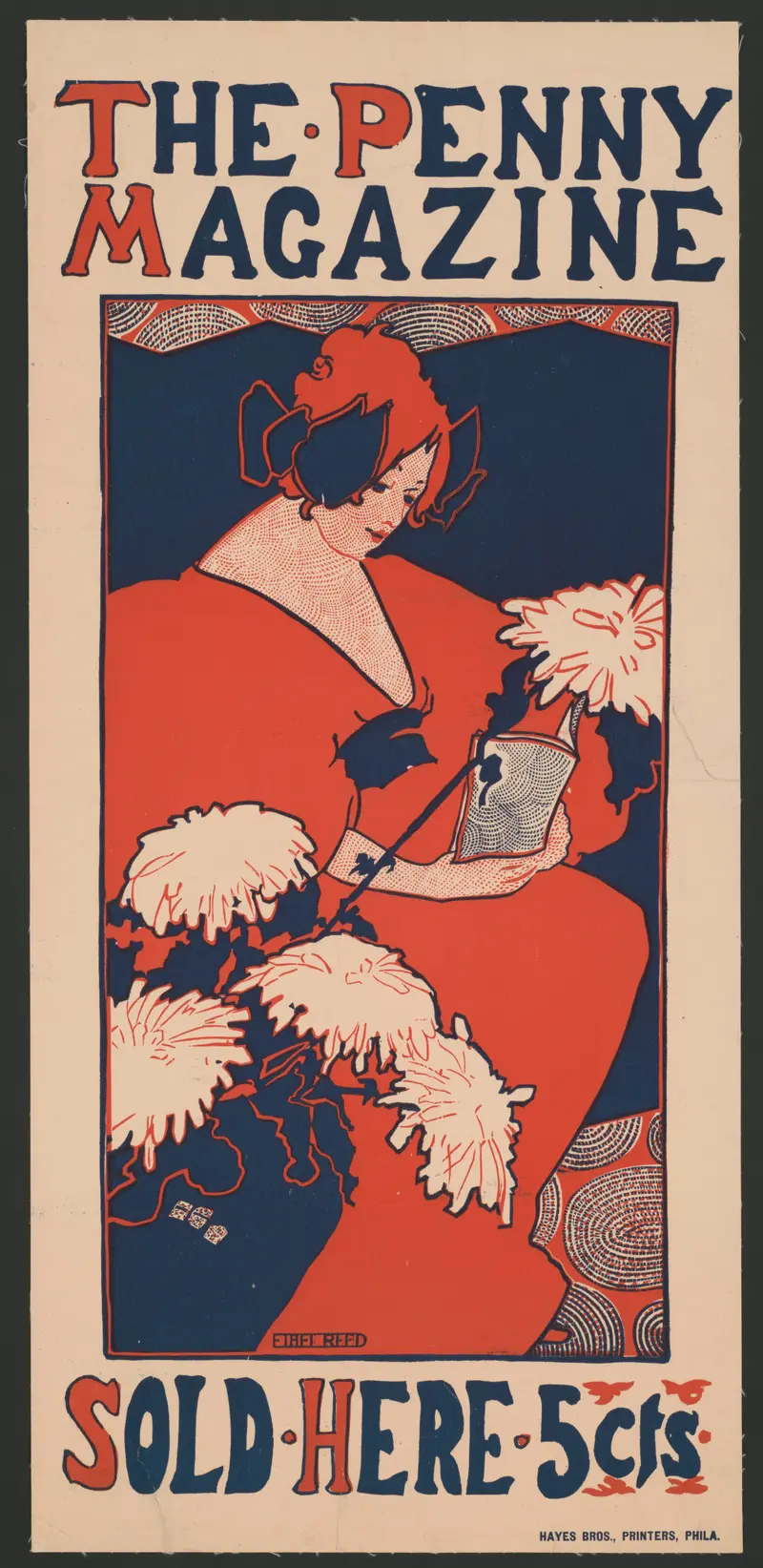
The Penny Magazine
Ethel Reed
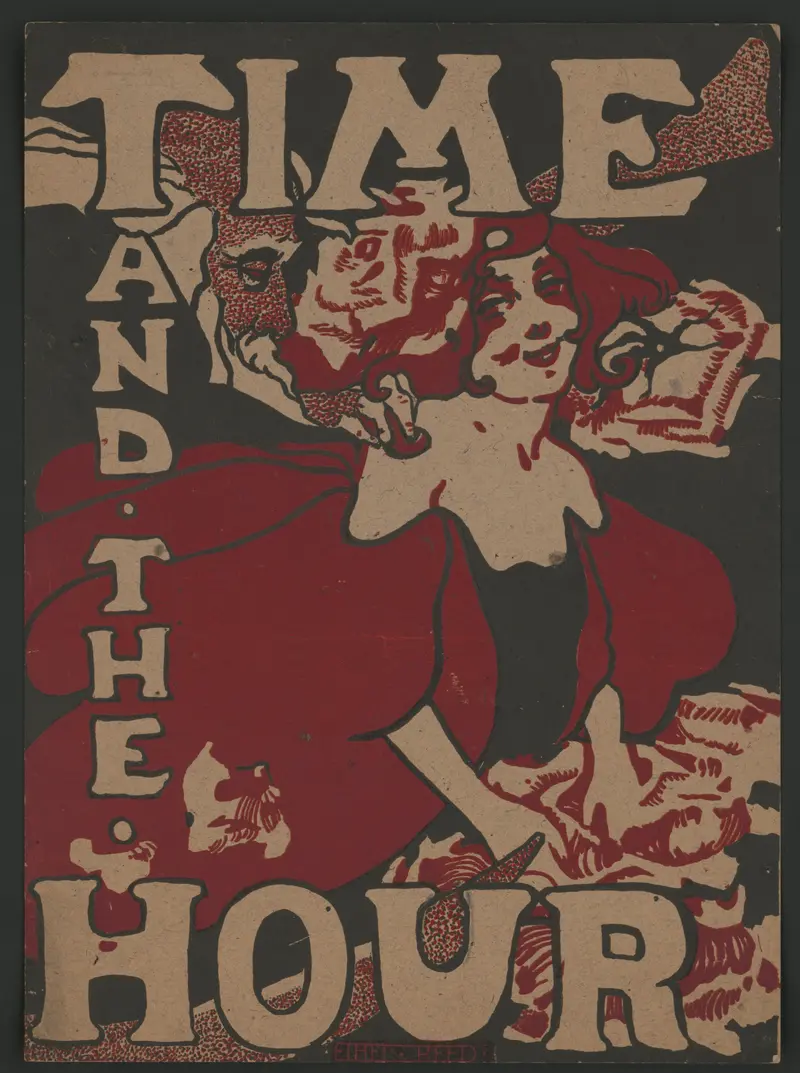
Time and the Hour
Ethel Reed
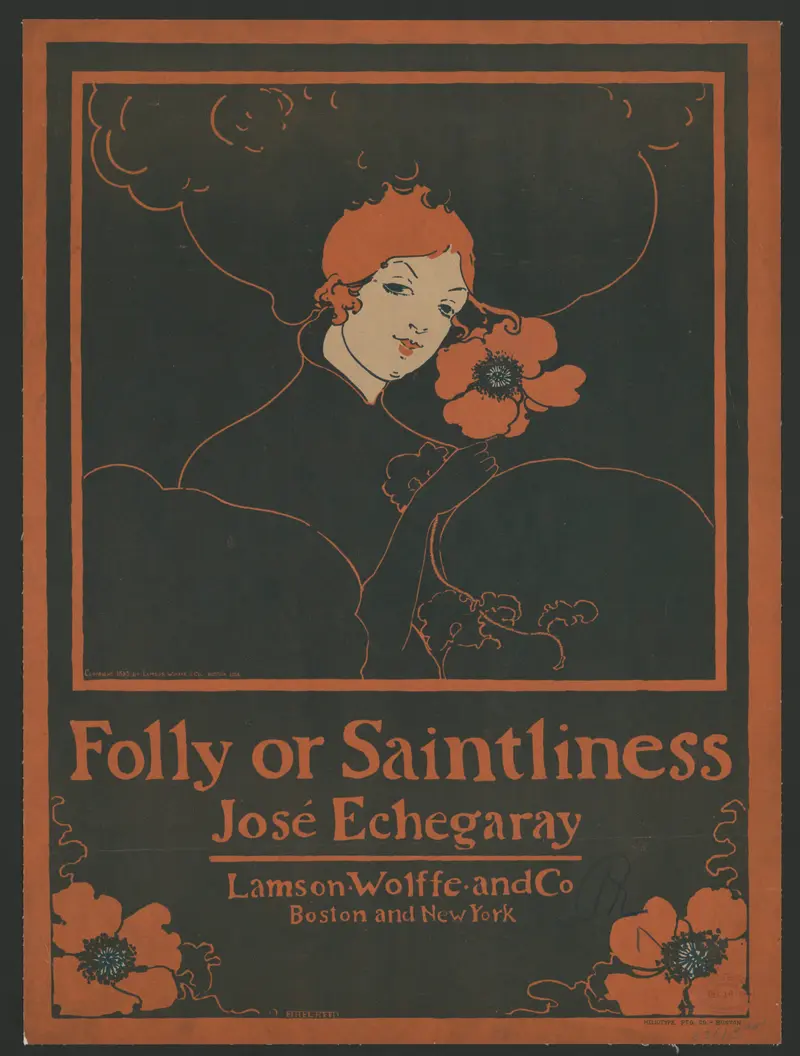
Folly or Saintliness
Ethel Reed
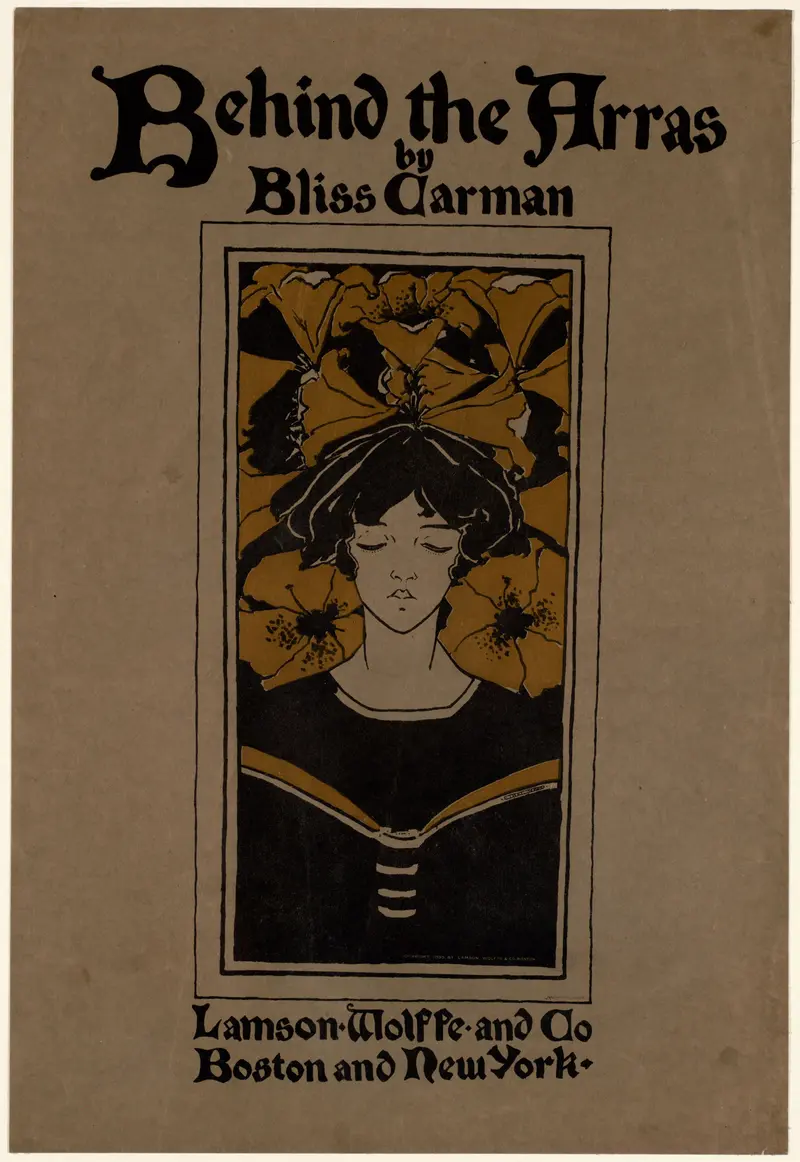
Behind the Arras
Ethel Reed
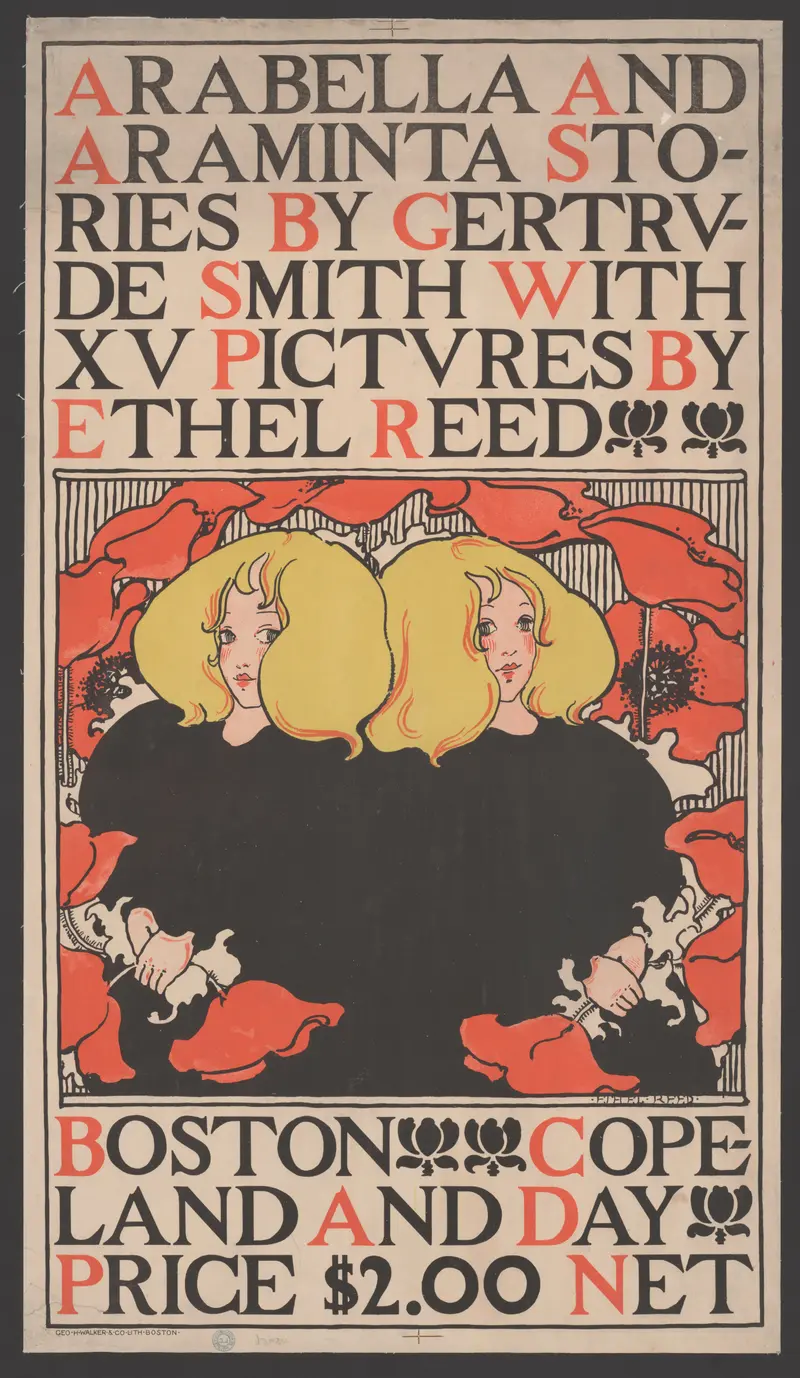
Arabella and Araminta Stories
Ethel Reed





