
Moon of the enemy’s lair (Zokuso no tsuki) — History & Facts
In Moon of the enemy’s lair (Zokuso no tsuki) by Tsukioka Yoshitoshi, the viewer is greeted by a dramatic night scene. The moon casts a silvery light over a dark landscape, creating a sense of mystery. Figures are depicted in traditional Japanese attire, suggesting a narrative of conflict or intrigue.
The use of deep blues and blacks enhances the atmosphere of tension and anticipation. This artwork is a woodblock print, a technique that involves carving images into wood blocks and inking them for printing. The details are finely rendered, showcasing Yoshitoshi's skill in capturing movement and expression. The composition is balanced, with the moon as a focal point that draws the eye.
The print's dimensions are approximately 25 x 35 cm, making it an intimate piece. Tsukioka Yoshitoshi was a prominent figure in the Ukiyo-e movement, known for his innovative approach to traditional themes. This work reflects his interest in the supernatural and the dramatic, often blending historical narratives with mythological elements. An interesting fact about this piece is that it was created during a time when Yoshitoshi was exploring darker themes in his art, influenced by the tumultuous events in Japan during the late 19th century.
More Artworks by Tsukioka Yoshitoshi

Frost fills the air and the autumn air is still/lines of returning geese cross the moon in the third hour-Kenshin, from the series Twelve Aspects of the Moon
Tsukioka Yoshitoshi
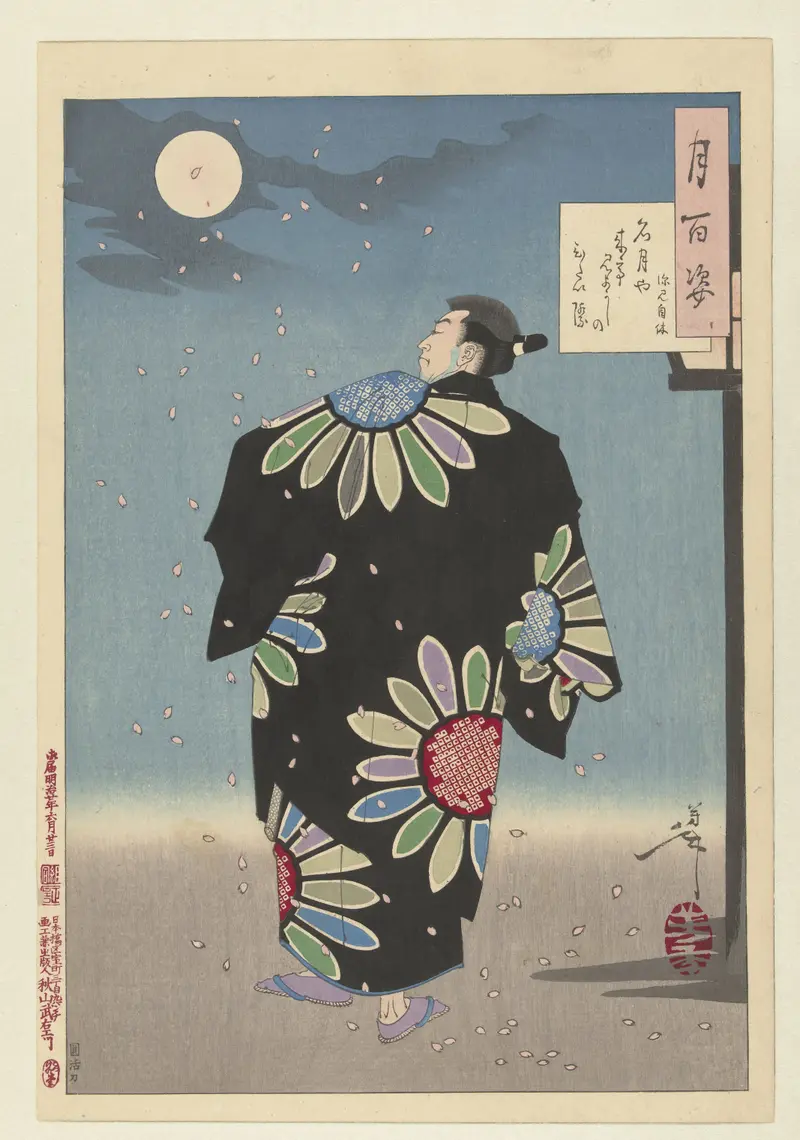
Fukami Jikyu in maanlicht
Tsukioka Yoshitoshi
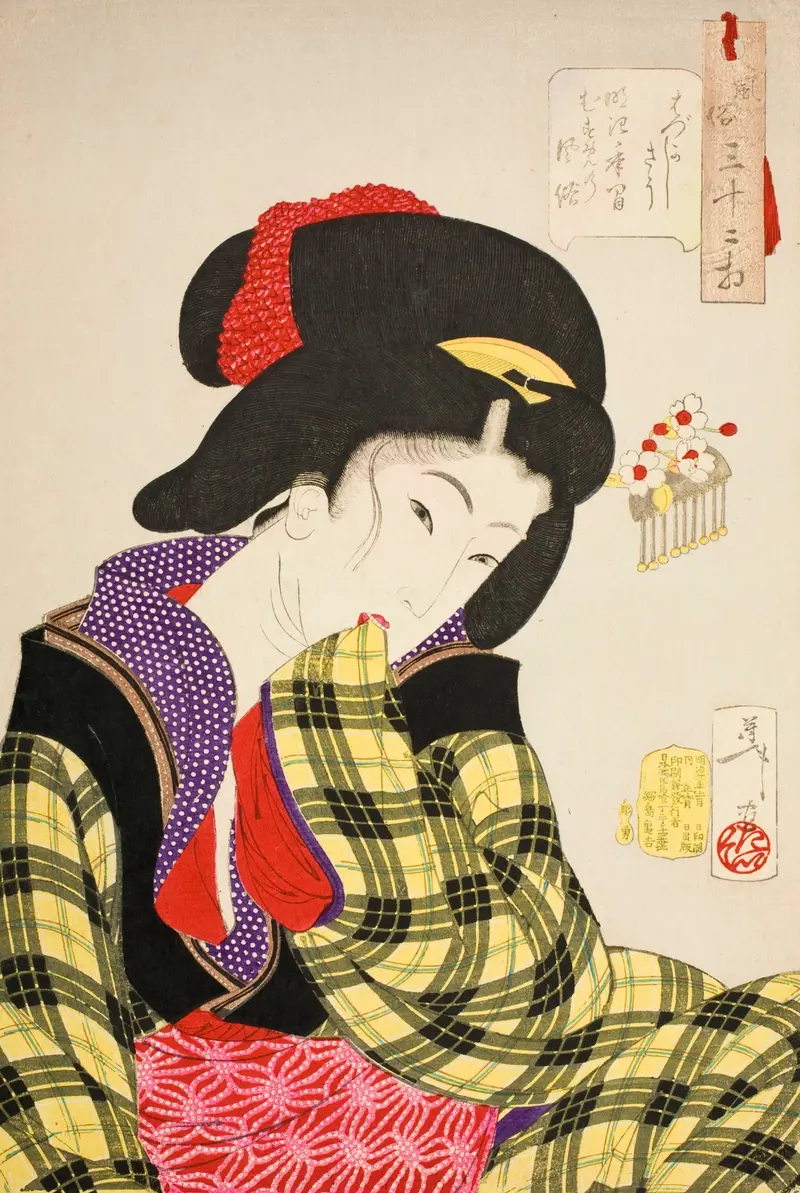
Looking Shy; The Manners of a Young Girl of the Meiji Era
Tsukioka Yoshitoshi
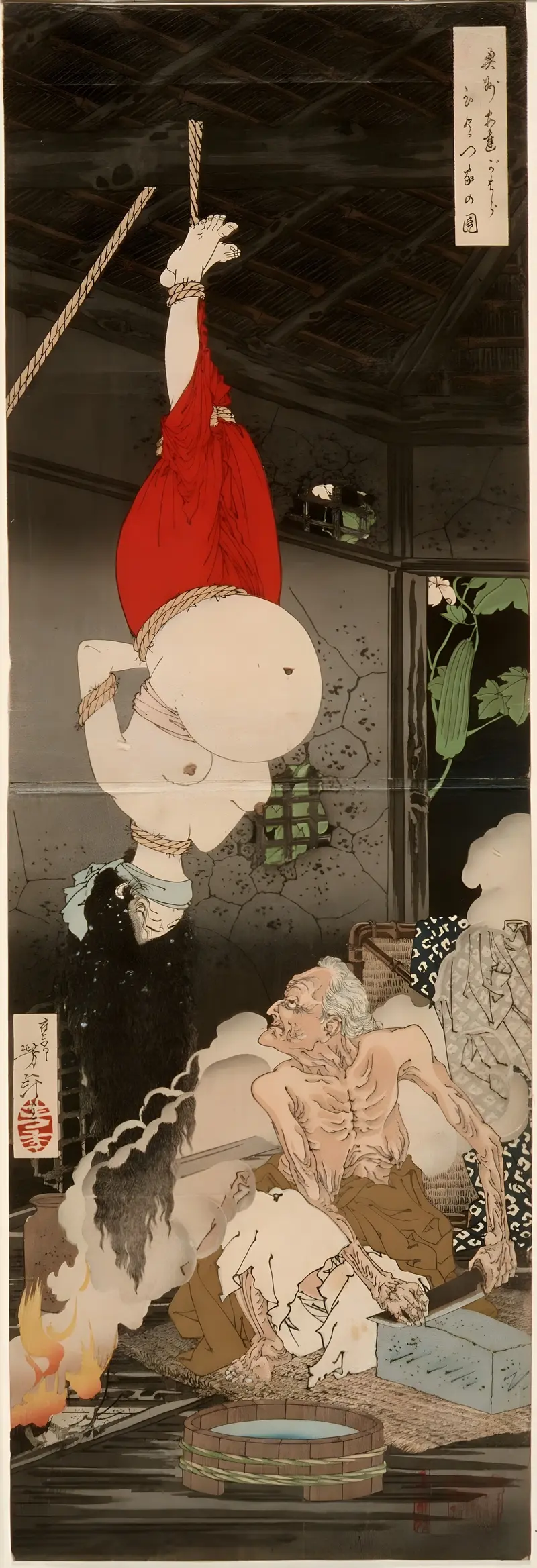
The Lonely House on Adachi Moor in Northern Japan
Tsukioka Yoshitoshi
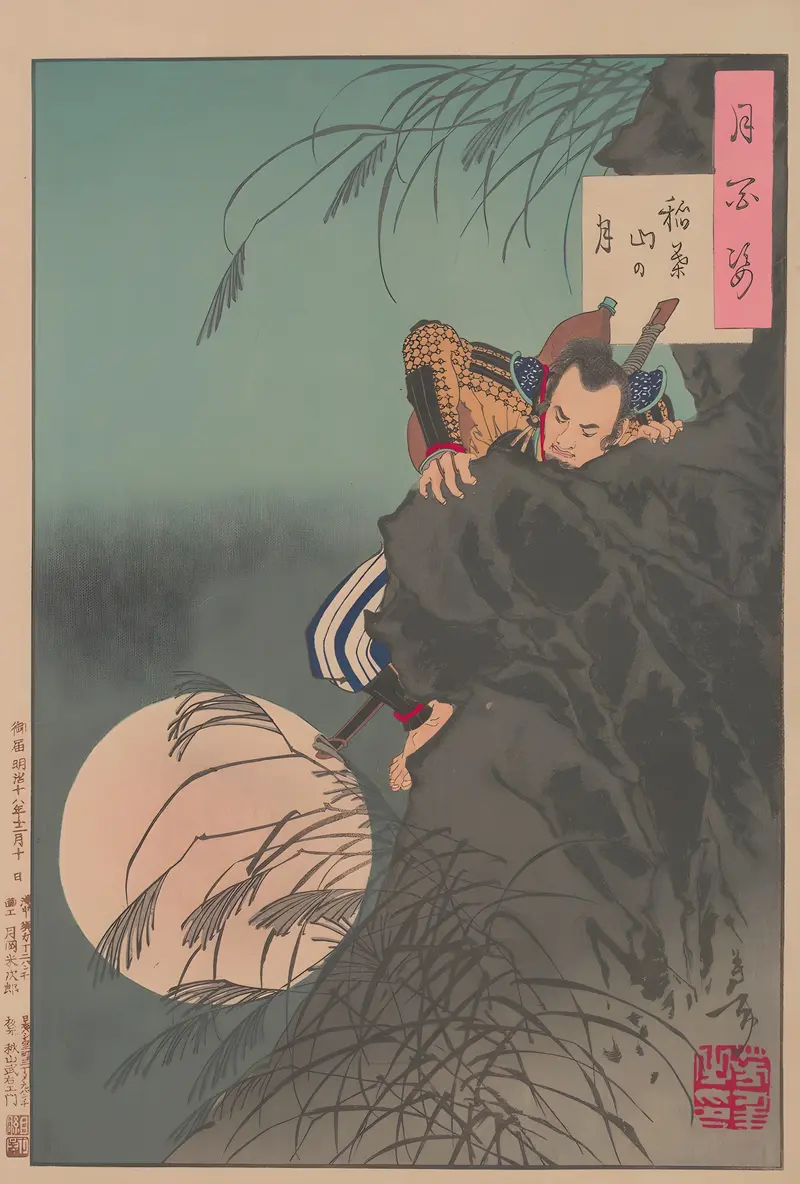
Inaba Mountain moon (Inabayama no tsuki)
Tsukioka Yoshitoshi
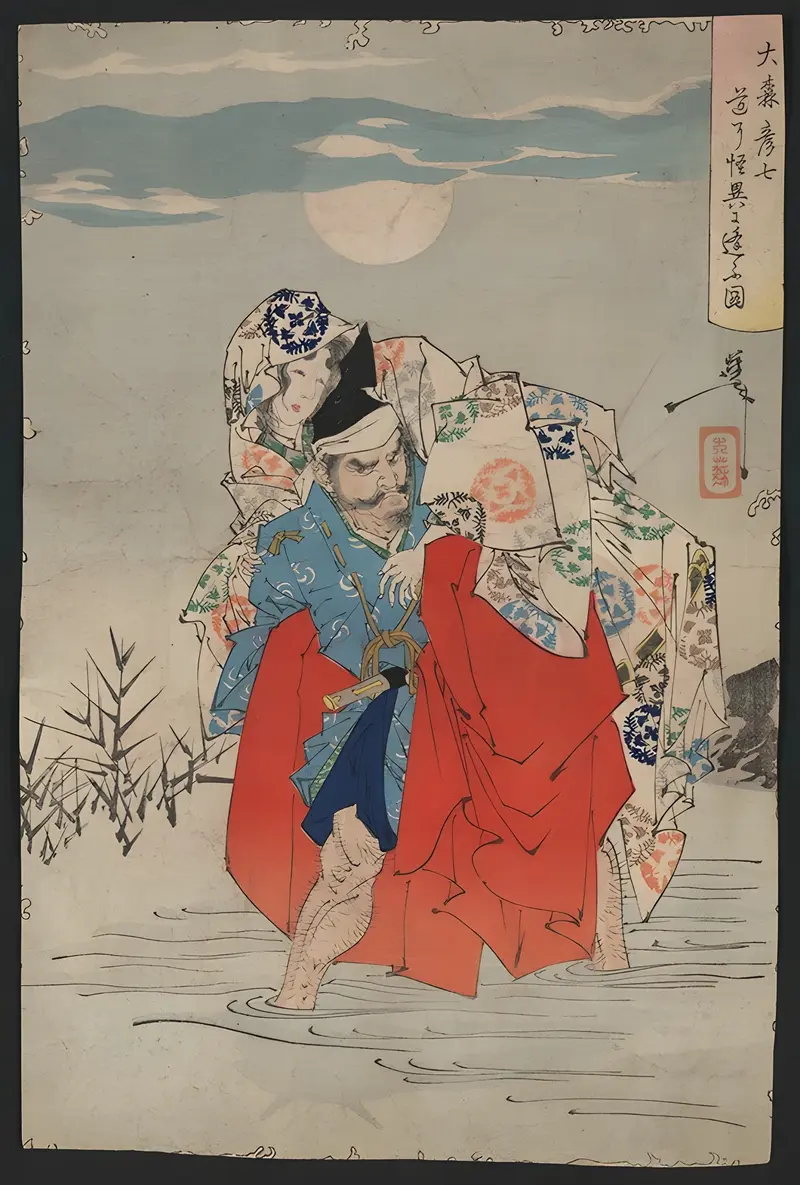
Omori Hikoshichi
Tsukioka Yoshitoshi
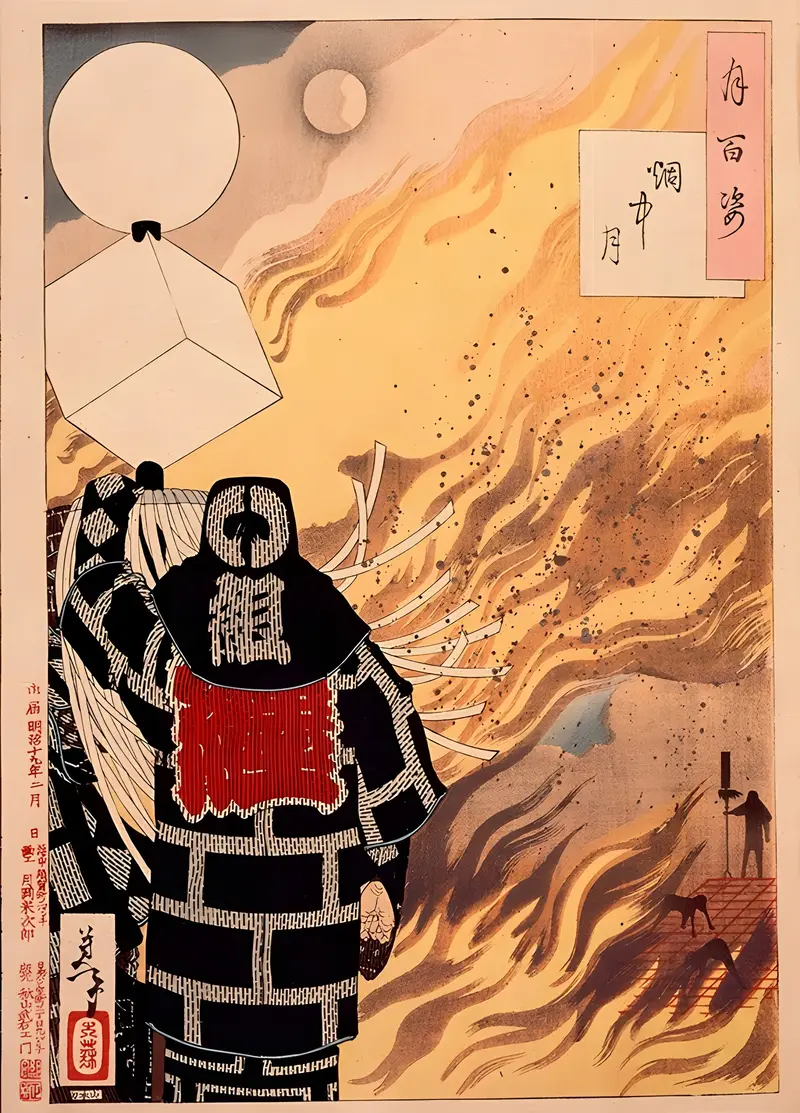
One Hundred Aspects of the Moon
Tsukioka Yoshitoshi
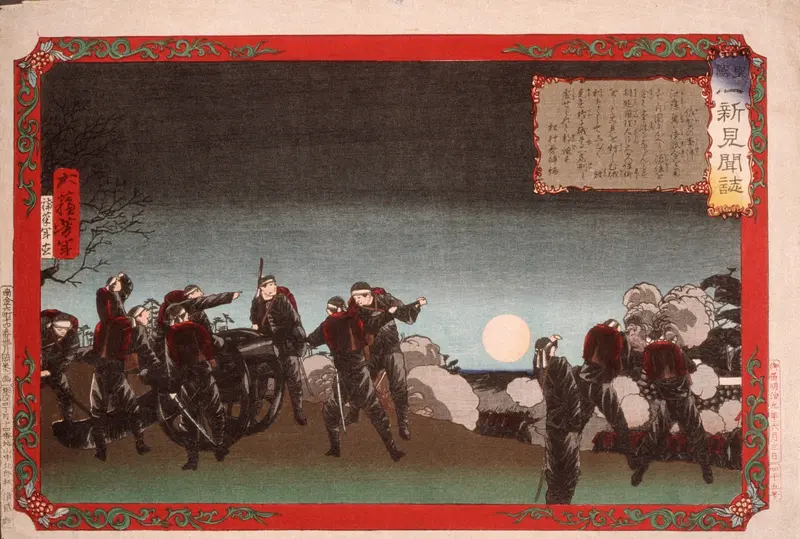
The Saga Incident
Tsukioka Yoshitoshi
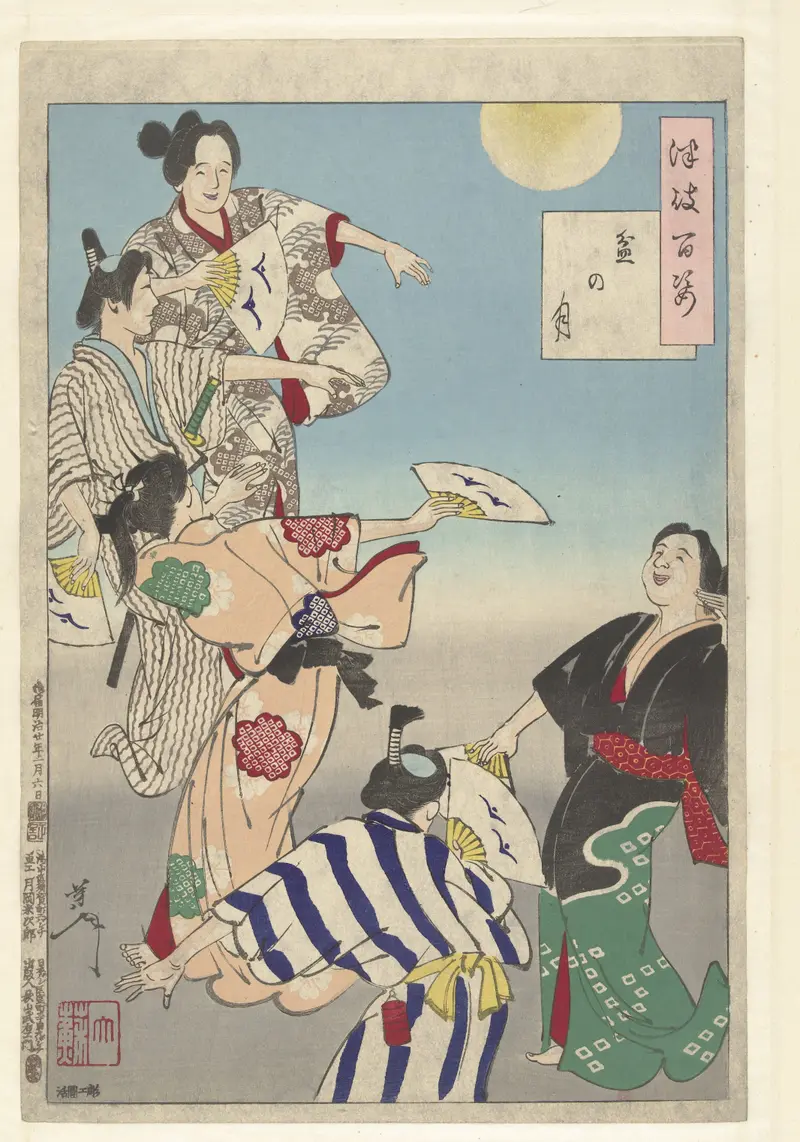
Bon Festival Moon (Bon no tsuki)
Tsukioka Yoshitoshi
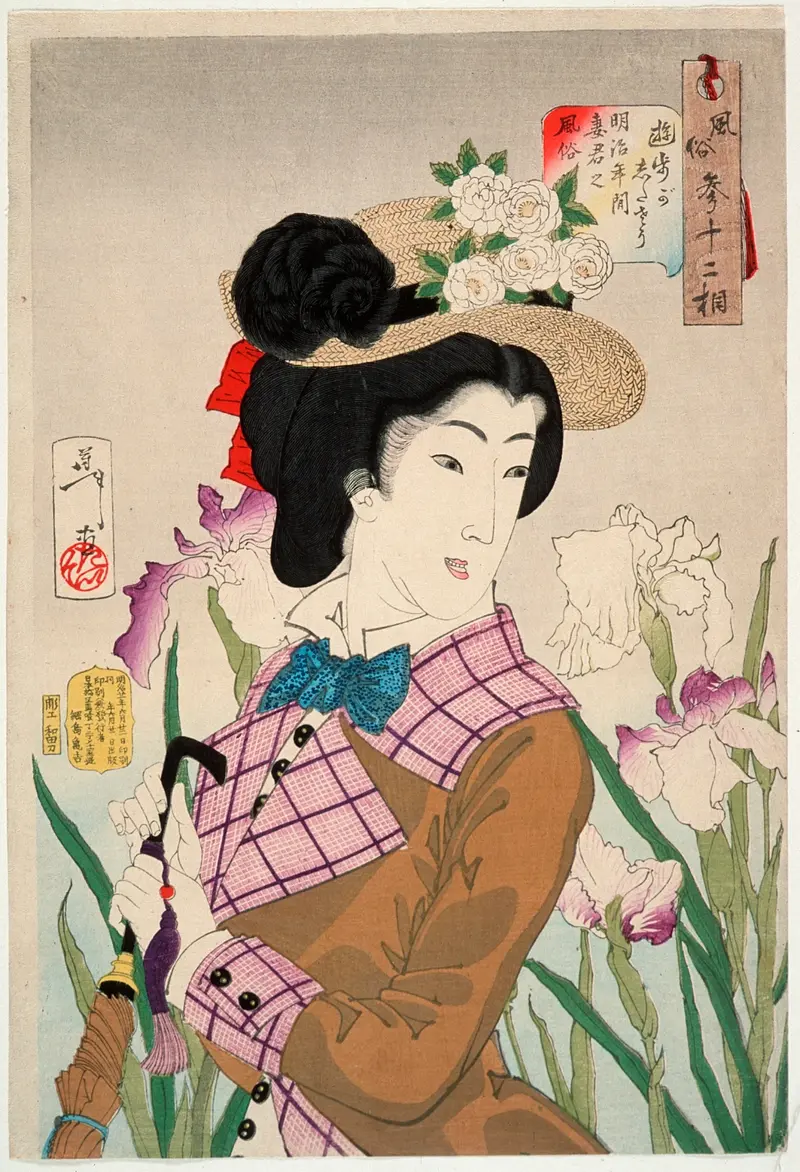
Preparing to Take a Stroll; The Wife of a Nobleman of the Meiji Period
Tsukioka Yoshitoshi





