Moonlight by the Mediterranean — History & Facts
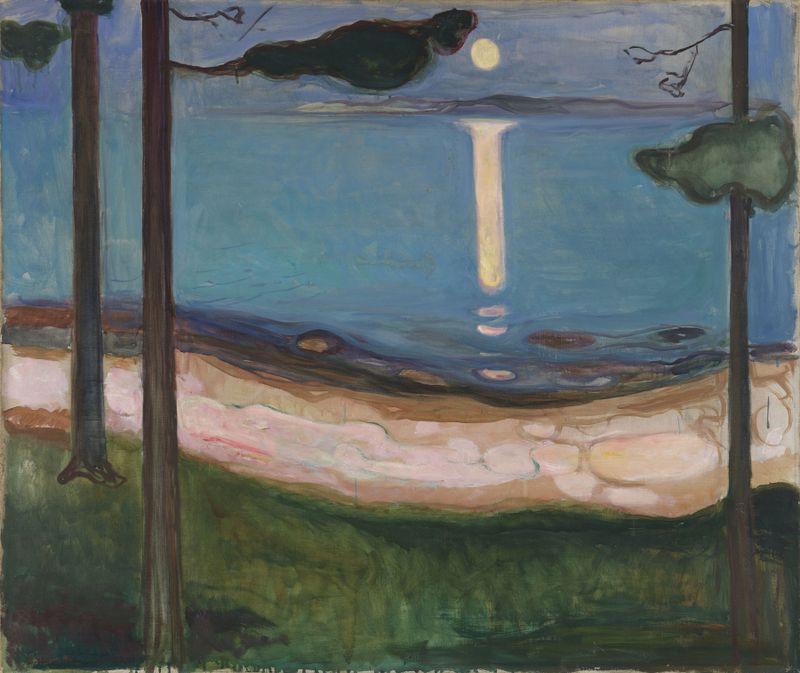
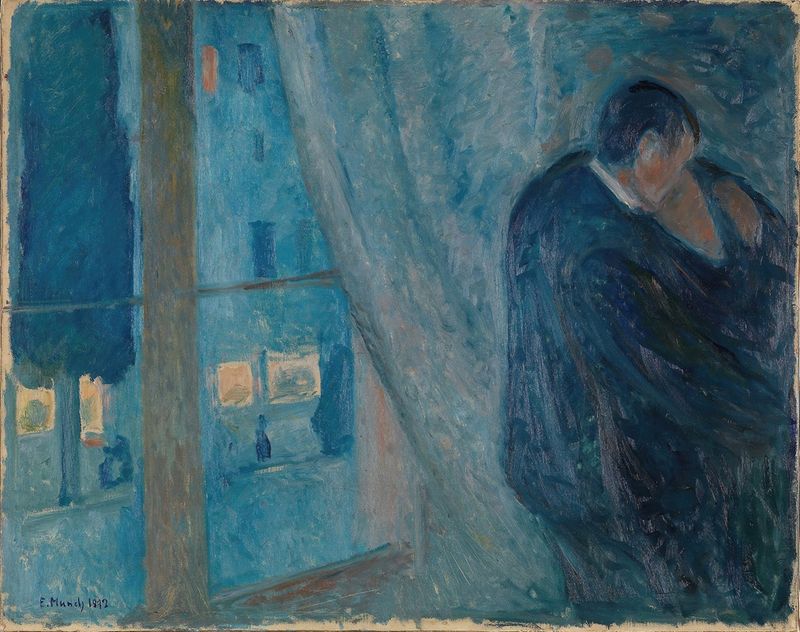
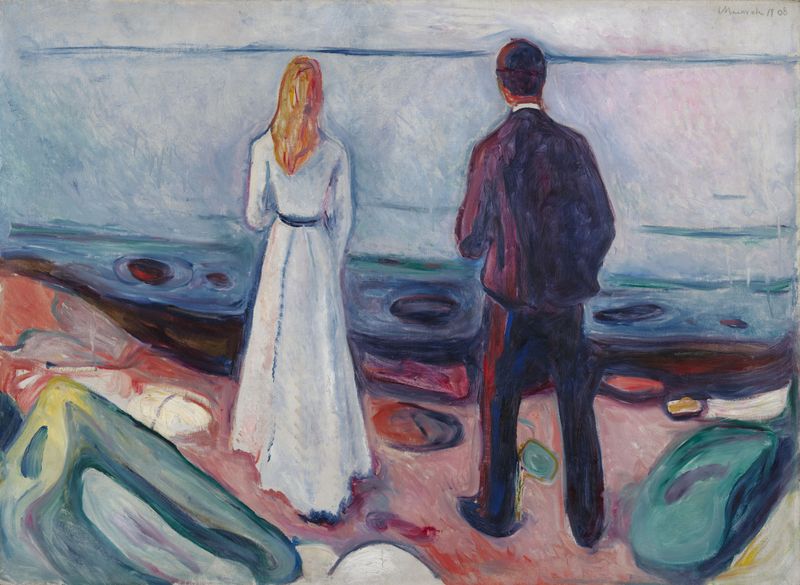
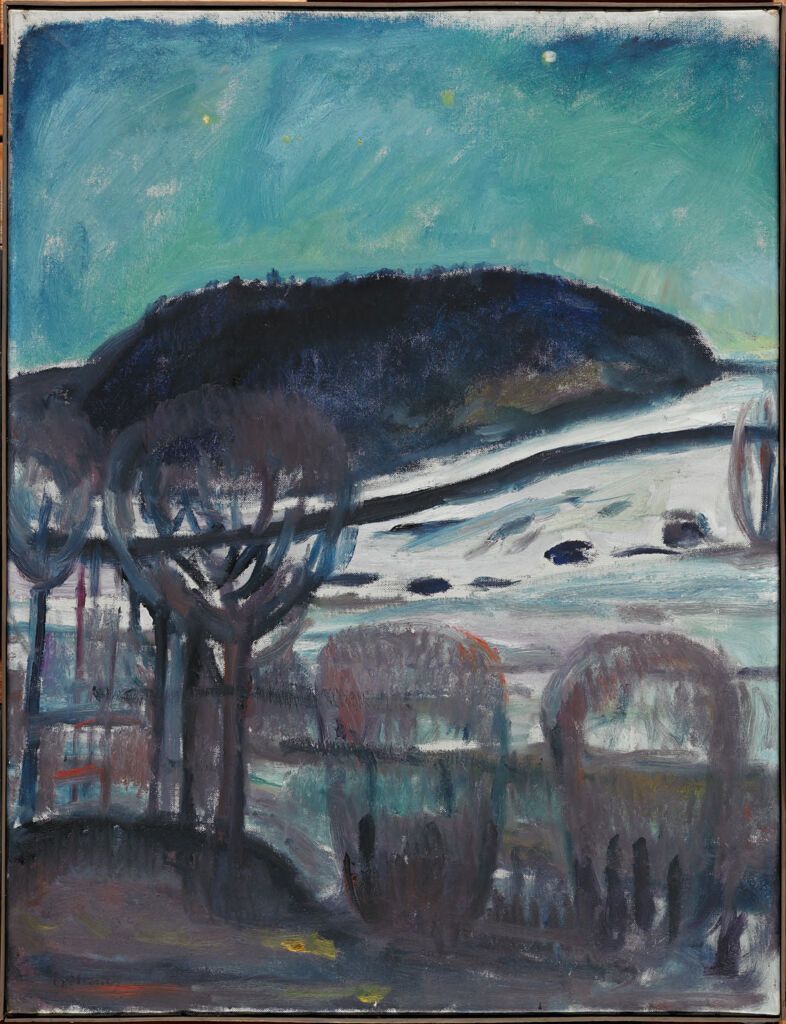
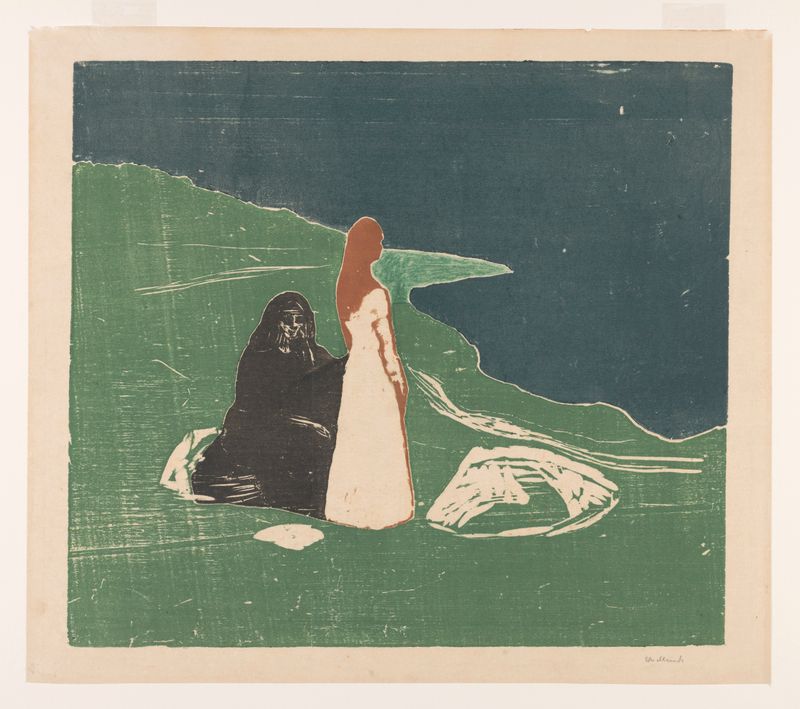
What if beauty was never meant to be finished? In Edvard Munch's work, Moonlight by the Mediterranean, the viewer is invited to ponder the transient nature of awe, captured in the stillness of a midnight scene. Focus on the shimmering water, which glistens under the silvery moonlight, drawing your eye into the depths of the canvas. The composition plays with light and shadow, creating a luminous contrast that almost feels alive. The palette, dominated by deep blues and soft whites, evokes a sense of calm yet tinged with mystery, as if the landscape itself is a dream waiting to be unraveled.
Notice how the dark, almost silent mountains cradle the scene, enhancing the serenity of the water’s surface. Delve deeper into the emotional currents at play. The interplay of light suggests a fleeting moment, an ephemeral beauty that vanishes as quickly as it arrives. This tension between the vastness of nature and the intimate embrace of moonlight conjures feelings of nostalgia and longing.
The empty space in the foreground invites contemplation, while the distant horizon hints at the unknown, making the heart ache with the possibilities that lie beyond perception. In 1891, Munch painted this evocative piece while living in Norway, a time marked by a burgeoning interest in symbolism and expressionism. The artist was deeply influenced by the emotional turbulence of his own life, reflecting the discord of the modern world in his work. As he explored themes of love, solitude, and existential dread, this painting emerged as a haunting meditation on beauty that transcends the confines of reality.