
Moonlight on a River before a Town — History & Facts
The first thing that draws the eye in Moonlight on a River before a Town is the moon itself, suspended in a sky thick with drifting clouds. Its pale light gently brushes the river’s surface, turning water into a mirror that doubles the drama of the heavens. The town’s church spire rises quietly above the trees, a sentinel in silhouette, while a pair of small figures and their dog walk a shadowy path at the water’s edge.
Every detail is chosen to heighten the sense of stillness: the boats moored in the distance, the delicate reflections, the careful gradation from darkness under the trees to the luminous openness of the sky. The composition leads the viewer’s gaze from the intimacy of the foreground to the vast, moonlit expanse, inviting a slow, deliberate contemplation. Painted in 1650, this work belongs to the world of Dutch landscape painting, a genre that flourished in the seventeenth century as the Dutch Republic grew prosperous and urbanized. Artists like Aert van der Neer became renowned for their ability to capture the unique moods of their homeland’s waterways and skies—especially at twilight or under moonlight, when familiar scenes take on a mysterious, almost private character.
Such paintings were prized by the urban middle class, who hung them in their homes as reminders of the beauty and quiet dignity of everyday Dutch life. Though little is recorded about the specific journey of this canvas, its presence in the Dresden collection by the late nineteenth century speaks to the enduring appeal of these nocturnes. Let your gaze linger on the moon’s reflection and imagine the hush that must have settled over the riverbank centuries ago.
More Artworks by Aert van der Neer

A Moonlit River Landscape With Figures Standing By A Gate, A Village Beyond
Aert van der Neer
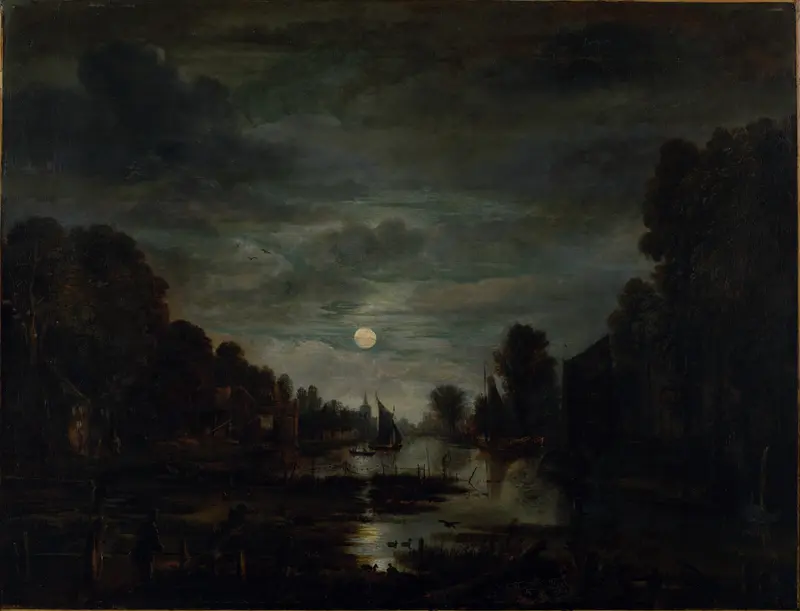
River Landscape in Moonlight
Aert van der Neer
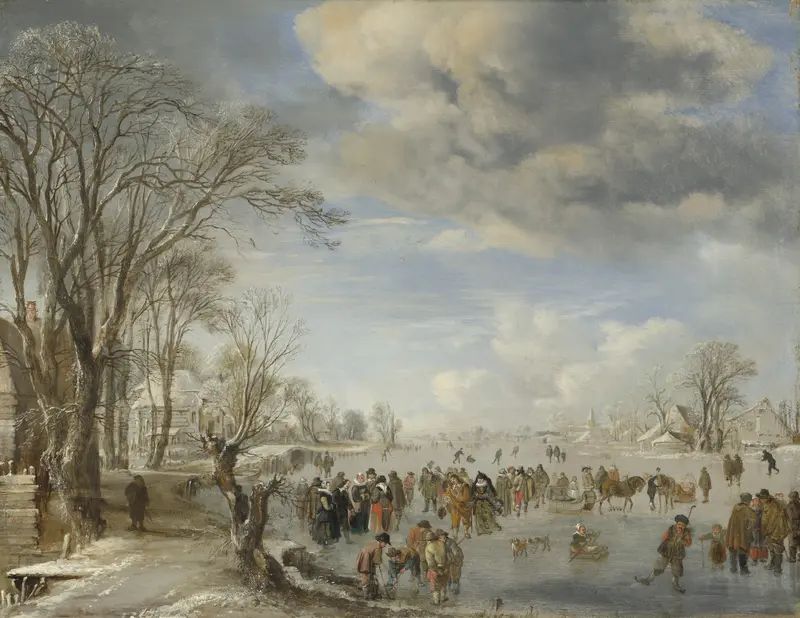
Winter in Holland – Skating Scene
Aert van der Neer

River Landscape
Aert van der Neer
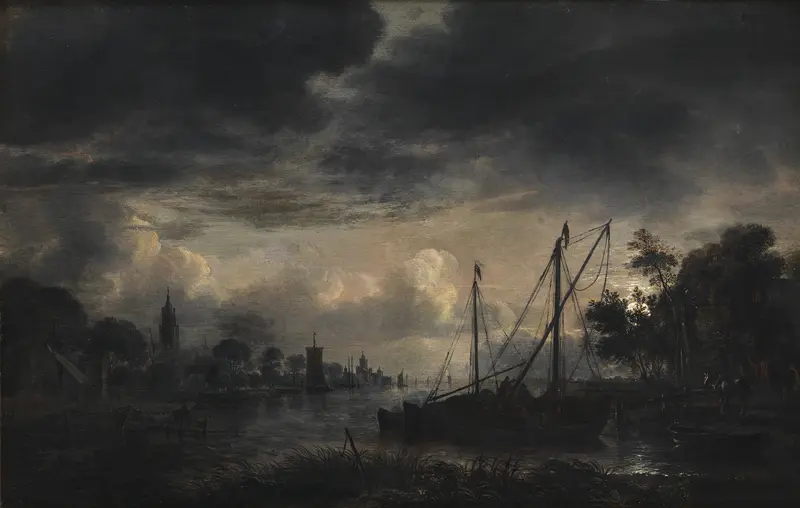
River Landscape in Moonlight
Aert van der Neer
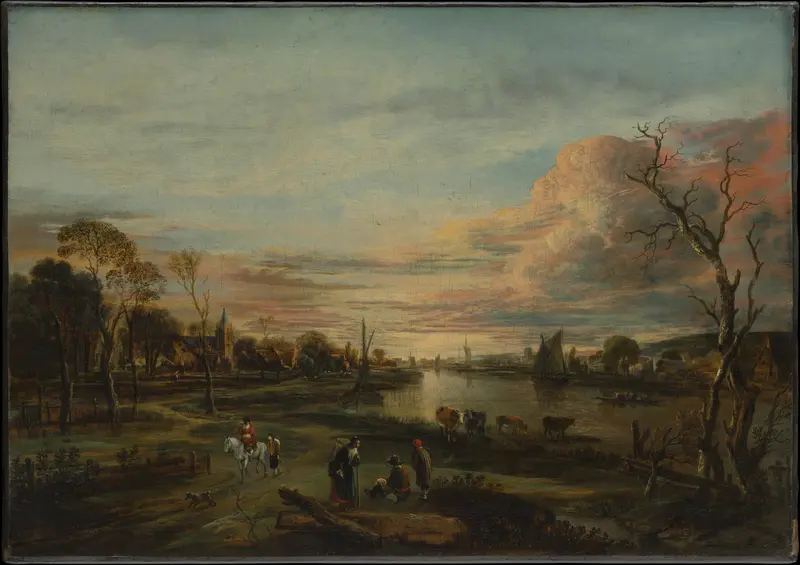
Landscape at Sunset
Aert van der Neer
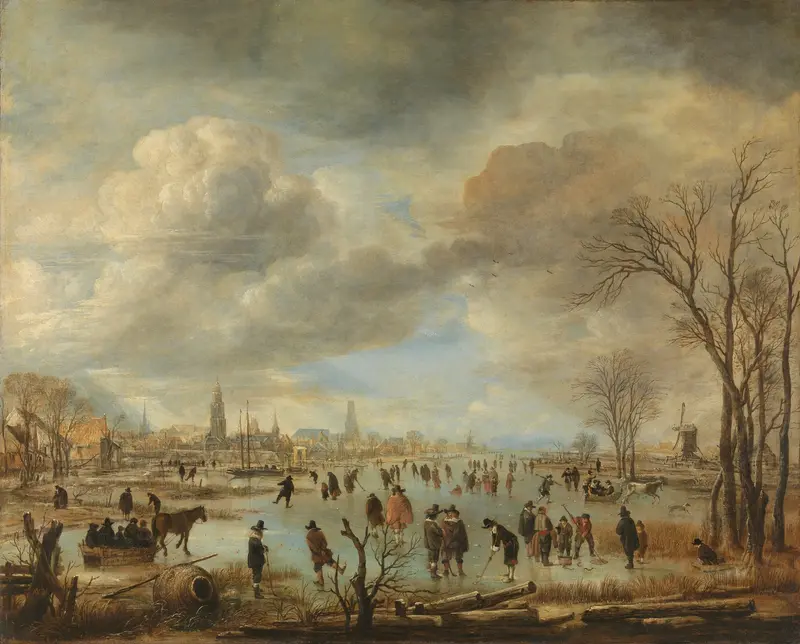
Winter Landscape near a Town with Kolf Players and Horse-Drawn Sleighs
Aert van der Neer

Winter Landscape with Skaters on a Frozen River
Aert van der Neer
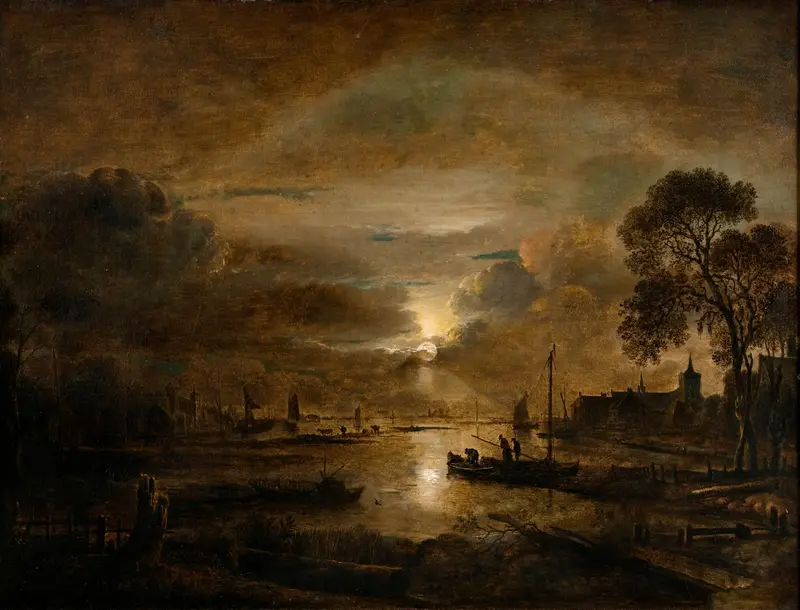
Moonlight at a Dutch River
Aert van der Neer
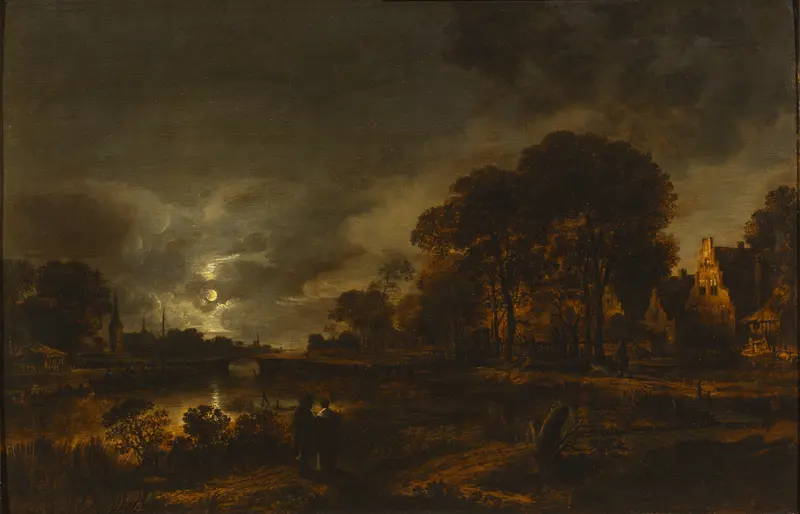
Moonlight Landscape
Aert van der Neer
More Landscape Art

The Starry Night
Vincent van Gogh

View of Delft
Johannes Vermeer

Water Lilies
Claude Monet

The Grand Canal, Venice, looking north-west from the Ca' Corner to the Ca' Contarini degli Scrigni, with the campanile of Santa Maria della Carità
Canaletto

Windsor Castle
Canaletto

The Grand Canal looking North-East from the Palazzo Dolfin-Manin to the Rialto Bridge
Canaletto