
Moonlit landscape — History & Facts
The first thing that catches the eye in Moonlit landscape is the way the moon’s glow breaks through the dense, restless clouds, turning the night sky into a stage for light and shadow. The painter, Aert van der Neer, draws you in by letting the moon’s reflection ripple across the water, pulling your gaze from the quiet boat in the foreground to the distant silhouettes of houses and church towers. Every element is placed to heighten the sense of hush and anticipation—the fences in the water, the angled masts, the clustered rooftops all seem to listen to the night.
The palette is rich with browns and ochres, but it is the silvery moonlight that gives the scene its pulse, hinting at stories unfolding just out of sight. Scenes like this were a specialty of Dutch painters in the seventeenth century, when the interplay of light and water became a kind of national signature. In the world of Aert van der Neer, these landscapes were not just records of place, but invitations to linger in the quiet drama of the everyday—a genre prized by collectors who wanted reminders of their homeland’s beauty and ingenuity. The date and medium of this particular work remain unknown, and history has kept few traces of its journey, but today it belongs to the collection of Rijksmuseum Twenthe.
The stillness and subtle tension in the painting ask the viewer to look again, to see what else the moon might reveal.
More Artworks by Aert van der Neer

A Moonlit River Landscape With Figures Standing By A Gate, A Village Beyond
Aert van der Neer
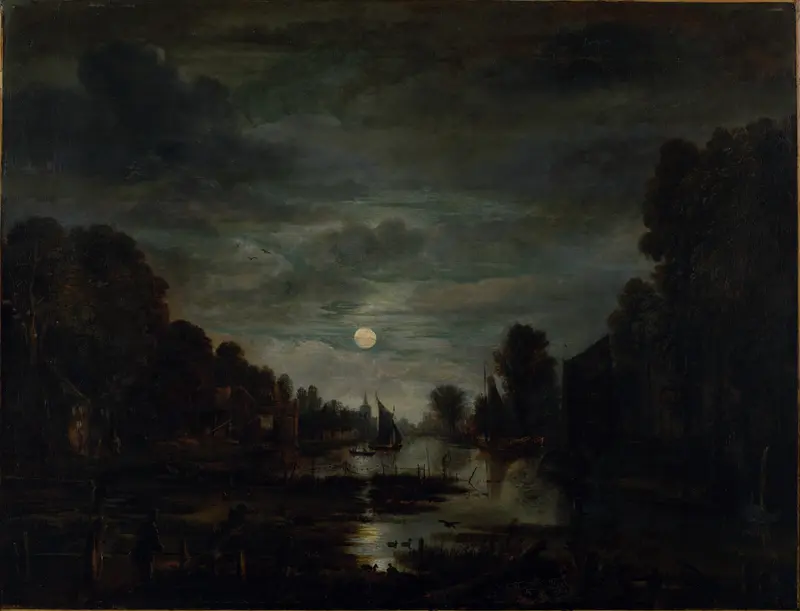
River Landscape in Moonlight
Aert van der Neer
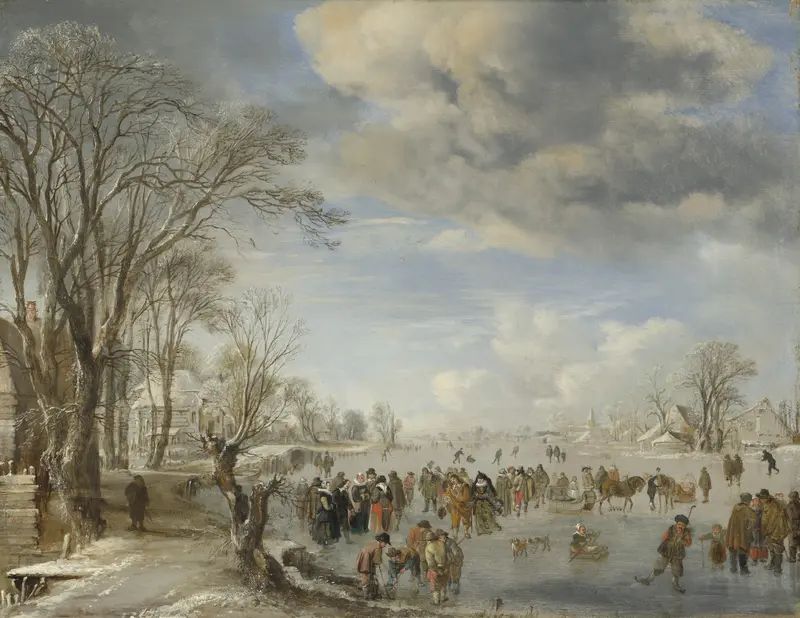
Winter in Holland – Skating Scene
Aert van der Neer

River Landscape
Aert van der Neer
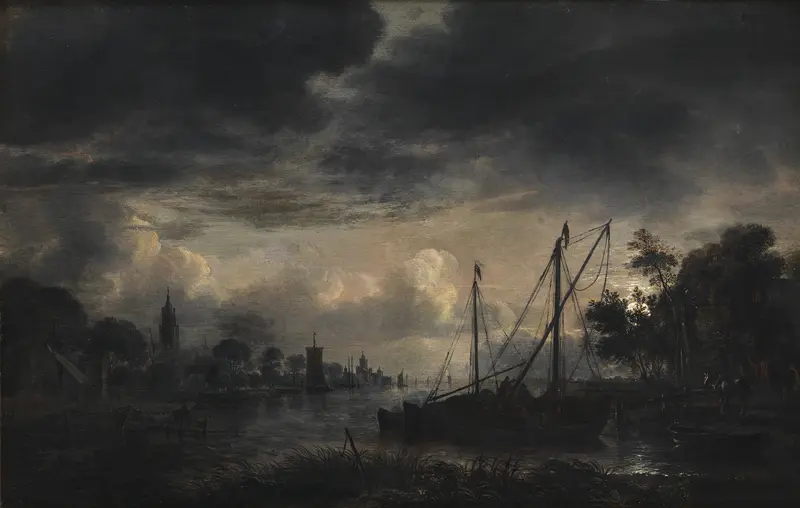
River Landscape in Moonlight
Aert van der Neer
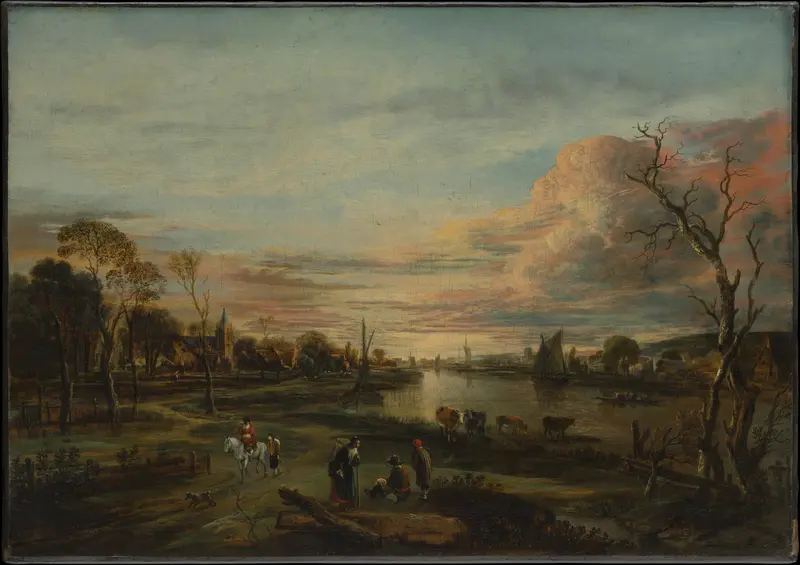
Landscape at Sunset
Aert van der Neer
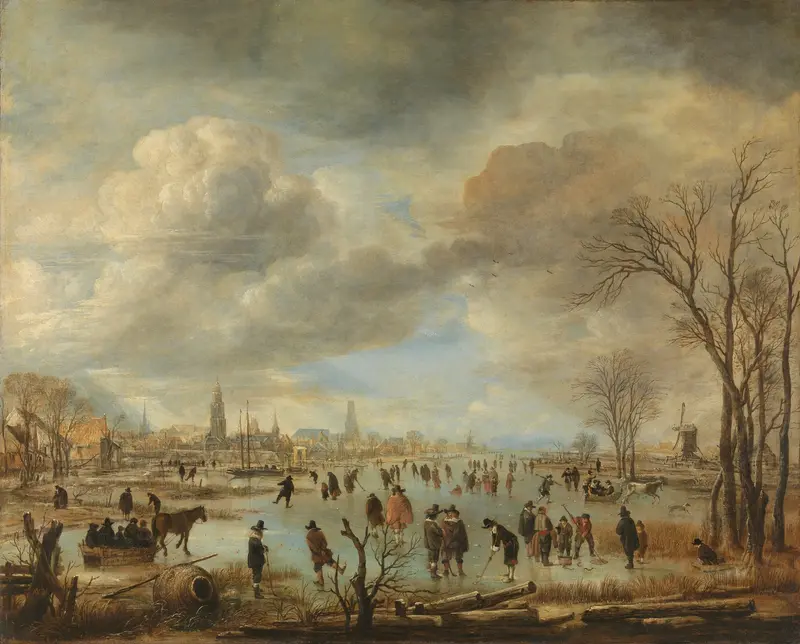
Winter Landscape near a Town with Kolf Players and Horse-Drawn Sleighs
Aert van der Neer

Winter Landscape with Skaters on a Frozen River
Aert van der Neer
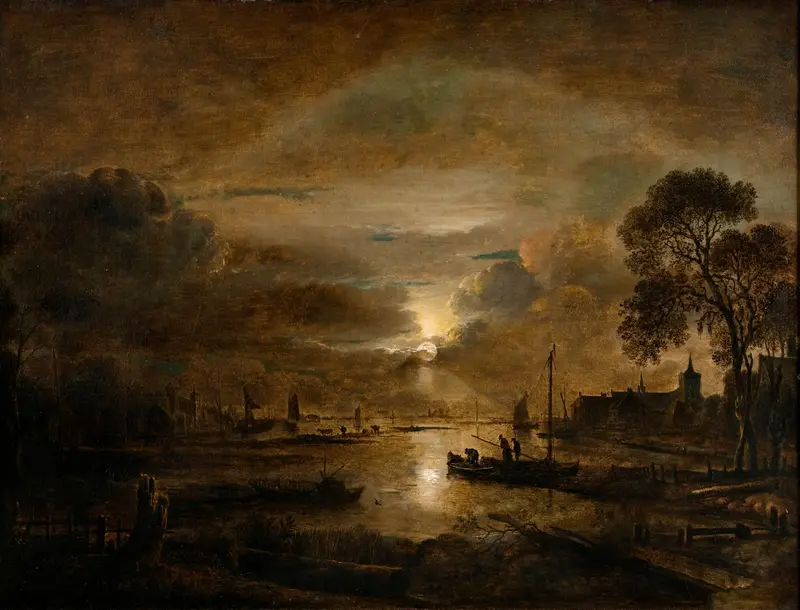
Moonlight at a Dutch River
Aert van der Neer
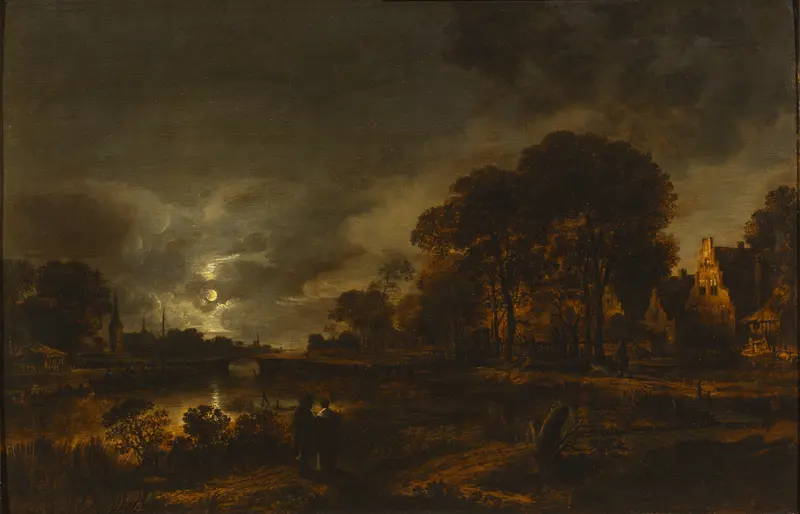
Moonlight Landscape
Aert van der Neer
More Landscape Art

The Starry Night
Vincent van Gogh

View of Delft
Johannes Vermeer

Water Lilies
Claude Monet

The Grand Canal, Venice, looking north-west from the Ca' Corner to the Ca' Contarini degli Scrigni, with the campanile of Santa Maria della Carità
Canaletto

Windsor Castle
Canaletto

The Grand Canal looking North-East from the Palazzo Dolfin-Manin to the Rialto Bridge
Canaletto