
Moonlit Landscape with Bridge — History & Facts
The first thing that catches the eye in Moonlit Landscape with Bridge is the way the moon carves its own path through the clouds, scattering silver across the water and drawing the viewer into a world where night is alive with quiet drama. The bridge at the center is not just a passage over water; it becomes a stage for the moonlight, its arch reflected perfectly in the stillness below. To the right, two small figures stand in conversation beneath towering trees, their presence almost swallowed by the darkness, yet illuminated just enough to suggest a story unfolding in hushed tones.
The clustered buildings on the left, half-lost in shadow, hint at a village retreating into sleep, while the wild growth at the water’s edge reminds us that nature, too, is a restless character in this scene. Every element is arranged to lead the eye from the glowing sky to the silent earth, inviting us to linger in the moment between day and night. Painted probably between 1648 and 1650, this work belongs to a period in Dutch art when landscapes were more than backdrops—they were invitations to contemplate the world’s quiet mysteries. Artists like Aert van der Neer became renowned for their ability to capture the subtle play of light and atmosphere, especially in nocturnes such as this.
These paintings were sought after by the prosperous middle class of the Dutch Republic, who hung them in their homes as reminders of both the beauty and the unpredictability of nature. While little is recorded about the specific journey of this painting, now in the masterworksartgallery collection, its mood and subject place it firmly within a tradition that valued observation and wonder over spectacle. Look again at the moon’s reflection, and consider how, centuries ago, it offered viewers the same quiet invitation to pause and look closer.
More Artworks by Aert van der Neer

A Moonlit River Landscape With Figures Standing By A Gate, A Village Beyond
Aert van der Neer
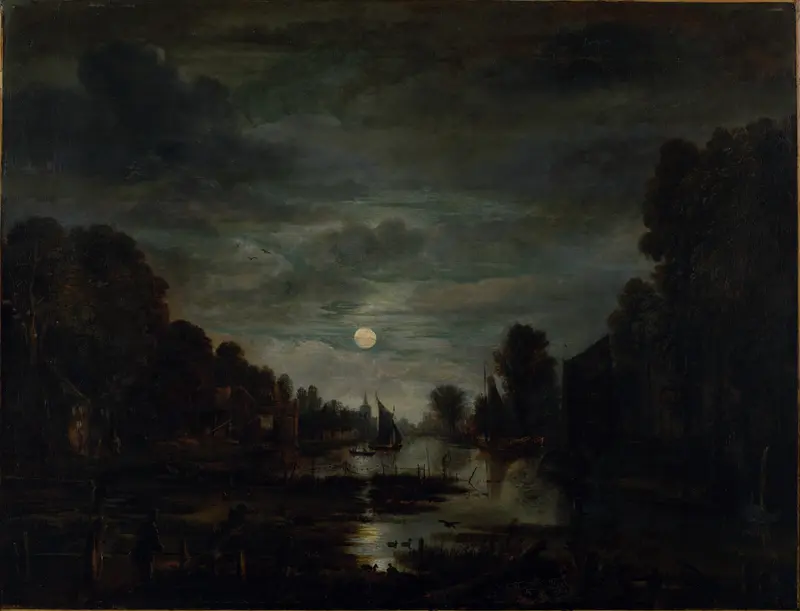
River Landscape in Moonlight
Aert van der Neer
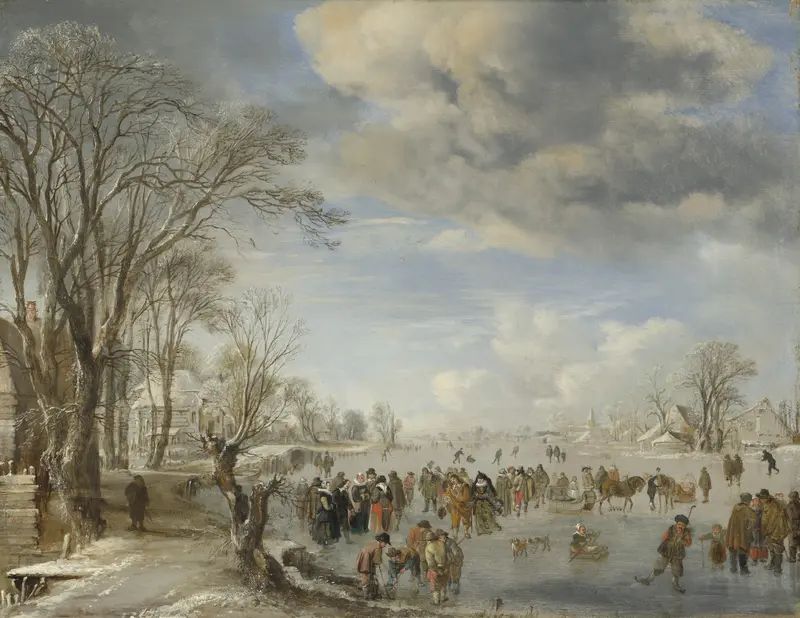
Winter in Holland – Skating Scene
Aert van der Neer

River Landscape
Aert van der Neer
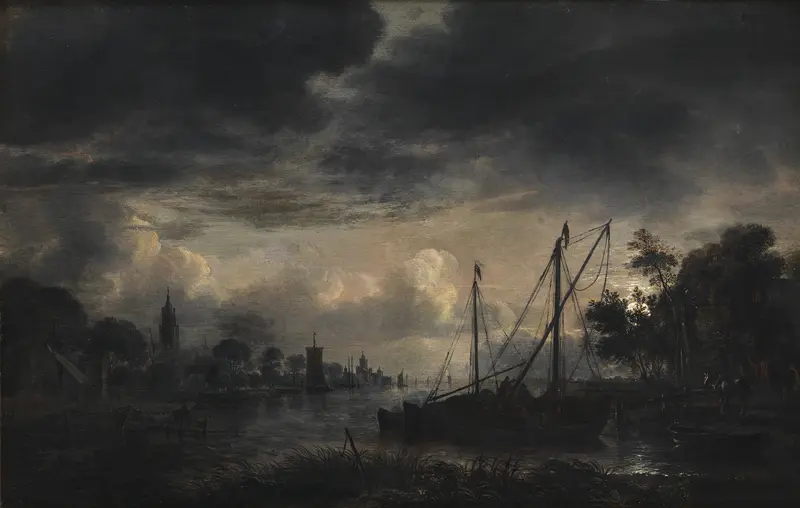
River Landscape in Moonlight
Aert van der Neer
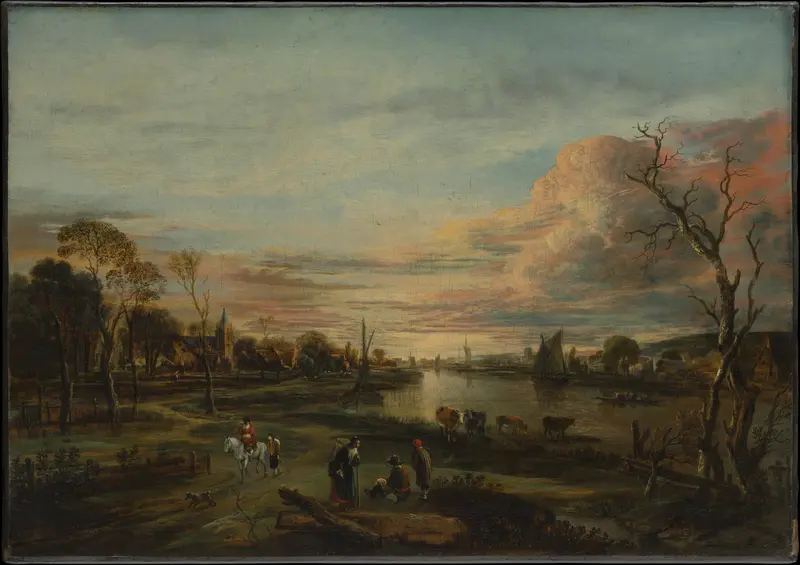
Landscape at Sunset
Aert van der Neer
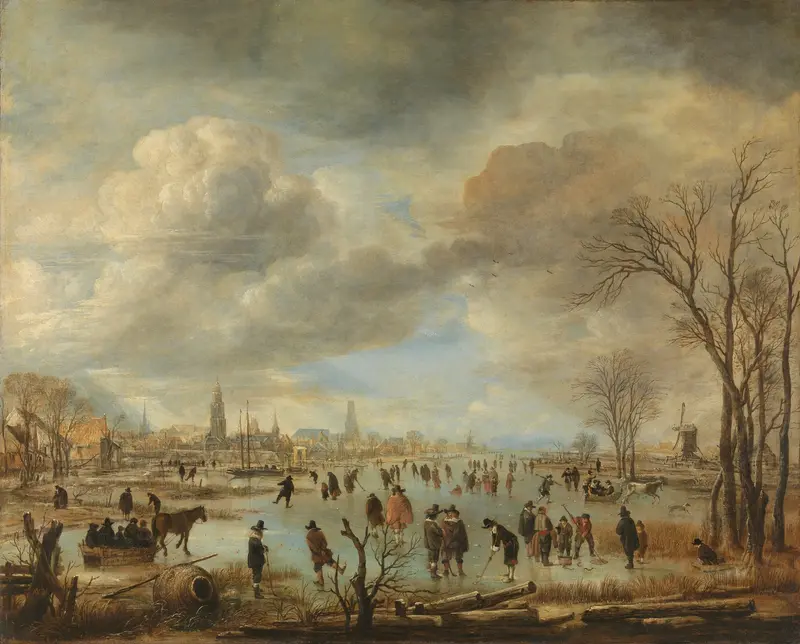
Winter Landscape near a Town with Kolf Players and Horse-Drawn Sleighs
Aert van der Neer

Winter Landscape with Skaters on a Frozen River
Aert van der Neer
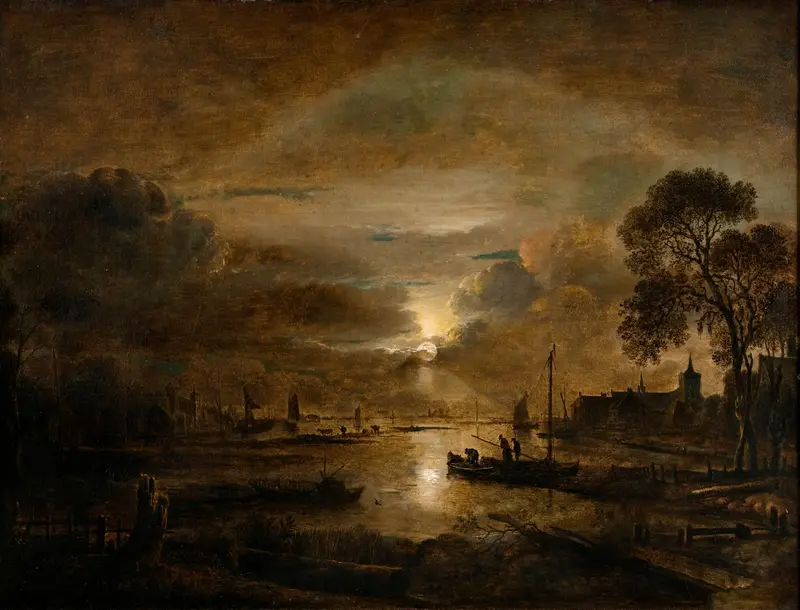
Moonlight at a Dutch River
Aert van der Neer
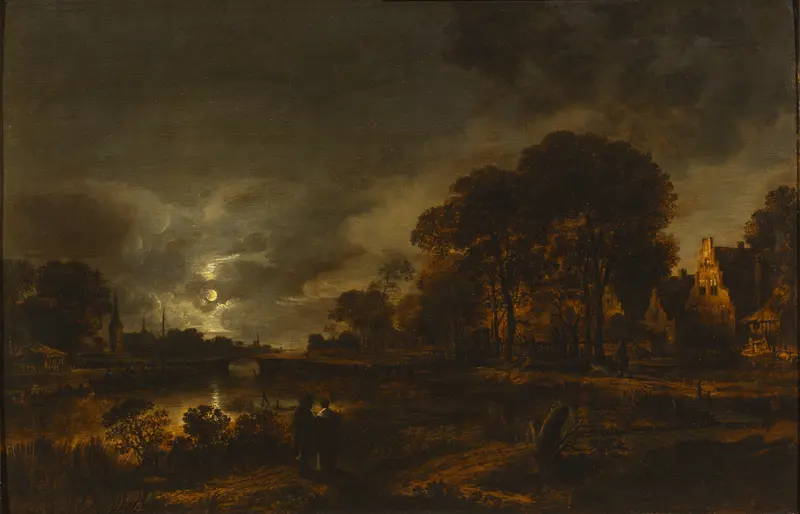
Moonlight Landscape
Aert van der Neer
More Landscape Art

The Starry Night
Vincent van Gogh

View of Delft
Johannes Vermeer

Water Lilies
Claude Monet

The Grand Canal, Venice, looking north-west from the Ca' Corner to the Ca' Contarini degli Scrigni, with the campanile of Santa Maria della Carità
Canaletto

Windsor Castle
Canaletto

The Grand Canal looking North-East from the Palazzo Dolfin-Manin to the Rialto Bridge
Canaletto